How to Safely Put Window Cleaner in Your Car
Cleaning your car’s windows can be a hassle, especially when you’re unsure about the safest way to handle window cleaner. Many people struggle with avoiding spills or accidents, and that’s totally normal. You’re not alone in wanting a simple, safe method to keep your car sparkling.
To safely put window cleaner in your car, first choose an ammonia-free, eco-friendly product and gather your supplies in a well-ventilated area.
Use a funnel to transfer the cleaner slowly into the reservoir, making sure the container is secure and upright. Avoid overfilling and double-check the cap seal.
Store the cleaner upright, away from children and sunlight. For detailed steps on maintaining and avoiding common mistakes, keep exploring this guide.
Key Takeaways
- Use containers that are clearly labeled and meant for storing window cleaner. This helps ensure you’re handling it safely.
- Find a well-ventilated space before you start. Open the bottle slowly to avoid splashes, and use a funnel for better control when pouring.
- Fill the reservoir only up to the recommended level. This prevents spills and overflows when you’re driving.
- Make sure to close the container tightly after filling. This way, you won’t have leaks while on the road.
- Store the cleaner upright in a cool, secure spot. Keep it away from children and pets to stay safe.
Why Proper Storage of Window Cleaner Matters for Your Car
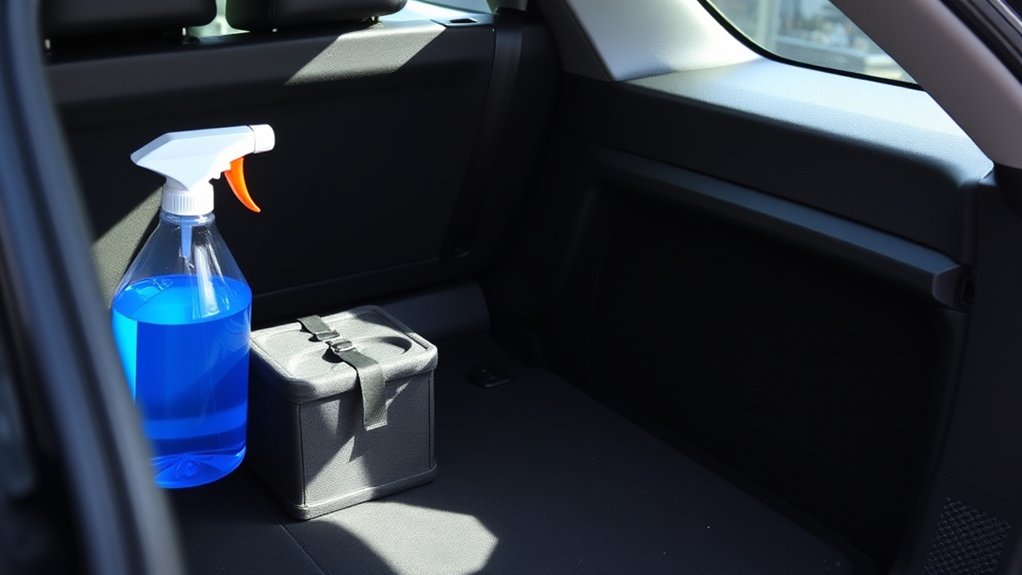
Proper storage of window cleaner is vital because it helps prevent accidents and keeps your car safe. If you leave it in an easily accessible or unsecured spot, you risk spills, leaks, or accidental exposure, which can be harmful.
Storing it in a designated, secure container or compartment guarantees it stays upright and sealed tightly. This prevents leaks that could damage your interior or create slippery surfaces.
Moreover, keeping the cleaner away from children and pets is essential. An unsecured bottle in your trunk or glove box could be dangerous if swallowed or spilled.
Proper storage also preserves the effectiveness of the cleaner by preventing contamination or evaporation. Taking these precautions safeguards both your vehicle and everyone around it.
How to Choose the Right Window Cleaner for Your Vehicle
Choosing the right window cleaner for your vehicle is key to keeping your visibility clear without damaging your car’s surfaces. Look for products labeled specifically for automotive use, as they’re made to be safe on glass and paint.
Avoid ammonia-based cleaners because they can harm tinted windows and paint over time. Instead, go for alcohol- or water-based solutions that are gentler on your vehicle.
| Feature | Why It Matters |
|---|---|
| Ammonia-Free | Protects tinted windows and paint |
| Fast-Drying | Prevents streaks and residue buildup |
| Eco-Friendly | Safer for the environment and your vehicle |
| Non-Abrasive | Keeps glass and surfaces scratch-free |
| Streak-Free Formula | Ensures crystal-clear visibility |
Preparing Your Car and Workspace for Safe Filling
Before you start, open the windows to ensure good ventilation and avoid inhaling fumes.
Clear your workspace of any clutter or objects that could get in the way or cause accidents.
Taking these simple steps keeps you safe and ready to clean effectively.
Ensure Proper Ventilation
Since fumes from window cleaner can be harmful, you should always make sure your car and workspace are well-ventilated before starting. Open all windows and doors to let fresh air flow in freely.
Turn on your vehicle’s ventilation system or fans to help clear out any lingering vapors. Avoid working in enclosed or poorly ventilated areas, as this can increase your risk of inhaling toxic fumes.
If you can, do the task outside or in a garage with plenty of airflow. Proper ventilation lowers the concentration of harmful chemicals, making the process safer for you.
Always take these precautions before pouring or handling window cleaner to reduce health risks and create a safe working environment.
Clear Workspace Area
With proper ventilation in place, it’s important to clear your workspace and prepare your car to guarantee safety during the cleaning process. Remove any items from your car’s interior that could spill or get in the way, like loose papers, coins, or personal belongings.
Park your car on a flat surface and open all doors and windows to improve airflow. Cover or protect nearby surfaces that might get splattered with cleaner. Keep your tools and cleaning supplies organized in one area to avoid accidental spills.
Make sure there’s enough space around your vehicle for easy movement. Clearing the workspace minimizes the risk of accidents, spills, and contamination. This way, you can focus on safely filling your window cleaner without unnecessary hazards.
How to Transfer Window Cleaner Safely Into Your Car’s Container
Carefully transferring window cleaner into your car’s container guarantees safety and prevents spills. Begin by choosing a stable, flat surface to work on, making sure you have enough space.
Open the window cleaner bottle slowly to avoid splashing. Use a funnel if possible to guide the liquid smoothly into your car’s container.
Pour the cleaner slowly, using a funnel to prevent splashes and ensure a smooth transfer.
Keep the container steady and pour slowly to prevent overflows. If you spill, wipe it up immediately with a cloth to avoid sticky residue or damage.
Make sure the container cap is tightly closed after the transfer to prevent leaks during driving. Always handle the cleaner carefully, especially if it’s concentrated.
Store any leftover in its original container for future use. This cautious approach keeps your vehicle clean and safe.
Step-by-Step: Filling Your Car’s Window Cleaner Reservoir
Now that you’ve safely transferred the window cleaner into your car’s container, it’s time to fill the reservoir itself. First, locate the reservoir, which is usually under the hood or inside the car near the driver’s seat.
Unscrew or open the cap carefully, making sure not to spill. Use a funnel if you have one to avoid messes. Slowly pour the window cleaner into the reservoir, filling it up to the indicated level—usually marked with “MAX” or “FULL.”
Don’t overfill, as this can cause leaks or improper functioning. Once filled, securely tighten the cap to prevent leaks during driving. Check around the edges for any drips or spills, and wipe them away immediately.
Your reservoir is now ready for use, ensuring your window cleaner system works efficiently.
Tips to Avoid Spills During Window Cleaner Refill
To prevent spills when refilling your window cleaner, choose a container that’s the right size for your reservoir.
Pour slowly and carefully, keeping a steady hand so you don’t overfill or cause a mess.
Once you’re done, always tighten the lid securely to prevent any leaks.
Use Proper Container Size
Choosing the right container size is key to preventing spills when refilling your window cleaner. A container that’s too big can cause overflows, while one that’s too small might need multiple refills, increasing the chance of spills.
Pick a container that matches the amount you usually need. It should have enough capacity without being bulky or hard to handle. Think about your storage space and how easy it is to carry.
Here’s a quick guide:
| Container Size | Pros | Cons |
|---|---|---|
| Small (8 oz) | Precise control | Needs frequent refills |
| Medium (16 oz) | Balanced size | Slightly heavier |
| Large (32 oz) | Fewer refills | More prone to spills |
Choosing carefully helps you avoid messes and the frustration of refilling too often.
Fill Slowly and Carefully
Slowly pouring your window cleaner helps prevent spills and splashes. To make sure you refill smoothly, follow these steps:
- Keep the bottle tilted at a low angle, so the liquid flows controlled.
- Use a steady hand and avoid sudden movements that can cause splashes.
- Stop pouring as soon as the container is almost full, leaving a little space to prevent overfilling.
Secure the Lid Tightly
Securing the lid tightly is key to preventing spills while refilling. After pouring in the window cleaner, make sure the cap is screwed on completely and snugly.
Check that the lid is aligned properly and threaded correctly to avoid leaks. A loose lid can cause accidental drips or spills if you tilt or jostle the container.
Before moving the bottle, give it a quick shake to settle the liquid and make sure the lid is secure.
If you feel resistance when tightening, don’t force it, as this can damage the threads. Taking a moment to double-check the seal saves you cleanup time and keeps your car interior clean.
Properly securing the lid is a simple but important step to avoid messes during and after refilling.
How to Label and Secure Your Window Cleaner Container
Labeling and securing your window cleaner container is crucial to prevent accidents and ensure safe handling. Proper labels help you quickly identify the contents, reducing the chances of misuse or mix-ups.
Securing the container stops leaks or spills during transit, which can cause damage or safety hazards. To do this well:
- Write “Window Cleaner” clearly on the container with a waterproof marker or attach a sturdy label.
- Make sure the lid is tight and secure. Adding tape around the closure can give extra security.
- Store the container upright in a designated spot to minimize movement and potential leaks.
What to Do If You Spill Window Cleaner in Your Car
If you accidentally spill window cleaner in your car, acting quickly can prevent damage and keep things safe. First, grab a clean cloth or paper towels and blot up as much liquid as you can to stop it from spreading.
Quickly blot spilled window cleaner to prevent damage and keep your car safe.
Avoid rubbing because that might push the cleaner deeper into fabrics or upholstery. If the cleaner has soaked into carpets or seats, gently dab the area to lift the liquid.
Ventilate the car by opening windows to disperse fumes and reduce chemical buildup. For stubborn stains or lingering smells, consider using a mild upholstery cleaner once the area is dry.
Always wash your hands afterward, especially if you touched the cleaner. Acting fast minimizes damage and helps keep your car safe and clean.
Cleaning the Reservoir and Maintaining Your Window Cleaner
After addressing spills and making sure your car’s interior stays clean, it’s important to keep your window cleaning supplies in good shape. Regularly cleaning the reservoir helps prevent dirt and debris from building up and clogging the spray mechanism.
To do this effectively, start by emptying the reservoir completely and rinsing it with warm water to remove any residue. Use a soft brush or cloth to scrub inside, paying special attention to corners and nozzles.
Next, refill the reservoir with a fresh, properly diluted solution to keep your cleaner working well. Regular maintenance like this ensures your spray stays consistent and helps your supplies last longer.
Common Mistakes to Avoid When Filling Your Car’s Window Cleaner
When filling your car’s window cleaner, using the wrong container can cause spills or contamination.
Overfilling the reservoir might lead to leaks or inefficient cleaning, so watch the fill line carefully.
Also, neglecting proper labeling can cause confusion or accidental use of the wrong fluids later on.
Using Incorrect Container Types
Using the wrong container for your car’s window cleaner can lead to spills, leaks, or chemical reactions that damage your vehicle. Picking the wrong container can cause leaks or contamination, which can make the cleaner less effective. To avoid this, always use containers designed specifically for liquids like cleaning solutions.
Here are three key points:
- Use bottles made from chemical-resistant plastic or glass, not household food containers.
- Avoid containers with porous materials that can absorb chemicals or degrade over time.
- Make sure the container has a secure, leak-proof lid to prevent spills during transport.
Choosing the right container helps keep the cleaner effective and protects your vehicle from damage. Always check the material and sealing capability before filling.
Overfilling the Reservoir
Overfilling the reservoir is a common mistake that can cause more harm than good. When you add too much cleaner, it can leak out and damage your vehicle’s interior or electrical parts.
Too much fluid can also cause streaks or smudges on your windows, making visibility worse instead of better. To avoid this, fill the reservoir only up to the level marked on the container or reservoir.
Pour slowly and steadily to prevent spills. Remember, a little cleaner goes a long way—overfilling wastes product and might clog or break the spray mechanism.
Make sure to check the level regularly so you don’t accidentally add too much next time. Proper filling helps your window cleaner work well and keeps your car safe.
Neglecting Proper Labeling
Neglecting proper labeling on your window cleaner container can lead to confusion and mistakes when refilling. If you don’t clearly mark your bottles, you might end up using the wrong solution or accidentally mixing chemicals.
This can damage your car’s interior or even pose safety risks. To prevent this, make sure each container is labeled with what’s inside.
Consider these simple steps:
- Use waterproof labels so they don’t smudge or peel over time.
- Clearly note whether the bottle has cleaner, water, or a mix.
- Double-check the labels before refilling to ensure you’re using the right product.
Proper labeling helps you stay organized, avoids accidents, and guarantees you always use the correct solution for your car’s windows.
How to Store Window Cleaner Safely in Your Vehicle
Storing window cleaner safely in your vehicle is key to avoiding accidents and damage. Always keep the bottle upright to prevent leaks or spills that could mess up your car’s interior or cause slipping hazards.
Use a sealed, tightly closed container made for liquids to keep it from leaking during sudden stops or crashes. Store the cleaner away from direct sunlight because heat can weaken the container or break down the chemicals.
Place it in a secure spot, like the glove box or a dedicated storage bin, so it doesn’t shift around while you’re driving. Keep it out of reach of children and pets to prevent any accidental ingestion or contact.
Proper storage helps keep the cleaner effective and makes sure your vehicle stays safe.
When and How to Refill Your Window Cleaner to Keep It Effective
To keep your window cleaner working well, refill it when the solution runs low or starts to lose its cleaning power. Usually, you’ll notice this after several uses. Refilling on time helps keep your windows clear and streak-free.
Here’s how you can do it properly: Check the container regularly for low levels or cloudiness, which means it needs a refill. Use a clean funnel to pour fresh solution into the container carefully, avoiding any contamination.
Finally, give the container a gentle shake or swirl to mix the solution well before using it again. This way, your window cleaner stays effective and your windows stay sparkling.
Frequently Asked Questions
Is It Safe to Use Homemade Window Cleaner in My Car?
Using homemade window cleaner in your car can be safe if you pick the right ingredients and use it carefully. Stick with natural, non-abrasive solutions like vinegar and water, and avoid harsh chemicals.
Always test a small area first and don’t over-spray. Keep the cleaner away from your car’s electronics or fabric to prevent damage.
Make sure to label and store your homemade cleaner properly to avoid accidents. Use it in a well-ventilated area for best safety and effectiveness.
Can Window Cleaner Damage My Car’s Paint or Interior?
Yes, window cleaner can damage your car’s paint or interior if it has harsh chemicals like ammonia or alcohol. These ingredients can strip the paint, cause discoloration, or break down interior surfaces.
Always pick a gentle cleaner that’s made specifically for cars. It’s a good idea to test it on a small, hidden spot before using it more widely.
Make sure to keep the cleaner away from sensitive interior parts, and don’t spray directly onto the painted surfaces. This helps prevent any accidental damage.
How Often Should I Replace or Refill My Car’s Window Cleaner?
You should replace or refill your car’s window cleaner whenever it runs out or becomes streaky, usually every few months.
It’s easy to forget, but doing a quick check during your regular cleaning routine helps. Keep an eye on the level in the bottle, and if you notice smudges or decreased effectiveness, it’s time for a refill.
Maintaining your window cleaner regularly ensures clear views and safer driving.
What Are the Environmental Considerations When Disposing of Leftover Window Cleaner?
When disposing of leftover window cleaner, you should consider its environmental impact. Avoid pouring it down drains, toilets, or onto the ground because it can contaminate water sources.
Instead, check local regulations for hazardous waste disposal and take it to designated collection sites. Use up as much as possible to minimize waste, and choose eco-friendly cleaners when you can.
Proper disposal helps protect wildlife and keeps our water clean. Being mindful of how you get rid of leftover cleaner makes a big difference for the environment.
Can I Use Multi-Purpose Cleaner Instead of Specific Window Cleaning Products?
Using a multi-purpose cleaner instead of a specific window cleaner isn’t always the best idea. Many multi-purpose cleaners have ingredients that can leave streaks or even damage your glass surface.
Some work okay, but they might not give you that clear, streak-free shine you’re after. It’s always a good idea to check the label for glass-specific formulas.
For the best results, stick with a cleaner made just for windows. This way, you’ll get clarity and avoid any potential damage.
Conclusion
By following these safety tips, you’ll keep your car’s window cleaner working smoothly and your journey clear as day. Think of your car’s cleaning system as a delicate dance—each step ensuring safety and effectiveness. When you handle it with care, you prevent mishaps and keep your vehicle sparkling without a hitch.
Remember, a little caution goes a long way in making sure your driving experience stays safe and spotless. Properly storing and handling window cleaner in your car helps avoid accidents and keeps your windshield crystal clear. Stay safe, and enjoy a clean, streak-free view on every drive.