How to Safely Use All-Purpose Cleaner on Car Interiors
Many car owners struggle with keeping their vehicle interiors looking fresh and clean without causing damage. It’s a common concern—using the wrong cleaner can lead to discoloration or residue that’s tough to remove. If you’re searching for safe, effective ways to clean your car’s interior, you’re not alone.
To safely use all-purpose cleaner on your car interior, start by choosing a gentle, compatible product and test it on a hidden area to check for discoloration or damage.
Always spray the cleaner onto a microfiber cloth rather than directly on surfaces, and work in small sections with light, circular motions.
Dry each area immediately to prevent streaks or residue buildup. If you want to learn more effective techniques and tips, keep exploring how to keep your car looking its best.
Key Takeaways
- Test the cleaner on a hidden area first to see if it causes any discoloration or damage. It’s always better to be safe before applying it to the whole interior.
- Spray the cleaner onto a microfiber cloth rather than directly onto the surfaces. This helps prevent over-application and keeps things under control.
- Work in small sections, using light and even strokes. This way, you’ll avoid streaks and leftover residue.
- Make sure to use gentle, appropriate cleaners for different surfaces like leather, plastic, or fabric. Different materials need different care.
- After cleaning, dry the surfaces immediately. This prevents moisture damage and streaks, leaving your interior looking fresh.
Why Using All-Purpose Cleaners Safely on Your Car Interior Matters
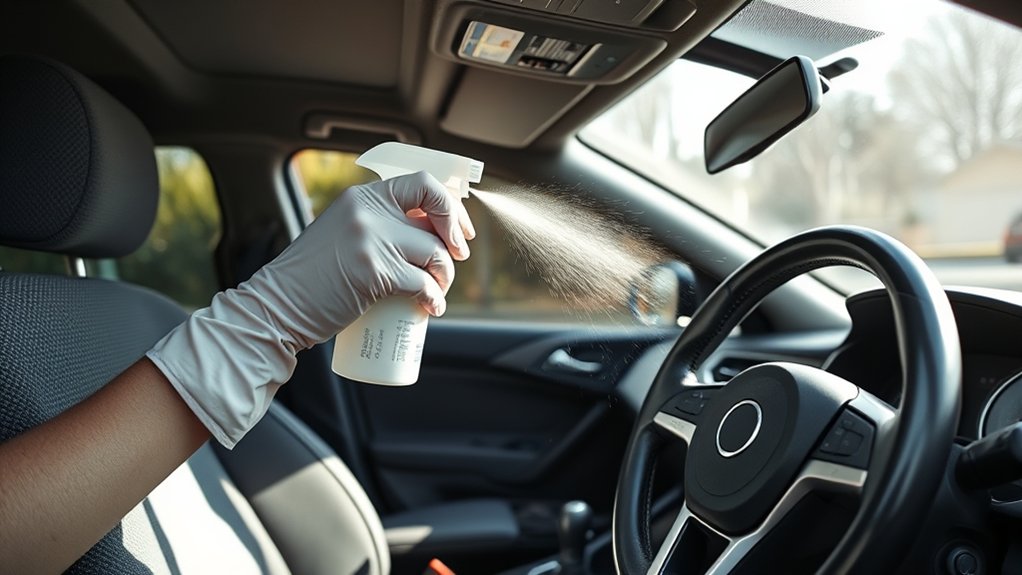
Using all-purpose cleaners safely on your car interior is important because these products contain chemicals that can damage surfaces or cause health issues if misused. If you don’t follow proper safety measures, you risk discoloring or ruining your upholstery, dashboard, or trim.
Many cleaners have strong chemicals that can irritate your skin, eyes, or respiratory system if inhaled or spilled. Overusing or applying cleaners too aggressively can lead to residue buildup, making surfaces sticky or attracting more dirt.
You also want to avoid mixing different cleaning products, which could produce harmful fumes. By handling all-purpose cleaners carefully, you protect both your vehicle’s interior and your health.
Proper use guarantees a cleaner, safer environment inside your car, extending its lifespan and keeping it looking its best.
How to Choose the Best All-Purpose Cleaner for Your Car Interior
When choosing an all-purpose cleaner for your car interior, it’s important to consider what materials it’s safe for. Using the wrong cleaner can cause damage, so check the labels carefully.
Look at the cleaning ingredients to make sure they’re effective but gentle. You want something that cleans well without harming your surfaces.
Also, pay attention to the smell and what residue is left behind. A pleasant scent and a streak-free finish make the cleaning process more enjoyable.
These factors will help you pick a cleaner that’s safe, effective, and pleasant to use in your car.
Consider Material Compatibility
Choosing the right all-purpose cleaner for your car interior depends heavily on the materials you’re cleaning. Different surfaces respond differently to cleaning agents, so it’s important to consider material compatibility.
For example, leather seats can be damaged by harsh chemicals, so it’s best to use a gentle cleaner made specifically for leather. Plastic and vinyl surfaces usually handle stronger cleaners but can discolor or crack if the product is too abrasive.
Fabric upholstery may need a different approach altogether. Avoid products that leave residue or cause staining. Always check the manufacturer’s recommendations or test a small, hidden area first.
Using incompatible cleaners can cause discoloration, deterioration, or permanent damage. Choosing a product suited for each material ensures a safe and effective cleaning process.
Check Cleaning Ingredients
To pick the best all-purpose cleaner for your car interior, carefully examine its cleaning ingredients. Look for formulas that are free from harsh chemicals like ammonia, bleach, or strong solvents, which can damage surfaces or cause fumes.
Instead, choose cleaners with gentle surfactants and natural extracts that effectively lift dirt without harming materials. Check for added ingredients like conditioners or protectants that help preserve your car’s surfaces.
Avoid cleaners with artificial fragrances or dyes, especially if you’re sensitive or have allergies. Reading the label allows you to understand what’s inside and verify the product is safe for your vehicle’s interior.
Assess Odor and Residue
Evaluating odor and residue is crucial because lingering smells or residue can make your car’s interior unpleasant and suggest incomplete cleaning. Before choosing an all-purpose cleaner, test for odors by smelling different areas after a quick wipe.
If odors persist, look for cleaners with odor-neutralizing properties. Residue left behind can attract dirt or cause stickiness, so check reviews or product labels for residue-free formulas.
Use a clean cloth to wipe a small section and observe if any streaks or sticky spots remain. If residue or odors are still noticeable, switch to a different cleaner or try diluting your current one.
Properly evaluating odor and residue guarantees you select a product that leaves your car smelling fresh and thoroughly clean.
Preparing Your Car Interior for Safe Cleaning
Before you start cleaning, it’s important to prepare your car interior to avoid damage and stay safe. First, clear out loose items like trash, mats, and personal belongings.
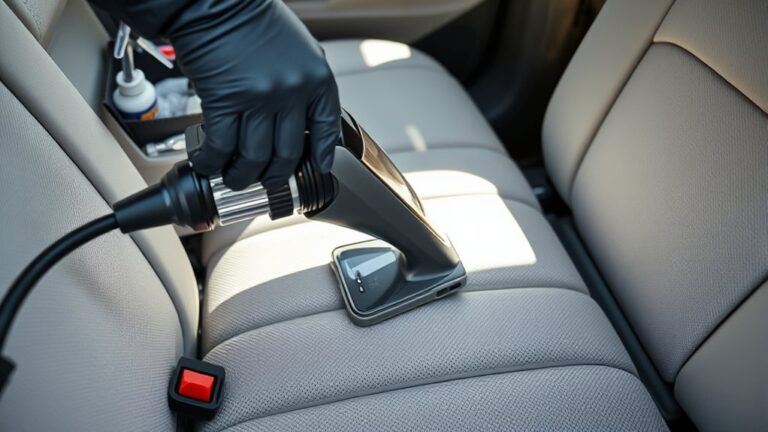
Next, vacuum seats, carpets, and tight spots to lift dirt and debris. Cover electronic parts like the dashboard and infotainment system with a microfiber cloth to protect them from moisture.
Finally, make sure the windows are rolled down for good ventilation. This prep makes it easier to access all surfaces and reduces the chance of spreading dirt or damaging sensitive areas.
How to Test the Cleaner on a Small Area First
After preparing your car interior, it’s smart to test the all-purpose cleaner on a small, hidden spot first. Choose an inconspicuous area like under a seat or inside a door panel to avoid any visible damage.
Dilute the cleaner as recommended and apply a small amount using a soft cloth or sponge. Let it sit for a few minutes, then gently wipe the area.
Check for any changes in color, texture, or material—look for discoloration, fading, or stiffness. If nothing seems off, you can go ahead and clean larger surfaces.
If you notice any issues, avoid using that cleaner on your car’s interior. Testing helps prevent damage to sensitive materials and ensures you pick the safest, most effective product for your vehicle.
How to Apply All-Purpose Cleaner Safely and Effectively
To apply all-purpose cleaner safely and effectively, start by making sure the area is free of loose dirt and debris. This helps prevent scratching surfaces and ensures a thorough clean.
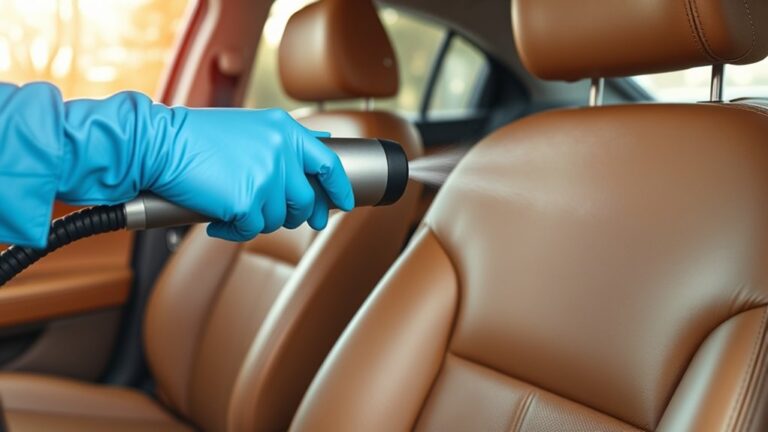
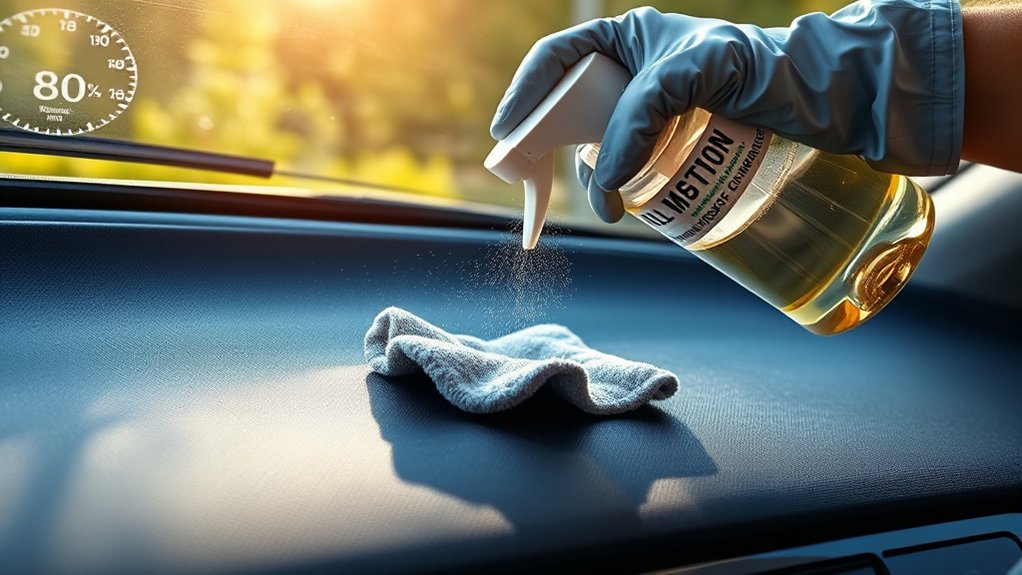
Next, spray the cleaner onto a microfiber cloth or sponge instead of directly on surfaces. This way, you can control how much you use and avoid over-saturating delicate spots.
Spray cleaner onto a cloth or sponge to control application and protect delicate surfaces.
Remember to test a small, hidden area first to check for any discoloration or damage. Use light, even strokes to spread the cleaner around.
Avoid saturating surfaces—use just enough to clean. Work in sections so the cleaner doesn’t dry before you wipe it away.
Tools and Materials You Need for Gentle Cleaning
To clean your car interior gently, you’ll need a few essential tools and materials. Soft cleaning cloths help prevent scratches, and mild cleaning solutions stop harsh chemical reactions.
Use gentle detailing tools to reach tight spots without damaging surfaces. Keeping everything soft and gentle is the key to a careful clean.
Soft Cleaning Cloths
Soft cleaning cloths are essential tools for gentle, effective car interior cleaning. They help remove dirt and grime without scratching surfaces or causing damage.
When choosing cloths, look for materials like microfiber or soft cotton, which are gentle yet effective. These cloths are reusable and washable, making them cost-effective.
Keep a few in your cleaning kit for different areas, such as dashboards, seats, and door panels. Using the right cloth guarantees thorough cleaning without leaving lint or streaks.
For the best results, use separate cloths for different surfaces to prevent cross-contamination. Always pick soft, non-abrasive cloths to protect your interior’s finish.
Proper cloths make cleaning safer and more efficient, giving your car a fresh, well-maintained look.
Mild Cleaning Solutions
After selecting the right soft cloths, gathering mild cleaning solutions ensures gentle yet effective interior care. Use diluted all-purpose cleaner or make a gentle mix with water and a small amount of mild dish soap.
Avoid harsh chemicals like bleach or ammonia, which can damage surfaces. You might also consider natural options like a vinegar-water solution, which cleans without stripping finishes.
Confirm your solutions aren’t too concentrated—test on a small, hidden area first. Keep the cleaning mixture in a spray bottle for easy application.
These mild solutions are perfect for removing dirt and grime gently, preventing scratches or discoloration. Having the right gentle cleaners ready means you can maintain your car’s interior without risking damage.
Gentle Detailing Tools
Gentle detailing tools are essential for caring for your car’s interior without causing damage. Using the right tools guarantees a thorough clean while protecting delicate surfaces. Invest in soft-bristled brushes to loosen dirt without scratching.
Microfiber cloths are perfect for wiping surfaces without leaving lint or streaks. A vacuum with gentle suction can remove debris from seats and carpets without damage. Moreover, foam applicators help evenly distribute cleaner without abrasive pressure.
- Soft-bristled brushes
- Microfiber cloths
- Gentle vacuum attachments
- Foam applicators
These tools work together to make your cleaning safe and effective, giving your interior a fresh look without risking scratches or wear. Using gentle tools is the key to maintaining your car’s interior for the long haul.
Cleaning Plastic, Vinyl, Leather, and Fabric Surfaces Safely
Cleaning plastic, vinyl, leather, and fabric surfaces in your car requires careful attention to avoid damage and ensure a thorough clean. Always start by vacuuming loose dirt and debris to prevent scratching.
Use a soft, microfiber cloth dampened with a mild all-purpose cleaner, testing it on a small area first. For plastics and vinyl, gently wipe surfaces to remove dirt and grime, avoiding excessive scrubbing.
Leather surfaces need a gentle touch; use a cleaner specifically formulated for leather and follow it with a conditioner. Fabric seats can be cleaned with a damp cloth or fabric-safe cleaner, just be careful not to oversaturate.
Always dry surfaces with a clean cloth afterward to prevent moisture buildup. Proper, gentle cleaning helps preserve your interior’s appearance and longevity.
Tips to Prevent Discoloration and Streaks During Cleaning
To prevent discoloration and streaks during cleaning, it’s important to use the right amount of cleaner and avoid spraying it directly onto surfaces. Instead, spray or apply the cleaner onto a microfiber cloth first, then gently wipe the area. This helps prevent excess product that can cause streaks or discoloration.
Apply cleaner to a microfiber cloth first to prevent streaks and discoloration during cleaning.
Work in small sections and dry each area immediately with a clean, dry cloth to avoid residue buildup. Using a soft microfiber cloth for even application makes a big difference.
Always test your cleaner on a small hidden area first to be sure it won’t cause any damage. Avoid cleaning in direct sunlight, which can cause streaks or quick drying that leaves spots.
Use light, circular motions for even coverage. Following these tips helps keep your car’s interior looking its best without risking discoloration or streaks.
How to Maintain Your Car Interior After Using All-Purpose Cleaner
After you’ve finished using all-purpose cleaner on your car’s interior, the key to keeping it looking fresh is regular upkeep. Vacuum seats and carpets often to remove dirt and debris that can dull surfaces.
Wipe down surfaces weekly with a clean microfiber cloth to prevent dust buildup. Use a gentle conditioner on leather or vinyl to keep them supple and prevent cracking.
Avoid harsh chemicals or abrasive tools that can damage your interior’s finish. Keep windows and mirrors clean with a streak-free cleaner to maintain brightness inside.
Make sure to clean spills or stains promptly to stop them from setting. By sticking to these habits, you’ll help preserve your car’s interior and keep it inviting over time.
Troubleshooting Common Problems When Cleaning Car Interiors
Even with regular maintenance, you might run into some common issues when cleaning your car’s interior. For example, you could see streaks on your windows, lingering odors, or uneven cleaning results. These problems can be frustrating, but they’re fixable.
To troubleshoot, try these tips:
Streaks on glass: Use a microfiber cloth and a dedicated glass cleaner, and avoid oversaturating the surface.
Persistent odors: Sprinkle baking soda on carpets and seats, then vacuum after a few hours.
Uneven cleaning: Test your cleaner on a small area first and make sure you’re not using too much product.
Residue buildup: Wipe surfaces with a damp cloth after cleaning to remove any leftover cleaner.
Addressing these issues quickly helps keep your interior fresh and spotless, making sure your cleaning efforts really pay off.
Final Tips for a Spotless, Well-Maintained Car Interior
To keep your car interior spotless, stick to a regular cleaning schedule so dirt doesn’t build up.
Always use the right products for each surface to avoid damage.
While cleaning, check for any signs of wear or damage.
Staying consistent and attentive will help your car stay fresh and well-maintained.
Regular Cleaning Schedule
Establishing a regular cleaning schedule is key to keeping your car interior spotless and well-maintained. Being consistent helps prevent dirt buildup and makes cleaning easier over time. Aim to clean your car at least once every two weeks, focusing on high-traffic areas like the dashboard, seats, and carpets.
Regular vacuuming removes loose debris and helps prevent stains from setting. Wiping down surfaces with an all-purpose cleaner keeps dust and grime at bay. Don’t forget to include these tasks in your schedule:
- Vacuuming floors and seats
- Wiping dashboard and door panels
- Cleaning windows and mirrors
- Spot cleaning spills promptly
Sticking to this routine will keep your car interior fresh, hygienic, and inviting. Plus, it saves you time and effort in the long run.
Use Appropriate Products
Choosing the right cleaning products makes a big difference in maintaining your car’s interior. Use all-purpose cleaners specifically formulated for automotive surfaces to avoid damage. Read labels carefully to verify the product is safe for your seats, dashboard, and trim.
Test new products on a small, hidden area first to check for any adverse reactions. Avoid harsh chemicals like bleach or abrasive cleaners that can strip or discolor surfaces.
For fabric seats, opt for fabric-safe cleaners, while leather seats need specialized leather cleaners and conditioners. Using appropriate products prevents damage and guarantees a thorough clean.
Always follow the manufacturer’s instructions for application and dilution to get the best results without harming your interior.
Inspect for Damage
Inspecting for damage is an important step before you start cleaning your car interior. Take a close look at all surfaces to spot any scratches, tears, or stains that might need special attention or repair.
Pay extra attention to delicate areas like leather seats and electronic displays. If you find any damage, address it first to avoid making it worse when cleaning.
Check for cracks, tears, or peeling on upholstery and trim. Look for stains or spots that need targeted treatment, and note any loose or damaged components.
Finally, make sure all electronic screens and controls are working properly. This way, you prevent causing new problems and keep everything in good shape.
Frequently Asked Questions
Can All-Purpose Cleaners Damage Specific Car Interior Materials?
Yes, all-purpose cleaners can damage certain car interior materials if not used properly. Some cleaners might discolor or degrade plastics, vinyl, or fabric surfaces.
Always check the label to see if the cleaner is compatible with your specific materials. It’s a good idea to test a small, hidden area first before applying it more broadly.
Avoid harsh chemicals or using too much product. Follow the manufacturer’s instructions carefully to prevent potential damage and keep your car’s interior looking its best.
How Often Should I Clean My Car Interior With All-Purpose Cleaner?
You should clean your car interior with all-purpose cleaner every 1 to 3 months, depending on how much you use your car and how dirty it gets. Regular cleaning helps keep surfaces looking fresh and stops grime from building up.
For areas like the dashboard and seats that get a lot of traffic, consider cleaning more often. Just keep an eye on how your materials react and avoid over-cleaning, which can damage delicate surfaces.
Adjust the cleaning frequency based on your car’s condition and your habits. This way, your car stays fresh without risking any damage from too much cleaning.
Are There Any Safety Precautions for Using All-Purpose Cleaner Around Children?
Yes, there are safety precautions to keep in mind when using all-purpose cleaner around children. You should always keep the cleaner out of their reach and ensure proper ventilation during and after cleaning.
Avoid direct contact with skin and eyes, and consider using child-safe products if possible. After cleaning, make sure all surfaces are thoroughly dried before children can access the area to reduce any risk of accidental ingestion or irritation.
What Should I Do if the Cleaner Causes a Discoloration?
If the cleaner causes discoloration, rinse the area immediately with clean water to dilute the chemical’s effect. Gently blot the spot with a soft cloth to lift any residue. Avoid scrubbing, as it can make things worse.
If the discoloration sticks around, you might try a color-restoring product. Or, it’s a good idea to ask a professional for advice. Always test any new cleaning method on a hidden spot first to avoid causing more damage.
Can All-Purpose Cleaner Be Used on Electronic Components Inside the Car?
Think of electronic components as delicate butterflies, easily disturbed by harsh elements.
You shouldn’t use all-purpose cleaner directly on them, as it can cause damage.
Instead, lightly dampen a microfiber cloth with a small amount of cleaner, then gently wipe the surfaces.
This careful approach helps clean without causing harm, protecting your car’s sensitive electronics while keeping them looking their best.
Conclusion
Imagine opening your car door after a thorough clean—fresh scents mingle with a spotless interior, like stepping into a new car. Choosing the right all-purpose cleaner is key.
Always test it first on a small, hidden area to make sure it won’t cause any damage or discoloration. When applying, use a soft cloth or sponge to avoid scratching surfaces.
Take your time wiping down dashboards, door panels, and other interior surfaces. With a little attention, your car’s interior stays vibrant and inviting, just like that first day you drove it off the lot.
By using an appropriate all-purpose cleaner carefully, you turn cleaning into a satisfying routine. A little effort now keeps your ride looking its best for miles to come.