7 Easy Steps to Clean Car Windows Without Glass Cleaner
Are you tired of streaky, cloudy car windows ruining your view? Many people struggle with keeping their windows crystal clear without resorting to harsh chemical cleaners. If you want an easy, budget-friendly way to shine your car windows, you’re not alone.
To clean your car windows without glass cleaner, start by gathering supplies like a microfiber cloth, spray bottle with water and vinegar, and a rinse bowl.
Remove loose dirt, then spray a vinegar-water solution to loosen grime. Wipe with a clean cloth in straight lines for a streak-free finish.
For stubborn spots, use rubbing alcohol or a baking soda paste.
Finally, buff and dry the windows for crystal clarity. Keep going to uncover more helpful tips!
Key Takeaways
- Use a vinegar-water spray to loosen dirt and grime before wiping.
- Wipe windows with a microfiber cloth in straight, even strokes for a streak-free finish.
- Rinse the cloth frequently in clean water to remove dirt and avoid smudges.
- Treat stubborn spots with rubbing alcohol or a baking soda paste for a thorough clean.
- Dry the windows promptly with a clean towel to prevent streaks and water spots.
Gather Supplies Needed for Natural Car Window Cleaning
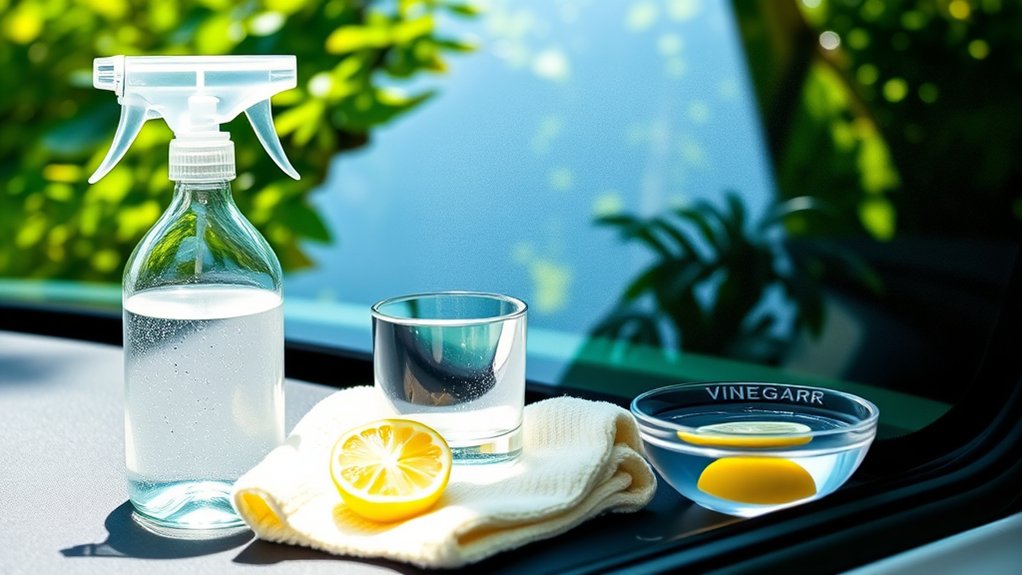
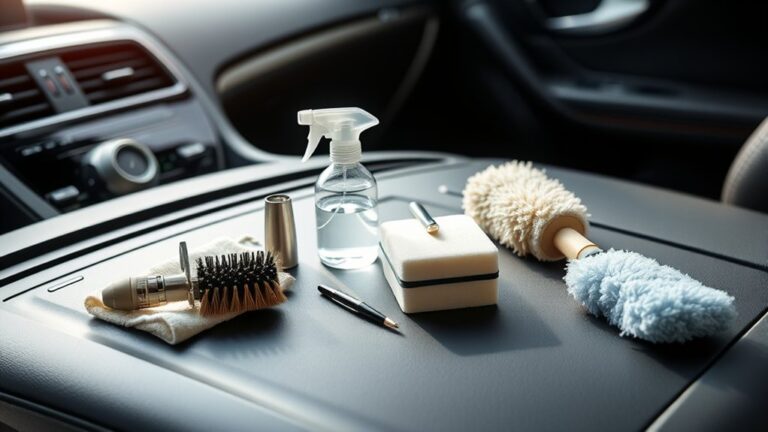
Before you start cleaning your car windows naturally, gather all the supplies you’ll need. First, grab a microfiber cloth or a soft cleaning rag—these are gentle and won’t scratch the glass.
Next, find a spray bottle and fill it with a homemade solution like equal parts water and white vinegar. Alternatively, you can add a few drops of dish soap to water.
You might also want a small bowl of clean water for rinsing your cloth. Optional but helpful are cotton swabs or an old toothbrush for tight spots and edges.
Keep a dry towel nearby to wipe away any excess moisture. Having everything ready makes the cleaning process smooth and helps you get streak-free, clear windows quickly.
Get Your Car Windows Ready for Cleaning
To make sure your cleaning process goes smoothly, start by removing any loose dirt, dust, or debris from the surface of your car windows. This helps prevent scratching and ensures a cleaner finish. Use a soft brush, microfiber cloth, or gentle brush to sweep away particles.
Next, check the windows for stubborn grime or bird droppings that might need pre-treatment. Park your car in a shaded area to avoid streaks caused by direct sunlight.
Check for stubborn grime or bird droppings and pre-treat, then park in shade to prevent streaks during cleaning.
Also, roll down the windows slightly to access the edges and corners more easily. Finally, gather your cleaning supplies nearby so you’re ready to start without interruptions.
Spray Vinegar Solution to Loosen Dirt
Mix equal parts vinegar and water to make your cleaning solution. Spray it generously on the dirty window surface, making sure to cover the entire area.
Let the solution sit for a few minutes before gently scrubbing away the dirt.
Prepare Vinegar Mixture
Start by preparing a simple vinegar solution to help loosen dirt and grime on your car windows. Mix equal parts white vinegar and water in a spray bottle.
This natural solution is effective at breaking down stubborn dirt without harsh chemicals. Shake the bottle gently to combine the ingredients thoroughly.
Before spraying, confirm your windows are cool and shaded to prevent streaks. Test the solution on a small area first to check for any adverse effects.
Keep the mixture handy for multiple cleaning sessions. Using this mixture regularly can make dirt removal easier and extend the life of your windows.
Apply and Let Sit
Spray the vinegar solution evenly across your car windows, focusing on areas with visible dirt or grime. Make sure to cover the entire glass so the solution can loosen stubborn dirt effectively.
Let the vinegar sit for about 5 to 10 minutes, giving it time to break down grease, mud, and other residues. During this period, don’t wipe or scrub—just let the solution work its magic.
This step is important because it softens the grime, making it easier to remove later. Be careful not to let the solution dry completely, especially in direct sunlight, or it might leave streaks.
Once the time is up, you’re ready to wipe away the loosened dirt with a clean cloth or sponge for a clear, spotless finish.
Wipe Your Windows for a Streak-Free Finish
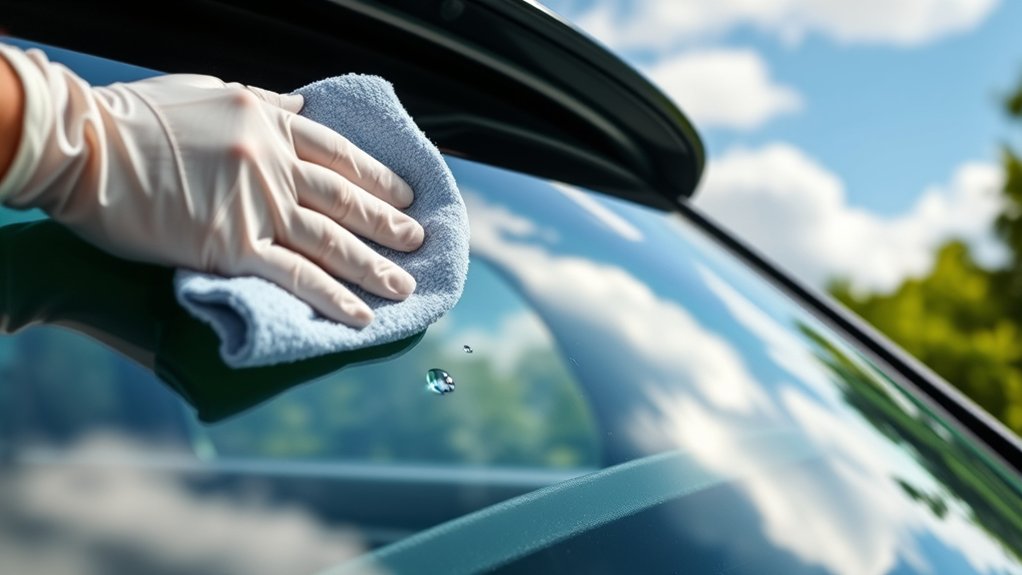
To achieve a streak-free finish, use a clean microfiber cloth to wipe your windows gently. Avoid doing this in direct sunlight, as it can cause streaks and uneven drying.
Apply gentle pressure to prevent smudges and guarantee a spotless shine.
Use Microfiber Cloths
Using microfiber cloths is essential for getting a streak-free finish on your car windows. They trap dirt and moisture effectively, preventing streaks and lint left by other materials.
When you wipe, use a clean, dry microfiber cloth to remove smudges and dust, ensuring your windows look spotless. For the best results, fold the cloth to expose a fresh surface with each pass.
Microfiber cloths are gentle on glass but tough on grime, making your cleaning more efficient. Avoid towels or paper towels, which can leave lint or scratch the glass.
Keep your microfiber cloths clean by washing them regularly to stay effective. Proper use of these cloths makes window cleaning quick and leaves your windows crystal clear.
Avoid Direct Sunlight
Avoiding direct sunlight while cleaning your car windows is really important because it stops the cleaning solution from drying too fast. When it dries quickly, it can leave streaks and spots behind.
Sunlight hitting the glass makes the cleaner evaporate faster, which makes it harder to wipe away evenly. So, it’s best to work in a shaded spot or during cooler times like early morning or late afternoon.
This way, the solution stays moist longer, giving you more control and making it easier to get a streak-free finish. Cooler temperatures also stop the glass from heating up, which helps prevent the cleaner from evaporating instantly.
Use Gentle Pressure
Gently applying pressure while wiping your windows helps prevent streaks and guarantees a smooth, even finish. Pressing too hard can leave smudges or damage the glass, so find a light, consistent touch.
Focus on using slow, deliberate motions to lift dirt and grime without pressing too firmly. This approach guarantees a streak-free look and keeps your windows clear.
To improve your technique, consider these tips:
- Use a clean, soft cloth or microfiber towel
- Wipe in straight, horizontal or vertical lines
- Avoid circular motions that can cause streaks
- Check your work from different angles for even cleaning
Use Rubbing Alcohol to Remove Residue and Smudges
Rubbing alcohol is great for removing stubborn residue and smudges on your car windows. Just dampen a clean microfiber cloth with a small amount of rubbing alcohol and gently wipe the affected areas.
The alcohol breaks down oils and grime, making it easier to remove stubborn smudges and sticky residues. Use light pressure to avoid damaging the glass or spreading dirt.
For the best results, work in small sections and follow up with a dry, clean cloth to buff the window and restore clarity. Rubbing alcohol evaporates quickly and leaves a streak-free, crystal-clear surface.
Use this method regularly to keep your windows spotless and free of stubborn marks without harsh chemicals.
Treat Hard Water Spots and Stains on Windows
Hard water spots and stains can be stubborn, but with the right approach, you can restore your windows’ clarity. To tackle these, start by mixing equal parts white vinegar and water in a spray bottle. Spray the solution generously on the affected areas and let it sit for a few minutes. The acidity helps break down mineral deposits.
Use a soft cloth or sponge to gently scrub the spots, then rinse with clean water. For persistent stains, apply a paste of baking soda and water, gently scrub, and rinse thoroughly. Repeat the process if needed.
Here are some tips to keep in mind: Use a microfiber cloth for gentle scrubbing. Avoid abrasive pads that can scratch glass. Dry windows promptly to prevent new spots. Regularly clean to prevent buildup.
Buff and Dry Your Car Windows for Crystal Clarity
After removing stubborn spots and stains, the next step is to buff and dry your windows to get a clear, streak-free shine. Use a clean microfiber cloth or a soft, lint-free towel.
Gently buff the glass in circular motions to remove any remaining residue and bring out the shine. Pay close attention to the edges and corners, where streaks often form.
Once the surface feels smooth and dry, flip the cloth to a clean side and wipe again for extra clarity. This not only improves how your windows look but also helps prevent water spots later.
Take your time and don’t rush. Proper buffing and drying will make your windows look crystal clear and professionally cleaned.
Frequently Asked Questions
Can Natural Cleaning Methods Damage Tinted Windows?
Natural cleaning methods generally won’t damage tinted windows if you use gentle ingredients like water and vinegar.
But be careful with harsh or abrasive substances, as they can cause the tint to peel or fade over time.
Avoid ammonia-based cleaners or anything with strong chemicals.
It’s a good idea to test a small, hidden area first, just to be safe.
Use a soft cloth to clean, and you’ll keep your tinted windows looking great while cleaning naturally.
How Often Should I Clean My Car Windows Naturally?
You should clean your car windows naturally every 2 to 4 weeks, depending on your driving environment.
Imagine your car as a clear window into your world—keeping it spotless guarantees you see everything clearly.
I once waited a month, and dirt blurred my view. Regular cleaning prevents grime buildup, preserves your tinted windows, and keeps your car looking fresh.
Consistency is key to maintaining spotless, streak-free windows.
Are There Eco-Friendly Alternatives to Vinegar for Cleaning?
Yes, there are eco-friendly alternatives to vinegar for cleaning your car windows. You can mix water with a few drops of mild dish soap or castile soap, which is biodegradable and gentle.
Another good option is lemon juice mixed with water. It works as a natural cleaner and leaves a fresh scent.
These alternatives are effective, non-toxic, and environmentally friendly, making your cleaning routine safer for the planet.
Will Rubbing Alcohol Harm Car Window Seals?
Rubbing alcohol can be a double-edged sword for your car’s seals. If used improperly, it might cause some damage.
Think of your seals as delicate skin; harsh chemicals like pure rubbing alcohol can dry them out or cause cracking over time. To protect them, dilute the alcohol with water and avoid prolonged contact.
When used carefully, it cleans effectively without harming your seals, keeping your windows clear and your car in top shape.
How Do I Prevent Streaks During Natural Cleaning?
To prevent streaks during natural cleaning, use a microfiber cloth for wiping because it absorbs dirt and moisture without leaving lint.
Always clean in circular motions instead of straight lines, and don’t press too hard.
Make sure your cleaning solution isn’t too wet, and dry the window afterward with a separate dry microfiber cloth.
This way, you’ll get a streak-free, clear finish on your car windows.
Conclusion
Now that you know these simple steps, you’re all set to achieve crystal-clear car windows naturally. Remember, “A stitch in time saves nine.” Taking a little effort now keeps your windows spotless and your view unobstructed.
Regular cleaning not only improves your car’s appearance but also keeps you safe on the road. So, grab your supplies and enjoy the satisfaction of a streak-free shine every time you roll down the windows.
With these easy tips for cleaning car windows without glass cleaner, you can maintain a clear view effortlessly. Keep your car looking great and your drive safer with just a bit of care.