Can You Put Window Cleaner in Your Car?
Many car owners struggle with keeping their windows crystal clear without streaks or residue. It’s frustrating when your view is compromised just because of the wrong cleaner. You’re not alone—finding the right product can be confusing, especially with so many options out there.
You shouldn’t put household window cleaner in your car because it can damage the tint, coatings, and glass. Household products often contain ammonia, vinegar, or fragrances that aren’t designed for automotive surfaces, risking streaks, residue, and long-term harm.
Instead, use a car-specific cleaner for safe, streak-free results.
If you want to learn how to protect your windows and avoid common mistakes, keep exploring to find the best tips for cleaning your car windows effectively.
Key Takeaways
- Household window cleaners can actually harm your car’s tinting, seals, and plastics. That’s why they’re not a good choice for cleaning your vehicle’s windows.
- Car-specific window cleaners are made to prevent streaks and help protect those surfaces. They’re formulated for automotive glass and materials.
- Using regular household cleaners can leave behind residues or streaks. This can make it harder to see clearly and could be dangerous while driving.
- Always opt for automotive glass cleaner and a soft microfiber cloth. These tools help you get a safe, streak-free clean.
- If you notice stubborn streaks or any damage, it’s best to get professional cleaning or restoration. That way, your windows stay clear and in good shape.
Can You Use Household Window Cleaner on Your Car Windows?
Many car owners wonder if they can just use household window cleaner on their vehicle’s windows. While it might seem easier, it’s not always the best choice.
Household cleaners often contain chemicals that can damage your car’s tinting or protective coatings. They might be too harsh or leave residues that cause streaks and reduce visibility.
Household cleaners can harm car tinting and leave streaks, reducing visibility and damaging coatings.
Some cleaners also include fragrances or ingredients that aren’t meant for automotive use. If you want clear, streak-free windows, it’s better to use a cleaner made specifically for cars.
Car-specific cleaners are designed to be gentle on automotive glass and coatings while still effectively removing dirt, grime, and fingerprints. Using the right product helps keep your windows clear and in good shape over time.
How Are Household and Car Window Cleaners Different?
Household and car window cleaners are made differently to work best on their specific surfaces and uses.
You need to consider surface compatibility and safety because some household products can damage car glass or leave streaks.
Knowing these differences helps you pick the right cleaner and avoid any problems.
Formulation Differences
While both household and car window cleaners are made to remove dirt and grime, their formulas are quite different to match specific needs. Household cleaners often contain ammonia or vinegar, which clean glass well but can leave streaks if not wiped properly.
They may also include fragrances and surfactants to tackle indoor dirt. Car window cleaners, on the other hand, are designed to prevent streaks and smudges caused by sunlight and outdoor exposure. They usually contain alcohol-based solvents like isopropanol that evaporate quickly and leave a streak-free finish.
These cleaners are built to handle tough outdoor conditions like dust, bugs, and road grime without damaging the glass or leaving residues. The main difference is that car cleaners focus on quick evaporation and streak prevention for automotive use.
Surface Compatibility
Surface Compatibility
Household and car window cleaners are formulated for different surfaces, which affects how they interact with glass and nearby materials. Household cleaners often have ingredients safe for various surfaces, like painted areas or plastics around windows.
They might include fragrances or detergents that could harm car finishes or plastics if used improperly. Car window cleaners are made specifically for automotive glass and plastics, so they clean well without streaks or residue.
These cleaners usually contain alcohol or fast-evaporating solvents that dry quickly and leave no streaks. Using household cleaners on your car’s glass can cause residue buildup or damage sensitive surfaces, so it’s best to pick a product made for automotive use.
Safety Considerations
Are household and car window cleaners safe to use interchangeably? Not necessarily. Household cleaners often contain ingredients that can damage your car’s interior or paint if spilled or sprayed improperly. They might also leave residues that impair visibility.
Car window cleaners are formulated specifically for automotive glass, with a balanced mix of ingredients that clean thoroughly without streaks or smudges. Using household cleaners in your vehicle can pose safety risks, especially if fumes are toxic or if the product isn’t designed for glass.
Always check labels and use products as intended. To keep yourself and your vehicle safe, stick to cleaners made for automotive use. This reduces the risk of damage and guarantees clear visibility while driving.
Are Household Window Cleaners Safe for Car Windows?
Many car owners wonder if household window cleaners are safe to use on their vehicle’s windows. The truth is, not all household products are designed for automotive surfaces. Using the wrong cleaner can cause damage or leave streaks. For example, some common household cleaners contain ammonia, which can harm tinting films and strip protective coatings.
Before using any cleaner, consider these points:
- Household cleaners may contain harsh chemicals not suitable for car windows.
- They can leave residues that attract dirt or cause streaks.
- Some products might damage window tint or coatings on your car.
Always check labels or opt for products specifically designed for automotive use to keep your windows clean without risking damage.
What Are the Risks of Using Household Window Cleaner on Your Car?
Using household window cleaner on your car can cause paint damage or discoloration if it drips or sprays onto your vehicle’s surface. It might also harm the glass or leave streaks that are hard to remove.
Plus, chemical incompatibility could lead to corrosion or other issues over time. It’s best to stick with products made specifically for cars to keep everything in good shape.
Paint Damage Potential
Household window cleaners often contain harsh chemicals like ammonia or vinegar, which can quickly damage your car’s paint if used improperly. These chemicals can strip away the clear coat, leading to dullness, discoloration, and even peeling over time.
When you spray window cleaner on your car, it might seem harmless, but repeated exposure can weaken the paint’s protective layer. Be aware that:
- Ammonia can break down the paint’s outer layer
- Vinegar’s acidity can cause discoloration
- Frequent use can lead to paint fading or peeling
Using household cleaners on your car’s exterior can cause irreversible harm. It’s best to stick with products specifically designed for automotive paint.
Glass Surface Risks
Applying household window cleaner to your car’s glass might seem like a quick fix, but it can actually be risky for your visibility and safety. Many household cleaners have chemicals that can leave streaks, foggy spots, or a residue film, making it harder to see while driving.
Over time, these chemicals can cause the glass to become cloudy or develop hazy patches, reducing clarity. Some cleaners contain ammonia or harsh ingredients that might weaken the glass’s surface or damage any protective coatings.
This can lead to increased glare from headlights or sunlight, which makes it even tougher to see clearly. In the end, using the wrong cleaner can compromise your safety, so it’s best to use products made specifically for automotive glass.
Chemical Compatibility Issues
Many common household window cleaners contain chemicals that aren’t compatible with automotive glass. Using them can cause damage or reduce how well your windshield works. Some chemicals might weaken the glass surface, leading to cracks or scratches over time.
Others can strip away the protective coatings on your windshield, making it more vulnerable to dirt, streaks, and deterioration. Plus, certain cleaners contain ammonia or alcohol, which can harm rubber seals and plastic parts around your windows.
Be aware of these risks:
- Chemical reactions that weaken glass or coatings
- Damage to rubber seals and plastic trim
- Reduced visibility due to streaks or clouding
To avoid these issues, stick to products designed specifically for automotive use.
How to Clean Your Car Windows Safely
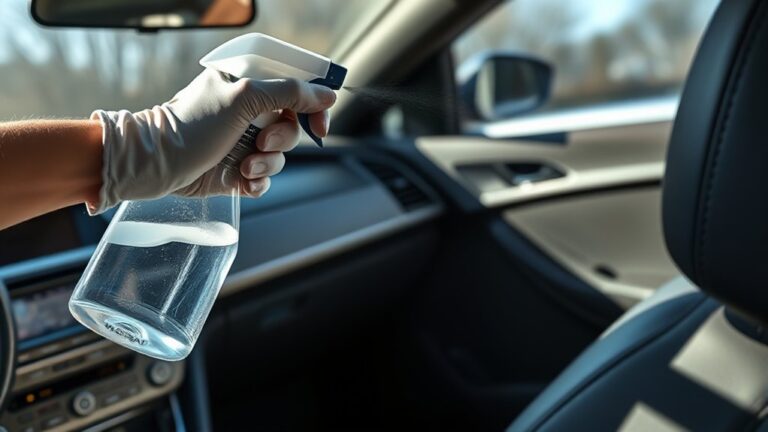
Cleaning your car windows safely means using the right products and techniques to avoid damage or streaks. Start by choosing a gentle, non-abrasive cleaner made specifically for automotive glass.
Use gentle, automotive-specific cleaners and proper techniques to safely clean your car windows without streaks or damage.
Avoid household cleaners with ammonia, as they can damage tinting or leave streaks. Use a soft microfiber cloth or a dedicated glass cleaning towel to wipe the windows.
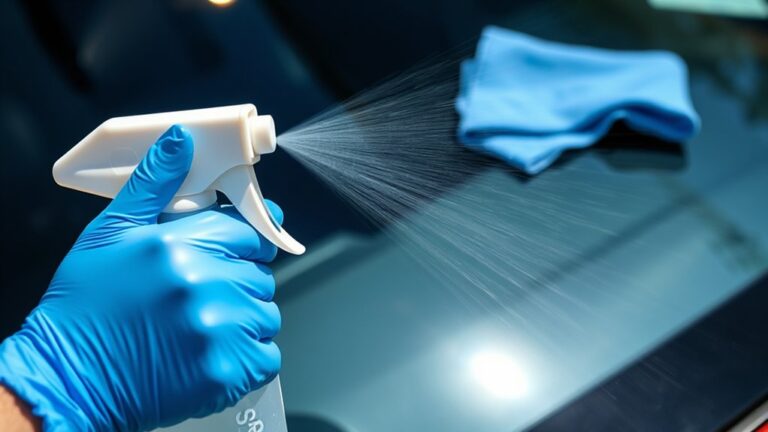
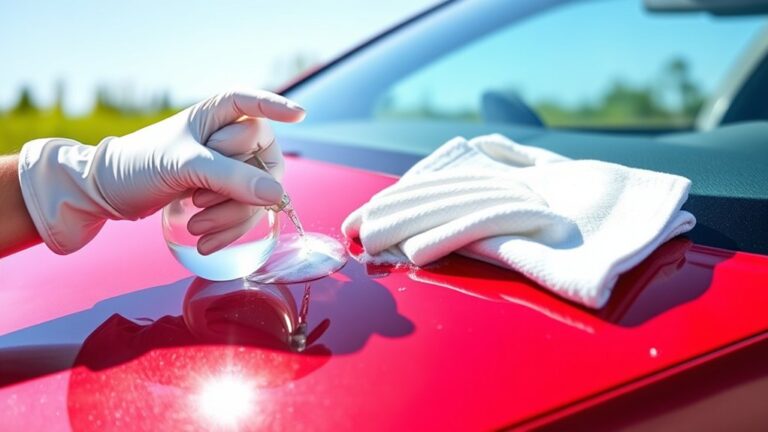
Spray the cleaner onto the cloth first, not directly onto the glass, to prevent excess liquid from seeping into seals. Wipe in a circular motion to lift dirt and grime, then switch to vertical or horizontal strokes to remove streaks.
For stubborn spots, apply a little more cleaner and gently scrub. Always dry the glass thoroughly to finish with a clear, streak-free shine.
What Are Better Alternatives to Household Window Cleaners?
While household window cleaners may seem convenient, they often contain harsh chemicals that can damage your car’s tint or leave streaks. Instead, try safer alternatives that work well and are gentle on your vehicle.
A simple solution is water mixed with white vinegar, which easily cuts through grime without harming surfaces. You can also opt for a dedicated automotive glass cleaner made specifically for cars, ensuring it won’t cause any damage and leaves a streak-free finish.
Don’t forget about microfiber cloths—they’re essential because they won’t scratch your glass and help lift away dirt effectively.
These options are safer for your car’s finish and help you achieve a clearer, streak-free view without risking any damage.
Tips for Long-Term Maintenance of Clear Car Windows
Maintaining clear car windows over the long term requires consistent care and attention. Regularly wash your windows with a gentle, streak-free cleaner to prevent buildup of dirt, grime, and streaks. Use a microfiber cloth to wipe them down, avoiding abrasive materials that can scratch the glass.
Park in shaded areas whenever possible to reduce sun damage and prevent the glass from drying out unevenly. Applying a water-repellent treatment like a hydrophobic coating can help water bead off and maintain visibility during rain.
Keep your windshield wipers in top condition—replace them if they leave streaks or chatter. Finally, avoid using household cleaners not designed for automotive glass, as they can leave residues that attract dirt. Long-term maintenance is key to keeping your windows clear and streak-free.
Common Mistakes to Avoid When Cleaning Car Windows
One common mistake to avoid is using harsh or abrasive cleaners that can scratch or damage your car windows. They might seem effective, but they often cause more harm than good, leading to streaks or permanent scratches.
Instead, opt for gentle, glass-specific products. Also, avoid cleaning windows in direct sunlight, as the cleaner can dry too quickly and leave streaks.
Finally, don’t use dirty or rough cloths, which can smudge or scratch the glass. Instead, use a clean microfiber cloth for a streak-free finish.
When Should You Seek Professional Help for Car Window Cleaning?
If you notice persistent streaks or smudges after cleaning, it’s time to get professional help. Excessive dirt buildup or stubborn stains that won’t budge also mean you should seek expert cleaning.
Don’t hesitate to call in the pros when your efforts fall short or the damage seems beyond simple maintenance. Sometimes, it’s better to let the professionals handle it for a spotless finish.
Persistent Streaks or Smudges
Have stubborn streaks or smudges on your car windows that just won’t go away? If cleaning with your usual products doesn’t work, it’s time to consider professional help.
Persistent marks can be caused by tough residues or improper cleaning techniques, which DIY methods might not fix. You should seek professional help if:
- The streaks stay after multiple cleanings
- Smudges appear even when using quality window cleaner
- You notice haziness or film that won’t come off
Professionals have specialized tools and solutions to tackle difficult grime, making sure your windows are crystal clear. Ignoring stubborn streaks can affect visibility and safety. When DIY efforts fail, it’s best to trust experts to restore your windows’ clarity quickly and safely.
Excessive Dirt Build-Up
When your car windows are covered with thick dirt and grime, DIY cleaning methods often don’t do the trick. If scrubbing with household products or basic cleaners doesn’t bring back clarity, it’s time to consider professional help.
Excessive dirt buildup can block your view, especially during rain or at night, making driving unsafe. Over time, dirt can get embedded into window edges and seals, which can cause damage if not addressed properly.
Professionals have specialized tools and cleaning solutions that can reach stubborn dirt and ensure a thorough clean. If your attempts leave streaks or dirt stays despite multiple washes, don’t hesitate to get expert help.
Regular professional cleaning can prevent dirt from building up further, keeping your windows clear and extending their lifespan.
Difficult Stubborn Stains
Even after thorough cleaning, some stains stubbornly resist removal, lingering on your car windows and affecting visibility. These tough spots may be caused by tree sap, bird droppings, or mineral deposits that regular cleaning can’t eliminate.
If you find yourself scrubbing endlessly without success, it’s time to consider professional help. Experts use specialized tools and solutions to tackle difficult stains effectively.
You should seek professional assistance if:
- Stains persist despite multiple cleaning attempts
- You notice cloudiness or a hazy film on the glass
- Visibility is compromised, especially during bad weather
Professional cleaners can restore clarity and guarantee your windows are spotless, improving safety and appearance. Don’t risk damaging your glass with harsh scrubbing—know when to call in the pros.
Final Tips for Safe and Effective Car Window Cleaning
To guarantee your car windows stay crystal clear and safe to drive, it’s important to follow some final tips for safe and effective cleaning. Always use a gentle, automotive-specific cleaner to prevent damage to your tinted windows or surfaces.
Spray the cleaner onto a microfiber cloth rather than directly on the glass to avoid overspray and streaks. Use a clean, dry cloth to wipe in circular motions, making sure you remove dirt and grime thoroughly.
Avoid harsh scrubbing, which can scratch the glass. For stubborn spots, let the cleaner sit for a few seconds before wiping. Finally, dry the windows completely to prevent streaks and water spots.
Regular cleaning with these tips will keep your windows clear and your visibility ideal.
Frequently Asked Questions
Can Using Household Cleaner Damage Your Car’s Paint or Interior?
Yes, using household cleaner can damage your car’s paint or interior. Many household cleaners contain harsh chemicals that might strip away the paint’s protective layer or stain your upholstery.
You should avoid using them on your car. Instead, choose products specifically designed for automotive use. These are made to clean effectively without harming your vehicle’s paint or interior surfaces.
Using the right products will help you keep your car looking its best.
How Often Should I Clean My Car Windows for Optimal Clarity?
You should clean your car windows every two to four weeks for ideal clarity. Regular cleaning keeps grime and streaks at bay, making sure your visibility stays clear and your drive stays safe.
If you notice dirt or smudges more often, don’t hesitate to give your windows a gentle wipe. Using a good quality glass cleaner and a soft cloth makes the process quick and easy.
Consistent care helps preserve your view and makes your driving experience better overall.
Are There Specific Brands of Household Cleaners Safe for Cars?
Yes, there are specific brands of household cleaners that are safe for cars. Look for window cleaners labeled as safe for automotive use or those free of ammonia and harsh chemicals.
Brands like Meguiar’s, Chemical Guys, and Griot’s Garage offer products designed for car surfaces, so they won’t damage your windows or interior.
Always check the label and test a small area first to avoid streaks or damage.
What Are Signs That My Car Windows Need Professional Cleaning?
If your car windows look hazy or streaked after cleaning, it’s a sign they need professional attention. Imagine driving on a foggy day, but the haze isn’t fog—it’s grime buildup.
You might also notice persistent smudges or difficulty seeing clearly through the glass. These issues suggest that dirt, grease, or mineral deposits have built up beyond surface cleaning.
A professional detail can restore clarity and ensure safe driving.
Can Window Cleaner Damage Tinted or Coated Car Windows?
Yes, window cleaner can damage tinted or coated car windows if it has harsh chemicals like ammonia or alcohol. These ingredients can cause the tint to peel, crack, or fade over time.
To keep your windows safe, use a cleaner made specifically for tinted glass or choose a mild, ammonia-free option. Always check the instructions on the product and test it on a small area first.
Conclusion
Just like a lighthouse guides ships safely through treacherous waters, using the right cleaner keeps your car’s windows crystal clear and risk-free.
Remember, shortcuts with household cleaners can turn your vehicle into a foggy mirror.
Stick to proper techniques and trusted products, and you’ll navigate the road ahead with clarity and confidence.
Your car’s windows deserve the same care as a sailor’s compass—precise and dependable.
Safe cleaning keeps your view bright and your journey smooth.
And yes, you can put window cleaner in your car—just make sure it’s a product designed for automotive use to get the best results.