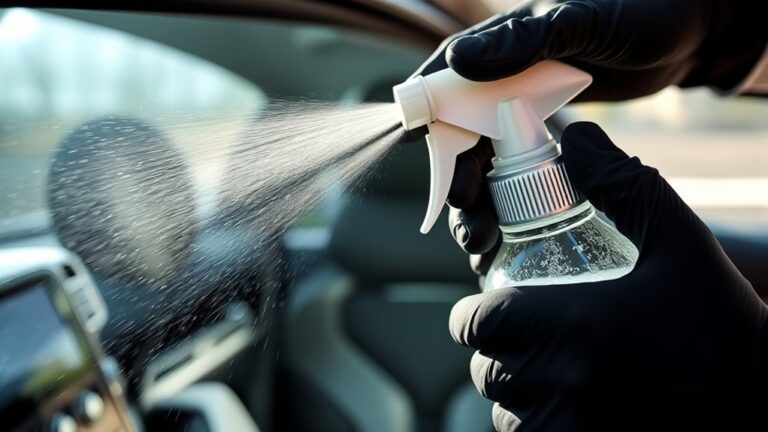
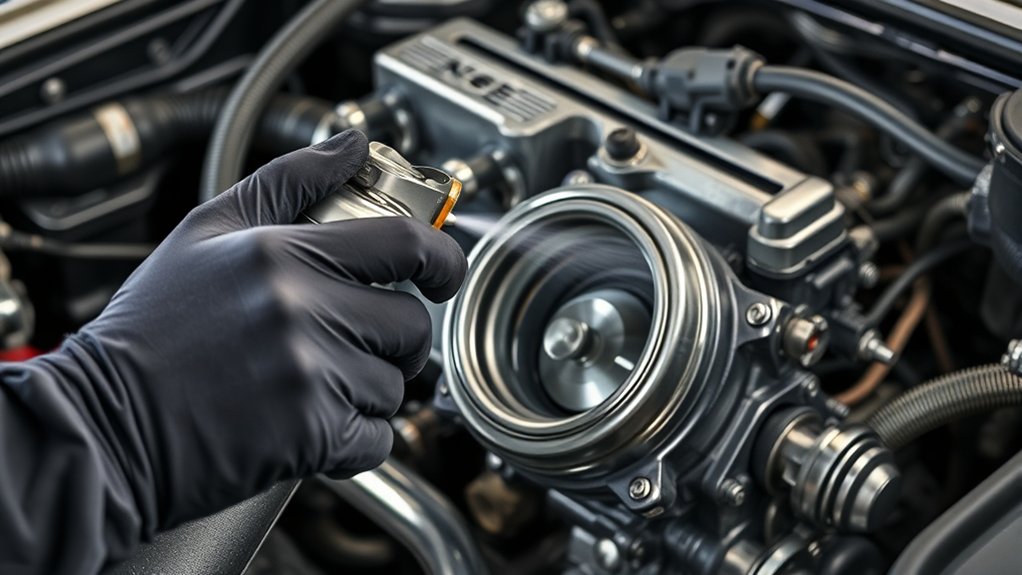
How to Safely Spray Throttle Body Cleaner While Your Car Is Running
If you’ve ever tried cleaning your throttle body, you know it can be a bit intimidating. Many people struggle with how to do it safely while the engine is running, worried about damaging sensitive parts or not doing it right. You’re not alone—getting this right is important for your engine’s health and performance.
To safely spray throttle body cleaner while your engine runs, start by preparing a well-ventilated area and wearing safety gear.
With the engine idling, aim the cleaner at the throttle plate, using short bursts to avoid flooding the intake. Keep the nozzle away from sensors and electrical components.
Move carefully and monitor the engine’s response. If you follow these tips, you’ll improve your cleaning process and avoid common mistakes—more essential steps await you below.
Key Takeaways
- Ensure the engine is cool and work in a well-ventilated area before starting.
- Wear safety glasses and gloves to protect against fumes and splashes.
- Start the engine and keep it idling so the cleaner can reach all surfaces.
- Aim the spray at the throttle plate or bore without touching sensors, using short bursts.
- Keep an eye on the engine’s behavior and avoid over-spraying.
- This helps prevent flooding or any potential damage to engine components.
Why Safe Throttle Body Cleaning While the Engine Runs Matters
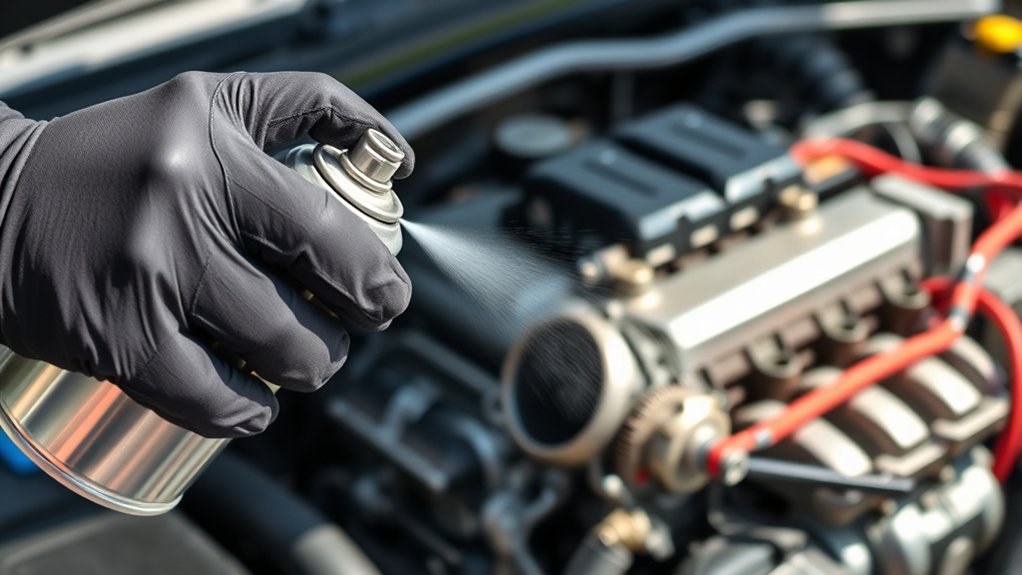
Cleaning your throttle body while the engine runs is important because it helps the cleaner reach and dissolve built-up grime more effectively. When the engine is on, the throttle body is actively controlling airflow, so cleaning it during operation ensures the cleaner contacts all surfaces where deposits form.
This prevents the buildup from hardening and becoming harder to remove later. Plus, the airflow helps distribute the cleaner evenly, which improves overall efficiency. Doing this while the engine runs also saves time by avoiding the need to shut down and restart your vehicle repeatedly.
However, it’s essential to do this carefully and follow safety procedures to prevent accidents or damage. Proper technique guarantees thorough cleaning while keeping you safe during the process.
Preparing Your Vehicle and Workspace for Safe Throttle Body Cleaning
Before you begin, make sure your vehicle is parked on a flat, well-ventilated surface and that the engine is cool. This helps prevent burns or accidents during the cleaning process. Proper preparation ensures safety and efficiency.
Here are three key steps to get ready:
- Clear your workspace of any clutter or flammable materials to avoid fire hazards.
- Gather all safety gear like gloves and safety glasses to protect yourself.
- Turn off the engine, remove the keys, and disconnect the negative battery terminal to prevent electrical issues.
Taking these precautions creates a safe environment for cleaning the throttle body. When your workspace is organized and safe, it minimizes risks and makes the process smoother and more effective.
Tools and Safety Tips Before You Start Cleaning
Having the right tools and safety precautions in place is essential to ensure a smooth and safe throttle body cleaning process. You’ll need a clean cloth, a screwdriver or socket set to remove any covers, and a spray throttle body cleaner.
Wear protective gloves and safety goggles to prevent chemical contact with your skin and eyes. Make sure your workspace has good ventilation to avoid inhaling fumes.
Keep a fire extinguisher nearby in case of accidental sparks or ignition. Always turn off your engine before starting and never lean directly over the engine bay.
Having these safety measures and tools ready helps you work efficiently and minimizes risks, making the cleaning process safer and more effective.
Step-by-Step: How to Spray Throttle Body Cleaner While Your Car Is Running
Start your cleaning process by turning on your engine and letting it idle. Once warmed up, follow these steps to spray the throttle body cleaner safely:
Begin with the engine idling, then follow safe spraying steps to clean the throttle body effectively.
- Position your spray: Hold the can upright, aiming the nozzle at the throttle plate or bore. Be careful to avoid direct contact with sensors.
- Spray in short bursts: Press the nozzle in quick, controlled bursts. This helps loosen grime without flooding the intake.
- Keep the engine running: Continue spraying while the engine runs. The cleaner will break down deposits as the throttle moves. Be sure not to spray too much at once and watch for any unusual behavior. This method ensures a thorough clean without turning off the engine.
Common Mistakes to Avoid During Throttle Body Cleaning
Avoid overusing throttle body cleaner, as too much can cause damage or leave residue.
Always warm up your engine before cleaning to help loosen grime and prevent issues.
Make sure you reassemble everything properly afterward to avoid leaks or loose parts.
Overusing Throttle Body Cleaner
Using too much throttle body cleaner can do more harm than good, so it’s important to use it sparingly. Overapplication can cause excess solvent to seep into areas where it shouldn’t, leading to damage or buildup issues.
To avoid this, keep these points in mind:
- Don’t spray continuously; use short bursts to target specific areas.
- Avoid flooding the throttle body with too much spray, which can wash away vital lubricants.
- Limit how much you apply to prevent oversaturation and potential damage.
Ignoring Engine Warm-Up
Skipping the engine warm-up before cleaning the throttle body can lead to uneven solvent distribution and potential damage. When your engine is cold, the fuel and air mixture is dense, making it harder for the cleaner to reach all areas effectively.
Cold components can also cause the cleaner to evaporate quickly, reducing its effectiveness. Warming up the engine for a few minutes ensures the parts are at the right temperature, allowing the cleaner to spread evenly and loosen carbon buildup properly.
Plus, a warm engine helps prevent sudden temperature shocks that could crack or warp delicate components. Always start your engine and let it idle for a few minutes before applying throttle body cleaner for the safest, most effective cleaning process.
Forgetting to Reassemble Properly
When you finish cleaning the throttle body, it’s easy to forget how important proper reassembly is. Skipping or rushing this step can lead to poor engine performance or even damage.
To avoid mistakes, double-check that all screws and clips are securely fastened before starting the engine. Make sure the throttle plate moves freely and returns smoothly to the closed position.
Reconnect all electrical connectors and hoses, and confirm they’re properly seated. Failing to reassemble correctly might cause air leaks, rough idling, or engine stalling.
Take your time to verify each component is installed correctly. Proper reassembly ensures your cleaning pays off and keeps your engine running smoothly.
Always follow the manufacturer’s torque specs and inspection steps to avoid issues.
How to Check If Your Throttle Body Is Clean and Working Properly
Wondering if your throttle body is clean and functioning properly? Start by inspecting the throttle plate and bore for dirt, carbon buildup, or sticky residue. With the engine off, gently open the throttle and look inside. If it appears dirty or clogged, cleaning is needed.
Next, start your car and observe the idle. A smooth, steady idle usually indicates a healthy throttle body. If the engine idles rough, stalls, or revs unexpectedly, there may be issues.
You can also test responsiveness by lightly pressing the accelerator. If the throttle responds quickly and smoothly, it’s likely in good shape. Regularly cleaning and checking your throttle body keeps your engine running efficiently and helps prevent future problems.
Troubleshooting and When to Call a Professional
If you notice rough idling, poor acceleration, or unusual engine noises, it might be time to seek help.
Ignoring warning signs can lead to further damage or safety risks.
Know when to call a professional to prevent potential dangers and keep your vehicle in good shape.
Recognizing Warning Signs
Recognizing warning signs of throttle body issues can save you time and prevent further damage. If you notice any of these signs, it’s a clear indicator something’s wrong:
- Rough Idle or Stalling: Your engine stalls or idles unevenly when stopped or in gear.
- Poor Acceleration: You press the gas pedal, but the car responds sluggishly or hesitates.
- Check Engine Light: The warning light appears on your dashboard, signaling a potential problem.
Don’t ignore these signs, as they often point to throttle body trouble. Addressing them early can save you from costly repairs. If these symptoms persist despite cleaning, it’s best to consult a professional for a thorough diagnosis.
When to Seek Help
While cleaning your throttle body can often fix minor issues, it’s important to know when to get professional help. If your engine is still rough idling, losing power, or won’t start even after cleaning, it’s time to call a mechanic.
Also, if you hear unusual noises, see warning lights, or if cleaning doesn’t improve your vehicle’s performance, don’t try to troubleshoot further on your own. Fixing complex problems like faulty sensors, wiring issues, or internal engine damage needs special tools and expertise.
Trying to handle these problems without the right knowledge can do more harm than good. When you’re unsure, it’s best to consult a professional so your vehicle gets the right diagnosis and repair. This way, it runs safely and efficiently.
Potential Risks and Dangers
Attempting to troubleshoot throttle body issues without proper knowledge can lead to more damage or safety hazards. Mistakes during cleaning or adjustment can cause engine problems or even fires. Be aware of these risks:
- Electrical Damage: Spraying near sensors or wiring might short-circuit components, which can lead to costly repairs.
- Fire Hazard: Using flammable cleaners the wrong way can cause fires, especially if the engine is hot or smoking.
- Personal Injury: Slipping with chemicals or inhaling fumes can harm your skin, eyes, or lungs.
If you’re unsure about the procedures or if issues keep happening, it’s safest to call a professional. They have the experience and tools to diagnose and fix throttle body problems without risking damage or injury. Always prioritize safety over shortcuts.
Frequently Asked Questions
Can I Use Any Brand of Throttle Body Cleaner Safely?
You should use a reputable, specifically formulated throttle body cleaner, rather than any brand. Not all cleaners are safe or effective for your vehicle’s parts.
Check the label for compatibility with your car’s make and model, and avoid products with harsh chemicals that could damage components.
Following manufacturer guidelines guarantees safety and ideal results. When in doubt, consult your vehicle’s manual or a professional mechanic before choosing a cleaner.
How Often Should I Perform This Cleaning Process?
Did you know that cleaning your throttle body every 30,000 miles can improve engine performance? You should perform this cleaning process every 30,000 miles or as needed if you notice rough idling, poor acceleration, or decreased fuel efficiency.
Regular maintenance helps prevent buildup that could cause issues down the line. Always follow your vehicle’s manufacturer recommendations, and consider inspecting more often if you drive in dusty or polluted environments for the best engine health.
Is It Safe to Spray Cleaner Near Other Engine Components?
It’s generally safe to spray cleaner near other engine components if you take proper precautions. Keep the spray aimed only at the throttle body and avoid contact with sensitive parts like sensors, wiring, or plastic components.
Use a controlled, light spray and keep the engine running to prevent overspray from settling elsewhere. Always follow the cleaner’s instructions and work carefully to avoid damaging any engine parts.
What Signs Indicate My Throttle Body Needs Cleaning?
Did you know that dirty throttle bodies can cause up to 30% lower fuel efficiency? If your engine stalls, idles roughly, or your acceleration feels sluggish, your throttle body might need cleaning.
You may also notice uneven engine responses or a check engine light. These signs suggest buildup that hinders airflow.
Regular maintenance can restore smooth performance, saving you fuel and preventing more costly repairs down the line.
Can I Perform This Task Without Disconnecting the Battery?
Yes, you can clean your throttle body without disconnecting the battery. Just make sure the engine is running and the car is in park or neutral with the parking brake engaged.
Turn on the engine, spray the cleaner into the throttle body carefully, and avoid any electrical components. Keep the engine running during the process, and only turn it off after you’re done so the cleaner can work effectively.
Conclusion
Cleaning your throttle body while the engine runs is like giving your car a refreshing breeze—invigorating and essential for smooth performance. Just make sure to follow safety tips and take your time.
Stick to each step carefully and avoid rushing. When done right, you’ll notice better acceleration and fuel efficiency, making your car run more smoothly.
Think of it as tuning a fine instrument—you want everything to work in harmony. Keep safety front and center, and your car will thank you with reliable, smooth operation. Using throttle body cleaner safely while your engine runs is key to keeping everything in perfect balance.