Is Glass Cleaner Bad for Car Paint and How to Use It Safely
If you’re tired of streaks and spots ruining your car’s shine, you’re not alone. Many car owners struggle with finding safe ways to keep their vehicle spotless without damaging the paint.
It can be tricky to know what products are safe to use, especially when it comes to glass cleaners.
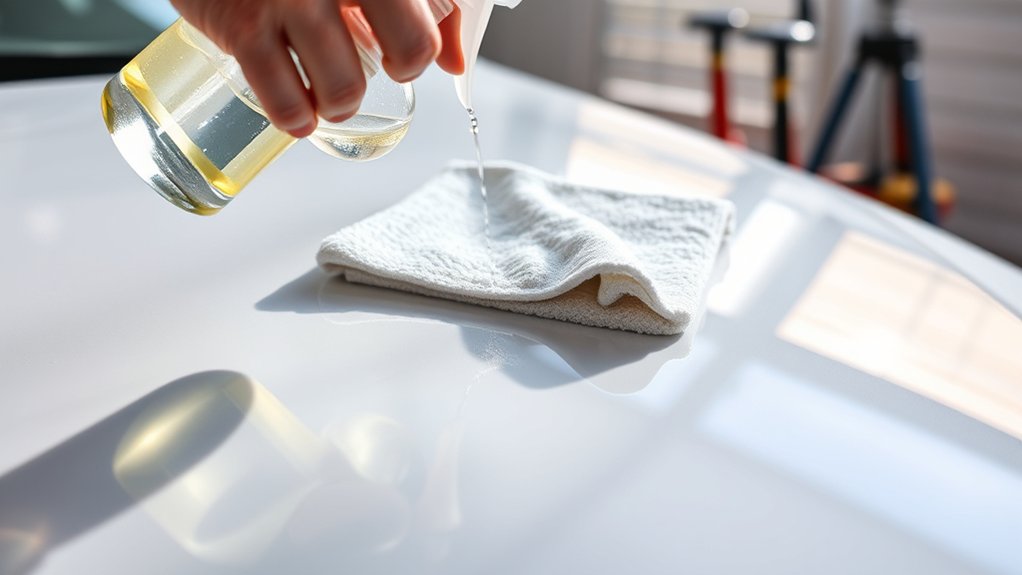
Using glass cleaner on your car isn’t usually harmful if you’re careful. Most cleaners don’t damage paint when applied correctly, like spraying onto a cloth instead of directly on the surface.
Be cautious of harmful ingredients like ammonia and alcohol, which can dull or dry out your paint over time.
To keep your car safe, test a small area first and follow proper techniques.
Keep going, and you’ll uncover more helpful tips to protect your vehicle’s finish.
Key Takeaways
Most glass cleaners are safe as long as you spray them onto a cloth rather than directly onto the car surface.
Try to avoid cleaners with ammonia or harsh chemicals because they can dull or damage the paint’s clear coat.
Before applying it all over, test a small, hidden area first. This helps you check for any adverse effects.
When cleaning, use gentle, circular motions. It’s best to work in shaded areas to prevent streaks and surface damage.
If you’re dealing with extensive or delicate surfaces, professional detailing can be a safer, more effective option.
Will Glass Cleaner Damage My Car’s Paint?
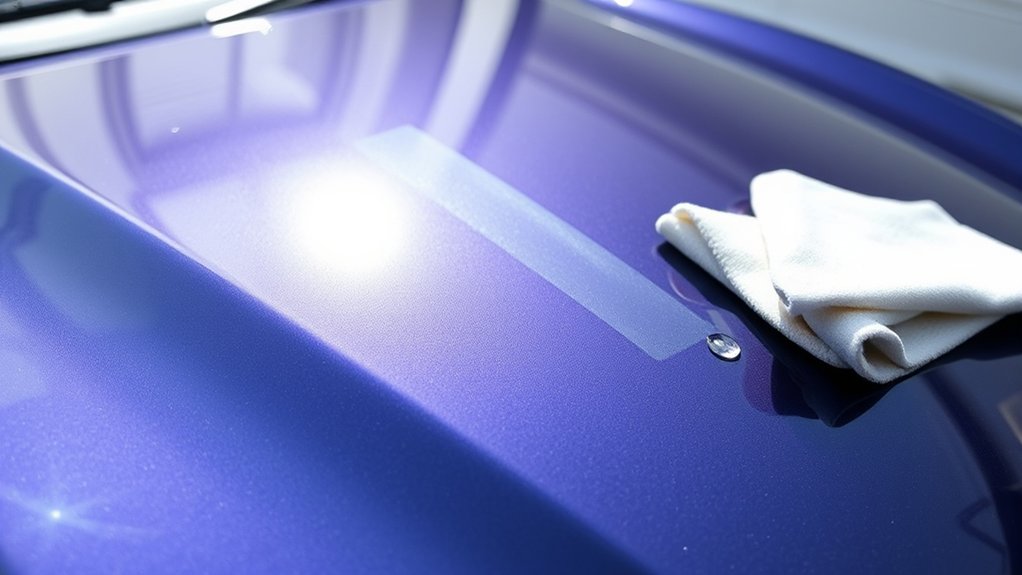
Many car owners wonder whether using glass cleaner on their vehicle’s exterior could cause damage. The good news is that most glass cleaners, when used properly, won’t harm your car’s paint. These products are designed specifically for glass and typically contain gentle cleaning agents.
However, if you spray directly onto painted surfaces or wipe aggressively, you might risk removing or dulling the paint’s finish over time. Some cleaners also contain harsh chemicals that could affect the clear coat if used excessively or left on too long.
To protect your paint, always spray glass cleaner onto a soft cloth rather than directly onto the car. Avoid prolonged contact to keep your paint looking its best. Using the right technique helps ensure your car stays shiny without any risk of damage.
What Ingredients in Glass Cleaners Could Harm Your Car?
Certain ingredients in glass cleaners can damage your car’s paint if you’re not careful. Ammonia, for example, is highly corrosive and can break down the clear coat.
Alcohol can dry out and crack the paint over time. Harsh chemical additives might also weaken the surface or leave unwanted residues.
Ammonia’s Corrosive Effects
Ammonia is a common ingredient in many glass cleaners because it effectively cuts through grime and streaks. However, its corrosive nature can harm your car’s paint if used improperly. Ammonia can break down the clear coat layer, leading to dullness and potential damage over time.
It’s especially risky if the cleaner is left on the surface for too long or used frequently. Be aware that ammonia’s effects can include eroding the protective clear coat, stripping away wax or sealant layers, and causing paint discoloration or fading.
To keep your car safe, avoid using ammonia-based cleaners on painted surfaces. Instead, opt for products specifically designed for automotive use.
Alcohol’s Drying Properties
While alcohol-based ingredients in glass cleaners can effectively remove streaks, they also have drying properties that can harm your car’s paint. Alcohol evaporates quickly, stripping away the natural oils and moisture from your car’s surface.
This rapid evaporation can lead to paint becoming dull and brittle over time. If you frequently use glass cleaner containing alcohol, you might notice increased paint fading or cracking.
The dryness caused by alcohol also weakens the protective layer on your car, making it more vulnerable to environmental damage. To keep your paint safe, avoid products with high alcohol content or use them sparingly.
Instead, opt for gentle, car-safe cleaning solutions that preserve your paint’s integrity and keep it looking shiny and well-maintained.
Harsh Chemical Additives
Many glass cleaners contain harsh chemical additives that can damage your car’s paint if used regularly. These ingredients can erode the clear coat and dull your car’s finish over time.
Some common harmful chemicals include ammonia, solvents, and certain fragrances. Ammonia, in particular, can strip away protective layers, making your paint more vulnerable.
Solvents like methanol can cause paint discoloration and deterioration. Fragrances and dyes may seem harmless but can leave residues that harm your car’s surface.
To protect your paint, always check labels and opt for cleaner formulas specifically designed for automotive use. Avoid products with these harsh additives, and consider using gentle, car-safe cleaners instead.
This way, you keep your car clean without risking damage.
How to Use Glass Cleaner Safely on Your Car Windows and Exterior
To use glass cleaner safely, start by choosing products labeled as safe for automotive use. Apply the cleaner using a soft cloth or sponge, and try not to spray too much so it doesn’t reach painted surfaces.
Be careful to prevent drips or overspray from damaging your car’s paint or other exterior parts. A gentle touch helps keep your car looking great without any unwanted damage.
Choosing Safe Glass Cleaners
Choosing the right glass cleaner is key to protecting your car’s paint and keeping the windows clear. You want something that gets rid of dirt and grime without harming your vehicle’s surface.
Look for products labeled as safe for automotive use or that have a pH-balanced formula. Stay away from cleaners with harsh chemicals like ammonia or alcohol, as they can damage the paint over time.
Instead, choose environmentally friendly options that are gentle but still effective. Always check the label to make sure the cleaner is safe for outdoor use and won’t harm your car’s finish.
Using the right product reduces risks and helps your car look its best. Make sure to select cleaners specifically designed for automotive glass, and read reviews to confirm they’re safe and effective.
Avoid products with harsh chemicals like ammonia or alcohol to protect your vehicle’s finish and keep it shining.
Proper Application Techniques
When applying glass cleaner to your car, it’s important to do so carefully to avoid streaks and damage. Start by working in a shaded area so the cleaner doesn’t dry too quickly.
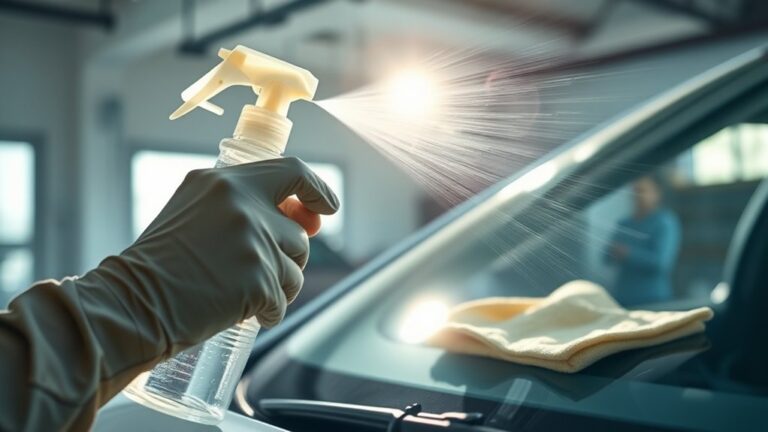
Spray the cleaner directly onto a clean, microfiber cloth instead of the glass or painted surface to reduce overspray. Wipe the windows or exterior with gentle, circular motions for even coverage.
Don’t press too hard, as that can cause scratches or streaks. After cleaning, use a dry microfiber cloth to buff the surface and remove any remaining streaks or residue.
Be patient and take your time for the best results. Proper technique helps keep your windows clear, your paint protected, and your shine streak-free.
Avoiding Surface Damage
Using proper application techniques helps prevent damage, but you also need to be careful to protect your car’s surfaces. Always use a soft microfiber cloth to avoid scratching paint or glass.
Spray the cleaner onto the cloth instead of directly onto the surface. This gives you better control and prevents oversaturation. Work in small sections so you get even cleaning and avoid streaks.
Avoid using glass cleaner on hot or sunlight-exposed surfaces, as this can cause streaks or damage. To protect your car further, consider these tips:
- Use a gentle, non-abrasive cleaner designed for automotive surfaces.
- Test the cleaner on a small, hidden area first.
- Rinse surfaces with water before applying cleaner to remove dirt and debris.
Best Alternatives to Glass Cleaner for a Streak-Free Shine
If you want a streak-free shine without risking damage to your car’s paint, there are several effective alternatives to traditional glass cleaners. A mixture of equal parts distilled water and white vinegar works well for cleaning glass surfaces without streaks.
Microfiber cloths are essential; they clean smoothly without scratching. You can also use a gentle, automotive-specific detailer spray or a diluted dish soap solution, applied with a microfiber cloth, for safe cleaning.
Another option is a solution of water and a small amount of rubbing alcohol, which evaporates quickly and reduces streaks. Always avoid harsh chemicals or abrasive materials that can harm your paint.
These alternatives deliver a clear, streak-free finish while keeping your paint protected and looking its best.
How to Test for Paint Safety Before Cleaning
Before applying any cleaning solution to your car’s glass or paint, it’s a good idea to do a quick test first. This helps make sure the product won’t cause any damage.
Start by applying a small amount of the cleaner on a hidden spot, like the edge of a door or trunk. Wait a few minutes and watch for any changes.
Apply a small amount of cleaner on a hidden spot, wait, and observe for any changes before full use.
If you see discoloration, streaks, or dullness in the paint, it’s best not to use that product on larger areas. Use these tips to check if it’s safe:
- Test on a hidden spot first
- Use a clean, soft cloth to wipe the area
- Look for any negative reactions before moving on to the whole surface
Doing this quick test can help you avoid costly damage and ensure your cleaning is safe.
Common Mistakes to Avoid When Cleaning Your Car’s Glass and Paint
Are you aware of the common mistakes that can ruin your car’s finish while cleaning? One mistake is using harsh or abrasive cleaners that can scratch or dull the paint and glass.
Avoid cleaning in direct sunlight, as heat can cause streaks and make cleaning products evaporate quickly, leaving residue. Using dirty or abrasive cloths can also scratch surfaces, so always opt for microfiber towels.
Another mistake is spraying glass cleaner directly onto the entire windshield or paint instead of onto a cloth first. This can lead to overspray and streaks.
Finally, rushing the process or applying too much pressure can damage the paint or glass. Take your time, use gentle motions, and stick to recommended cleaning products to protect your car’s finish.
When to Call a Professional for Car Detailing Help
Knowing when to seek professional help for car detailing can save you time, effort, and potential damage. If your car has deep scratches, stubborn stains, or a dull finish that won’t improve with regular cleaning, it’s time to call in experts. Also, if you notice rust spots, paint chipping, or extensive interior dirt and odors, professionals can handle these issues safely and effectively.
Attempting complex repairs or deep cleaning without proper tools can do more harm than good. Consider calling a professional if you’re unsure about using certain cleaning products or techniques.
Your car may need specialized treatments like paint correction or ceramic coating. If you’re short on time and want a thorough, high-quality job done efficiently, it’s a good idea to hire experts.
Frequently Asked Questions
Can Glass Cleaner Damage Tinted Windows?
Yes, glass cleaner can damage tinted windows if it contains ammonia or alcohol, which can break down the tint film.
You should avoid using harsh cleaners on tinted windows. Instead, choose a cleaner specifically made for tinted glass or mix water with a mild soap.
Always spray the cleaner onto a soft cloth first, then gently wipe the windows. This helps prevent any damage and keeps your tint looking its best.
How Often Should I Clean My Car’s Glass?
You should clean your car’s glass once a week to keep it clear and streak-free. Think of your windshield like a mirror reflecting your safety; if you neglect it, dirt and grime can impair your vision.
I once ignored cleaning mine for a month, and rain made driving stressful. Regular cleaning prevents buildup, maintains visibility, and keeps your driving experience safe and enjoyable.
Are There Eco-Friendly Glass Cleaners Suitable for Cars?
Yes, there are eco-friendly glass cleaners suitable for cars. You can find products labeled as biodegradable, non-toxic, and free from harsh chemicals like ammonia and solvents.
These cleaners effectively clear your windows without harming the environment or damaging your car’s paint. When using them, follow the instructions carefully, spray evenly, and wipe with a soft cloth to avoid streaks.
Eco-friendly options help keep your car clean and protect the planet.
Will Using Household Glass Cleaner Harm My Car’s Paint?
Using household glass cleaner on your car’s paint can cause damage because many contain ammonia or harsh chemicals that strip protective coatings. You might notice paint fading, dullness, or scratches over time.
To protect your car’s finish, go for a cleaner specifically made for automotive use. Always spray the cleaner onto a cloth first, then wipe gently, avoiding too much pressure that could harm the paint.
Can Glass Cleaner Be Used on Car Mirrors Safely?
Yes, you can safely use glass cleaner on your car mirrors. Just make sure to pick a non-abrasive, ammonia-free formula to avoid damaging the mirror’s coating.
Spray the cleaner onto a soft cloth instead of directly on the mirror, and wipe gently. This helps prevent any accidental scratches or damage.
Stay away from harsh or abrasive materials that could scratch the surface. Regularly cleaning with a gentle cleaner keeps your mirrors clear and in good shape without risking damage.
Conclusion
So, next time you pick up that glass cleaner, think of it as a tiny paint assassin ready to sabotage your car’s shiny look. It’s sneaky but avoidable.
With a little caution, you can keep your ride sparkling without turning it into a paint-swapping experiment. Proper technique and patience are your best friends here.
Nobody wants their car to look like it’s been through a bubble bath of harsh chemicals. Keeping things gentle will help preserve your paint’s shine.
Remember, using glass cleaner safely is key. It keeps your car looking great without risking damage. Stay smart and keep it shiny!