
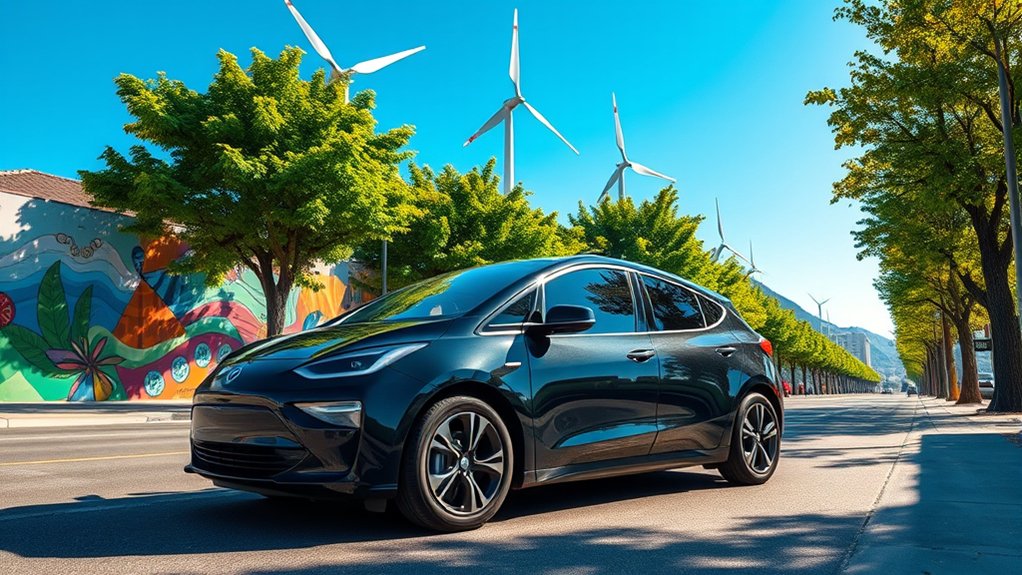
8 Reasons Why EVs Are Cleaner Than Gas Cars
Are you concerned about the environmental impact of your car but don’t know where to start? You’re not alone—many people want to make greener choices but feel overwhelmed by the options.
Electric vehicles produce zero tailpipe emissions, so you won’t breathe in harmful gases like nitrogen oxides or carbon monoxide. They also generate fewer emissions overall, especially when powered by renewable energy, which lowers your carbon footprint.
Plus, EVs are more energy-efficient, require less maintenance, and create less waste thanks to fewer moving parts and regenerative braking.
Advances in battery recycling and sustainable manufacturing make them even greener.
Keep exploring to uncover more ways EVs help create a cleaner planet.
Key Takeaways
- EVs produce zero tailpipe emissions, which helps reduce local air pollution and harmful gases like nitrogen oxides and volatile organic compounds.
- They use cleaner energy sources such as wind and solar, lowering their overall carbon footprint.
- Modern batteries are more efficient now, allowing for longer ranges and faster charging. This helps reduce energy consumption per mile.
- Manufacturing is also becoming more eco-friendly, with a focus on renewable energy and sustainable materials. This minimizes the environmental impact.
- EVs need less maintenance overall, which means they generate less hazardous waste. Plus, regenerative braking systems help save energy.
Why Do Electric Vehicles Produce Zero Tailpipe Emissions?
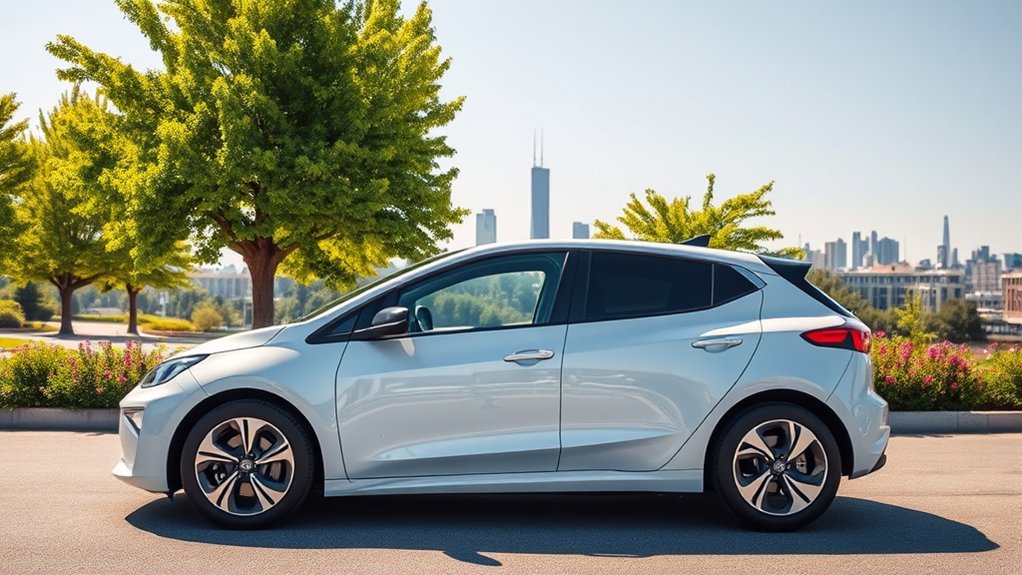
Electric vehicles produce zero tailpipe emissions because they run entirely on electricity stored in batteries, unlike gas-powered cars that burn fuel to operate. When you drive an EV, no exhaust gases are released into the air, which helps reduce local pollution and improve air quality.
This happens because EVs don’t have combustion engines that burn gasoline or diesel. Instead, they rely on electric motors powered by rechargeable batteries. As a result, EVs don’t emit carbon dioxide or other greenhouse gases during operation.
This clean operation not only benefits the environment but also helps create healthier communities. By choosing an EV, you’re actively reducing the pollutants released directly from your vehicle.
How EVs Reduce Their Carbon Footprint Overall
You can lower your EV’s carbon footprint by choosing cleaner energy sources like wind or solar to power it.
As battery tech improves, EVs become more efficient and produce fewer emissions over their lifespan.
Over time, these advancements make EVs an even greener alternative to gas cars.
Cleaner Energy Sources
How do EVs truly reduce their overall carbon footprint? The key is in the cleaner energy sources used to generate electricity. As more power plants switch to renewable energy like wind, solar, and hydro, the electricity powering EVs becomes greener.
Unlike gas cars that emit pollution directly from the tailpipe, EVs rely on electricity that’s increasingly coming from low-carbon sources. This shift means fewer greenhouse gases are released into the atmosphere during energy production.
Even if some electricity still comes from fossil fuels, overall emissions are lower because power plants are more efficient and better regulated than individual vehicle engines. Over time, as renewable energy adoption grows, EVs will become even cleaner, significantly reducing their carbon footprint.
Enhanced Battery Efficiency
Advancements in battery technology have significantly improved the efficiency of EVs, allowing them to travel further on less energy. Modern batteries can now store more power in smaller sizes, which helps reduce weight and boost range.
This means you can go longer distances without needing to recharge, which cuts down on overall energy use. Plus, better battery designs also mean faster charging times, so you’re not waiting around as long.
Smarter battery management systems help optimize energy use, prevent waste, and extend battery life. As a result, EVs become more energy-efficient, which directly lowers their carbon footprint.
Thanks to these technological improvements, your electric vehicle uses less energy per mile, making it a cleaner and more sustainable choice compared to traditional gas-powered cars.
Reduced Emissions Over Time
EVs consistently reduce their carbon footprint over time because they produce zero tailpipe emissions and can be powered by cleaner energy sources. As the electricity grid gets greener, the emissions associated with charging decrease significantly.
Over the years, this means EVs become even more environmentally friendly, lowering their overall impact. Plus, EVs tend to require less maintenance, which cuts emissions linked to manufacturing and repairs.
Here’s a quick visual:
| Aspect | Impact |
|---|---|
| Renewable energy integration | Lower emissions from cleaner electricity sources |
| Battery improvements | Increased efficiency reduces energy use |
| Reduced maintenance | Fewer emissions from manufacturing and repairs |
| Grid decarbonization | Overall emissions from EVs decline over time |
How Renewable Energy Powers Cleaner Electric Vehicles
Renewable energy plays an essential role in making electric vehicles truly sustainable by providing cleaner power sources. When your EV is charged with electricity from wind, solar, or hydro power, it greatly reduces its carbon footprint.
Charging your EV with wind, solar, or hydro power significantly lowers its carbon footprint and promotes sustainability.
This shift to renewables means fewer emissions during production and use, making your ride greener overall. Imagine a clean wind farm spinning turbines, a bright solar panel catching sunlight, and rivers flowing through hydroelectric dams—all generating the electricity that powers your car.
These sources create a cycle of clean energy:
- Wind turbines transforming breezes into electricity
- Solar panels soaking up sunlight to generate power
- Hydropower harnessing flowing water to produce clean energy
Lower Maintenance and Less Waste With EVS
Because electric vehicles have fewer moving parts than traditional gas-powered cars, they require less maintenance and create less waste over their lifespan. You won’t need to change oil, replace spark plugs, or do frequent engine tune-ups.
This means fewer trips to the mechanic and less disposal of hazardous parts. Maintenance tasks like oil changes and engine tune-ups are not needed, saving you time and hassle.
Brake repairs happen less often thanks to regenerative braking, and fluid replacements are mainly for cooling systems. Overall, this reduced upkeep cuts waste and lowers your environmental impact.
You’ll spend less on repairs and produce less hazardous waste, making EVs a cleaner, more sustainable choice over the long run.
Why Electric Vehicles Are More Energy Efficient
Electric vehicles are more energy efficient because they convert a higher percentage of stored energy into motion compared to traditional gas-powered cars. When you drive an EV, less energy is wasted as heat, making each unit of electricity more effective.
This efficiency comes from electric motors’ ability to deliver instant torque with minimal loss. Imagine smooth acceleration without energy spikes or dips, and less energy lost through engine heat compared to combustion engines.
Electric vehicles also have precise control over power flow, reducing waste during driving. These factors mean EVs use energy more effectively, which results in less energy consumption for the same distance traveled.
As a result, EVs not only save you money on fuel but also make better use of the energy they consume, highlighting their superior efficiency.
How EVs Improve Urban Air Quality
When you choose an electric vehicle, you help cut down emissions that pollute city air.
EVs produce no tailpipe emissions, which means fewer harmful gases are released into the atmosphere.
As a result, urban areas see lower levels of particulate matter, making the air healthier to breathe.
Reduced Emissions From Vehicles
Switching to electric vehicles greatly reduces emissions of harmful pollutants that contribute to urban air pollution. Unlike gas cars, EVs produce no tailpipe emissions, which cuts down on nitrogen oxides, carbon monoxide, and volatile organic compounds.
This means cleaner air and healthier communities. As you drive an EV, imagine a world with clear, pollution-free streets where children can play safely without inhaling exhaust fumes.
Picture smog levels decreasing and blue skies once hidden behind haze becoming visible again. With fewer pollutants, residents experience fewer respiratory issues, making the air easier to breathe.
Lower Particulate Matter Levels
Because electric vehicles produce no tailpipe emissions, they greatly reduce the amount of particulate matter released into urban air. Gas cars emit tiny particles from exhaust, which contribute to smog, respiratory issues, and pollution.
EVs eliminate this source entirely, leading to cleaner air in cities. Without exhaust emissions, the levels of fine particulate matter decrease significantly, improving air quality for residents.
This reduction benefits vulnerable populations, such as children and the elderly, who are more sensitive to air pollution. Less particulate matter also means less soiling of roads and buildings, keeping urban areas cleaner.
Making EVs More Sustainable: Battery Recycling and Manufacturing
To make electric vehicles (EVs) more sustainable, improving battery recycling and manufacturing processes is key. Think of advanced recycling centers efficiently breaking down used batteries to recover valuable materials like lithium and cobalt. This helps reduce the need for new mining, lowering environmental impact.
Better manufacturing practices also play a big role. Imagine factories using renewable energy and eco-friendly materials to produce batteries cleaner and greener. Streamlined processes can minimize waste and emissions, making production more sustainable.
Focusing on these areas ensures EVs become truly eco-friendly. Recycling facilities safely reclaim critical materials, cutting waste and pollution. Manufacturing plants can adopt greener energy sources to lower their carbon footprint.
Innovative battery designs that last longer mean fewer replacements and less environmental strain. Together, these improvements help make EVs a more sustainable choice for everyone.
How Switching to EVs Helps Fight Climate Change
When you choose an electric vehicle over a traditional gas-powered car, you directly reduce greenhouse gas emissions that contribute to climate change. EVs emit no tailpipe pollutants, so they cut the amount of carbon dioxide released into the atmosphere.
As electricity generation becomes cleaner with more renewable sources, the overall emissions associated with driving EVs decrease further. This shift helps slow global warming and reduces air pollution, which improves public health.
Moreover, widespread adoption of EVs encourages investments in cleaner energy infrastructure and promotes technological advancements. Your choice supports a move toward sustainable transportation, making a real difference in fighting climate change.
Every electric mile you drive brings us closer to a healthier, more stable planet for future generations.
Frequently Asked Questions
Are EVS Truly Zero Emissions During Manufacturing?
No, EVs aren’t completely zero emissions during manufacturing. You produce emissions from mining materials like lithium, cobalt, and nickel, which are essential for batteries.
Manufacturing processes also consume energy, often from fossil fuels, leading to emissions. However, over their lifetime, EVs generally generate fewer emissions than gas cars, especially as the electricity grid becomes cleaner.
How Does Battery Recycling Impact EV Sustainability?
When you recycle EV batteries, you help close the loop on sustainability. It’s a fortunate coincidence that advanced recycling methods recover valuable materials like lithium and cobalt, reducing the need for new mining.
This process cuts down waste, lowers environmental impact, and conserves resources. By supporting battery recycling, you’re actively extending your EV’s eco-friendly benefits.
It makes your choice even cleaner and more sustainable for the planet’s future.
Do EVS Require Rare or Environmentally Damaging Materials?
Yes, EVs do require rare or environmentally damaging materials like lithium, cobalt, and nickel for their batteries. These materials are often mined in ways that can harm ecosystems and communities.
But advances in technology and recycling efforts are helping to reduce this impact. You can also support brands that prioritize sustainable sourcing and recycling.
This makes your EV more environmentally friendly over its entire lifecycle.
What Is the Lifecycle Carbon Footprint of an EV?
Think of your EV’s lifecycle as a journey across a vast, evolving landscape. From manufacturing, which involves some emissions—like planting a tree that takes years to grow—through its use phase, where it emits no tailpipe pollution.
Your EV’s overall carbon footprint is lower than that of gas cars. Over time, the environmental costs diminish, making it a greener choice for your travels and the planet’s future.
Can EVS Be Powered Entirely by Renewable Energy?
Yes, you can power EVs entirely with renewable energy. By installing solar panels or subscribing to green energy programs, you make sure that the electricity fueling your EV comes from sustainable sources like wind, solar, or hydro.
This greatly reduces your carbon footprint, making your driving even cleaner. With advances in renewable energy infrastructure, it’s becoming more practical for individuals like you to charge EVs using 100% renewable power.
Conclusion
Switching to EVs isn’t just a good choice; it’s like giving the Earth a big, much-needed hug!
By driving electric, you’re cutting down emissions, reducing pollution, and helping fight climate change faster than a superhero saving the day.
It’s as if you have the power to turn every city into a fresh, vibrant place and make our planet cleaner and greener.
So, hop in and be a hero — your planet will thank you forever!
Choosing EVs makes a real difference in protecting our environment and creating a sustainable future.