
7 Reasons Electric Cars Are Cleaner Than Gas Cars
Many people are concerned about their environmental impact but feel overwhelmed by the options and information out there. If you’re wondering how to make a greener choice, switching to electric cars might be the answer you’re looking for.
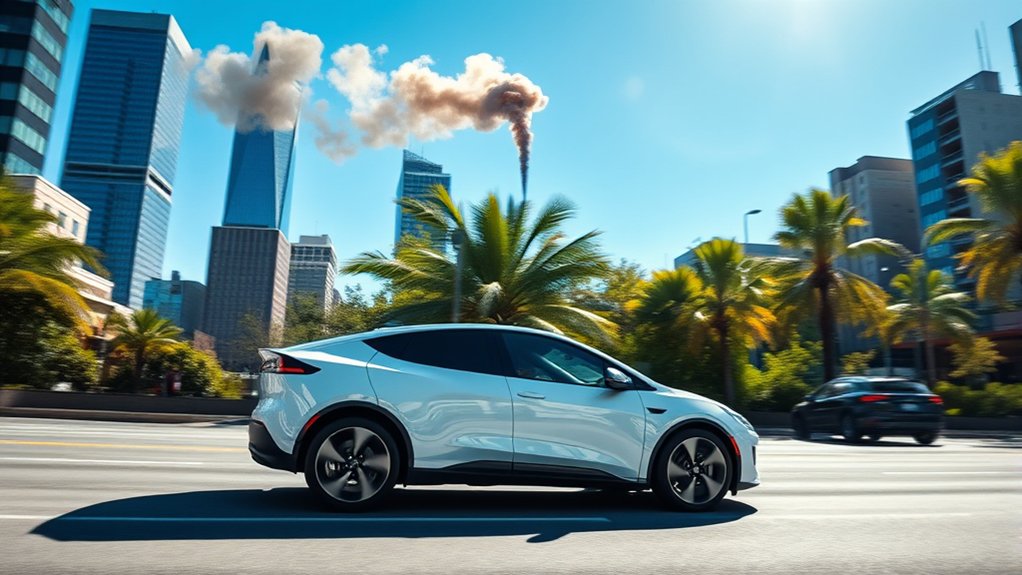
Electric cars are cleaner than gas cars because they produce no tailpipe emissions, which helps reduce air pollution and improve urban air quality. They generate fewer greenhouse gases, especially if powered by renewable energy, lowering your overall carbon footprint.
Electric motors are more efficient, wasting less energy, and regenerative braking recovers energy to boost efficiency.
Switching to electric vehicles also supports cleaner energy sources, making a significant environmental difference now and for future generations—there’s much more to unveil.
Key Takeaways
– Electric cars produce no tailpipe emissions, which means they don’t release pollutants like carbon monoxide and nitrogen oxides into the air.
They’re much cleaner in that way. Plus, they have higher energy efficiency, converting about 85-90% of stored energy into useful power. That’s more efficient than traditional gas-powered cars.
Charging electric cars with renewable energy sources helps cut down on their overall environmental impact. It minimizes lifecycle emissions from production to disposal.
Electric motors also generate less waste heat and make use of regenerative braking, which recovers energy and improves overall efficiency.
Switching to electric vehicles supports cleaner energy grids. As more renewable energy is added, the overall environmental footprint of driving electric gets even smaller.
How Do Electric Cars Reduce Emissions Compared to Gas Vehicles
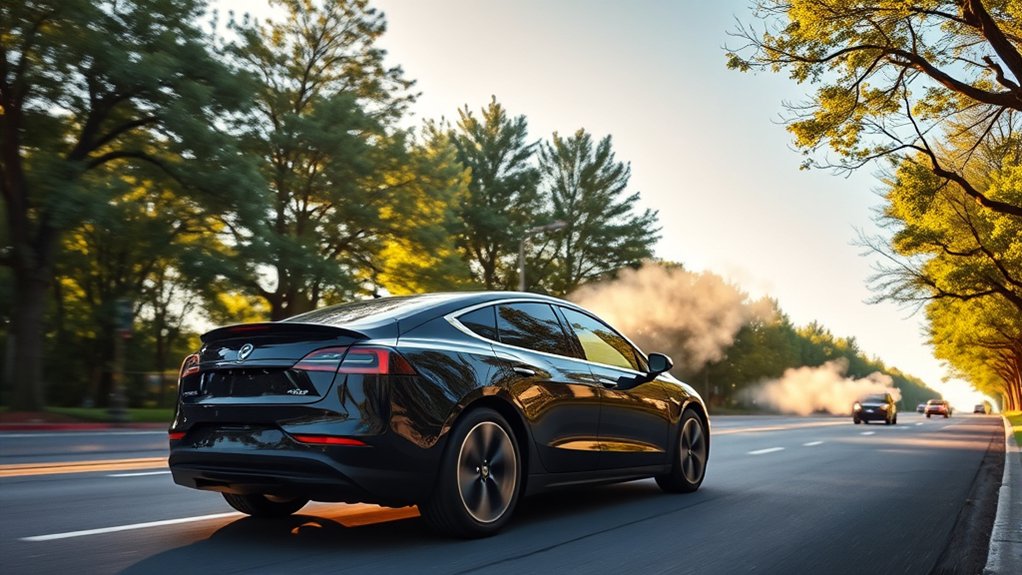
Electric cars considerably cut emissions because they produce no tailpipe pollutants. When you drive an electric vehicle, you eliminate exhaust emissions like carbon monoxide, nitrogen oxides, and particulate matter that gas cars emit.
These pollutants contribute to air pollution, smog, and health problems. Electric motors are inherently more efficient, converting more energy from the battery into movement, which reduces overall pollution.
Unlike gas engines that burn fuel and release greenhouse gases, electric cars don’t emit these gases directly. This means cleaner air in your community and a smaller carbon footprint.
Where Does Electric Power Come From, and How Does It Affect Cleanliness
The cleanliness of electric power used to charge your vehicle depends a lot on how that electricity is made. If it comes from coal or natural gas, it creates more emissions and pollution, which reduces the environmental benefits of your electric car.
Many places are moving toward cleaner sources like wind, solar, and hydroelectric power. These generate electricity with little to no emissions. As the grid uses more renewable energy, charging your electric car gets greener.
If your power mainly comes from fossil fuels, your vehicle’s overall emissions are higher. Still, electric cars usually produce fewer emissions over their lifetime compared to gas cars, especially as cleaner energy sources become more common.
Your choice of where your electricity comes from directly affects how eco-friendly your electric vehicle really is.
Why Zero Tailpipe Emissions Matter for Urban Air Quality
Since urban areas often have a lot of vehicle traffic, tailpipe emissions really impact air quality. These emissions release pollutants like nitrogen oxides and particulate matter, which can cause breathing problems and make asthma worse.
When you drive a gas car, you’re adding these harmful pollutants directly into the air we all breathe every day. Zero tailpipe emissions from electric cars mean fewer pollutants in the city environment.
This is especially important in densely populated areas where pollution tends to be higher. Cleaner air helps improve public health and lowers the risk of pollution-related illnesses.
How Electric Cars Lower Overall Carbon Footprints
While reducing tailpipe emissions improves urban air quality, electric cars also help lower overall carbon footprints. Unlike gas cars, which emit CO₂ continuously during driving, electric vehicles produce no emissions while on the road.
Their impact really depends on how the electricity is generated. In areas with lots of renewable energy, electric cars can have almost zero lifecycle emissions. Plus, electric motors are naturally more efficient than combustion engines, wasting less energy.
Manufacturing electric vehicles, especially their batteries, takes more energy upfront. But over time, this is balanced out by the lower emissions during use. As renewable energy becomes more common, electric cars will get even cleaner, helping shrink your overall carbon footprint.
What Makes Electric Vehicles More Efficient and Wasteless
Electric vehicles convert energy more efficiently than gas cars, so you get more mileage for each charge. They also experience fewer mechanical losses, meaning less energy is wasted as heat or friction.
Plus, regenerative braking helps recover energy, boosting overall efficiency and reducing waste.
Enhanced Energy Conversion Efficiency
Electric vehicles stand out because they convert a higher percentage of stored energy into usable power, making them more efficient overall. Unlike gas engines, electric motors are designed to maximize energy use, so there’s less waste. This means more of your battery’s energy goes directly to powering the car, reducing overall energy loss.
The efficiency gains come from electric motors’ ability to convert electrical energy directly into motion with minimal heat loss. Here’s a quick comparison:
| Aspect | Electric Vehicles | Gas Vehicles | Impact |
|---|---|---|---|
| Energy Conversion | High (about 85-90%) | Moderate (about 20-30%) | Less waste, more efficiency |
| Heat Loss | Minimal | Significant | Less wasted energy |
| Power Delivery | Instant torque | Delayed, less precise | Better acceleration |
| Mechanical Complexity | Fewer moving parts | Many moving parts | Reduced energy loss |
| Overall Efficiency | Higher | Lower | Cleaner, more sustainable |
Reduced Mechanical Losses
One of the key reasons electric vehicles are more efficient is that they have fewer mechanical components that can cause energy loss. Unlike gas cars, which rely on complex engines, transmissions, and many moving parts, electric cars use a simplified system.
This reduction in mechanical parts minimizes friction and wear, leading to less energy wasted as heat. You’ll notice smoother operation and less maintenance over time.
Fewer moving parts in the drivetrain means less energy loss. Electric cars also don’t need multi-speed transmissions, which saves energy.
Reduced friction in electric motor components helps improve efficiency. There’s less energy lost through mechanical linkage, making the system more effective.
Plus, electric vehicles have a lower risk of mechanical failures and inefficiencies. All these factors help electric cars convert more of their stored energy into useful movement.
Regenerative Braking Benefits
When you brake in an electric vehicle, it doesn’t just stop the car. It also recovers energy that would otherwise be wasted as heat. This process, called regenerative braking, converts the car’s kinetic energy into electrical energy.
The energy is then stored in the battery for later use. Unlike traditional brakes that dissipate energy as heat, regenerative braking makes your car more efficient by recapturing energy during deceleration.
This reduces overall energy consumption and minimizes brake wear, saving you money on maintenance. You’ll notice that electric vehicles often feel smooth and responsive when slowing down, thanks to this system.
Can Renewable Energy Maximize Electric Cars’ Environmental Benefits
Renewable energy has the potential to greatly boost the environmental benefits of electric cars, but only if it’s used to power the charging process. When you charge your EV with renewables, you cut down on reliance on fossil fuels and reduce emissions significantly.
To get the most out of this, try to use solar or wind power sources whenever you can. Supporting policies that promote renewable energy expansion is also a smart move.
Use solar and wind energy whenever possible to maximize your EV’s environmental benefits.
Installing solar panels at home for direct charging can make a big difference. You can also choose EV charging stations that are powered by renewable energy sources.
Finally, advocating for cleaner grid infrastructure helps ensure that the electricity used for charging EVs is as green as possible.
Long-Term Environmental Advantages of Switching to Electric Vehicles
Switching to electric vehicles offers long-term environmental benefits that go beyond just cutting emissions now. Over time, EVs help improve air quality since they don’t produce tailpipe pollutants, which is great for public health and the environment.
As renewable energy sources become more common, the environmental impact of charging EVs gets even lower. This makes their entire lifecycle footprint smaller and more sustainable. Electric cars also push forward innovations in green technology and boost energy efficiency.
They support a transition to a cleaner grid, which benefits ecosystems by reducing our dependence on fossil fuels. Over the years, these combined effects—less pollution, cleaner air, and more renewable energy—will play a key role in fighting climate change and conserving natural resources for future generations.
Frequently Asked Questions
How Do Electric Cars Impact Noise Pollution Compared to Gas Vehicles?
Electric cars markedly reduce noise pollution compared to gas vehicles. You’ll notice they operate much more quietly because they lack engines that produce loud exhaust sounds.
When you drive electric, you experience a smoother, quieter ride, especially at lower speeds. This decrease in noise helps create a more peaceful environment for you and those around you.
It makes cities and neighborhoods less noisy and more comfortable for everyone.
What Are the Recycling Challenges for Electric Vehicle Batteries?
You’ll face a tangled maze when recycling electric vehicle batteries. The challenge lies in extracting valuable materials like lithium and cobalt without harming the environment, kind of like untangling a knot of precious jewels.
Battery components can be hazardous if mishandled, so advanced techniques and strict safety measures are needed.
As demand grows, developing efficient, eco-friendly recycling methods becomes essential to prevent these batteries from becoming tomorrow’s toxic waste.
Do Electric Cars Produce Any Environmental Pollution During Manufacturing?
Yes, electric cars produce some environmental pollution during manufacturing. You’ll find emissions from extracting raw materials like lithium, cobalt, and nickel, as well as energy used in manufacturing processes.
These emissions are generally higher initially but decrease over the vehicle’s lifespan. Overall, electric cars tend to be cleaner over time, especially if your electricity comes from renewable sources.
This makes them a better choice for reducing long-term pollution.
How Does Vehicle Lifespan Affect Overall Environmental Benefits?
Your vehicle’s lifespan greatly boosts its environmental benefits. A longer-lasting electric car means less waste and fewer manufacturing impacts.
It also spreads out the energy used for production over more years of use. When you maintain and use your EV efficiently, you can cut down emissions even more.
Extending your car’s life means fewer replacements, which means less resource extraction and a smaller carbon footprint. Overall, it makes your choice even more eco-friendly over time.
Are There Regions Where Electric Cars Are Less Environmentally Friendly?
Yes, there are regions where electric cars might be less environmentally friendly. If a place relies heavily on coal or other fossil fuels for electricity, the benefits of electric cars decrease because their clean energy comes from polluting sources.
In these areas, electric vehicles can produce emissions that are similar to or even higher than efficient gas cars. To get the most environmental benefit, it’s important to consider local energy sources when choosing to adopt an electric vehicle.
Conclusion
Switching to electric cars truly offers a cleaner, greener future, especially as renewable energy becomes more common.
While some skeptics say electricity still comes from fossil fuels, recent advances show a shift toward cleaner sources.
By choosing electric, you’re not just reducing emissions today—you’re helping speed up the transition to sustainable energy.
This makes a real difference for urban air quality and long-term environmental health.
It’s a future worth driving toward, especially with electric cars leading the way to a cleaner planet.