How to Use Car AC Foam Cleaner in 7 Easy Steps
Many car owners know the struggle of keeping their vehicle’s AC fresh and clean. Over time, vents can trap dust, mold, and odors, making drives uncomfortable.
Luckily, using a car AC foam cleaner is an easy way to refresh your car’s interior without much hassle.
To use car AC foam cleaner in 7 easy steps, start by turning off your vehicle and opening the windows for ventilation.
Gather your supplies, including the foam cleaner, a brush, and cloths.
Apply the foam directly into the vents, ensuring even coverage.
Let it sit for a few minutes to break down dirt and mold.
Scrub the vents with a brush, then wipe and dry them for a fresh finish.
Keep going to uncover all the tips for a thorough clean.
Key Takeaways
- Turn off your vehicle and open the windows to get good ventilation before you start.
- Grab your foam cleaner, microfiber cloths, a vacuum, and some gloves to keep things safe and easy.
- Spray the foam directly into the AC vents, making sure you cover everything evenly.
- Let the foam sit for a few minutes to loosen up dirt, mold, and any odors lingering inside.
- Use a brush to scrub the vents gently, then wipe everything down with a cloth and dry it off.
This way, your car’s AC will be fresh and clean!
Why Keeping Your Car’s AC System Clean Matters

A clean car AC system isn’t just about fresh air; it’s essential for your health and comfort. When your AC isn’t maintained, mold, bacteria, and dust build up inside the ducts and filters. Breathing in these pollutants can trigger allergies, asthma, or respiratory issues.
Plus, a dirty system reduces cooling efficiency, making your drive less comfortable and increasing energy use. Over time, grime and debris can damage parts of the AC, leading to costly repairs. Regular cleaning helps prevent these problems, ensuring cleaner air and better airflow.
It also prolongs the lifespan of your AC components. Ultimately, keeping your car’s AC clean isn’t just about comfort. It’s about protecting your health and saving money in the long run.
How Car AC Foam Cleaner Works and Why You Should Use It
Car AC foam cleaner works by penetrating and lifting dirt, mold, and bacteria from your system’s vents and coils. Its foam formula clings to surfaces, making sure everything gets cleaned and disinfected.
Using foam makes it easy to apply and ensures good coverage. This leaves your air smelling fresh and your system running smoothly.
How It Cleans Effectively
Because of its foam-based formula, a car AC foam cleaner penetrates deep into the vents and ducts, effectively loosening dirt, mold, and bacteria that build up over time. The foam expands as it spreads, reaching into hard-to-access areas where dust and grime hide.
This action lifts contaminants from surfaces, making them easier to remove. The cleaner’s active ingredients break down organic buildup and neutralize odors caused by mold and bacteria.
As you spray, the foam clings to surfaces, ensuring prolonged contact for thorough cleaning. This process not only removes visible dirt but also targets microscopic particles that can impact air quality.
Benefits of Using Foam
Using foam as a cleaning method offers several key benefits because its unique expansion and adherence properties help it reach deep into vents and narrow ducts. This ensures a thorough clean where dust, mold, and bacteria tend to hide.
Foam clings to surfaces longer, giving it more time to break down grime effectively. It also minimizes mess since it stays in place rather than dripping or splattering.
Plus, foam cleans quickly and efficiently, saving you time and effort. It provides a deep, thorough clean without needing to disassemble parts or use harsh chemicals. Imagine:
- Penetrating hard-to-reach corners with ease
- Trapping dirt and bacteria in the foam’s bubbles
- Staying in place for maximum cleaning action
- Leaving no residue or odor behind
Get Your Car Ready and Gather Your Supplies
Before you start cleaning, make sure your vehicle is turned off and open the windows to let in some fresh air. This helps with ventilation and keeps things safer.
Ensure your car is off and ventilate by opening windows for a safer, fresher cleaning process.
You’ll need a few key items to keep the process smooth: a foam cleaner, microfiber cloths, a vacuum, and gloves. Having everything within easy reach makes the job easier and faster.
Check that your foam cleaner is nearby, and gather your cloths and vacuum. Preparing everything beforehand saves time and keeps you organized as you work.
Getting everything ready beforehand makes cleaning safer and more effective. Plus, it helps you stay focused and avoid missing any important supplies.
Apply the Foam Cleaner to Your AC Vents
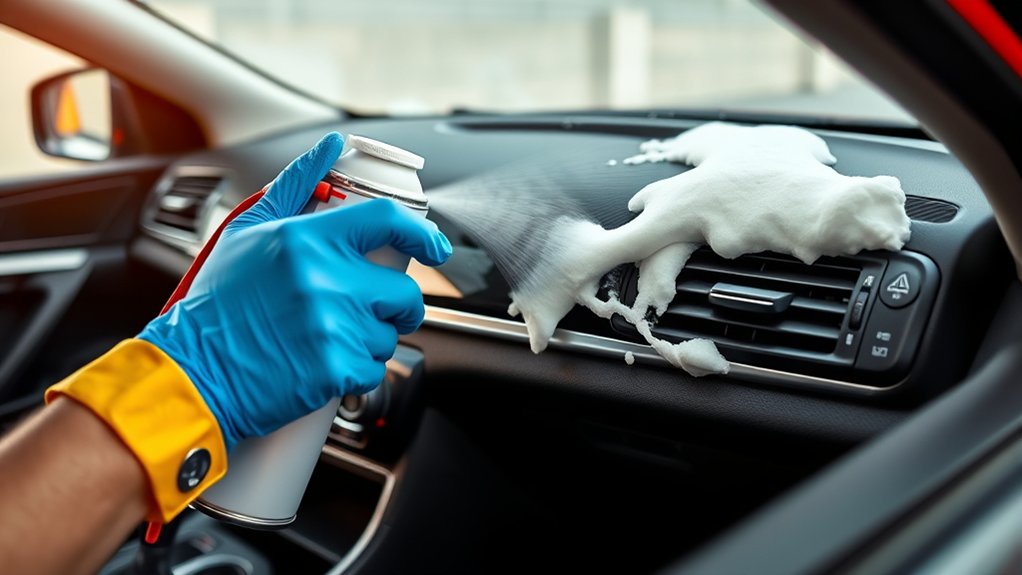
With your supplies ready, it’s time to apply the foam cleaner directly to your AC vents. First, hold the can upright and insert the straw nozzle into the vent slats. Then, follow these steps:
- Spray the foam evenly into each vent, making sure you cover all areas.
- Listen for a hissing sound as the foam disperses inside.
- Move the nozzle from one vent to the next, so all air outlets get cleaned.
- Pause briefly after each spray to let the foam settle inside.
Keep the can upright and avoid over-spraying to prevent excess foam from spilling out. This process coats the interior surfaces and prepares them for cleaning.
Let the Foam Sit and Break Down Dirt and Mold
Allow the foam to sit for a few minutes so it can really get into the surfaces of your vents.
As it works, it breaks down dirt, mold, and other contaminants effectively.
This step helps ensure your AC system gets thoroughly cleaned and refreshed.
Foam Penetrates Surface
Once you’ve applied the foam cleaner, it starts to penetrate the surface, working its way into dirt, mold, and grime. As the foam seeps in, it lifts stubborn contaminants from deep within the surfaces.
You’ll notice the foam expanding and filling every nook and cranny, reaching areas you can’t see. Imagine the foam bubbling up, loosening dirt stuck in tiny crevices.
It spreads across the surface like a thick blanket of bubbles and penetrates moldy patches, breaking the bonds of grime. The foam wraps around hard-to-reach spots, softening stubborn debris.
This process ensures the cleaner gets into all the tiny spaces, making it easier to remove dirt and mold later. Letting it sit allows the foam to do its job thoroughly.
Breaks Down Contaminants
As the foam sits on the surface, it starts breaking down dirt, mold, and grime at a molecular level. This helps loosen stubborn contaminants stuck in the vents and surfaces.
You’ll see the foam expand and change color as it reacts with the buildup, showing it’s doing its job. During this time, the cleaner dissolves grease, bacteria, and mold spores, making them easier to wipe away.
It’s important to let the foam sit undisturbed for a few minutes. This allows it to fully contact all surfaces and penetrate deep into crevices.
Once the foam has done its part, you can rinse and wipe away the loosened debris for a fresh, contaminant-free AC system.
Scrub and Wipe Down the Vents
Start by grabbing a clean cloth or microfiber towel and a small brush or toothbrush. Dip the brush into your foam cleaner, then gently scrub the vent louvers to loosen dirt and grime. Imagine yourself working along the narrow slats, making sure each one gets some attention.
Next, follow these steps:
- Spray foam cleaner directly onto the vents, covering all surfaces.
- Use the brush to scrub thoroughly, reaching into tight spaces.
- Wipe away loosened dirt with your cloth or towel.
- Repeat if necessary for stubborn spots.
This process breaks down dirt and grime, preparing the vents for a fresh, clean finish. Be gentle but thorough, making sure no area is left untouched.
Wipe Down and Dry the Vents for a Fresh Finish
After scrubbing the vents, grab a clean, dry microfiber cloth and gently wipe away any remaining foam cleaner and loosened dirt. Use light, circular motions to make sure you pick up all the residue. Pay close attention to the vent slats and surrounding areas for a thorough clean.
Once the vents look clear and free of foam, switch to a dry part of the cloth to absorb any lingering moisture. This step helps prevent dirt from sticking and helps dry the surface faster. Taking your time to wipe and dry ensures your vents aren’t just clean-looking but also free of moisture that could cause mold or odors later.
A fresh, dry finish leaves your AC system smelling clean and working efficiently.
Frequently Asked Questions
Can I Use Car AC Foam Cleaner on All Vehicle Types?
Yes, you can generally use car AC foam cleaner on most vehicle types, but it’s a good idea to check the product label for compatibility.
Some older or specialized vehicles might have sensitive components that need specific cleaning methods. Always read the instructions carefully and test a small area first to make sure there’s no damage.
If you’re unsure, it’s best to consult your vehicle’s manual or ask a professional to avoid any potential issues.
How Often Should I Clean My Car’s AC Vents?
You should clean your car’s AC vents every three to six months, depending on how often you use the AC and the environment you’re in.
Regular cleaning helps prevent dust, mold, and bacteria from building up, which keeps the air fresh and your system running smoothly.
If you notice a musty smell or your airflow seems weaker, it’s a good idea to clean the vents sooner.
Staying on top of this maintenance not only improves air quality but also helps your AC last longer.
Are There Any Safety Precautions to Consider During Cleaning?
Like a knight safeguarding their armor, you should wear gloves and a mask while cleaning your car’s AC vents. Make sure the area is well-ventilated to avoid inhaling fumes.
Keep the foam cleaner away from your eyes and skin, and follow the instructions carefully. Turn off the engine and disconnect the battery if needed.
These precautions help prevent any accidents or irritation during the cleaning process.
Will Foam Cleaner Damage the Car’s Interior or Dashboard?
Foam cleaner generally won’t damage your car’s interior or dashboard if you use it properly. Just avoid spraying it directly onto sensitive surfaces and keep the foam away from electronic parts.
Instead, apply the foam to a cloth first, then gently wipe the surfaces. Always follow the manufacturer’s instructions for safe use.
When used correctly, foam cleaner is effective at cleaning your AC system without harming your interior.
Can I Use the Foam Cleaner for Other Air Conditioning Systems?
Yes, you can use foam cleaner for other air conditioning systems, but it’s a good idea to check compatibility first. A study shows that improper cleaning can lead to bacteria buildup in 80% of AC units.
Always follow the manufacturer’s instructions for each system. Avoid using automotive foam cleaner on household or commercial AC units unless it’s explicitly recommended.
This way, you’ll clean effectively without risking damage to different systems.
Conclusion
By following these simple steps, you’ll breathe new life into your car’s interior. Turn a stuffy, moldy mess into a fresh, inviting space. Think of your AC vents as the lungs of your vehicle—clean them, and you’ll breathe easier every time you hit the road.
Don’t let dirt and mold steal your comfort. Take action today with your car AC foam cleaner and enjoy crisp, clean air. Just a little foam and a bit of effort can make a big difference.
Your car—and your lungs—will thank you for it.