

Are Diesel Cars Cleaner Than Petrol?
Are you trying to decide whether a diesel or petrol car is the better choice for you? Many people struggle with understanding which option is truly cleaner and better for the environment.
Diesel cars aren’t necessarily cleaner than petrol ones. They emit less CO2, making them better for climate change, but produce higher levels of nitrogen oxides (NOx) and particulate matter (PM), which harm air quality and health.
Modern diesel vehicles use advanced filters and tech to reduce pollution, but some risks still remain. If you want to understand the full impact of diesel versus petrol, uncover more about their emissions and health effects.
Key Takeaways
– Diesel engines emit higher levels of NOx and particulate matter, which are more harmful to air quality and health than petrol emissions.
Petrol vehicles generally produce more CO2, contributing more to global warming than diesel engines.
Modern diesel filters help reduce particulate matter, but they can’t completely eliminate harmful emissions.
Advances like SCR systems aim to cut down NOx emissions, but they still pose health risks compared to petrol engines.
Overall, diesel cars aren’t necessarily cleaner. They have different emissions profiles that affect the environment and health in specific ways.
How Do Diesel and Petrol Engines Differ in Emissions?
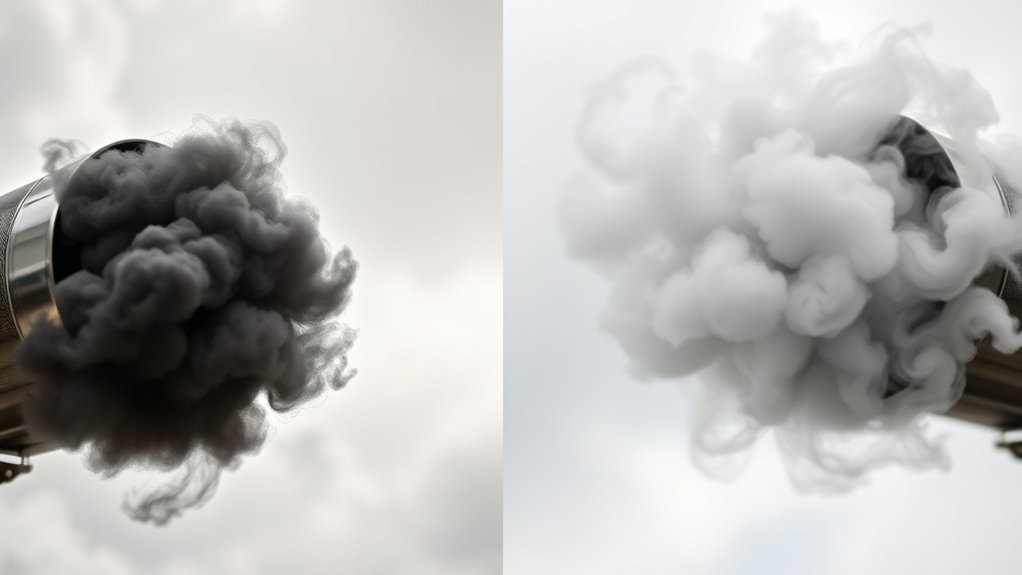
Although both diesel and petrol engines produce emissions, they do so in different ways. Diesel engines tend to emit higher levels of nitrogen oxides (NOx) and particulate matter, which can contribute to smog and health problems.
Diesel engines emit more NOx and particulates, while petrol engines release more carbon monoxide and hydrocarbons.
Petrol engines generally release more carbon monoxide (CO) and hydrocarbons, which are harmful pollutants linked to air quality issues. Diesel combustion is more efficient, leading to lower carbon dioxide (CO2) emissions compared to petrol engines.
However, the higher NOx and particulate emissions from diesel can offset this benefit. Your choice of engine affects the type and amount of pollutants released into the environment.
Understanding these differences helps you see why diesel and petrol engines impact air quality differently.
Which Pollutants Are Higher in Diesel Cars?
You’ll notice that diesel cars emit more particulate matter, which can affect air quality and health. They also produce higher levels of nitrogen oxides, contributing to smog and respiratory problems.
Understanding these pollutant differences helps you make informed choices about which vehicle to drive.
Higher Particulate Matter Emissions
Diesel cars tend to emit higher levels of particulate matter (PM) compared to petrol vehicles, mainly because of how diesel engines burn fuel. This combustion process creates tiny particles made of soot, unburned fuel, and other contaminants that can reach deep into your lungs.
These particles can cause respiratory issues, heart problems, and pollution. Diesel engines operate under higher compression than petrol engines, which produces more soot and ash. Even with modern filters like diesel particulate filters (DPFs), some PM still escapes into the air.
You might notice that diesel exhaust looks darker or more visible, which indicates the presence of these fine particles. Overall, if you’re worried about air quality, the higher PM emissions from diesel vehicles are an important factor to consider.
Increased Nitrogen Oxides
While diesel engines are known for their efficiency and torque, they also produce higher levels of nitrogen oxides (NOx) compared to petrol engines. NOx gases are harmful pollutants that contribute to smog, acid rain, and respiratory problems.
Diesel combustion temperatures are higher, which increases NOx formation. This means that even if diesel engines emit less carbon dioxide, they can pose greater risks to air quality because of NOx emissions.
Stricter regulations have led manufacturers to install exhaust treatment systems like SCR catalysts, but some NOx still escapes. As a result, diesel cars tend to be more problematic regarding NOx pollution.
You should consider these factors when evaluating whether diesel cars are cleaner, especially in urban areas with strict air quality standards.
How Do Nitrogen Oxides From Diesel Affect Air Quality?
Nitrogen oxides from diesel cars contribute a lot to urban air pollution, raising concerns about air quality in cities.
These emissions can lead to smog formation and cause respiratory issues among residents.
Understanding their health risks and environmental impact helps you see why reducing NOx from diesel is so important.
Nitrogen Oxides Emission Levels
Because nitrogen oxides (NOx) are major pollutants produced by diesel engines, they directly impact air quality and public health. Diesel engines emit higher levels of NOx compared to petrol engines, making their emissions more concerning.
These gases contribute to the formation of smog and acid rain, which harm ecosystems and human health. When you see a thick haze around diesel vehicles, it’s often due to these emissions.
Imagine standing near a busy road, feeling the sharp, acrid smell that signals pollution. Visualize dark exhaust clouds billowing from tailpipes, smog lingering in city streets, and heavy traffic with visible emissions.
During rush hour, the air feels thick and suffocating. These images highlight how NOx emissions from diesel engines greatly affect air quality.
Impact on Urban Air Quality
Diesel engines release a lot of nitrogen oxides (NOx), which directly make urban air quality worse. NOx gases react with other pollutants in the air, creating ground-level ozone and tiny particles.
These pollutants lead to smog, reduce visibility, and make cities less pleasant to live in. As NOx levels go up, the air gets more polluted, especially during rush hours.
This pollution can worsen breathing problems and irritate eyes, noses, and throats. Cities with many diesel vehicles often have worse air quality and more frequent smog days.
The effects are immediate and clear, impacting daily life and making urban areas less comfortable for residents and visitors alike.
Health Risks From NOx
When nitrogen oxides (NOx) are released into the air, they pose serious health risks, especially for vulnerable populations like children, the elderly, and those with pre-existing respiratory conditions. NOx irritates your lungs, worsens asthma, and can lead to chronic respiratory diseases.
Breathing in high levels of NOx can cause coughing, shortness of breath, and wheezing. Long-term exposure increases the risk of lung infections and reduces lung function. Imagine inhaling a dark, polluted fog that penetrates deep into your airways.
Visualize smog hanging over busy streets, choking the air you breathe, and settling into your lungs. These images highlight how NOx from diesel engines worsens air quality and directly harms your health and that of your community.
What Is Particulate Matter, and Why Does It Matter?
Particulate matter (PM) refers to tiny particles suspended in the air, often released by vehicle emissions. These particles are so small that they can easily be inhaled deep into your lungs, potentially causing health problems.
PM includes a mix of soot, metal particles, and unburned fuel, which can come from both diesel and petrol engines. Why does it matter? Because exposure to PM is linked to respiratory issues, heart disease, and even premature death.
PM includes soot, metal particles, and unburned fuel from both diesel and petrol engines, impacting health and air quality.
Diesel engines tend to produce more PM than petrol engines, especially older models. Understanding what PM is helps you grasp why emissions control is essential.
Reducing PM emissions can greatly improve air quality and protect public health, making cleaner vehicles an important goal.
Are Modern Diesel Cars Cleaner Thanks to New Tech?
Recent advancements in vehicle technology aim to reduce harmful emissions from diesel engines, making modern diesel cars cleaner than their older counterparts. Thanks to innovations like selective catalytic reduction (SCR) systems and improved fuel injection, diesel engines now produce fewer pollutants.
These technologies help break down nitrogen oxides and particulate matter before they escape the exhaust. You can imagine a sleek exhaust system with sensors and filters working seamlessly, along with advanced catalytic converters transforming harmful gases into harmless substances.
Engine control units now precisely adjust fuel delivery for cleaner combustion, and exhaust after-treatment devices actively reduce emissions in real-time. These improvements mean modern diesel cars emit much less pollution, helping improve air quality and environmental health.
However, it’s important to stay aware of ongoing innovations and regulations shaping their future.
How Do Emissions Standards Shape Diesel and Petrol Vehicles?
Emissions standards directly influence how diesel and petrol vehicles are designed and engineered.
As regulations become stricter, automakers have to adopt new technologies to meet these requirements.
This push for cleaner emissions shapes the features and performance of modern vehicles.
Regulation Impact on Emissions
Regulations on vehicle emissions have really shaped how diesel and petrol cars are built. These standards push manufacturers to create cleaner engines and add advanced exhaust systems.
You’ll notice tighter controls on pollutants like nitrogen oxides and particulate matter. Governments set testing procedures and limits to make sure vehicles meet environmental rules.
These rules spark innovation, leading to features like catalytic converters and diesel particulate filters. They also encourage faster phase-outs of older, dirtier models.
Imagine:
- Fine-tuned exhaust systems cutting down harmful gases
- More thorough testing before cars go on sale
- New emission control tech in fresh models
- Stricter penalties for breaking the rules, influencing industry standards
Standards Influence Vehicle Design
Because standards set strict limits on pollutants, vehicle designers are compelled to incorporate specific features that meet these requirements. You’ll notice improvements like advanced catalytic converters, particulate filters, and exhaust gas recirculation systems in modern diesel and petrol cars.
These components reduce harmful emissions and help vehicles pass regulatory tests. Designers also optimize engine calibration and fuel injection systems to minimize pollutants while maintaining performance.
In response to tighter standards, you’ll see manufacturers adopting hybrid and electric technologies. This further decreases reliance on traditional combustion engines.
These innovations not only help vehicles comply but also influence marketing and consumer choices. Overall, emissions standards directly shape vehicle design, pushing automakers toward cleaner, more efficient, and environmentally friendly cars.
Is Diesel More Fuel-Efficient Than Petrol?
Is diesel truly more fuel-efficient than petrol? Generally, yes. Diesel engines usually get more energy out of each gallon, making them more economical over long distances.
When you drive a diesel car, you’ll often notice it covers more miles on the same amount of fuel, saving you trips to the pump. Imagine cruising through the city or on the highway, knowing your car stretches every drop.
Think of a diesel engine as a marathon runner, steadily maintaining its pace, versus a petrol engine’s quick bursts.
Here’s what contributes to diesel’s reputation for better fuel efficiency:
- A higher compression ratio maximizes fuel use
- Diesel fuel contains more energy per liter
- Longer driving ranges between refueling stops
- Better fuel economy for high-mileage drivers
All these factors add up to make diesel more fuel-efficient in many situations.
What’s the Long-Term Environmental Impact of Diesel vs. Petrol?
Diesel and petrol vehicles each leave different environmental footprints that can affect the planet over the long term. Diesel engines tend to emit more nitrogen oxides (NOx) and particulate matter, which contribute to air pollution and respiratory problems.
Petrol engines release more carbon dioxide (CO2), which is a major driver of climate change. Over time, these emissions influence air quality, global warming, and public health.
| Vehicle Type | Long-Term Impact |
|---|---|
| Diesel | Higher NOx and particulate emissions, affecting air quality |
| Petrol | Higher CO2 emissions, speeding up climate change |
While diesel pollutants harm local environments, petrol’s CO2 contributes to global warming. Both have different ways of impacting the earth.
Can Advances in Diesel Technology Reduce Pollution?
Recent advancements in diesel technology aim to address its long-standing pollution issues. You can now find diesel engines equipped with cleaner systems designed to reduce harmful emissions.
These innovations include:
Innovative systems like SCR, DPF, and EGR significantly reduce diesel engine emissions.
- Selective Catalytic Reduction (SCR) systems that inject urea to break down nitrogen oxides
- Diesel Particulate Filters (DPF) that trap soot particles before they escape
- Advanced fuel injection techniques that improve combustion efficiency and reduce unburned pollutants
- Exhaust gas recirculation (EGR) systems that lower nitrogen oxide formation
These improvements help cut emissions considerably. While they don’t eliminate pollution entirely, they make diesel engines cleaner and more environmentally friendly.
As technology advances, you can expect even more effective solutions to reduce diesel’s impact on air quality.
How Do Lifecycle Emissions Compare Between Diesel and Petrol Cars?
Ever wonder how the total emissions from a diesel car compare to those from a petrol vehicle over their entire lifespans? Diesel cars generally produce more CO₂ during manufacturing and fuel extraction, but they often emit less CO₂ during operation because they are more fuel-efficient. Petrol cars, on the other hand, tend to have higher emissions from fuel combustion but lower manufacturing emissions.
Here’s a simple comparison:
| Stage | Diesel Car | Petrol Car |
|---|---|---|
| Manufacturing | Higher emissions | Slightly lower emissions |
| Fuel Extraction | More emissions (due to refining) | Less emissions |
| Operation | Lower emissions (more efficient) | Higher emissions during use |
| End of Life | Similar disposal impacts | Similar disposal impacts |
What Are the Health Risks of Diesel Exhaust?
While diesel exhaust might seem like just an emissions issue, it poses significant health risks for those exposed to it regularly. Breathing in diesel fumes can cause respiratory problems like asthma and chronic bronchitis. It also raises the risk of cardiovascular diseases, including heart attacks. Diesel exhaust contains tiny particles and harmful chemicals that can go deep into your lungs and bloodstream.
Imagine inhaling a cloud of dark, smoky fumes filling the air around you. Tiny particles settle in your lungs with each breath, and chemical fumes irritate your airways. Long-term exposure can even increase your chances of developing lung cancer.
These risks show why frequent exposure to diesel exhaust isn’t just an environmental problem. It’s a serious health hazard.
Which Car Type Is Better for the Environment in the Long Run?
When comparing diesel and petrol cars for their environmental impact over the long term, diesel vehicles often emerge as the more sustainable choice because of their higher fuel efficiency and lower carbon dioxide emissions per mile. Diesel engines tend to burn fuel more completely, which means better mileage and fewer greenhouse gases.
However, diesel cars usually emit more nitrogen oxides and particulates, which harm air quality and contribute to climate change. Petrol cars typically produce fewer NOx emissions but release more CO2.
Over time, choosing a diesel might help lower your carbon footprint if you focus on reducing greenhouse gases. Still, electric and hybrid vehicles could be better long-term options since they produce no tailpipe emissions and are more sustainable as technology advances.
Frequently Asked Questions
How Does Diesel Engine Maintenance Impact Emissions and Environmental Friendliness?
Maintaining your diesel engine properly reduces emissions and boosts environmental friendliness. Regularly changing filters, using quality fuel, and servicing the engine help minimize pollutants like nitrogen oxides and particulates.
Well-maintained engines run more efficiently, burning fuel completely and producing fewer emissions. Ignoring maintenance can lead to increased pollution, higher emissions, and greater environmental harm.
Are Electric Vehicles a Better Alternative to Diesel and Petrol Cars?
Electric vehicles are a better alternative because they produce zero tailpipe emissions, which helps cut down air pollution a lot.
You also save money on fuel and maintenance, making EVs more affordable over time.
And if you charge them with renewable energy, you can reduce your carbon footprint even more.
While charging stations are getting better, EVs still offer a cleaner, quieter, and more sustainable way to drive compared to diesel and petrol cars.
What Are the Safety Concerns Associated With Diesel Exhaust Fumes?
Diesel exhaust fumes pose significant safety concerns because they contain harmful pollutants like nitrogen oxides and particulate matter.
These fumes can increase your risk of respiratory problems, heart disease, and lung cancer. Did you know diesel exhaust is classified as a carcinogen by the WHO?
If you’re exposed regularly, especially in poorly ventilated areas, you could experience serious health issues. Always ensure proper ventilation and limit your exposure to protect yourself.
How Does Fuel Production Affect the Overall Environmental Impact?
Fuel production impacts the environment quite a bit. When you make petrol and diesel, it involves extracting, refining, and transporting, all of which release greenhouse gases and pollutants.
Diesel production usually needs more energy, which means higher emissions. Plus, spills and leaks during production can contaminate soil and water.
Can Bio-Diesel Make Diesel Cars More Environmentally Friendly?
Bio-diesel can make diesel cars more environmentally friendly, acting like a cleaner wind clearing the air. For example, a farmer switched to bio-diesel and noticed a 20% reduction in emissions, proving it’s a greener option.
While it still emits some pollutants, bio-diesel’s renewable nature and lower greenhouse gases make it a better choice for reducing environmental impact. It’s a step toward cleaner, sustainable transportation.
Conclusion
Ultimately, choosing between diesel and petrol isn’t straightforward. While diesel engines emit more nitrogen oxides and particulates, modern tech is making them cleaner.
Remember, every coin has two sides, and in environmental choices, it’s about weighing the pros and cons. Stay informed, consider your driving habits, and don’t forget—what’s good today might change tomorrow.
As the saying goes, “The proof of the pudding is in the eating,” so keep evaluating the latest innovations.
When it comes to cleaner cars, diesel’s reputation is evolving. It’s essential to stay updated on new emissions standards and advancements in technology.
So, is a diesel car cleaner than petrol? It depends on the context and the latest developments in auto tech.