Can I Use Window Cleaner on My Car Safely?
Many car owners struggle with finding the right way to keep their windows spotless without causing damage. It’s a common dilemma—using the wrong products can lead to streaks, scratches, or even long-term harm to your car’s glass and tint.
You can’t safely use regular household window cleaners on your car because they often contain harsh chemicals like ammonia or alcohol that can damage tint films, coatings, and even the glass itself. Instead, choose automotive-specific glass cleaners designed for your vehicle.
Using the right products and techniques prevents streaks, scratches, and long-term damage.
Want to know more about proper cleaning methods and avoiding pitfalls? Keep going to learn how to protect your car windows effectively.
Key Takeaways
- Use only automotive-specific, non-abrasive glass cleaners to prevent damage to your car’s windows and tint films.
- Stay away from household cleaners that contain ammonia, alcohol, or harsh chemicals. These can cause streaks, fading, or long-term damage to your glass.
- When cleaning, spray the cleaner onto a microfiber cloth instead of directly on the glass. This helps reduce residue and prevents streaks.
- Regularly clean your windows using proper techniques. This keeps visibility clear and prevents debris from building up.
- If you notice stubborn stains, mineral deposits, or damaged glass, it’s best to seek professional cleaning. Trying to fix these yourself could cause more harm.
How to Safely Clean Your Car Windows
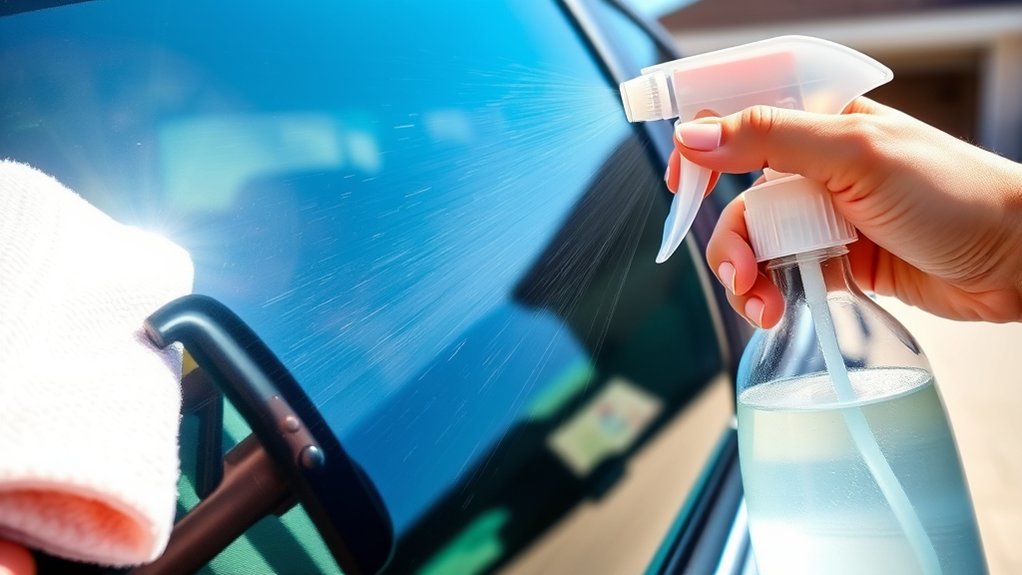
Cleaning your car windows safely starts with choosing the right cleaning products. Use a mild, non-abrasive glass cleaner made specifically for cars. Stay away from harsh chemicals that could damage the glass or trim.
Before you start, park your car in a shaded spot. This helps prevent the cleaner from drying too quickly and causing streaks. Spray the cleaner directly onto the glass, not on the rubber seals or trim.
Use a microfiber cloth or a soft, lint-free towel to wipe gently. Move in circular motions to lift dirt without scratching the glass. Then, switch to a clean part of the cloth and buff the window for a streak-free shine.
Following these tips will help keep your windows clear and undamaged. Proper technique makes all the difference!
Are Household Window Cleaners Safe for Car Glass?
Are household window cleaners safe to use on your car’s glass? It’s tempting to grab the same cleaner you use at home, but it’s not always a good idea.
Many household cleaners contain chemicals that can damage your car’s glass or tint over time. These products often have ammonia or harsh detergents that aren’t designed for automotive surfaces.
Household cleaners with ammonia or harsh chemicals can damage your car’s glass and tint over time.
Using them might leave streaks, reduce visibility, or cause long-term harm to the glass and tint. Plus, some formulas can degrade the protective coatings on your car’s windows.
To keep your windshield clear and undamaged, it’s best to use cleaners specifically made for automotive glass. These products are formulated to clean effectively without risking scratches or chemical damage.
Which Ingredients in Window Cleaners Can Damage Your Car’s Glass or Tint?
Many common window cleaner ingredients can harm your car’s glass or tint, especially those with ammonia or harsh chemicals. Ammonia can eat away at tint films, causing them to peel or discolor over time.
Harsh chemicals like alcohol, acetone, or ammonia-based solutions can also degrade the protective coatings on your glass. This makes your glass more prone to scratches and damage.
Some cleaners contain acids or strong solvents that can etch or corrode the glass surface. Using these ingredients regularly can weaken the tint’s adhesive, leading to bubbling or peeling.
To protect your car’s glass and tint, avoid cleaners with ammonia, alcohol, acetone, or strong acids. Instead, choose gentle, car-specific products that won’t compromise your vehicle’s glass or tint.
Can I Use DIY Window Cleaning Solutions on My Car?
You might wonder if homemade window cleaners are safe for your car, but their effectiveness varies. Some DIY solutions can cause damage to your glass or tint if they contain harsh ingredients.
It’s important to know what ingredients you’re using to avoid risking harm to your vehicle. Using the wrong solution could lead to scratches or fading on your car’s windows.
Effectiveness of DIY Solutions
While DIY window cleaning solutions might seem like a quick and cheap fix, they often don’t pack the cleaning power your car needs. Homemade mixes can struggle to cut through tough grime or grease.
They might not remove stubborn bugs or tree sap effectively, leaving spots behind. Plus, if not rinsed well, they can leave streaks that make your car look dull.
Over time, these solutions could even damage your car’s delicate paint or coatings. Since they’re weaker, you might find yourself reapplying them often, which isn’t very convenient.
While they can handle light dirt or quick clean-ups, DIY mixes usually don’t match the cleaning performance of commercial car-specific products. Relying only on DIY solutions can leave your car less protected and looking less shiny.
For the best results, it’s worth using professional-grade cleaners made specifically for cars. They’ll give your vehicle a thorough clean and help keep it looking its best.
Potential Car Damage Risks
Using DIY window cleaning solutions on your car can pose serious risks to its paint and coatings. Many household cleaners contain harsh chemicals that aren’t meant for automotive surfaces.
These substances can strip away protective wax layers, leaving your paint vulnerable to scratches, oxidation, and fading. Some ingredients might also cause discoloration or degrade clear coats over time.
Even if a cleaner seems gentle, repeated use can weaken your car’s finish. Overly abrasive or acidic solutions can create micro-scratches, making the surface more prone to dirt buildup and damage.
To keep your vehicle looking its best and avoid costly repairs, it’s best to stick with products designed specifically for automotive use. Don’t risk damage with homemade or household cleaners.
Homemade Cleaner Ingredients
Homemade window cleaning recipes often include ingredients like vinegar, dish soap, or baking soda, which are easily found in most homes. These ingredients seem like a simple solution for cleaning your car’s windows, but it’s important to know how they affect your vehicle.
For example, vinegar helps cut grease and grime, but it can damage rubber seals if used too often. Dish soap works well to remove dirt but might leave streaks if you don’t rinse thoroughly. Baking soda is a gentle abrasive that can tackle stubborn spots.
Water mixed with these ingredients makes a mild cleaner, but using too much vinegar or soap can harm your car’s finish. While DIY solutions might work temporarily, it’s best to be cautious when using them regularly to avoid damage.
What Are the Best Products for Cleaning Car Windows Without Damage?
When choosing products to clean your car windows, look for safe cleaning ingredients that won’t harm the glass or surrounding paint.
Opt for non-abrasive formulas that effectively clean without scratching. Avoid harsh chemicals that can cause damage over time.
Using the right products guarantees your windows stay clear and intact without risking any harm.
Safe Cleaning Ingredients
Choosing the right cleaning ingredients is key to keeping your car windows clear and scratch-free. Use products specifically made for automotive glass to avoid damage.
Look for ingredients that don’t corrode or leave residue. Good options include isopropyl alcohol, which removes grime effectively without harming glass.
Distilled water is another great choice because it prevents mineral spots and streaks. Vinegar solutions are natural cleaners that safely cut through dirt.
You can also use commercial glass cleaners labeled as safe for automotive use. These are formulated to clean without scratching your windows.
Avoid harsh chemicals like ammonia or bleach, which can damage the glass or tint.
Using gentle, approved ingredients helps your windows stay crystal clear and scratch-free over time.
Non-Abrasive Formulas
To effectively clean your car windows without risking scratches, it’s important to choose non-abrasive formulas designed specifically for automotive glass. These formulas are gentle yet effective, removing dirt and smudges without harming the glass surface. Look for products labeled as safe for automotive use and avoid harsh chemicals that can cause damage over time.
| Product Type | Key Features |
|---|---|
| Glass-specific cleaners | No harsh abrasives, streak-free |
| Microfiber sprays | Gentle cleaning, quick drying |
| Eco-friendly solutions | Safe for environment and glass |
Choosing the right formula guarantees your windows stay clear and intact, helping maintain your vehicle’s appearance and safety.
Avoiding Harsh Chemicals
Selecting cleaning products that avoid harsh chemicals guarantees your car windows stay clear without risking damage. Look for gentle, eco-friendly solutions designed specifically for automotive use. For example, consider:
- Vinegar-based cleaners are natural and effective at removing grime without leaving residue.
- Alcohol-free glass cleaners help reduce streaks and won’t damage your paint.
- Biodegradable formulas are safer for the environment and less likely to contain harmful chemicals.
- DIY solutions like a mix of distilled water and a small amount of dish soap can be a gentle, cost-effective option.
Always check labels and choose products labeled safe for automotive glass. Avoid ammonia, bleach, and other corrosive substances that can damage your windows or paint.
How Do Standard Window Cleaners Affect Car Tint and Coatings?
Standard window cleaners often contain harsh chemicals that can damage your car’s tint and protective coatings. These chemicals, like ammonia or alcohol, can cause your window tint to peel, bubble, or fade over time.
They can also strip away protective coatings, leaving your car vulnerable to scratches, water spots, and UV damage. To understand better, here’s a quick comparison:
| Effect on Car Tint | Effect on Coatings |
|---|---|
| Causes peeling or bubbling | Removes protective layers |
| Fades tint color | Exposes paint to damage |
| Leads to discoloration | Reduces durability |
Using the wrong cleaner can really impact your car’s appearance and how long it lasts. Always choose products made specifically for automotive use to keep your windows and coatings in top shape.
Common Mistakes to Avoid When Cleaning Car Windows
Avoid using household cleaners or harsh chemicals, as they can damage your car’s windows and tint. Stick to products specifically made for automotive glass to keep it safe.
Don’t ignore residue buildup, which can cause streaks and reduce visibility. Make sure to clean thoroughly to see clearly and stay safe on the road.
Also, applying too much pressure can scratch the glass or damage delicate coatings. Be gentle during cleaning to keep your windows in good shape.
Using Household Cleaners
While household cleaners might seem like a convenient option, using them on your car windows can cause problems if you’re not careful. Many common cleaners contain ingredients that can damage the glass or strip protective coatings. To avoid issues, keep these points in mind:
- Check ingredients. Stay away from ammonia-based products, as they can cause streaks or damage window tinting.
- Test first. Try the cleaner on a small area before applying it to the entire window.
- Avoid abrasive scrubbing. Harsh scrubbing can scratch the glass surface and make it worse.
- Don’t mix cleaners. Combining different chemicals can produce harmful fumes or reactions.
Ignoring Residue Buildup
Ignoring residue buildup can make your car windows look streaky and cloudy, which ruins your cleaning efforts. Over time, dirt, grease, and leftover cleaner can pile up, forming a film that’s tough to remove later.
If you skip a thorough cleaning, your windows won’t look clear or shiny, no matter how much cleaner you use. Be sure to wipe away all traces of dirt and grime before applying a fresh coat of window cleaner.
Use a clean microfiber cloth to tackle stubborn spots and residue. Forgetting this step can cause streaks and block your view, which isn’t safe.
Regularly removing debris and residue keeps your windows transparent and spotless. This helps you see the road clearly and makes your driving safer and more enjoyable.
Applying Excessive Pressure
After removing dirt and residue thoroughly, it’s important to be gentle when cleaning your windows. Applying excessive pressure can cause scratches, damage the glass, or weaken seals. To avoid this, keep these tips in mind:
- Use light, consistent pressure instead of pressing hard.
- Switch to a soft cloth or microfiber towel to prevent scratching.
- Avoid scrubbing aggressively; gentle circular motions work best.
- Refrain from using abrasive tools or harsh scrubbing pads.
Applying too much force might seem effective, but it risks harming your windows and making cleaning more difficult in the long run. Be patient and gentle, focusing on the quality of your technique rather than brute force. Properly cleaning your windows without applying excessive pressure keeps them clear and undamaged.
When Should You Call a Professional for Car Window Cleaning?
Have you ever wondered when it’s best to leave car window cleaning to the professionals? You should consider calling a pro if your windows have stubborn stains, heavy grime, or mineral deposits that won’t come off with normal cleaning. Also, if you notice chips or cracks in your glass, avoid DIY methods because they could make things worse.
Here’s a quick guide:
| Situation | Why Call a Pro |
|---|---|
| Hard-to-remove stains or mineral deposits | Professional equipment for deep cleaning |
| Cracks or chips | Prevent further damage or injury |
| Extensive dirt buildup | Guarantee thorough, safe cleaning |
If any of these apply, it’s safest to get expert help. That way, you keep your windows looking great and avoid potential damage.
Techniques for Cleaning Inside and Outside Car Windows Effectively
Cleaning your car windows effectively requires different techniques for the inside and outside surfaces. For the outside, start by rinsing off loose dirt with water, then spray a dedicated glass cleaner.
Use gentle, separate cleaning techniques for inside and outside car windows for a streak-free shine.
Use a microfiber cloth in a circular motion to wipe the glass, avoiding streaks. For the inside, first dust off the surface with a clean cloth. Next:
- Apply a glass cleaner to a microfiber cloth, not directly on the glass.
- Wipe the inside surface with gentle, horizontal strokes.
- Use a dry section of the cloth to remove any remaining smudges.
- Finish by buffing with a clean, dry microfiber cloth for a streak-free shine.
Following these steps guarantees clear visibility and prevents streaks, keeping your windows spotless and safe.
Why Use Automotive-Specific Window Cleaners?
Automotive-specific window cleaners are designed to handle the unique challenges of car surfaces, like stubborn grime, road dirt, and bug residue. They contain special ingredients that break down dirt without damaging your car’s paint or glass coatings.
Unlike regular household cleaners, automotive formulas evaporate quickly and leave no streaks, giving you clear visibility. They also resist smudges and water spots, leaving a streak-free finish.
Using the right cleaner helps protect your windows from scratches and chemical damage, which can extend their lifespan. Plus, these cleaners often include ingredients that prevent streaks caused by oils or wax residues.
Choosing products made specifically for cars ensures your windows stay clean, clear, and safe for driving in any weather.
Tips for Maintaining Clear Car Windows Over Time
To keep your car windows crystal clear over time, regular maintenance is key. Here are four simple tips to help you keep their clarity.
- Clean your windows weekly using a gentle, automotive-specific cleaner. This helps prevent dirt buildup and keeps your view clear.
- Use a microfiber cloth to wipe down the glass. It avoids scratches and ensures streak-free visibility.
- Apply a water-repellent treatment once a year. It boosts visibility during rain and makes your driving safer.
- Check your windshield wipers regularly and replace them if they’re worn out. This prevents streaks and smudges on your glass.
Stick to these tips, and your windows will stay clear and unobstructed. Avoid harsh chemicals or abrasive materials that can damage the glass. Regular upkeep not only improves safety but also extends the life of your windows.
Consistent care makes driving safer and keeps your car looking its best.
Frequently Asked Questions
Can Using Window Cleaner Damage My Car’s Paint or Exterior?
Using window cleaner on your car’s exterior can damage the paint or finish if it has harsh chemicals like ammonia or alcohol. These ingredients can strip away wax, dull the paint, or cause discoloration over time.
To keep your car safe, choose a cleaner made specifically for automotive use. Always read the labels and test a small area first to avoid any potential damage.
Are There Any Safety Precautions When Using Household Cleaners on Cars?
Yes, there are safety precautions you should take when using household cleaners on your car. Always wear gloves and eye protection to prevent skin and eye irritation.
Test the cleaner on a small, hidden area first to see if it causes any damage. Avoid using harsh chemicals that can strip the paint or ruin the finish.
Keep the cleaner away from vents or openings, and make sure to rinse thoroughly with water afterward. This helps prevent any leftover residue from causing issues.
How Often Should I Clean My Car Windows to Prevent Damage?
You should clean your car windows at least once a month to prevent buildup of dirt and grime.
Research shows that dirty windows can reduce visibility by up to 50%, which increases safety risks.
Regular cleaning helps prevent long-term damage like scratches or paint erosion caused by harsh chemicals.
Use a gentle, automotive-specific cleaner, and avoid harsh household products.
Consistent maintenance keeps your windows clear, extending their lifespan and ensuring safe driving conditions.
Do Different Car Window Types Require Specific Cleaning Methods?
Yes, different car window types need specific cleaning methods. For tinted windows, avoid ammonia-based cleaners because they can damage the tint. Instead, use a gentle, non-abrasive cleaner and a soft cloth or microfiber towel.
For glass with special coatings, it’s best to check the manufacturer’s instructions before cleaning. Always test a small area first to make sure the cleaner doesn’t cause any damage.
Avoid harsh chemicals that could scratch or degrade the window’s surface. Following these tips will help keep your windows clean and in good condition.
Is It Safe to Use a Spray Bottle for Applying Window Cleaner on Cars?
Yes, using a spray bottle for applying window cleaner on your car is safe and effective. It helps you control how much cleaner you use, so you get even coverage without overdoing it.
Just hold the bottle at a good distance, avoid oversaturating the glass, and wipe everything off with a clean microfiber cloth. This way, you’ll prevent streaks and keep your windows crystal clear.
Using a spray bottle won’t damage the glass or the surrounding paint if you follow these simple tips.
Conclusion
In the battle for crystal-clear windows, using the wrong cleaner could turn your car into a foggy, scratched nightmare overnight! Stick to automotive-specific products, avoid household cleaners with harsh chemicals, and follow proper techniques.
With the right care, you’ll turn your car into a sparkling fortress of clarity—so dazzling that even your reflection will stop and stare. Don’t leave your windows vulnerable.
Protect them fiercely and enjoy the clearest view on every journey. Remember, using a dedicated window cleaner for your car is the best way to keep your windows spotless and safe.