How to Safely Put Glass Cleaner in Your Car
Many car owners know the hassle of cleaning their glass, especially when streaks or smudges keep ruining that clear view. You’re not alone—getting your car’s glass perfectly clean can be tricky, but using the right glass cleaner makes a huge difference.
To safely put glass cleaner in your car, start by choosing a product designed for automotive glass and avoid harsh chemicals.
Prepare your workspace with a clean, flat surface, and carefully transfer the cleaner into a spray bottle using a funnel to prevent spills.
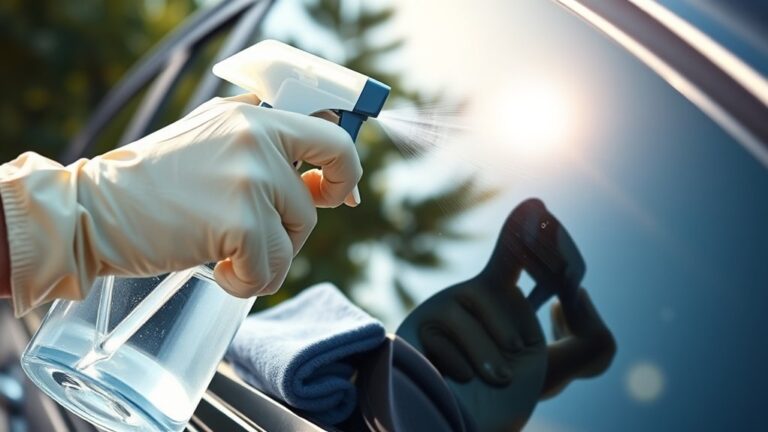
Wear gloves and work in a shaded, ventilated area to prevent accidents.
If you keep these tips in mind, you’ll learn much more about safe application and storage for a streak-free shine.
Key Takeaways
- Use a funnel or a controlled spray bottle to prevent spills when transferring the cleaner. It makes the process so much easier and less messy.
- Open the container carefully and pour slowly into a designated spray bottle. Take your time to avoid overflows and spills.
- Store the glass cleaner upright in a cool, dry place away from children. This keeps it safe and ready for your next cleaning session.
- Wear gloves and protective eyewear when handling the cleaner. It’s always better to be safe and protect your skin and eyes.
- Always label the container clearly and avoid overfilling to prevent leaks. Proper labeling helps prevent mix-ups and accidents.
Why Safety Comes First When Using Glass Cleaner in Your Car
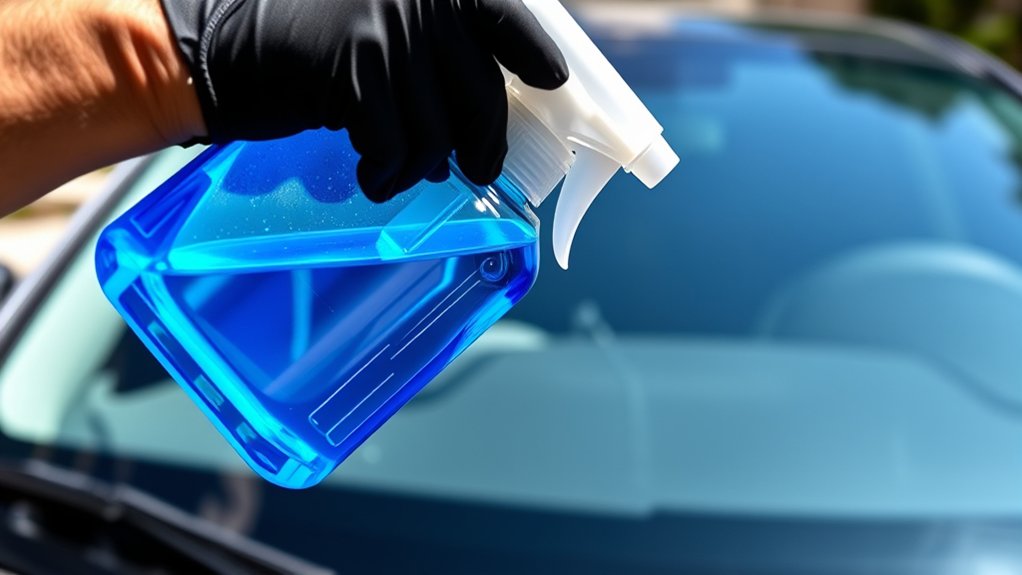
Because safety is paramount, you should always prioritize precautions when using glass cleaner in your car. The chemicals in some cleaners can be harsh and may cause skin irritation or damage to your eyes if mishandled.
Before spraying, confirm the vehicle is parked in a well-ventilated area to avoid inhaling fumes. Always wear gloves and protective eyewear to guard against splashes. Keep the cleaner away from your face and avoid inhaling the spray directly.
Read the label carefully for instructions and warnings before use. Never spray glass cleaner on hot surfaces or in direct sunlight, as this can cause streaks or even damage.
Taking these safety steps helps protect you and guarantees a safer, more effective cleaning process.
How to Choose the Best Glass Cleaner for Your Vehicle
When choosing a glass cleaner, look for products that give a streak-free finish and can effectively remove dirt and grime.
Check the chemical ingredients to make sure they’re safe for your vehicle’s surfaces and your health.
Finding the right cleaner is about balancing good performance with safety so your windows stay clear and your car stays protected.
Effectiveness and Streak-Free Finish
Choosing the right glass cleaner for your vehicle is key to achieving a streak-free, crystal-clear finish. Look for products specifically formulated for automotive glass, as they’re designed to cut through grime without leaving residues.
Effective cleaners remove dirt, fingerprints, and smudges quickly, leaving your windows spotless. To guarantee a streak-free result, use a clean microfiber cloth and wipe in a circular motion, then finish with a straight-line wipe.
Avoid cleaners with excessive alcohol or ammonia, which can cause streaks or damage. Testing a small area first helps you gauge effectiveness.
The best glass cleaners dry quickly and leave no film behind, giving you clear visibility and a professional-grade shine every time.
Chemical Composition and Safety
Selecting the right glass cleaner means paying close attention to its chemical makeup to ensure safety and effectiveness. Look for products that are ammonia-free because ammonia can damage tinting and leave fumes that irritate your eyes and respiratory system.
Instead, choose cleaners made with water, alcohol, or plant-based ingredients, which are safer for both you and the environment. Always check labels for warnings and proper usage instructions.
Avoid cleaners with harsh solvents or abrasives that could scratch or weaken your glass. It’s also important to read the ingredient list to make sure it’s formulated for automotive use.
Opt for a cleaner with non-toxic, biodegradable components. This confirms safety during application and disposal, giving you peace of mind while keeping your vehicle spotless.
Preparing Your Car for Glass Cleaning
Before you start cleaning your car’s glass, it’s important to prepare the vehicle properly. Park in a shaded area to stop the cleaner from drying too fast and causing streaks.
Park in shade to prevent cleaner from drying too quickly and leaving streaks.
Turn off the engine and roll down the windows slightly to let air flow and prevent pressure buildup. Remove any loose debris like leaves or dust with a soft brush or cloth.
Clear away any items near the windows that might block your access or get in the way. Make sure the windshield wipers are lifted away from the glass so they don’t smear dirt back onto the surface.
Taking these steps helps you get a cleaner, streak-free finish. It also protects your vehicle’s interior and exterior during the cleaning process.
How to Open and Transfer Glass Cleaner Into Your Car Safely
Before opening the container, make sure your workspace is clear and well-ventilated. Carefully unscrew the cap, avoiding splashes or spills.
When transferring the cleaner, use a funnel if needed to prevent any mess or waste.
Prepare Your Workspace
Start by finding a clean, flat surface in your garage or driveway to set up your workspace. Clear the area of any clutter or objects that could get in your way or cause spills.
Lay down a rag or paper towels to catch any drips or leaks. Have your glass cleaner container ready, along with any tools you’ll need, like a funnel or gloves.
Make sure the area is well-ventilated, especially if you’re working with strong-smelling or chemical products. Keep a trash bin nearby for empty containers or used paper towels.
Take your time to arrange everything neatly so you can transfer the cleaner smoothly without rushing or spilling. Preparing your workspace carefully helps guarantee a safe and efficient process.
Open Container Carefully
Carefully opening your glass cleaner container is key to avoiding spills or accidents. Grip the cap firmly and turn it slowly to break the seal.
Check for any leaks or damage before you proceed. To help you visualize, here’s a quick guide:
| Step | Action | Tip |
|---|---|---|
| 1 | Grip the container cap | Use a firm hold but avoid crushing |
| 2 | Turn slowly counterclockwise | Prevent sudden splashes |
| 3 | Check for leaks | Make sure there are no drips before pouring |
Transfer Without Spillage
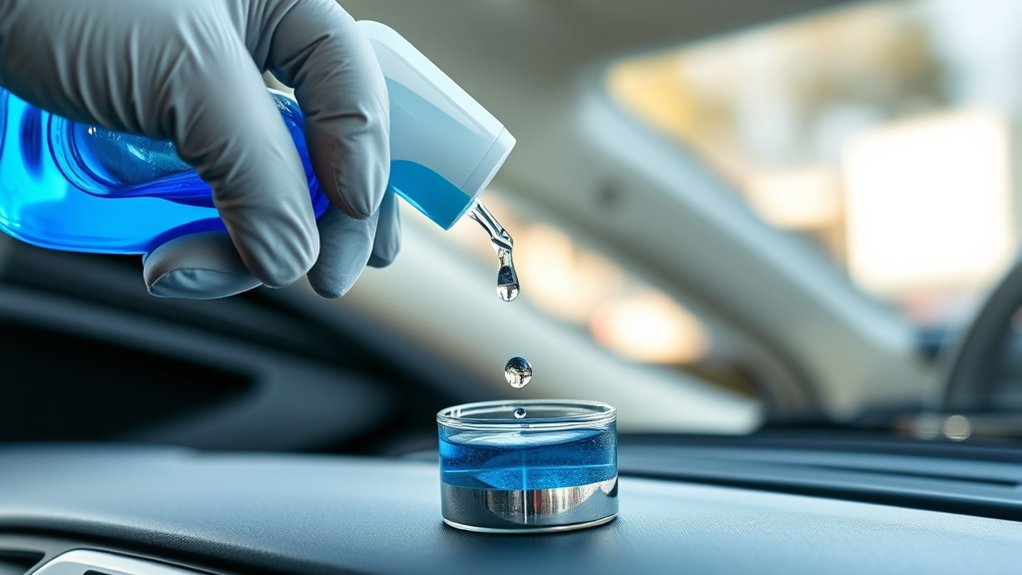
To transfer glass cleaner into your car safely, make sure you have a clean, stable surface to work on and keep your hands steady. This helps reduce spills and accidents.
Before pouring, loosen the cap slowly to release any built-up pressure. Using a funnel can help control the flow and prevent splashes.
Pour slowly and steadily, focusing on accuracy.
Here are three tips to guarantee a spill-free transfer:
- Ensure the container’s opening is wide enough for controlled pouring.
- Keep the container close to the car’s opening to reduce drips.
- Use a paper towel nearby to catch any accidental spills immediately.
Following these steps keeps the process safe, clean, and efficient.
Tips to Prevent Spills During Glass Cleaner Application
One of the easiest ways to prevent spills when applying glass cleaner is to use a spray bottle with a controlled nozzle. This helps you aim precisely, reducing overspray or drips.
Hold the bottle close to the surface before spraying to minimize excess liquid. Keep your hand steady and avoid quick movements to prevent squirting outside the target area.
If you’re working near sensitive spots like electronic controls or upholstery, cover them with a cloth or plastic wrap beforehand. Also, don’t overfill your spray bottle, as that can cause leaks.
How to Apply Glass Cleaner to Your Windshield and Windows
Once you’ve prepared your spray bottle and taken steps to prevent spills, it’s time to apply the glass cleaner to your windshield and windows.
Hold the spray bottle about six inches away from the surface, then spray evenly across the entire area. Use a circular motion to cover all spots, paying special attention to stubborn streaks or grease.
For best results, follow these steps:
- Start from the top and work your way down to avoid drips and streaks.
- Apply light, even coats—more isn’t better; it’s about thorough coverage.
- Use a clean microfiber cloth to wipe in a circular motion, guaranteeing streak-free clarity.
This method guarantees a spotless, crystal-clear view that improves your driving safety.
How to Clean and Store Your Glass Cleaner Bottle
To keep your glass cleaner bottle in good shape, make sure to regularly clean the outside and the nozzle. This helps prevent buildup and keeps everything working smoothly.
Store the bottle upright in a cool, dry place away from direct sunlight. This prevents leaks and keeps the cleaner from degrading over time.
Check the bottle periodically for cracks or leaks. If you notice any damage, replace it to ensure safe and effective use.
Proper Cleaning Techniques
Start by rinsing your glass cleaner bottle with warm water to remove any leftover product or dirt. This helps keep the surface clean before you refill or store it.
Next, wipe the bottle thoroughly with a clean cloth to get rid of any remaining moisture and dirt. Finally, check the nozzle or spray mechanism to make sure it’s free of clogs or buildup.
Remember these key points:
- Clean the bottle regularly to prevent contamination.
- Use warm water to dissolve dried cleaner residue.
- Make sure the spray nozzle works smoothly to avoid uneven application.
Safe Storage Practices
Keeping your glass cleaner bottle in good condition involves proper cleaning and careful storage. After each use, rinse the bottle with warm water to remove residue and prevent buildup. Wipe the nozzle and cap to keep them free of cleaner, which helps maintain proper spray function.
Store the bottle in a cool, dry place away from direct sunlight, extreme temperatures, and heat sources. Always keep it upright to prevent leaks or spills. If you’re not using the cleaner for a while, tighten the cap securely to avoid evaporation or accidental leaks.
Use a designated storage area to keep the bottle out of reach of children and pets. Proper storage guarantees the cleaner stays effective and safe to use whenever you need it.
Bottle Maintenance Tips
Regularly cleaning and properly storing your glass cleaner bottle helps ensure it stays effective and safe to use. Rinse the bottle thoroughly after each use to remove any residue.
Make sure the nozzle is clean and free of clogs so you get an even spray every time. Store the bottle upright in a cool, dry place away from direct sunlight, which can break down the solution.
Here are three key tips:
- Rinse thoroughly after each use to prevent buildup and clogging.
- Check the nozzle regularly for blockages to ensure proper spray flow.
- Store upright in a cool, shaded area to keep the cleaner effective.
Following these steps can help extend the life of your bottle and keep your cleaning safe and efficient.
Common Mistakes to Avoid When Cleaning Your Car’s Glass
One common mistake to avoid is using harsh or abrasive cleaning tools, which can scratch or damage your car’s glass. Steer clear of steel wool, rough scrub brushes, or abrasive pads, as they can leave permanent marks. Instead, use a soft microfiber cloth or a non-abrasive sponge to prevent scratches.
Furthermore, avoid cleaning your glass in direct sunlight because this can cause the cleaner to dry too quickly, leaving streaks. Don’t use ammonia-based cleaners on tinted windows, since they can damage the tint film.
Also, never spray glass cleaner directly onto the glass; always spray it onto the cloth first. These mistakes can hurt your glass’s clarity and longevity, so follow gentle, proper cleaning techniques.
What to Do If You Spill or Damage Your Glass Cleaner
If you accidentally spill or damage your glass cleaner, acting quickly can help prevent stains or damage. First, grab a clean cloth and blot the spill right away, being careful not to spread the cleaner further.
Next, rinse the affected area with water to dilute the cleaner and reduce any residue. If you still see a stain or damage, try applying a mild soap solution or a stain remover that’s safe for glass.
Remember, quick action helps protect your car’s surfaces and keeps your cleaning routine effective.
React swiftly to minimize damage and keep your car looking its best.
Use water to dilute and neutralize the spill, reducing potential harm.
Follow up with gentle cleaning to restore clarity and cleanliness.
Final Tips for Safe and Effective Car Glass Cleaning
To guarantee safe and effective car glass cleaning, always choose the right products and tools. Use a microfiber cloth to avoid scratches and ensure a streak-free shine.
Work in good lighting and clean your glass with gentle, circular motions. Instead of spraying cleaner directly onto the glass, spray it onto the cloth to prevent overspray and damage.
Patience is key—don’t rush the process. Keep a small container of water nearby for quick rinses if needed.
| Emotions | Actions |
|---|---|
| Confidence | Choose quality products |
| Satisfaction | Achieve a streak-free view |
| Calmness | Clean slowly and carefully |
| Pride | Maintain your car’s appearance |
| Relief | Drive safely with clear visibility |
Frequently Asked Questions
Can Glass Cleaner Damage Tinted Windows?
Yes, glass cleaner can damage tinted windows if it contains ammonia or harsh chemicals. These substances can break down the tint film, causing it to peel, crack, or discolor over time.
To protect your tinted windows, choose a cleaner specifically designed for tinted glass or a gentle, ammonia-free formula. Always spray the cleaner onto a soft cloth before wiping, avoiding direct contact with the tint.
Is It Safe to Use Glass Cleaner on Car Mirrors?
Yes, it’s safe to use glass cleaner on your car mirrors. Just make sure to pick one that’s ammonia-free to avoid damage or streaks.
Spray the cleaner onto a clean microfiber cloth instead of directly on the mirror, then wipe gently.
Try to avoid harsh scrubbing motions, as they can scratch or damage the surface.
Regularly cleaning your mirrors with the right cleaner will keep them clear.
This helps maintain good visibility, making your driving safer.
How Often Should I Clean My Car’s Glass?
Think of your car’s glass as your window to the world—clean it often so you can see clearly.
You should wash your car’s glass every 1-2 weeks, especially if you notice dirt, smudges, or water spots.
Regular cleaning helps prevent buildup that can block your view.
Use a gentle glass cleaner and a microfiber cloth for the best results.
Staying consistent with cleaning keeps your view sharp and makes driving safer.
Can I Use Glass Cleaner on Interior Glass Surfaces?
Yes, you can use glass cleaner on interior glass surfaces. Just make sure to pick a cleaner meant for automotive use or one that’s ammonia-free to prevent damage or streaks.
Spray it lightly onto a soft, lint-free cloth instead of directly onto the glass. Wiping in gentle, circular motions works best.
Finally, buff with a dry cloth to get a clear, streak-free finish without harming your interior surfaces.
What Should I Do if My Glass Cleaner Fumes Cause Irritation?
If your glass cleaner fumes cause irritation, move to fresh air right away.
Rinse your eyes with clean water if they sting, and wash any affected skin thoroughly.
If the irritation continues, seek medical help promptly.
To prevent this from happening again, make sure your space is well-ventilated when using the cleaner.
Wear gloves and try not to breathe in the fumes directly.
Always check the product label for safety instructions so you can protect yourself effectively.
Conclusion
By prioritizing safety, selecting superb solutions, and staying vigilant, you’ll master the art of spotless, streak-free car glass cleaning. Remember, cautiousness and care create clear views and confident drives.
With these tips, you’ll prevent spills, avoid mistakes, and ensure your glass cleaner is stored safely and used steadily. So, stay savvy, stay safe, and keep your car’s glass gleaming brilliantly.
Because a little caution goes a long way toward crystal-clear clarity, especially when handling glass cleaner in your car.