How to Use Regular Glass Cleaner on My Car Windows Safely
Cleaning your car windows can often feel like a tricky task—especially when streaks and spots keep ruining that crystal-clear look. You’re not alone; many people struggle with getting their windows perfectly clean without harsh chemicals or frustrating smudges.
Luckily, with some simple tips, you can achieve spotless, streak-free glass every time.
To safely use regular glass cleaner on your car windows, start by rinsing the windows with water to remove loose dirt and dry with a microfiber cloth.
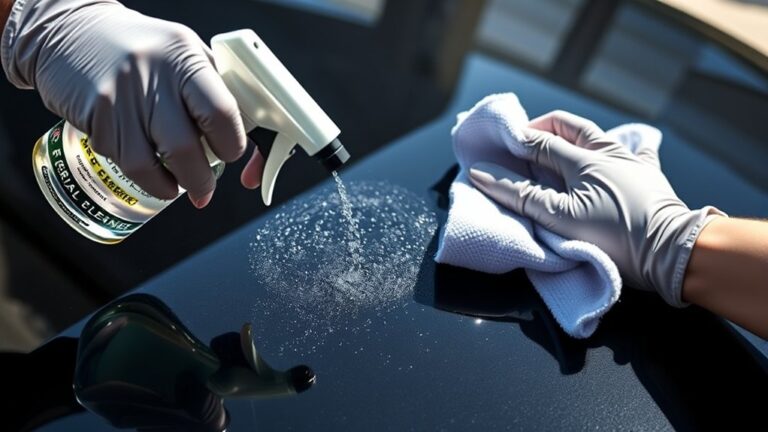
Spray the cleaner evenly and wipe in a circular motion, avoiding excessive use of harsh chemicals like ammonia or vinegar. Buff the glass with a clean, dry cloth for a streak-free finish.
If you want tips on handling stubborn spots or when to see a professional, keep exploring for helpful advice.
Key Takeaways
- Ensure the cleaner is ammonia-free and specifically designed for automotive glass. This helps prevent damage to your tint or coatings.
- Rinse your windows with water first. This will remove loose dirt and make the cleaning process easier.
- Dry the windows with a microfiber cloth to minimize streaks. It’s a simple step that can make a big difference.
- Spray the cleaner evenly in a circular motion. Be careful not to over-saturate the glass, as too much product can leave residue.
- Use a clean, dry microfiber cloth to buff the glass. This will help remove streaks or spots and leave your windows crystal clear.
- It’s best to work in shaded areas. This prevents the cleaner from drying too quickly, which can cause streaks.
Do Household Glass Cleaners Damage Car Windows?
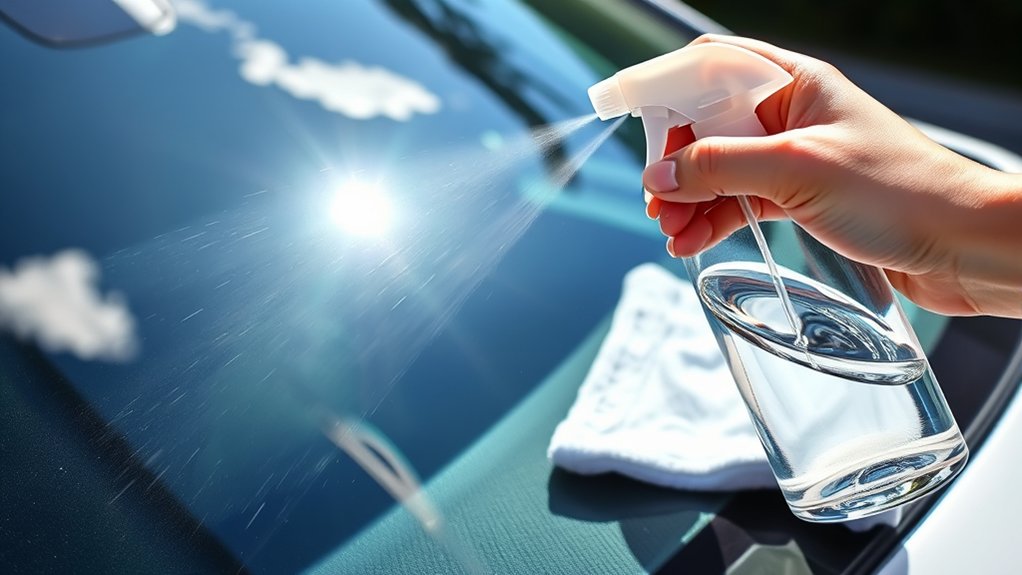
Although household glass cleaners are convenient and easy to find, they can sometimes damage your car windows. Many of these cleaners contain harsh chemicals like ammonia or vinegar, which can harm the tint film or protective coatings on your glass.
Household glass cleaners can harm car windows with harsh chemicals like ammonia or vinegar.
Over time, these chemicals might cause streaks, haziness, or even surface scratches. Using a cleaner not specifically made for automotive glass can weaken the window’s surface and reduce its durability.
This damage might not be obvious right away but can affect your visibility and the window’s strength. Some cleaners also leave residues that are hard to remove, making it even more difficult to see clearly.
To keep your car windows in good shape, it’s best to use cleaners made specifically for automotive glass. These are designed to clean effectively without causing damage.
How Regular Glass Cleaners Work on Car Glass
Regular glass cleaners are made to remove dirt, grime, and fingerprints from surfaces. But they often contain chemicals that might not be good for car windows.
When you use these cleaners, they work by breaking down the oils and residues that cause smudges and streaks. The active ingredients usually include alcohols and ammonia, which evaporate quickly and leave a clear surface.
Here’s how they work:
- They dissolve grease and oils, making dirt easier to wipe away.
- They lift off fingerprints and smudges without scratching the glass.
- They evaporate fast, which helps reduce streaks and fogging.
- They can sanitize the surface by killing bacteria and germs, depending on the formulation.
While these cleaners are great for household glass, they might not be the best choice for car windows. They can damage coatings or tinting over time.
Choosing the Best Glass Cleaner for Your Car
Choosing the right glass cleaner for your car is key to keeping your windows clear without causing damage. Look for formulas made specifically for automotive glass—they’re designed to remove dirt without leaving streaks or residue.
Avoid cleaners with ammonia or harsh chemicals, as they can damage tinting or strip protective coatings. Instead, go for ammonia-free options that are safe for tinted windows and sensitive surfaces.
Think about the cleaner’s power—some are better at tackling stubborn grime, while others focus on giving you a streak-free shine. Check the labels carefully and pick products with good reviews from car owners.
Finally, choose a cleaner that’s easy to apply and dries quickly so you can keep your visibility clear without any hassle.
Safety Tips for Cleaning Car Windows at Home
Cleaning your car windows at home can be safe and effective if you follow a few essential precautions. First, always work in a shaded area to prevent the cleaner from drying too quickly and leaving streaks.
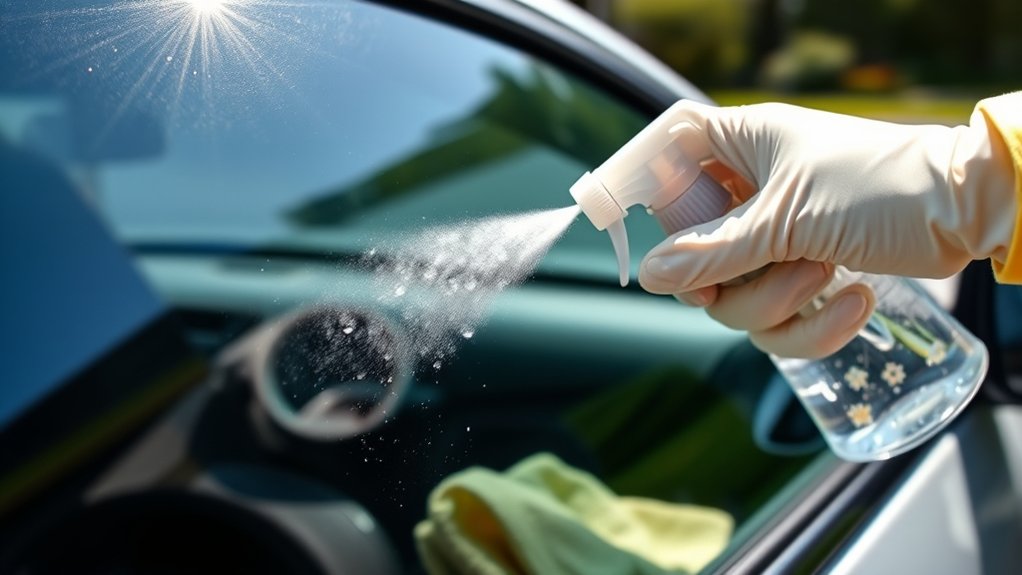
Second, wear gloves to protect your skin from harsh chemicals, even if they seem mild. Third, use a clean microfiber cloth to avoid scratching the glass.
Fourth, avoid using abrasive tools or cleaners that contain ammonia or bleach, as these can damage the glass or surrounding trim. Moreover, keep the area well-ventilated to prevent inhaling fumes.
How to Prepare Your Car Windows Before Cleaning
Before you start cleaning, it’s important to prepare your car windows properly to get the best results. First, remove loose dirt and debris with a soft brush or microfiber cloth. This helps prevent scratching when you wipe the glass later.
Next, rinse the windows with water to wash away dust and grime. Dry the surface with a clean cloth to avoid streaks. Use the table below to visualize these steps:
| Step | Action | Purpose |
|---|---|---|
| Remove debris | Brush or microfiber cloth | Prevent scratches |
| Rinse with water | Spray or splash water | Loosen dirt and grime |
| Dry the windows | Use a clean cloth | Minimize streaks |
Proper preparation makes your cleaning more effective and safer.
Tools You Need to Clean Car Windows Effectively
To clean your car windows effectively, you need the right tools at hand. Essential supplies include a quality glass cleaner, microfiber cloths, and a squeegee or applicator.
Using proper application tools guarantees a streak-free, spotless finish every time. It’s all about making the process easier and getting professional-looking results with less hassle.
Essential Cleaning Supplies
Having the right tools is key to getting streak-free, crystal-clear car windows. First, you’ll want a high-quality glass cleaner made for automotive use.
Next, a microfiber cloth is essential for wiping without scratching the glass. A soft-bristled brush can also help remove stubborn dirt and debris around the window edges.
Finally, a squeegee is great for streak-free drying, especially on larger surfaces. These supplies make sure you clean your windows effectively without damaging the glass or leaving streaks.
Always pick supplies specifically designed for automotive windows to avoid scratches and chemical damage.
With these essentials, you’ll be all set to achieve spotless, clear windows that boost your driving visibility and enhance your car’s look.
Proper Application Tools
Using the right application tools is essential for achieving streak-free, spotless car windows. You’ll want a microfiber cloth or soft, lint-free towels to avoid scratches and guarantee a smooth finish.
A dedicated glass cleaning applicator or a spray bottle with a trigger helps control the amount of cleaner you apply, preventing over-saturation. For larger surfaces, a squeegee can be useful for removing excess liquid without streaks.
Keep a small brush or toothbrush handy for cleaning around window edges and seals. Using clean, high-quality tools guarantees the cleaner works effectively and prevents dirt from spreading.
Step-by-Step Guide to Applying Glass Cleaner
Start by gathering your supplies: a clean, lint-free microfiber cloth and a good-quality glass cleaner. Once you have everything, follow these simple steps:
- Spray the glass cleaner evenly onto the window surface, covering all areas you want to clean.
- Use your microfiber cloth to gently wipe the glass in a circular motion, lifting dirt and grime as you go.
- Keep wiping until the entire window is cleaned evenly, paying extra attention to edges and corners.
- Use a dry part of the cloth to buff the glass, removing any leftover streaks or residue.
Make sure to keep the cloth clean during the process to avoid spreading dirt around. Work in small sections for the best, streak-free shine.
Tips for Achieving a Streak-Free Shine
Achieving a streak-free shine after applying the glass cleaner requires a few simple but effective techniques. First, use a clean, lint-free microfiber cloth to wipe the glass. This helps prevent fibers from sticking and leaving residue.
Always work in a shaded area or when the windows are cool. Direct sunlight can cause the cleaner to dry too quickly, which often results in streaks. Spray the cleaner evenly on the window surface, then wipe with vertical and horizontal motions to ensure full coverage.
Avoid over-spraying, as it can cause drips and streaks. After wiping, gently buff the glass with a dry part of the cloth to remove any remaining streaks or haze. With these tips, you’ll get a clear, mirror-like finish every time.
Common Mistakes When Cleaning Car Windows
One common mistake people make when cleaning car windows is relying only on household or all-purpose cleaners that aren’t meant for automotive glass. These cleaners can leave residues or streaks, which can reduce visibility and even damage the glass over time.
To avoid this, always use a cleaner made specifically for automotive glass. Also, try to clean your windows in the shade or on cloudy days—direct sunlight can cause streaks and quick evaporation.
Make sure to use a clean microfiber towel instead of a rough or dirty cloth, which can scratch the glass. And don’t forget to remove dirt and debris before applying the cleaner, because wiping over dirt can cause scratches.
How to Remove Stubborn Streaks and Spots
Stubborn streaks and spots can be really frustrating, but the first step is figuring out exactly where they’re sticking around.
Using the right cleaning tools and a good technique will make a big difference in removing them effectively.
With these simple methods, your windows will look crystal clear and streak-free in no time.
Identify Persistent Streaks
Persistent streaks can be really frustrating, especially after you’ve just cleaned your windows thoroughly. To spot those stubborn streaks, take a good look at your windows in different lighting. Sometimes the glass looks cloudy, uneven, or has a film that catches the light in a weird way.
These spots often mean there’s leftover residue or mineral deposits that regular cleaning can’t remove.
Here are four signs to keep an eye out for:
- Visible streaks that won’t go away even after wiping.
- Cloudy patches that stick around despite cleaning.
- Spots that shimmer or catch the light.
- Areas where water droplets or smudges stay longer than others.
Use Proper Cleaning Tools
To effectively remove stubborn streaks and spots, it’s crucial to use the right cleaning tools. Start with a microfiber cloth, which is gentle on glass and traps dirt without scratching.
Avoid abrasive materials like paper towels or rough sponges that can leave scratches or lint behind. A squeegee with a clean rubber blade works well for streak-free results when used properly.
For tougher spots, use a soft-bristled brush or a dedicated glass cleaning pad to loosen grime. Make sure all tools are clean before use to prevent spreading dirt.
Using the correct tools guarantees you don’t damage your windows and helps achieve a spotless, streak-free finish efficiently. Proper tools are key to making your cleaning routine effective and safe.
Apply Correct Cleaning Technique
Start by applying the glass cleaner evenly across the window surface, focusing on areas with streaks or spots. Use a clean microfiber cloth to wipe in a circular motion, which helps lift stubborn grime without scratching.
To get a streak-free finish, follow these steps: Use a fresh cloth for each section to prevent re-depositing dirt. Work from top to bottom to avoid drips streaking across clean areas.
Apply gentle pressure because pressing too hard can spread spots. Finish by wiping with a dry, lint-free cloth for a polished look.
This technique guarantees thorough cleaning and minimizes streaks, leaving your windows crystal clear and streak-free. Proper application is key to achieving professional-quality results at home.
Maintaining Clear Car Windows Over Time
Keeping your car windows clear over time requires regular maintenance and attention. To keep them spotless, clean them weekly with a gentle glass cleaner and a soft cloth. Avoid harsh scrubbing that can scratch the glass.
Regularly check for stubborn spots like bird droppings or bug splatter, and clean them promptly. Protect your windows from dirt buildup by parking in shaded areas and avoiding driving through muddy or dusty conditions.
| Tip | Benefit |
|---|---|
| Clean weekly | Prevents buildup and keeps visibility high |
| Use soft cloths | Avoids scratches and streaks |
| Address stains immediately | Maintains clarity and reduces damage |
| Park in shade | Protects from sun damage and fading |
| Avoid harsh chemicals | Preserves glass integrity |
When to Call a Professional Window Cleaner
If you notice stubborn stains or damage that won’t come off, it’s time to call a professional.
Safety concerns like risky heights or broken glass also mean you should get an expert.
For large or hard-to-reach areas, professionals can clean thoroughly and safely.
Stubborn Stains or Damage
When you notice persistent stains or visible damage on your car windows that won’t come off with standard cleaning, it’s a clear sign you should consider calling a professional. Trying to scrub stubborn stains or fix damage yourself can make things worse or cause permanent harm.
Reach out if you see deep scratches that catch your fingernail, persistent etching or cloudiness, cracks or chips that compromise the window’s integrity, or stains that won’t go away after multiple cleanings.
A professional window cleaner has the right tools and expertise to assess and fix these issues properly. They can prevent further damage and make sure your windows stay clear and safe, saving you time and potential repair costs later on.
Safety Concerns or Risks
Because car windows can pose safety risks if not handled properly, it’s important to recognize when professional help is necessary.
If you notice cracks, chips, or significant damage, don’t try to clean or repair them yourself. These issues can get worse with improper cleaning, risking glass shattering or further damage.
Also, if your windows are extremely dirty, greasy, or covered in stubborn grime, a professional cleaner has the right tools and expertise to handle tough stains safely.
When your windows are hard to reach or need special equipment like extension poles or lifts, it’s safer to call in the pros.
Attempting risky cleaning tasks without proper safety measures can lead to injury or damage.
Large or Hard-to-Reach Areas
Reaching large or high windows often needs special equipment and techniques that can be tough to handle by yourself. If you’re struggling to clean hard-to-reach spots safely, it’s a good idea to consider hiring a professional.
They have the experience, tools, and safety gear to get the job done right. Ask yourself these questions:
- Are the windows too high or far to reach without risking injury?
- Do you lack the right ladders or scaffolding?
- Is the area hard to access because of nearby obstacles?
- Have your past cleaning attempts been incomplete or unsafe?
If you answered yes to any of these, calling a professional ensures your windows are cleaned thoroughly and safely, without risking damage or injury.
Frequently Asked Questions
Can I Use Regular Glass Cleaner on Tinted Car Windows?
Yes, you can use regular glass cleaner on tinted car windows, but make sure it’s non-ammonia-based. Ammonia can damage the tint film over time.
Always spray the cleaner onto a soft cloth instead of directly on the glass. Gently wipe the windows to avoid scratching or damaging the tint.
It’s a good idea to test a small, hidden area first. That way, you can check if the cleaner causes any discoloration or damage to your tint before cleaning the entire window.
How Often Should I Clean My Car Windows With Regular Glass Cleaner?
You should clean your car windows with regular glass cleaner about once every two weeks, or more often if you notice dirt, smudges, or streaks.
Frequent cleaning keeps your windows clear and helps improve visibility. But try not to over-clean, because that can cause streaks or even damage.
Use a soft cloth or microfiber towel, and spray the cleaner evenly. Wipe gently for the best results.
Are There Any Car Window Coatings That React Negatively to Household Glass Cleaners?
Yes, some car window coatings, like ceramic or hydrophobic layers, can react badly to household glass cleaners that contain ammonia or harsh chemicals. These ingredients might strip or damage the coating, making it less effective.
To keep your coatings safe, always check the manufacturer’s recommendations. It’s best to use cleaners specifically designed for coated or treated windows.
Using the wrong cleaner could reduce visibility and lead to costly repairs later on. So, be careful and choose the right products to protect your car’s windows.
Is It Safe to Spray Glass Cleaner Directly Onto the Car Windows?
It’s generally safe to spray glass cleaner directly onto your car windows, but you should do so carefully. Hold the spray nozzle a few inches away to prevent overspray, and avoid spraying on hot or sunny windows to prevent streaks or residue.
After spraying, use a clean microfiber cloth to wipe and buff the glass, ensuring a streak-free finish. Always read the product instructions for the best results.
Can Regular Glass Cleaner Damage the Rubber Seals Around Car Windows?
Regular glass cleaner can potentially damage the rubber seals around your car windows if you spray directly onto them or let the cleaner sit too long.
To avoid this, spray the cleaner onto a soft cloth first, then wipe the windows. Keep the cloth away from the seals to prevent any contact.
This method minimizes the risk of deterioration, helps the seals last longer, and keeps your windows spotless without causing harm.
Conclusion
Now that you know how to safely use regular glass cleaner on your car windows, you’re ready to keep your view crystal clear. Think of your windows as the eyes of your car—keeping them spotless makes sure you see the road ahead clearly.
Just remember to follow safety tips, choose the right cleaner, and avoid common mistakes. Using regular glass cleaner properly helps maintain a streak-free shine without damaging your windows.
With a little effort, your windows will shine like a mirror, reflecting a world in perfect focus. Keeping your car windows clean with regular glass cleaner is a simple way to boost your driving safety and enjoyment.