Can Glass Cleaner Damage Car Paint?
Are you tired of worrying about accidentally damaging your car’s paint when cleaning it? Many car owners struggle with choosing the right products that keep their vehicle looking great without causing harm.
Using glass cleaner on your car can damage the paint if it contains harsh chemicals like ammonia or alcohol, which can strip protective coatings and cause dullness or micro-scratches.
Frequent use may weaken the paint’s surface, making it more vulnerable to damage.
To keep your car looking its best and avoid long-term harm, it’s best to opt for products designed specifically for automotive finishes.
Keep going to learn how to protect your vehicle effectively.
Key Takeaways
- Glass cleaners often contain ammonia and alcohol, which can strip protective coatings and dull your car paint.
- If you use harsh glass cleaners frequently, it might cause micro-scratches and damage the clear coat.
- Using products not made for automotive surfaces increases the risk of chemical damage to your paint.
- Signs of damage include dullness, streaks, and a rough texture, which might mean your paint is being harmed by improper cleaners.
- To keep your car’s paint in good shape, it’s best to use cleaning products specifically designed for automotive surfaces.
- Getting professional cleaning with these specialized products can help prevent damage and maintain your car’s paint health.
Is Glass Cleaner Safe to Use on Your Car Paint?
While glass cleaner might seem like a quick and easy way to clean your car, it’s important to ask if it’s safe for your paint. Many glass cleaners contain chemicals that can be tough on automotive finishes.
Using glass cleaner on your car can damage paint; opt for products designed specifically for automotive surfaces.
Ingredients like ammonia or alcohol can strip away protective coatings or cause dullness over time. If you use glass cleaner often, you might unknowingly damage your paint or clear coat.
It’s tempting to grab it for a quick clean, but it’s better to use products made specifically for cars. These are designed to clean well without harming your paint.
Always check the label to see if the cleaner is safe for cars. When in doubt, choose a dedicated automotive glass and surface cleaner.
What’s in Glass Cleaner, and How Does It Affect Car Paint?
Glass cleaners often contain chemicals like alcohol, ammonia, or vinegar. These can break down paint and the clear coat over time.
These ingredients can strip away protective layers, which makes your car more vulnerable to damage. Knowing what’s in your cleaner helps you understand how it might harm your vehicle’s paint.
Chemical Composition and Risks
Understanding what’s in glass cleaner is important because its chemicals can be risky for your car’s paint. Most contain ingredients like ammonia, alcohol, and solvents.
Ammonia is a strong alkaline compound that can break down your car’s clear coat, causing dullness and damage over time. Alcohol and solvents evaporate quickly but can strip away protective layers if used too much.
Some cleaners also have fragrances and surfactants that smell nice but might contain additives that aren’t good for your paint. Using harsh chemicals regularly can weaken your car’s finish, making it more prone to scratches and oxidation.
Always check labels and choose pH-balanced cleaners made specifically for cars to reduce these risks.
Impact on Paint Coating
The chemicals in glass cleaner can directly impact your car’s paint coating, especially if used improperly or too often. Many glass cleaners contain ammonia or alcohol, which can strip away the protective layer on your paint.
This coating acts as a barrier against dirt, UV rays, and weather elements. When these chemicals break down that layer, your car becomes more vulnerable to scratches, oxidation, and fading.
Frequent use of harsh cleaners can cause micro-scratches or dullness, reducing the paint’s shine and integrity over time. Even a seemingly harmless spray can weaken the clear coat if applied improperly.
To protect your car’s paint, choose gentle, pH-balanced cleaners. Avoid excessive or aggressive scrubbing. Proper maintenance helps preserve both the appearance and the longevity of your vehicle’s finish.
Can Using Glass Cleaner Damage Your Car’s Paint or Dull Its Finish?
Using glass cleaner on your car can pose risks to its paint and shine if it contains harsh chemicals. Over time, these ingredients might cause the paint to deteriorate or dull the finish.
It’s important to understand how your cleaner’s formulation impacts your car’s appearance. Choosing the right cleaner can help keep your car looking its best without causing damage.
Potential Paint Damage Risks
While glass cleaner is designed to be safe for automotive surfaces, some formulas contain chemicals that can pose a risk to your car’s paint. Many glass cleaners include ammonia or alcohol, which can strip away protective wax layers and cause the paint to become dull or faded over time.
If you use a harsh or concentrated formula frequently, it may weaken the paint’s clear coat, leading to potential peeling or discoloration. Spray residues left on the surface can attract dirt or cause uneven spots, further damaging the finish.
Using a cleaner not specifically formulated for cars increases the risk of unintended damage. To protect your paint, always choose a gentle, automotive-safe cleaner and follow the manufacturer’s instructions carefully.
Effect on Car’s Shine
Even if glass cleaner doesn’t directly harm your car’s paint, it can still dull your vehicle’s shine if not used properly. Many glass cleaners have chemicals that, over time, can strip away the protective wax or sealant on your car’s surface.
When this happens, the paint loses its reflective quality, making your car look dull and less vibrant. Using the wrong cleaner too often or applying it incorrectly can speed up this process.
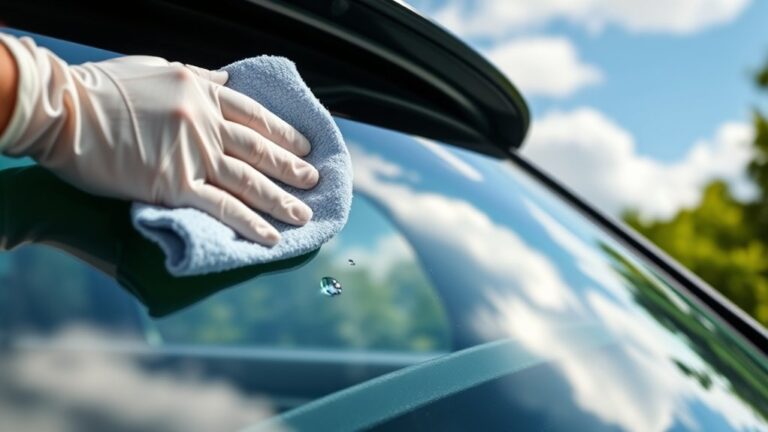
To keep that glossy finish, use a cleaner made specifically for cars, and avoid spraying it directly onto painted surfaces. Instead, spray it onto a microfiber cloth and gently wipe.
Proper maintenance and careful cleaning help preserve your car’s shine, keeping it looking fresh and polished longer.
Signs Your Car Paint Might Be Damaged by Glass Cleaner
One clear sign your car paint might be damaged by glass cleaner is seeing dull, streaky patches or tiny discoloration. These marks suggest the clear coat could be compromised. You might also notice rough or uneven spots on the paint, indicating surface erosion.
To help you understand what to look for, here’s a simple table:
| Sign | Description | Result |
|---|---|---|
| Dull, streaky patches | Loss of shine and streaks | Reduced gloss |
| Fine discoloration | Slight fading or spots on the paint | Uneven look |
| Rough texture | Surface feels gritty or uneven | Paint erosion |
| Flaking or peeling | Paint starts lifting off | Paint failure |
| Increased susceptibility | More prone to scratches or chips | Further damage risk |
Spotting these signs early can help you prevent more damage down the line.
How to Safely Clean Your Car’s Windows and Paint
To clean your car’s windows and paint safely, it’s important to choose the right cleaning products and techniques. Use a gentle, pH-balanced car wash soap instead of harsh household cleaners, which can strip paint and damage glass.
Always wash your car in a shaded area to prevent soap from drying too quickly and leaving spots. Use a soft microfiber cloth or sponge to avoid scratching surfaces. Rinse thoroughly before wiping, and dry the car with a clean, dry microfiber towel to prevent water spots.
When cleaning windows, avoid abrasive materials that can scratch glass. Regularly check your cloths and sponges for dirt or debris, and replace them if they become worn. Following these steps helps keep your car looking great while preventing damage.
Best Alternatives to Glass Cleaner for Car Care
While traditional glass cleaners can work, they’re not always the safest choice for your car’s paint and glass. Instead, try a mix of mild dish soap and water for cleaning windows and painted surfaces. It’s gentle but effective at removing dirt and grime without causing damage.
Microfiber cloths are great too. They clean thoroughly without scratching your car’s surfaces. For those stubborn spots, a dedicated automotive glass cleaner made specifically for cars is a better choice. These formulas are safe for both glass and paint.
Using a clay bar can also help. It removes embedded contaminants from your paint’s surface, leaving it smooth and clean. These alternatives are safer, cost-effective, and help keep your car looking good longer.
What to Do If Your Car Paint Gets Damaged by Glass Cleaner
If your car’s paint shows signs of damage after using glass cleaner, it’s important to act quickly to minimize further harm. First, rinse the affected area with plenty of water to remove any remaining cleaner, preventing it from causing additional damage.
Next, gently wash the area with car-specific soap and water, avoiding harsh scrubbing. After cleaning, dry the surface with a soft microfiber cloth.
If the damage is minor, you might be able to apply touch-up paint or a clear coat to restore the finish. For more severe damage or if you’re unsure, consult a professional auto detailer or body shop.
They can assess the extent of the damage and recommend repairs, preventing further deterioration of your car’s paint.
Frequently Asked Questions
Are There Specific Brands of Glass Cleaner Safer for Car Paint?
Yes, some brands are safer for your car’s paint. Look for glass cleaners labeled as non-abrasive and specifically made for automotive use.
Brands like Meguiar’s, Chemical Guys, or Griot’s Garage have products that won’t harm your paint if used correctly. Always read the labels carefully.
Avoid cleaners with harsh chemicals like ammonia or alcohol, which can strip or damage your car’s paint over time.
Can Repeated Use of Glass Cleaner Cause Long-Term Damage?
Repeated use of glass cleaner can cause long-term damage to your car’s paint if it contains harsh chemicals like ammonia or alcohol. Over time, these ingredients can strip away the clear coat, which can lead to dullness or scratches.
To protect your paint, it’s best to use a gentle, automotive-specific glass cleaner. Avoid excessive scrubbing, as this can also cause damage.
Regularly washing and waxing your car helps maintain its finish and prevents damage from frequent cleaning. This simple routine keeps your car looking its best over time.
How Does Glass Cleaner Compare to Car-Specific Cleaning Products?
You’ll find glass cleaner is like using a sledgehammer for a delicate task—effective but potentially harsh. It’s designed for windows, not car paint, and some formulas contain alcohol or ammonia that can strip protective coatings.
Car-specific products are like tailored suits; they clean effectively while safeguarding your paint. If you want to keep your car shiny and undamaged, stick with products made for automotive use to avoid unintended harm.
Does Temperature Affect the Safety of Using Glass Cleaner on Your Car?
Yes, temperature does affect the safety of using glass cleaner on your car. You should avoid applying it in direct sunlight or on a hot surface, as the cleaner can evaporate quickly and leave streaks or cause paint damage.
Ideally, use glass cleaner on a cool, shaded surface, early in the morning or during cooler parts of the day. This way, it works effectively and helps protect your car’s paint.
Can Glass Cleaner Damage Other Parts of Your Car Besides Paint?
Think of your car as a delicate sculpture; glass cleaner can harm more than just paint. It may strip away protective coatings on plastics, rubber, and trim, causing cracking or fading.
You might not notice immediately, but over time, these parts can deteriorate. Always use a cleaner specifically designed for automotive surfaces and avoid harsh chemicals.
This way, you can keep your car looking pristine without risking damage to other vulnerable areas.
Conclusion
Did you know that using the wrong glass cleaner can damage your car’s paint, leading to costly repairs? Many people aren’t aware that some household cleaners can cause harm.
Over 60% of vehicle owners admit to using household cleaners on their cars, risking damage. It’s a common mistake that can lead to dull spots or scratches on your paint.
To keep your car looking its best, always choose products specifically designed for automotive use. Proper cleaning techniques also make a big difference.
By doing so, you’ll preserve your paint’s shine and avoid unnecessary damage. Using the right glass cleaner is key to protecting your car’s finish and saving you time and money in the long run.