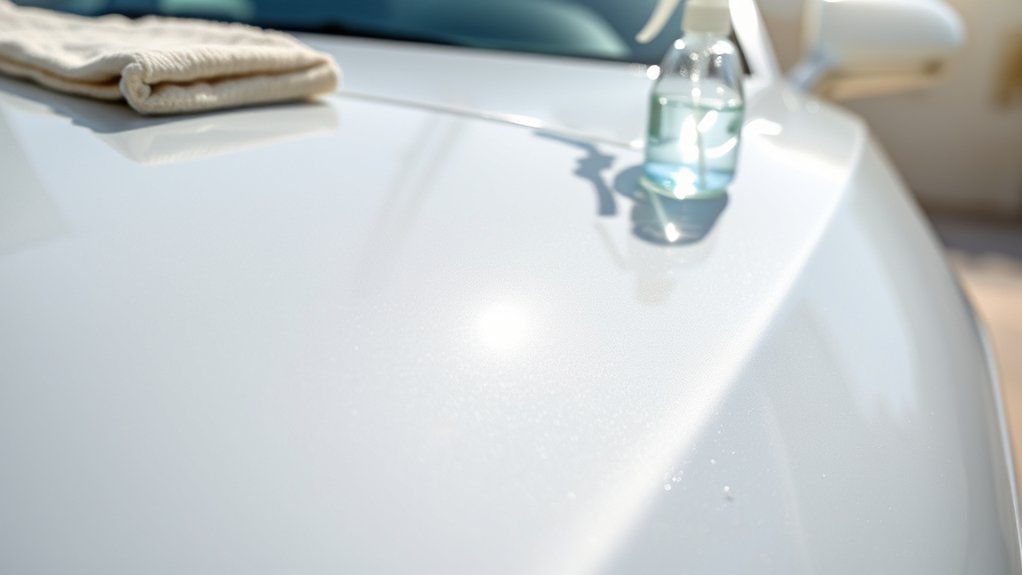
How Do You Use Glass Cleaner on Car Paint
Many car owners struggle with keeping their vehicle’s paint looking shiny and spotless. It’s easy to feel overwhelmed by the variety of cleaning products and unsure about the right way to clean without causing damage.
One simple, effective solution is using glass cleaner on your car paint—if done correctly, it can give your car a streak-free shine.
To use glass cleaner on your car paint safely, start by rinsing the surface with water to remove loose dirt.
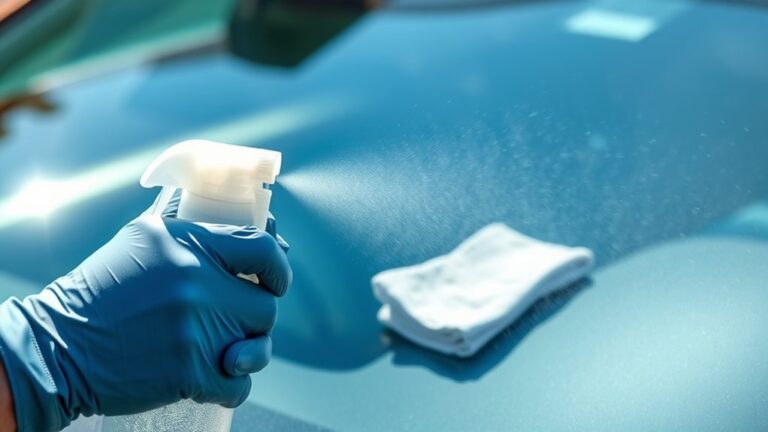
Spray the cleaner onto a clean microfiber cloth rather than directly on the paint, avoiding hot surfaces and direct sunlight. Wipe gently in circular motions, then dry with a separate cloth for a streak-free shine.
Be mindful not to press too hard and always test on a small area first—there’s more to take into account for a flawless finish as you continue.
Key Takeaways
- Test the glass cleaner on a small, hidden area first. This helps make sure it won’t damage your car’s paint before you do the whole surface.
- Spray the cleaner onto a clean microfiber cloth. Don’t spray it directly on the car’s surface—that can cause streaks or oversaturation.
- Gently wipe the painted surface with overlapping circular motions. Be careful not to press too hard, as that can damage the paint.
- Use a separate dry microfiber cloth to thoroughly dry the area. This will remove any streaks and leave a nice, clean finish.
- Try to avoid cleaning in direct sunlight or when the surface is hot. This can cause the cleaner to dry too quickly, leaving residue or streaks behind.
Is It Safe to Use Glass Cleaner on Car Paint?
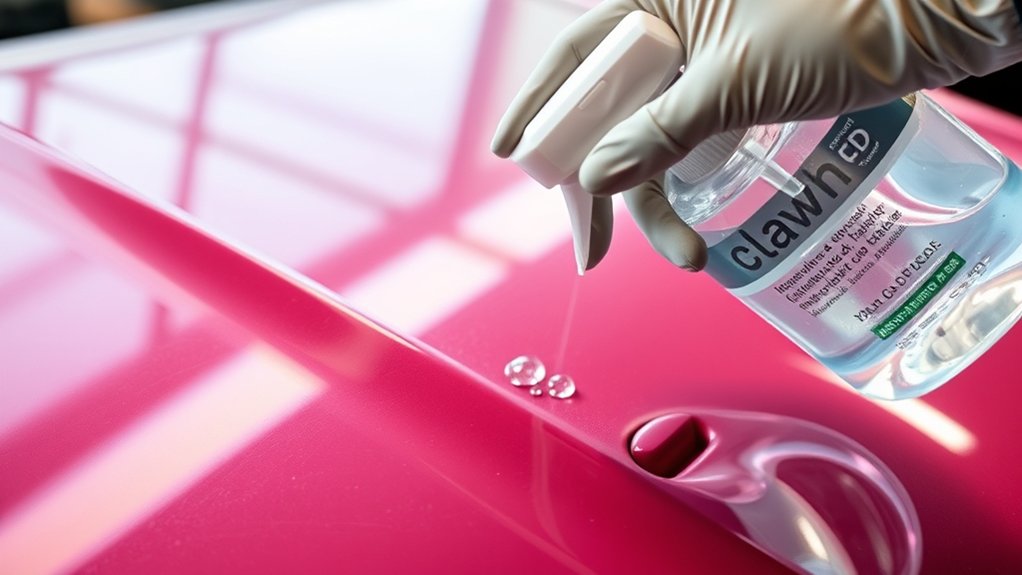
While glass cleaner can seem like a quick fix for cleaning your car’s exterior, be careful about using it directly on the paint. Most glass cleaners contain ammonia or alcohol, which can harm the clear coat and paint over time.
These chemicals might also strip away wax or protective layers, making your car more vulnerable to scratches and oxidation. If you accidentally use it on your paint, you may notice dullness or tiny scratches.
It’s best to avoid applying glass cleaner directly to painted surfaces unless it’s labeled as safe for automotive paint. Instead, use products made specifically for car paint or a gentle soap solution.
Always test a small, hidden area first to make sure it doesn’t cause any damage or adverse reactions.
How to Prepare Your Car Before Applying Glass Cleaner
Before applying glass cleaner, give your car a good wash to remove dirt and debris. This helps ensure the cleaner works effectively without trapping grime.
Make sure to dry it completely so water spots don’t interfere with the cleaning process. A dry surface makes for a streak-free finish.
Also, take a quick look at the paint for any damage or chips. Cleaning over these can sometimes make the damage worse, so it’s good to spot them beforehand.
Wash Car Thoroughly
Start by rinsing your car thoroughly with water to remove loose dirt, dust, and debris. This step helps prevent scratching when you wash with soap later. To visualize, think of these areas:
| Surface Area | Dirt Type | Cleaning Method |
|---|---|---|
| Hood | Dust and grime | Gentle rinse and soap |
| Windows | Bird droppings | Soft cloth and cleaner |
| Wheels and tires | Brake dust | Scrubbing with brush |
Imagine the water flowing over the curves, washing away particles that could scratch your paint. Use a hose with a spray nozzle to target hard-to-reach spots. Once the surface is free of loose debris, you’re ready to wash thoroughly, ensuring a clean surface for the glass cleaner.
Dry Completely Beforehand
After rinsing your car thoroughly, the next step is to make sure the surface is completely dry. Moisture on your car’s paint can dilute the glass cleaner, which reduces its effectiveness and causes streaks.
Use a clean, microfiber towel or chamois to gently dry the surface, working in straight, overlapping motions. Pay attention to crevices, door handles, and around badges where water tends to pool.
Make sure no water spots or damp patches remain, as even small amounts of moisture can interfere with the cleaning process. If needed, let the car air dry for a few minutes, but avoid applying glass cleaner on a wet surface.
A dry, dust-free surface ensures better adhesion and a streak-free finish.
Inspect for Damage
Inspecting your car for damage helps you catch issues early that could get worse with cleaning or affect how the glass looks. Before spraying on glass cleaner, walk around your vehicle and check the paint for chips, scratches, or dents.
Look closely at the areas you plan to clean to spot any damage that might be hidden or hard to see. Fix any big problems beforehand so dirt or cleaner don’t make them worse.
If you see cracks or chips, think about repairing them first. That way, cleaning won’t risk making the damage worse. Checking for damage also shows if your car needs a deeper wash or professional help.
Being proactive protects your paint and keeps your vehicle looking its best.
The Right Way to Apply Glass Cleaner on Your Car’s Exterior
To apply glass cleaner effectively, grab a clean microfiber cloth and spray the cleaner evenly across the surface.
Make sure you’re using a glass cleaner made for cars to avoid any damage.
Using the right technique will give you a streak-free finish and help protect your car’s paint.
Proper Cleaning Technique
Start by thoroughly rinsing your car’s exterior with water to remove loose dirt and debris. This helps prevent scratching during cleaning. Once rinsed, follow these key steps:
- Spray the glass cleaner evenly across the surface, avoiding direct sunlight to prevent streaks and quick drying.
- Use a clean, microfiber cloth to gently wipe the area in a circular motion, making sure to cover every inch without applying too much pressure.
- Dry the surface with a separate dry cloth to eliminate any leftover streaks and achieve a crystal-clear finish.
Sticking to this technique guarantees your car’s paint stays pristine, free of scratches, and looks flawlessly polished. Proper application makes all the difference for a professional-looking shine.
Suitable Glass Cleaner Types
Choosing the right glass cleaner is essential for a streak-free, professional finish on your car’s exterior. You want a cleaner specifically designed for automotive use, as household glass cleaners often contain ammonia, which can damage paint and tint.
Look for products labeled as safe for automotive surfaces, preferably alcohol- or ammonia-free. Some cleaners also contain surfactants that help lift dirt and grime without leaving streaks.
Spray-on, wipe-off formulas work best, allowing you to easily control the cleaning process. Avoid cleaners with harsh chemicals that can strip protective layers or cause discoloration.
Always read the label to verify compatibility with your car’s paint and finish. Using the appropriate glass cleaner guarantees a spotless, clear surface without risking damage.
Why Use a Microfiber Cloth for Best Results?
Using a microfiber cloth is essential because it gently lifts dirt and grime without scratching your car’s paint. This soft material traps particles, preventing scratches that can damage your finish. When you use a microfiber cloth, you’re protecting your investment and keeping your car looking sleek and shiny.
Using a microfiber cloth protects your car’s finish while gently removing dirt and grime for a sleek, scratch-free shine.
Here are three reasons why it’s worth choosing microfiber:
- Gentle on paint: It cleans thoroughly without causing scratches or damage.
- Efficient dirt removal: Traps dirt and dust, so you don’t have to wipe multiple times.
- Reduces streaks: Leaves a streak-free finish that makes your car’s shine stand out.
Choosing the right cloth shows you care for your car and helps maintain its beauty. It’s a small step that makes a big difference in achieving a spotless, flawless look.
Tips to Avoid Common Mistakes When Cleaning Car Paint
While microfiber cloths help protect your car’s finish, mistakes during cleaning can still cause damage. First, never clean your car in direct sunlight because heat can cause soap and cleaner streaks or spots. Use cool or room temperature water to avoid this.
Avoid pressing too hard when wiping. Applying too much force can scratch the paint. Always use the right cleaning solution—never use household cleaners or harsh chemicals, as they can strip the clear coat.
Don’t forget to rinse thoroughly before wiping to remove loose dirt and debris. This helps prevent scratching. Finally, avoid using dirty cloths or towels since they can spread grit and cause scratches.
Following these tips will help prevent common mistakes and keep your car’s paint looking fresh and protected.
Does Glass Cleaner Damage Your Car’s Clear Coat?
You might wonder if glass cleaner can harm your car’s clear coat, especially since some formulas have harsh chemicals.
These ingredients can potentially cause damage if not used correctly, risking your paint’s protective layer.
Knowing proper cleaning techniques and choosing the right product helps prevent clear coat issues.
Potential Clear Coat Damage
Many car owners worry that glass cleaner might harm their vehicle’s clear coat, but in most cases, it doesn’t cause damage if used properly. However, improper use can pose risks. You should be cautious because:
- Using a harsh or abrasive cleaner can strip or dull the clear coat, leaving your paint vulnerable.
- Spraying directly onto a hot surface may cause the cleaner to evaporate quickly, potentially leaving residues or streaks.
- Applying too much pressure during cleaning can scratch the surface, risking damage to the protective layer.
While occasional, proper use of glass cleaner usually won’t harm your clear coat, regular misuse can weaken its protective barrier. Always follow manufacturer instructions and test on a small area first for peace of mind.
Chemical Composition Risks
Glass cleaners are usually made with chemicals that can be risky for your car’s clear coat if you’re not careful. Many contain ammonia, alcohol, or strong solvents that can damage the protective layer over time.
Repeated exposure to these chemicals might make your clear coat look dull, cracked, or chipped. Even small amounts can cause problems if you don’t use them properly or leave residues behind.
Some cleaners also have acids or alkalis that can strip away your paint’s protective layer if you apply too much or leave them on too long. To keep your car safe, always check the ingredients and choose glass cleaners made for automotive use.
Using the wrong product or overdoing it with harsh chemicals can increase the chances of damaging your car’s finish.
Proper Cleaning Techniques
While glass cleaner can effectively remove dirt and grime from your car’s surface, improper cleaning techniques can damage the clear coat. To keep your paint looking its best, follow these simple steps:
- Use a soft microfiber cloth to prevent scratching and ensure gentle cleaning.
- Avoid applying glass cleaner directly onto the surface; spray it onto the cloth instead. This helps control the amount and prevents oversaturation.
- Wash in straight, overlapping strokes to avoid streaks and to spread the cleaner evenly.
Take your time and don’t rush. Rushing can cause scratches or residue buildup, which could damage your car’s finish. Proper technique helps keep your paint shiny and protected, giving you peace of mind and pride in your vehicle’s appearance.
When Should You Rinse or Wash Your Car After Using Glass Cleaner?
You might wonder when it’s necessary to rinse or wash your car after using glass cleaner. Usually, if the cleaner is designed to be streak-free and residue-free, you can just wipe it off with a clean microfiber cloth.
But if you see streaks, smudges, or leftover cleaner, it’s better to rinse or wash your car. This helps prevent buildup that can attract dirt or even damage the paint over time.
| Situation | Action Needed |
|---|---|
| Excess cleaner remains | Rinse or wash to remove residue |
| Visible streaks or smudges | Rinse or wash for a clean finish |
| Frequent glass cleaner use | Rinse periodically to protect paint |
Alternatives to Glass Cleaner for Car Exterior Cleaning
If you’re looking for alternative methods to keep your car’s exterior spotless without relying solely on glass cleaner, there are effective options to evaluate. First, you can use a high-quality car wash soap combined with a soft sponge or microfiber cloth, which gently lifts dirt without scratching.
Second, consider using a dedicated clay bar treatment; it removes embedded contaminants that regular washing can’t reach, leaving your paint smooth and shiny. Third, a waterless wash product offers a quick, eco-friendly solution for light dirt and dust, providing a streak-free finish.
These alternatives not only protect your car’s paint but also deliver a satisfying, gleaming result without the risk of damage from improper cleaning. Choose what suits your routine for a pristine, glossy exterior.
How to Fix Persistent Streaks and Spots After Cleaning
Are stubborn streaks and spots ruining the shine of your freshly cleaned car? To fix this, start by rinsing the area with clean water to get rid of any remaining cleaner or debris. Dry the spot thoroughly with a microfiber towel, using gentle pressure to avoid scratching.
If streaks still won’t go away, dampen a clean microfiber cloth with a mixture of equal parts distilled water and white vinegar. Gently wipe the affected area, then rinse with water again and dry immediately.
For those stubborn spots, you might want to try using a clay bar designed for automotive paint. It lifts embedded contaminants and helps restore that smooth, glossy finish.
Always work in shaded areas and steer clear of harsh abrasives. Following these steps will help eliminate streaks and spots, leaving your car with that perfect, spotless shine.
Final Tips for Maintaining a Shiny, Spotless Car Exterior
Maintaining a spotless, shiny exterior takes consistent effort and good habits. To keep your car looking its best, focus on these key tips:
- Regular Washing: Wash your car weekly with a gentle soap to remove dirt and prevent buildup.
- Proper Drying: Dry thoroughly with a microfiber towel to avoid water spots and streaks.
- Consistent Waxing: Apply a quality wax every few months to protect the paint and boost shine.
These habits don’t just keep your car looking great; they also boost your pride in ownership. When you stay committed, your vehicle remains eye-catching and well-maintained. Small, steady actions can make a big difference in achieving that flawless, glossy finish.
Troubleshooting: What to Do When Streaks or Spots Won’t Go Away
Even with careful washing and drying, streaks or spots can still stick around on your car’s paint. When that happens, the first step is to figure out if it’s leftover cleaner or water spots.
If it’s cleaner, gently buff the area with a microfiber cloth dampened with a little water or a detailing spray. For water spots, soak a soft cloth in a mix of equal parts white vinegar and water, then hold it against the spots for a few minutes before gently wiping.
Be careful not to scrub aggressively, as that can damage the paint. If streaks still won’t go away, try reapplying a small amount of glass cleaner, then buff it with a clean, dry microfiber cloth.
Frequently Asked Questions
Can Glass Cleaner Be Used on Tinted Car Windows?
Yes, you can use glass cleaner on tinted car windows, but it’s best to pick a non-ammonia formula. This helps prevent damage to the tint.
Spray the cleaner lightly onto the window and then wipe it clean with a soft microfiber cloth. Be gentle—don’t press too hard, as that could lift or peel the tint over time.
Regular, gentle cleaning keeps your tinted windows clear without harming the film.
How Often Should I Clean My Car With Glass Cleaner?
You should clean your car with glass cleaner about once a week or whenever you notice smudges, dust, or fingerprints.
Regular cleaning helps maintain clarity and keeps your car looking fresh. Avoid overusing it, especially on painted surfaces, to prevent any potential damage.
When cleaning, spray the cleaner onto a soft cloth first, then wipe the glass gently. This routine keeps your car’s windows spotless and improves your driving visibility.
Does Glass Cleaner Remove Wax or Sealants From Car Paint?
Glass cleaner can strip away wax or sealants from your car paint, and it’s more aggressive than you might think—like a tornado ripping through a calm field. When you spray it on, it dissolves these protective layers, leaving your paint vulnerable.
If you want to keep that shine, avoid using glass cleaner directly on waxed or sealed surfaces. Instead, go for a gentle car-specific cleaner to protect your car’s coating.
Are There Specific Glass Cleaners Designed for Automotive Use?
Yes, there are glass cleaners made specifically for automotive use. These products are designed to clean glass without leaving streaks or residue that could affect visibility.
When choosing one, look for labels that say it’s safe for car windows and paint. You should also avoid cleaners with ammonia, as they can damage tinting or paints.
Using a dedicated automotive glass cleaner helps keep your windows crystal clear without harming your vehicle’s finish.
Can I Use Glass Cleaner on Raw or Unpainted Metal Surfaces?
You can use glass cleaner on raw or unpainted metal surfaces, but it’s best to be careful. Most glass cleaners are safe for metal, but some have chemicals that might cause corrosion or discoloration over time.
To be safe, test a small, hidden area first. If it looks fine after a few minutes, then it’s probably okay to use.
Always rinse thoroughly and dry the surface afterward to prevent any potential damage.
Conclusion
Think of your car’s paint as a delicate canvas, waiting to be revealed in its true brilliance. Using the right glass cleaner and handling it with care helps bring out that shine.
When you apply the cleaner, spray it gently onto the surface, and use a soft, clean cloth. Avoid harsh scrubbing to prevent scratches and damage to the paint.
Patience and proper technique are key. With a steady hand and gentle motions, your car will shine like a gallery-worthy piece.
By keeping your tools gentle and your touch steady, you’ll protect your vehicle’s paint. This way, your car’s beauty will stand the test of time, especially when using glass cleaner on car paint.