Can I Put Window Cleaner in My Car
Many car owners struggle with keeping their windows crystal clear, especially when streaks and smudges keep creeping back. It’s frustrating to find the right product that really works without damaging your car’s glass.
You shouldn’t put household window cleaner in your car, as it can damage the glass and coatings designed for automotive use. Regular cleaners with ammonia, vinegar, or harsh chemicals can cause streaks, haziness, or even scratches, reducing visibility and potentially harming your windows over time.
Automotive glass needs special products that protect its coatings and durability. If you want to keep your windows clear and safe, it’s best to choose the right cleaners—there’s more to investigate if you continue.
Key Takeaways
- Use only automotive-specific, ammonia-free glass cleaners to prevent coating damage and ensure safety.
- Household window cleaners that contain ammonia or alcohol can harm your car’s window coatings and interior materials.
- Avoid harsh, abrasive, or scented cleaners because they might cause scratches or damage inside your car.
- Always follow the manufacturer’s instructions, and try to apply the cleaner in a shaded area for the best results.
- Regularly cleaning your car windows with proper products helps maintain good visibility without risking damage to the glass or coatings.
Is It Safe to Use Household Window Cleaner on Your Car Windows?
While household window cleaners might seem like an easy fix, they’re not always safe for your car windows. These products are designed for household glass, which is often different from automotive glass.
Car windows have special coatings like UV protectants and reflectivity layers. Household cleaners can damage these coatings, causing issues over time.
Household cleaners can harm your car’s special window coatings, leading to long-term damage and visibility issues.
The chemicals in typical cleaners, like ammonia or alcohol, can strip away these protective layers. That can lead to streaks, haziness, or even scratches on your windows.
Plus, some cleaners contain fragrances or dyes that might harm your car’s interior or leave unwanted residues.
Using the wrong product might seem harmless, but it can affect your visibility and the long-term health of your windows.
It’s best to choose cleaners made specifically for automotive glass to keep your windows clear and protected.
Why Regular Glass Cleaners Can Damage Your Car’s Windows
Regular glass cleaners are made for household windows, but they can hurt your car’s windows because automotive glass often has special coatings. These coatings protect against UV rays, reduce glare, and improve visibility, but regular cleaners can strip or damage them.
When that happens, your windows might look cloudy, streaky, or less good at repelling dirt and water. The chemicals in household cleaners can be too harsh, causing corrosion or peeling of the coating.
Over time, this damage can make your windows less clear and weaker. Using the wrong cleaner not only reduces visibility but can also lead to expensive repairs. To keep your windows in great shape, pick products made specifically for automotive glass.
How Automotive Glass Differs From Household Windows
Automotive glass is made from specialized materials that differ from household windows. This makes it more resistant to impacts and temperature changes.
You’ll notice it’s designed to be stronger and more durable. That affects how you should clean and maintain it.
Understanding these differences helps you choose the right products to keep your car’s windows clear and intact.
Material Composition Differences
Automotive glass is quite different from household windows in both material makeup and manufacturing standards. It’s specifically designed to meet the safety needs of vehicles.
Vehicle glass is usually tempered or laminated, which makes it stronger and safer when it breaks. Tempered glass shatters into small, blunt pieces, reducing the risk of injury, while laminated glass has a plastic layer that holds shards together.
Household windows generally use float glass, which isn’t as durable and isn’t built to handle impacts or temperature changes like automotive glass.
Durability and Strength
The material differences in automotive glass directly impact its durability and strength compared to household windows. Automotive glass is designed to withstand extreme conditions like temperature fluctuations, vibrations, and impacts from debris.
It’s often tempered or laminated, which improves its ability to absorb shocks without shattering dangerously. Tempered glass, for example, breaks into small, blunt pieces, reducing injury risk.
Laminated glass, with its plastic layer, holds shards together, providing extra safety. Household windows generally don’t face such intense stresses and are made from standard, annealed glass.
As a result, they lack the strength and resilience needed for vehicle environments. You can’t expect automotive glass to behave like typical household glass under stress; it’s built specifically for safety and durability on the road.
Cleaning and Maintenance Needs
Cleaning automotive glass requires a different approach than typical household windows because it faces more challenging conditions, such as exposure to dirt, bugs, bird droppings, and road grime. You need to use specific cleaning products designed for car glass, as household window cleaners may contain ingredients that damage automotive coatings.
Regularly cleaning your windshield and windows helps maintain visibility and safety. Avoid abrasive tools that could scratch the surface; instead, use a soft microfiber cloth or a dedicated glass cleaning tool. Be sure to clean both the interior and exterior surfaces, since grime can accumulate inside just as much as outside.
Proper maintenance not only improves clarity but also prolongs the life of your automotive glass, ensuring you see clearly and stay safe on the road.
What Are the Common Ingredients in Household Window Cleaners?
Household window cleaners usually have a few main ingredients that work together to get rid of dirt and grime while leaving your windows streak-free. The primary component is water, which acts as a solvent to help dissolve dirt.
You’ll often see ammonia or alcohol-based solutions in these cleaners. They help break down grease and grime quickly, making your windows look clear and shiny. These ingredients evaporate fast, so there’s no residue left behind.
Surfactants are common too. They help break down dirt and grease so you can wipe everything away easily. Some cleaners also include a bit of vinegar or citric acid for a natural cleaning boost, though not all formulas have these.
Surfactants and natural acids like vinegar aid in breaking down stubborn dirt and grease for easier cleaning.
Lastly, fragrances and dyes are added to make the cleaner smell nice and look appealing. But keep in mind, they don’t really help with cleaning. All these ingredients work together to give you spotless, streak-free windows.
What Happens When You Use Ammonia or Vinegar on Your Car Windows?
Using ammonia or vinegar on your car windows can cause corrosion and damage the glass over time.
You might also see residues or streaks, which can make it harder to see clearly through your windows.
It’s better to stick with cleaners made specifically for automotive glass.
That way, you can avoid these problems and keep your windows in good shape.
Corrosion Risks Increase
When you apply ammonia or vinegar directly to your car windows, you risk causing corrosion that can damage the glass and surrounding metal parts. These substances are highly acidic or alkaline, which can eat away at the metal around your windows, including the frame and seals.
Over time, this corrosion can weaken your car’s body, leading to rust and deterioration. Once corrosion starts, it can spread beneath the surface, making repairs costly and complicated.
Corrosion may also cause components like window regulators or tracks to seize or malfunction. Using harsh cleaners not made for cars speeds up these risks.
To keep your car safe, stick to proper, automotive-approved cleaning products that won’t harm metal or paint surfaces.
Glass Damage Possibility
Applying ammonia or vinegar directly to your car windows can cause immediate damage to the glass. These substances are harsh and can weaken the protective coatings on your windows, leading to potential cracks or pitting over time.
Vinegar’s acidity can etch the glass surface, making it more susceptible to scratches and cloudiness. Ammonia, while effective in some cleaning tasks, can also cause the glass to become cloudy or develop tiny cracks if used excessively.
This damage isn’t always visible right away but can compromise the integrity of your windows. It can reduce their clarity and durability over time.
Avoid using these substances directly on your car’s glass to prevent costly repairs or replacements. Stick to recommended automotive glass cleaners for safe, effective cleaning.
Residue and Smudges
Vinegar or ammonia can leave behind stubborn residues and streaks on your car windows, making visibility worse instead of better. When you use these acids, they may seem effective at first, but they often evaporate unevenly, leaving a film that attracts dirt and dust.
This residue creates smudges that are hard to wipe away completely. As a result, your windows look cloudy or streaky, which makes it harder to see clearly, especially in bright sunlight or at night.
Over time, these smudges can build up and require frequent cleaning or even professional treatment. To avoid these issues, stick to specially formulated glass cleaners made for cars. They clean well without leaving residues, keeping your windows clear and your vision unobstructed.
Are Household Solutions Safe for Your Vehicle’s Glass?
Are household solutions safe for your vehicle’s glass? Not always. While they might seem convenient, common household cleaners can actually harm your car’s windows.
Some products contain ammonia or vinegar, which can cause streaks, cloudiness, or damage to the glass coating. Others may leave residues that attract dirt or make the glass hazy over time.
To visualize, consider these risks: harsh chemicals that cause scratches or pitting, residues that leave streaks or smudges, damaging coatings or tint films, and long-term deterioration of the glass surface.
Using the wrong solution can compromise clarity and safety. It’s best to stick with products specifically designed for automotive glass to keep your windows clear, smooth, and protected.
How to Clean Your Car Windows Safely and Effectively
To clean your car windows safely and effectively, you need to choose the right products and use proper techniques. Avoid common mistakes like using harsh chemicals or applying too much pressure, which can damage the glass.
Choosing Safe Cleaning Products
Choosing the right cleaning products is essential to protect your car’s windows and guarantee a streak-free shine. You want products that clean effectively without damaging the glass or leaving residue.
Look for cleaners specifically designed for automotive use or gentle, ammonia-free formulas. Avoid household cleaners with harsh chemicals that can cause streaks or damage tinting.
Also, choose products that are environmentally friendly and safe to use around kids and pets. Keep in mind, some cleaning agents contain abrasives that can scratch your glass.
Always read labels carefully to make sure the product is compatible with your car’s windows. Using the right products helps maintain clarity, prevent deterioration, and give you a professional-looking finish every time.
Your goal is to have clean windows that shine without any risk.
Proper Cleaning Techniques
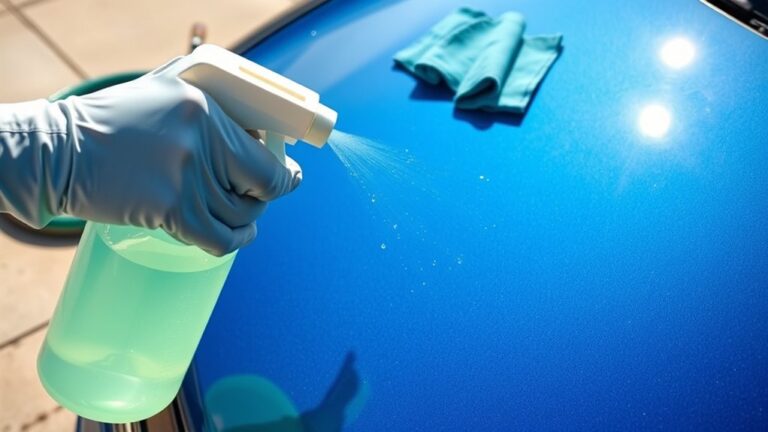
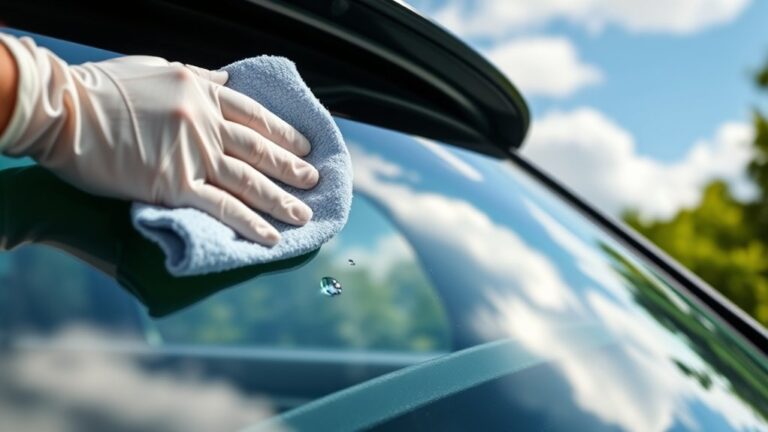
Cleaning your car windows properly involves more than just spraying cleaner and wiping them down. Start by choosing a gentle, ammonia-free cleaner suited for automotive glass. Use a microfiber cloth to prevent scratching and wipe in a circular motion to lift dirt effectively.
Avoid applying too much pressure, which can cause streaks or damage. For stubborn spots, let the cleaner sit for a few seconds before gently scrubbing. Always clean in a shaded area to prevent the cleaner from drying too quickly, which can leave streaks.
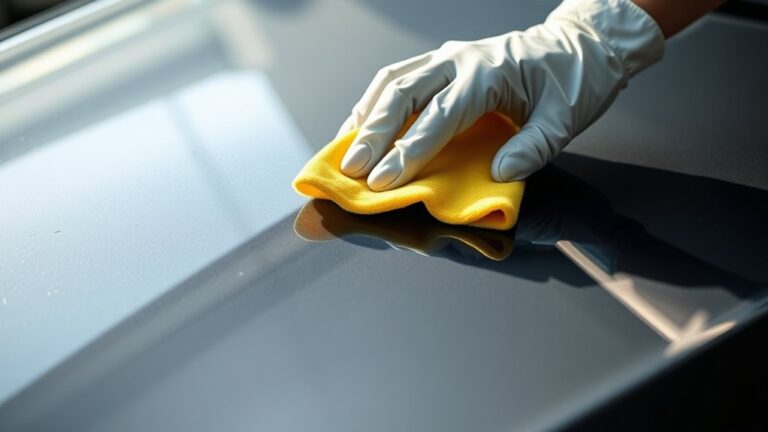
After wiping, use a dry microfiber cloth to buff the glass and remove any remaining residue. Proper technique guarantees clear, streak-free windows without harming the glass or surrounding trims.
Avoiding Common Mistakes
While cleaning your car windows, it’s easy to make mistakes that can leave streaks or cause damage, so paying attention to common pitfalls is essential. One mistake is using too much cleaner, which can drip and dry unevenly.
Another is cleaning in direct sunlight, causing streaks and rapid evaporation. Using rough cloths can scratch glass, while neglecting the edges can leave dirt behind.
Moreover, not drying the windows properly can result in water spots. To avoid these errors, use a small amount of cleaner, work in shaded areas, opt for a soft microfiber cloth, and dry thoroughly. Staying mindful of these common mistakes helps you achieve streak-free, spotless windows safely and efficiently.
Do Car Manufacturers Recommend Specific Window Cleaners?
Ever wonder if your car manufacturer has specific recommendations for window cleaners? Many brands do give guidance on cleaning products to protect your vehicle’s finish and surfaces.
Some manufacturers suggest using mild, non-abrasive cleaners that are compatible with your car’s glass and trim. They often recommend avoiding harsh chemicals like ammonia or alcohol-based solutions, which can damage tinting or seals.
Checking your owner’s manual or the manufacturer’s website can give you clear instructions on what cleaning products to use. Using recommended cleaners helps prevent damage, keeps your car looking good, and even preserves your warranty coverage.
If you’re unsure, it’s a good idea to stick with products labeled safe for automotive use. Always follow your manufacturer’s advice to keep your windows clean without risking any harm to your vehicle.
Natural and DIY Ways to Keep Your Car Windows Clear
If you prefer natural solutions or want to avoid harsh chemicals, there are simple DIY methods to keep your car windows clear. You can use common household items to clean and prevent fogging effectively.
For example, mix equal parts water and white vinegar in a spray bottle to create a streak-free cleaner that cuts through grime. Applying a thin layer of car wax or a homemade vinegar solution can also help repel rain and reduce fogging.
To keep your windows clear daily, wipe them with a microfiber cloth. You might also use a mixture of baking soda and water to tackle stubborn spots. These natural solutions are safe, inexpensive, and easy to use, making your car windows clearer without relying on commercial cleaners.
Tips for Maintaining Clean and Streak-Free Car Windows
Maintaining streak-free, spotless windows is easy if you follow a few simple habits. First, always use a clean microfiber cloth to wipe your windows—avoid paper towels, which can leave lint behind.
Next, clean your windows in the shade or during cooler parts of the day. This helps prevent quick drying and streaks from forming.
Use a proper glass cleaner or a mix of water and vinegar, and apply it evenly across the surface. This ensures a streak-free finish every time.
Finally, dry the windows thoroughly with a dry microfiber cloth. This step helps eliminate water spots and keeps your windows crystal clear.
Signs Your Car Windows Have Been Damaged by Incorrect Cleaners
Incorrect cleaners can cause visible damage to your car windows, often showing up through specific signs. You might notice cloudiness or streaks that don’t go away after cleaning.
The glass could develop tiny scratches or a hazy film that reduces visibility. Sometimes, the surface looks dull or uneven, which suggests the cleaner has damaged the protective coating.
You may also see discoloration or spots that seem stubborn even after cleaning. These signs indicate the cleaner might have compromised the glass’s integrity.
Keep an eye out for persistent streaks or smudges, a cloudy or foggy appearance, tiny scratches or abrasions, and discoloration or uneven patches.
If you notice any of these signs, your windows probably suffered damage from improper cleaning products.
Expert Advice: Choosing the Best Products for Your Car Windows
Choosing the right products for your car windows is key to avoiding damage and keeping visibility clear. Look for cleaners made specifically for automotive glass—they’re designed to remove dirt without harming the surface or leaving streaks.
Stay away from products containing ammonia or harsh chemicals because they can damage tinting or cause cloudiness over time. Instead, go for a gentle, alcohol-based cleaner that evaporates quickly and leaves no residue.
Always read labels carefully and follow the manufacturer’s instructions for best results. When cleaning, use a microfiber cloth to prevent scratches and ensure an even clean.
Using the right products regularly will help keep your windows clear and last longer, making your driving safer and your view unobstructed.
Frequently Asked Questions
Can Using Household Window Cleaner Void My Car’s Warranty?
Using household window cleaner in your car can potentially void your warranty if it causes damage. Car manufacturers often specify approved cleaning products, so using harsh chemicals might harm your vehicle’s surfaces or electronics.
To avoid issues, always check your car’s manual for recommended cleaners. If you accidentally damage something, your warranty might not cover repairs.
It’s best to use products designed specifically for automotive use to keep everything in good shape.
Are There Specific Brands Recommended for Automotive Window Cleaning?
You should choose brands specifically designed for automotive use, like Meguiar’s Perfect Clarity Glass Cleaner.
Imagine a car owner who used household cleaner on their windshield; it caused streaks and damage. Automotive window cleaners are formulated to be safe for your car’s glass and coatings, ensuring a clear view without harming the surface.
Always pick reputable brands to keep your windshield pristine and your driving safe.
How Often Should I Clean My Car Windows for Optimal Visibility?
You should clean your car windows at least once every two weeks to keep visibility clear. Regular cleaning gets rid of dirt, grime, and smudges that can block your view on the road.
If you spot streaks or dirt buildup sooner, don’t wait—clean them right away. Using a good-quality automotive window cleaner and a microfiber cloth will give you a streak-free shine.
This not only makes your windows look better but also improves your safety and driving experience.
Can Window Cleaners Damage Tinted or Coated Car Windows?
Using the wrong window cleaner can damage your tinted or coated car windows, just like using the wrong paint on a masterpiece. Some cleaners contain alcohol or ammonia that can strip away tint or coatings over time.
I once used a regular glass cleaner on my tinted windows, and the tint started peeling. It’s a good reminder to always choose a cleaner specifically formulated for tinted windows.
This way, you protect your investment and keep your view crystal clear.
Is It Safe to Use Paper Towels or Cloths Not Designed for Glass?
It’s generally safe to use paper towels or cloths not specifically designed for glass, but you should be careful. Regular paper towels can scratch the surface if they’re rough or dirty. Some cloths might leave lint or streaks behind.
To avoid damage or leftover residue, it’s best to use a clean, soft microfiber cloth or a dedicated glass cleaning cloth. Always test a small area first to make sure it doesn’t scratch or leave marks on your windows.
Conclusion
Using the wrong cleaner can cause permanent damage to your car’s windows. Did you know that improper cleaning can reduce visibility and compromise safety? Stick to automotive-specific products and natural remedies to keep your windows spotless without harm.
Regular maintenance not only improves your driving experience but also extends the lifespan of your glass. By taking these simple steps, you guarantee clearer, safer windows. Using the right products, like specialized car window cleaners, is key to maintaining that clarity.
So, can you put window cleaner in your car? Yes, but only if it’s designed for automotive use. This small step can make a big difference in safety and visibility.