Are Pressure Washers Good for Cleaning Cars?
Many car owners want a quick and effective way to keep their vehicle looking shiny and new. Pressure washers are a popular choice, but many people struggle with knowing if they’re safe and effective for cars. You’re not alone in wondering if this powerful tool can do more good than harm.
Pressure washers can be effective for cleaning your car if you use the right settings and techniques. They quickly remove dirt and grime, saving you time, especially in hard-to-reach spots.
However, improper use, like high pressure or close proximity, can damage paint or cause rust.
To keep your car safe, follow proper guidelines and consider gentle alternatives. Stay tuned to learn how to use pressure washers safely and effectively on your vehicle.
Key Takeaways
Pressure washers can effectively remove dirt and grime quickly from cars.
Just make sure to use the right technique. Using moderate pressure and keeping the nozzle at a safe distance helps prevent paint damage and scratches.
Be careful not to use excessive pressure or hold the nozzle too close. That can harm your vehicle’s paint and seals.
It’s best to stay below 2000 PSI and keep the nozzle a good distance away. This minimizes the risk of damage.
For delicate surfaces, gentle alternatives like soft water washing are safer and still get the job done.
Is Pressure Washing Safe for My Car?
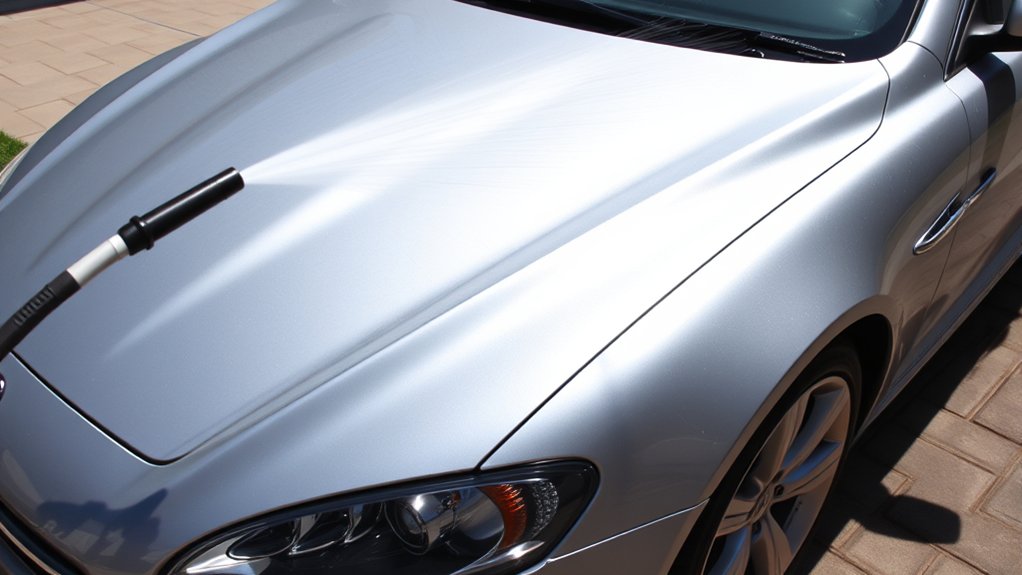
While pressure washing can be a great way to clean your car, it’s important to know that if you don’t do it properly, it can cause damage. Using too much pressure or holding the nozzle too close can strip paint, harm the clear coat, or even dent sensitive areas.
Pressure washing is effective but can cause damage if not done carefully; use gentle settings and proper distance.
High-pressure streams might also push water into seams, which can lead to rust or interior problems over time. To avoid this, use a gentle setting, ideally below 2000 PSI, and keep the nozzle about 12 inches away from the surface.
Always test on a small, hidden area first to see how your car reacts. Proper technique is key to preventing damage, so take your time and follow your pressure washer’s instructions.
When used carefully, pressure washing can be safe for your car’s finish and can help keep it looking great.
Benefits and Risks of Using Pressure Washers for Car Cleaning
Using a pressure washer to clean your car offers several benefits, like quickly removing dirt, grime, and stubborn stains that traditional washing might struggle with. It saves time and effort, especially on hard-to-reach areas.
But there are risks too. High-pressure water can damage your car’s paint, trim, or seals if you’re not careful. Spraying too aggressively could cause scratches or strip away protective coatings.
Improper technique might also force water into spots where it shouldn’t go. This can lead to rust or internal damage over time. It’s important to balance power with caution, adjusting pressure settings and keeping a safe distance.
While pressure washing can be really effective, understanding its risks is key. That way, you can get a clean car without compromising its integrity.
How to Pressure Wash Your Car Safely?
To clean your car safely, start with the right pressure settings. If it’s too high, you could damage the paint, so keep it moderate.
Use a proper spray technique by moving the nozzle constantly and avoiding focusing pressure on one spot. This helps you wash effectively without risking harm to your vehicle’s finish.
Proper Pressure Settings
Setting the right pressure is key to cleaning your car safely and effectively. You want enough power to get rid of dirt without risking damage to the paint or delicate parts.
For most vehicles, a pressure between 1200 and 1900 PSI works well. If your pressure washer has adjustable settings, start on the lower end. Higher pressures can strip paint or cause chips, so avoid going too high.
Keep the nozzle about 18 to 24 inches from the surface and don’t stay in one spot for too long. It’s a good idea to test on a small area first to make sure nothing gets damaged.
Adjust the pressure depending on how stubborn the dirt is and the condition of your car’s paint. Proper pressure lets you clean efficiently without risking costly damage.
Correct Spray Technique
When pressure washing your car, keep the nozzle moving steadily and at a consistent distance to prevent damage and ensure even cleaning. Stay about 12-18 inches from the surface, but adjust if needed.
Use a sweeping motion and overlap each pass slightly to avoid streaks and missed spots. Don’t hold the nozzle stationary, as that can cause paint damage.
Start with the lower panels and wheel wells, then move upward. This helps prevent dirt from spreading to cleaner areas and gives a better overall clean.
| Technique | Tip |
|---|---|
| Keep distance | Stay 12-18 inches from the surface |
| Continuous movement | Avoid staying in one spot |
| Overlap passes | Ensure even coverage |
| Angle of spray | Use a 45-degree angle for gentle cleaning |
Choosing the Right Pressure Washer Settings
Choosing the right pressure washer settings is key to cleaning your car effectively without causing any damage. You want enough power to wash away dirt but not so much that you strip paint or harm delicate surfaces.
Start with a lower pressure setting and increase gradually if needed. Adjust the spray nozzle to a wide, gentle spray instead of a concentrated jet. Keep the wand about 2 feet from the surface to avoid gouging.
Gentle Alternatives to Pressure Washing
Soft water washing techniques use lower pressure to clean your car gently without risking damage.
Hand washing gives you precise control, so you can remove dirt thoroughly while protecting your paint.
These gentle methods can be just as effective as pressure washing, especially for delicate surfaces.
Soft Water Washing Techniques
Despite their effectiveness, pressure washers can sometimes be too harsh for your car’s delicate paintwork. Soft water washing techniques offer a gentle alternative that still cleans effectively. Using softened water reduces mineral spots and streaks, leaving your car shiny and smooth.
To achieve this, you can fill a bucket with softened water that’s free of harsh minerals and impurities. Use a microfiber wash mitt to lift dirt without scratching the paint. Rinse the car thoroughly with a gentle water flow.
Dry the car with a microfiber towel to prevent water spots. This approach minimizes the risk to your paint and reduces the need for harsh chemicals. Soft water techniques are perfect for keeping your car’s finish clean and protected while providing a thorough, gentle clean.
Hand Washing Benefits
While soft water washing techniques are gentle and effective, many car owners prefer hand washing as a more controlled and personal approach. Hand washing allows you to target stubborn dirt without risking damage from high-pressure water. It also guarantees you can clean hard-to-reach areas thoroughly.
Plus, it’s a relaxing ritual that gives you a closer look at your car’s condition. To help you decide, here’s a quick comparison:
| Benefit | Explanation |
|---|---|
| Gentle on paint | Reduces risk of scratches or paint damage |
| Personalized cleaning | Focus on problem spots and stubborn dirt |
| Better inspection | Spot issues early for maintenance |
Choosing hand washing gives you more control, helping you keep your car in top shape safely.
Tips for Maintaining Your Car’s Paint and Components
Maintaining your car’s paint and components takes regular care to keep it looking great and prevent damage. Washing your vehicle often with a gentle, pH-balanced soap helps remove dirt and grime that can harm the paint over time.
Applying a high-quality wax or sealant creates a protective barrier, shielding your car from UV rays and pollutants. Be sure to check your paint for swirl marks or scratches and fix them with polishing or touch-up paint.
Try to avoid parking under trees or near industrial areas to reduce exposure to sap, bird droppings, and grime. Picture yourself rinsing off stubborn dirt, gently buffing out scratches, and sealing in that beautiful shine.
Imagine your car gleaming under the sun after a thorough wax job. Regularly inspecting your vehicle for damage or wear helps keep it in top shape, making maintenance feel easy and rewarding.
Frequently Asked Questions
Can I Use a Pressure Washer on All Car Types?
You can use a pressure washer on most car types, but be sure to adjust the pressure so you don’t damage your vehicle’s paint or seals.
For delicate or vintage cars, opt for a lower pressure setting and a wide spray pattern to be extra careful.
Always keep the nozzle moving to prevent concentrated water pressure from causing harm.
It’s best to keep the wand at a safe distance and avoid spraying directly at sensitive areas like seals and vents.
How Often Should I Pressure Wash My Car?
You should pressure wash your car every 2 to 4 weeks, depending on your environment. Think of it like brushing your teeth regularly—routine cleaning prevents buildup and damage.
I once neglected my car after a snowstorm, and grime quickly accumulated. Regular pressure washing keeps your car shiny and protects the paint, much like how daily habits keep your health in check.
Stay consistent for the best results.
What Detergents Are Best for Pressure Washing Cars?
You should use a car-specific detergent designed for pressure washing. Look for biodegradable, pH-balanced formulas that effectively break down dirt and grime without damaging your paint or clear coat.
Avoid harsh chemicals like degreasers or household cleaners. Dilute the detergent as instructed, and always rinse thoroughly to prevent residue.
Using the right cleaner helps protect your car’s finish while ensuring a deep, thorough clean during your pressure wash.
Can Pressure Washing Damage the Car’s Undercarriage?
Pressure washing can damage your car’s undercarriage if you use too high a pressure or hold the nozzle too close. Studies show that high-pressure water can strip away protective coatings and loosen parts.
To avoid damage, keep the pressure moderate, maintain a safe distance, and use a wide spray nozzle. This way, you’ll clean effectively without risking costly repairs or compromising your vehicle’s integrity.
Is It Better to Hand Wash or Pressure Wash My Car?
Hand washing is generally better for your car because it allows you to gently clean delicate areas and avoid potential damage from high-pressure water. You can focus on spots that need extra attention, like crevices and paintwork.
Pressure washing is quick and effective for removing dirt on the exterior, but it’s best to use it carefully and sparingly, especially around sensitive parts.
Conclusion
While pressure washers can be effective for cleaning your car, they’re not always the safest option. The myth that high pressure automatically damages your paint isn’t entirely true. It really depends on the setting and technique you use.
With the right adjustments and gentle methods, you can keep your car spotless without risking scratches or dings. Just take care to choose the right pressure and approach.
So, if you’re cautious and informed, pressure washing can be both safe and efficient. Just remember to use the correct pressure for your car’s paint.