Can I Use Glass Cleaner on My Car?
Many car owners struggle with keeping their windows crystal clear and streak-free. It’s frustrating when dirt, smudges, and streaks make visibility tricky, especially during bad weather or at night.
You shouldn’t use household glass cleaners, like Windex, on your car windows. These cleaners often contain ammonia, which can damage tint films, coatings, and adhesives over time.
They may cause streaks, fogging, and reduce visibility, making driving unsafe. Auto-specific cleaners are designed to protect your windows and tints while providing a streak-free finish.
Keep in mind that proper cleaning methods can extend your glass’s lifespan. Want to find out how to keep your windows spotless and safe?
Key Takeaways
- Use automotive-specific, ammonia-free glass cleaners to prevent damage to tint films and protective coatings.
- Household glass cleaners with ammonia can cause streaks, fogging, and deterioration of automotive glass and tints.
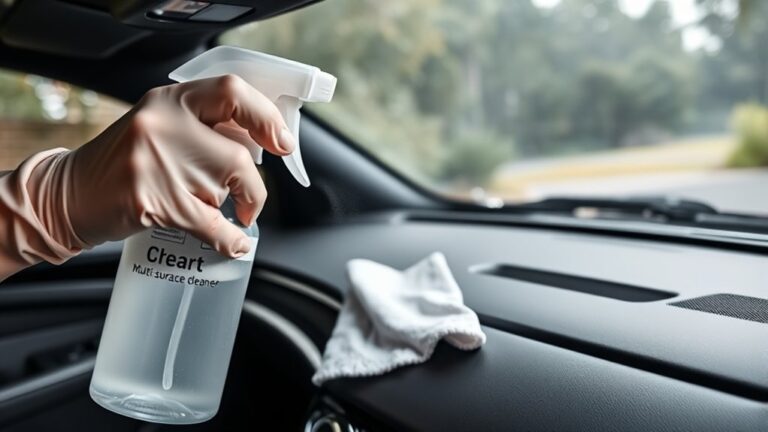
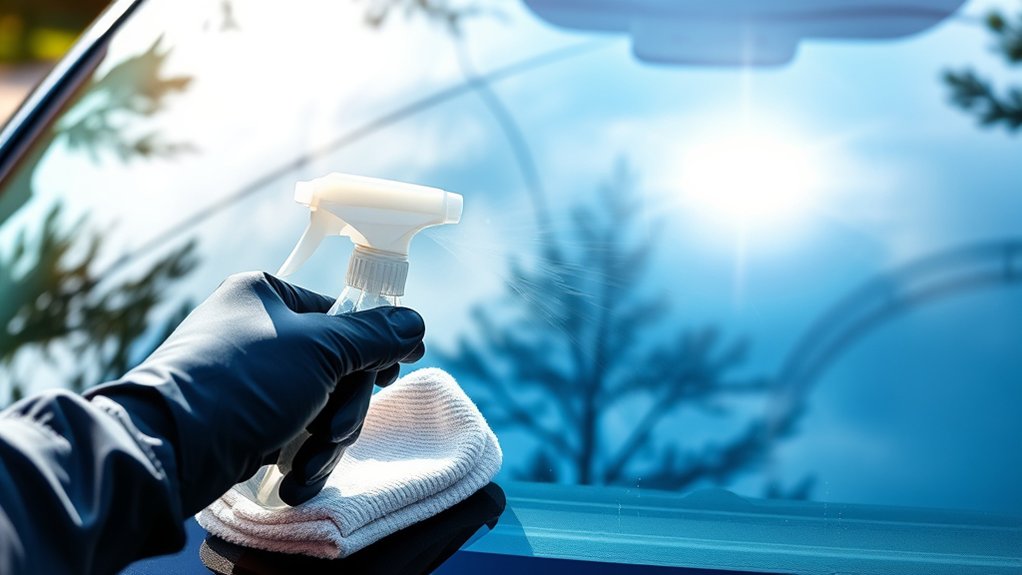
- Always spray the cleaner onto a microfiber cloth, not directly on the car windows. This helps avoid overspray and streaks.
- Proper cleaning techniques, like gentle strokes and working in shaded areas, help keep your windows clear and prevent damage.
- Regularly using the right auto glass cleaners improves visibility, safety, and helps your car’s windows last longer.
What Makes Automotive Glass Different From Household Windows?
Automotive glass is quite different from household windows because it’s built with safety and durability in mind. Usually, it’s laminated or tempered to resist impacts and prevent shattering easily.
Car windows often have special coatings like UV protection or hydrophobic layers. These help with visibility and protection but can get damaged by harsh cleaning products.
Since automotive glass is exposed to extreme weather, dirt, and fast-moving water, it needs cleaners that can handle these tough conditions. It might also have embedded heating elements or sensors that can be harmed by improper cleaners or abrasive tools.
To keep everything safe and clear, it’s best to use cleaning products made specifically for automotive glass, not household window cleaners.
Why Using Household Glass Cleaners on Your Car Is Risky
Using household glass cleaners on your car can cause serious problems because these products aren’t made for automotive glass. Many contain ammonia, which can damage tint films over time.
The chemicals in these cleaners might cause streaks, fogging, and make it harder to see through your windows. Repeated use can also weaken protective coatings and adhesives, affecting the glass’s strength.
Plus, household cleaners aren’t designed to handle weather elements like rain and UV rays. Over time, this can lead to faster deterioration of your car’s glass and tint.
All of this can result in costly repairs or replacements down the line. It’s best to stick with products made specifically for auto glass to keep things safe and effective.
How Household Cleaners Like Windex Can Damage Car Tints and Coatings
Household cleaners like Windex can cause serious damage to your car’s tints and coatings because they contain harsh chemicals, especially ammonia, which aren’t meant for automotive surfaces. Ammonia breaks down the adhesive bonds in window tints, leading to bubbling, peeling, or fading over time.
Repeated use of ammonia-based auto glass cleaners can also harm specialized coatings like hydrophobic or UV-protective layers, making them less effective. Plus, ammonia causes internal fogging and streaks on tinted windows, which can reduce visibility and safety while driving.
Using household cleaners with harsh chemicals weakens the tint film, increasing the risk of cracks, bubbling, or discoloration that might need costly repairs. To keep your car’s windows in good shape, always choose auto-specific products designed to clean without damaging the tint.
The Benefits of Using Auto Glass Cleaners for Better Visibility and Safety
Using auto glass cleaners improves your visibility by providing a streak-free, crystal-clear view of the road. They also add water-repellent properties, helping rain slide off quickly for safer driving in bad weather.
Regular use keeps your windshield clearer, making every drive safer and easier.
Enhanced Water Repellency
Enhanced water repellency is one of the main benefits of using auto glass cleaners with hydrophobic agents. These coatings create a barrier that makes water bead up, so rain rolls off your windshield faster and reduces glare.
Using a cleaner with these properties helps keep your windshield streak-free, even during heavy rain. Regular use also helps maintain the coating’s durability, giving you ongoing protection and clear visibility.
Not only does this improve safety by keeping your view unobstructed, but it also helps extend the life of your windshield wipers. Investing in a quality auto glass cleaner with hydrophobic ingredients boosts your driving experience, especially in tough weather.
It ensures long-term visibility benefits and makes driving in the rain safer and more comfortable.
Improved Clarity and Safety
Clear visibility through your windshield is essential for safe driving, especially in tough conditions like nighttime or heavy rain. Using an auto glass cleaner ensures streak-free glass, giving you better clarity and less glare.
This improved visibility helps you react faster to obstacles and road signs, making your drive safer. Specialized auto glass cleaners are gentle on tinted windows and protective coatings, so they stay in good shape over time.
Regular cleaning prevents fogging, streaks, and tint damage that can block your view. With clean, clear glass, you’ll have sharper sightlines and spot hazards earlier.
In the end, using the right auto glass cleaner boosts safety by maximizing clarity and cutting down risks caused by impaired vision.
Why Ammonia in Household Cleaners Is Harmful to Your Car Windows and Tints
Because ammonia is a powerful cleaning agent, it can cause serious damage to your car’s windows and tint films over time.
Ammonia in household cleaners can break down the adhesive bonds in window tint, leading to peeling and bubbling.
Ammonia can weaken window tint adhesives, causing peeling and bubbling over time.
Repeated use of ammonia-based products can also cause cracking, fading, and discoloration of tinted auto glass.
Plus, ammonia’s strong chemicals can dry out and damage the seals and weatherstripping around your windows, which can compromise their integrity.
Using ammonia-containing cleaners might also lead to interior fogging by degrading window films and coatings inside your vehicle.
Automotive manufacturers often recommend avoiding ammonia to keep your auto glass and tints looking their best.
To protect your car’s windows, it’s better to use specialized, ammonia-free cleaning products.
How to Properly Clean Your Car Windows Without Streaks or Damage
To clean your car windows effectively without leaving streaks or causing damage, using the right techniques and products is key. Choose an ammonia-free glass cleaner made for auto windows to avoid harming tint and coatings.
Spray the cleaner onto a soft, lint-free microfiber cloth instead of directly on the glass. This prevents oversaturation and helps keep streaks at bay.
Clean in a systematic pattern—use horizontal strokes on outside windows and vertical strokes on inside ones. This ensures thorough coverage and makes streaks easier to spot and fix.
Always work in shaded areas because direct sunlight causes the cleaner to dry too quickly, increasing the chances of streaks.
Use multiple microfiber cloths: one for applying the cleaner and another for buffing. This approach helps you achieve a streak-free, crystal-clear finish on your car windows.
What Features Should You Look for in a Safe, Effective Auto Glass Cleaner?
When choosing an auto glass cleaner, it’s important to look for safety and effectiveness by checking for key features.
Opt for ammonia-free formulas to avoid damaging window tint and coatings.
Pick products designed specifically for auto glass that give you streak-free, quick-drying results.
A water-repellent or hydrophobic feature can help water run off better, improving visibility in the rain.
Also, choose cleaners that are gentle on rubber seals, weather stripping, and electronic parts.
High-quality auto glass cleaners often come with microfiber cloths or simple application methods for better results.
Pay attention to these features to keep your windshield clean, clear, and safe without streaks or damage.
When Is It Time to Consider Professional Glass Cleaning Services?
Sometimes, your usual cleaning methods just aren’t enough to keep your car’s glass crystal clear. If stubborn water spots, mineral deposits, or hard water stains won’t come off with household cleaners, it’s time to call in a professional.
When stubborn stains won’t come off, it’s time to seek professional deep cleaning for your car’s glass.
When your vehicle is exposed to harsh conditions like heavy pollution or mineral-rich water, regular cleaning might not cut it. Deep cleaning becomes necessary to really get your glass looking its best.
If your tint or coatings show signs of damage like bubbling or peeling, professionals can help prevent further harm. They have the right tools to fix or protect your windows properly.
Persistent interior fogging or haze, even after regular cleaning, also calls for expert treatment. Professionals can identify the cause and restore clarity more effectively.
And if your windshield wipers leave streaks or smudges after cleaning, a deep clean by the pros can make a big difference. It restores clarity and can help extend the life of your wipers.
Common Mistakes to Avoid When Cleaning Your Car Windows at Home
One common mistake is using household glass cleaners with ammonia, which can harm your car’s tint and cause long-term damage.
Another mistake is applying cleaner directly to the glass without a microfiber cloth, which can lead to streaks and smudges.
Finally, cleaning in direct sunlight or hot conditions can make the cleaner evaporate too quickly, leaving spots and streaks behind.
Using Household Cleaners Improperly
Using household glass cleaners improperly can quickly lead to damage and reduced visibility in your car. Many people assume all cleaners are safe, but those containing ammonia can harm tinted films, causing peeling or discoloration over time.
Applying these cleaners with rough or non-microfiber towels risks scratching your automotive glass, leading to swirl marks that make visibility worse. Spraying household cleaners directly onto windows increases the chance of overspray reaching sensors or electrical parts, which could cause malfunctions.
Using products not meant for automotive surfaces repeatedly can degrade water-repellent coatings or protective layers, reducing their effectiveness. To avoid these issues, always choose ammonia-free automotive glass cleaners and follow proper cleaning techniques, like using gentle microfiber cloths and avoiding cleaning in direct sunlight.
Overlooking Proper Technique
Failing to follow proper cleaning techniques can leave your car windows streaked, hazy, or even damaged. Using the wrong methods often results in streaks and smudges that make it harder to see.
Applying cleaner directly onto the glass instead of onto a microfiber cloth can cause overspray, smudges, and potential damage to tint or coatings. Always use a microfiber cloth to ensure proper application and gentle cleaning.
Cleaning in circular motions may create swirl marks and scratches, reducing clarity and safety. It’s best to avoid this and instead use gentle, linear motions.
Also, avoid cleaning in direct sunlight or hot conditions, as the cleaner dries too quickly, leaving streaks. For a spotless finish, thoroughly buff your windows after cleaning and use the right tools.
Proper technique is key for clear, streak-free car windows. Taking your time and using the right methods makes all the difference.
How Regular, Proper Cleaning Extends the Life of Your Car’s Glass and Tints
Regular, proper cleaning plays a crucial role in extending the lifespan of your car’s glass and tints. Using the right glass cleaner and proper maintenance techniques helps prevent dirt, bugs, and grime from scratching or damaging your auto glass over time.
Properly cleaning and caring for your car tints with suitable products helps avoid deterioration, discoloration, and bubbling, which can shorten their lifespan. Consistent removal of mineral deposits and water spots with the right cleaners keeps your visibility clear and prevents long-term damage.
Employing the correct cleaning techniques also reduces micro-scratches and swirl marks that weaken the glass. Regular maintenance with quality products preserves protective coatings and adhesive bonds, ensuring your glass and tints stay durable and perform well.
- Use automotive-specific glass cleaner for the best results
- Clean your auto glass and tints regularly to prevent buildup
- Follow proper cleaning techniques to avoid scratches
- Maintain protective coatings for long-term durability
Final Tips for Maintaining Crystal-Clear Car Windows Safely
Maintaining crystal-clear car windows safely involves more than just choosing the right products; it requires proper techniques and consistency. Always spray an ammonia-free cleaner onto a microfiber cloth, not directly on the glass, to prevent overspray and streaks.
Use separate, clean microfiber cloths for interior glass to avoid cross-contamination and guarantee a streak-free finish. Clean your windows in shaded areas, especially when the sun is strong, so the cleaner dries evenly and reduces streaking.
Regularly maintaining your windows with the right products and techniques boosts visibility and safety. Prioritize gentle cleaning and avoid harsh scrubbing to protect your tint and glass.
Frequently Asked Questions
What Glass Cleaner Can I Use on My Car?
You should use an automotive-specific, ammonia-free glass cleaner on your car. These cleaners are made to resist water, dirt, and grime, giving you a streak-free, clear view without damaging your tint or coatings.
Avoid household cleaners like Windex because they contain ammonia, which can cause streaks and long-term damage. It’s better to stick with products designed for cars.
Always spray the cleaner onto a microfiber cloth first. Then, wipe your windows gently for safe and effective cleaning.
What Can I Use to Wash My Car if I Don’t Have Car Wash Soap?
Think of your car as a delicate painting that needs gentle care. If you don’t have car wash soap, you can use a mixture of water and a small amount of mild dish soap. It’s like giving your car a gentle shower.
Rubbing alcohol diluted with water can also remove stubborn grime. Vinegar and water work well for light cleaning. Just avoid household glass cleaners with ammonia, as they can damage your car’s finish.
What’s the Best Thing to Use to Clean Car Windows?
The best way to clean your car windows is with a dedicated automotive glass cleaner that’s ammonia-free. Use a microfiber cloth to avoid scratches and get a streak-free shine.
Spray the cleaner onto the cloth, not directly on the glass, so you can control how much product you use. Clean in shaded areas to prevent streaks and ensure a clear finish.
Avoid household glass cleaners with ammonia to protect your tint and prevent fogging over time. Stick with products made specifically for automotive glass for the best results.
Can Glass Cleaner Be Used on Car Paint?
Using glass cleaner on your car paint is like using a sledgehammer for a nail; it’s not meant for that job. These cleaners often contain harsh ingredients that can strip or damage your paint over time.
Instead, opt for a gentle, pH-balanced auto-specific wash. This will protect your paint, avoid streaks, and keep your car looking shiny and new without risking long-term harm.
Conclusion
To keep your car’s windows crystal clear without risking damage, stick to auto glass cleaners designed for your vehicle. Think of it as giving your car a suit of armor that protects its tints and coatings from harm.
Regular cleaning with the right products is like watering a plant. It helps your glass stay pristine and extends its lifespan.
So, play it safe. Using glass cleaner specially formulated for cars ensures your visibility remains bright and clear.