Can I Use Floor Cleaner to Wash My Car?
Many car owners struggle with finding the right products to keep their vehicle looking its best. It’s easy to reach for something like floor cleaner because it’s convenient and often on hand.
But is that really a good idea? Using floor cleaner to wash your car isn’t a good idea because its harsh chemicals can damage your paint, clear coat, and surface finish.
These cleaners contain strong ingredients, like bleach and abrasives, that can strip away wax and dull your car’s shine over time.
To keep your vehicle safe, opt for a soap specifically made for cars. If you want to learn more about safe cleaning practices, keep exploring the details.
Key Takeaways
– Floor cleaners contain harsh chemicals that can damage your car’s paint and clear coats.
They might strip away wax, making your car look duller over time.
Using products not meant for cars can also cause surface etching or corrosion.
So, it’s best to avoid them for vehicle cleaning.
Proper car wash soaps are milder and pH-balanced.
They’re designed to protect your vehicle’s finish while cleaning effectively.
For the best results, always use automotive-specific cleaners and proper washing techniques.
Can You Safely Use Floor Cleaner on Your Car?
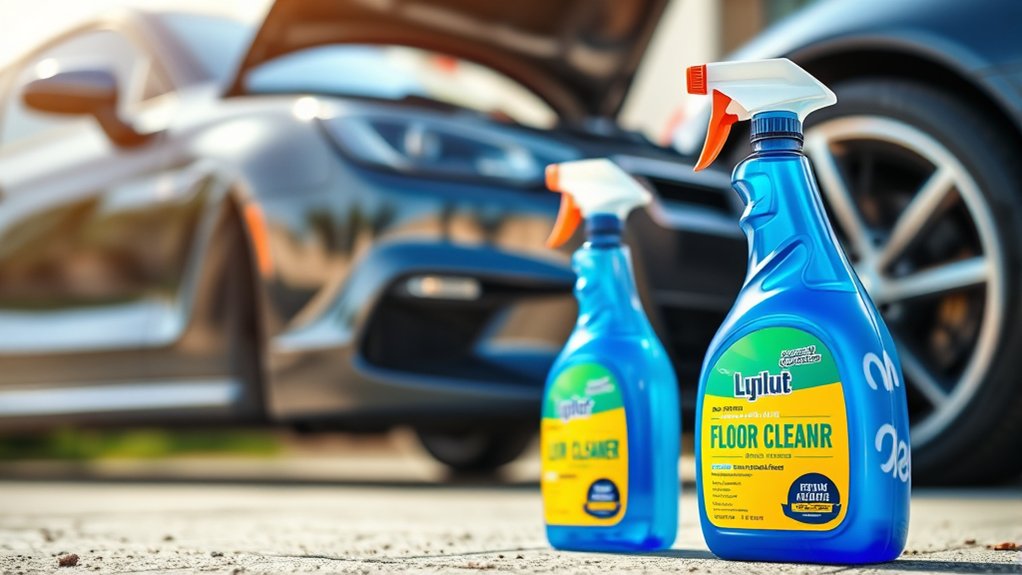
Is it safe to use floor cleaner on your car? Generally, no. Floor cleaners often contain harsh chemicals made to cut through dirt on hard surfaces, not the gentle paint and finishes of your vehicle.
Using them can strip away wax, damage clear coats, or make your paint look dull over time. Some floor cleaners include bleach or strong detergents that are just too aggressive for your car’s surfaces.
Even if a cleaner seems mild, it might still have ingredients that could harm your car’s paint or rubber seals. Instead, stick to products made specifically for cars.
Using the wrong cleaner can lead to costly repairs or a less attractive finish. When in doubt, always read labels and check your vehicle’s care instructions.
What Are Floor Cleaners and How Do They Work?
Floor cleaners are special solutions made to remove dirt, grime, and stains from hard floors like tile, vinyl, or concrete. They work by breaking down dirt and grease with cleaning agents, making it easier to wipe or scrub away.
Many floor cleaners have surfactants—detergent-like compounds that lift dirt from surfaces. Some also include degreasers to tackle grease and oils, while others have disinfectants to kill germs.
When you apply a floor cleaner, it penetrates the dirt and loosens it from the surface. Then, you scrub or mop to remove the debris. The cleaning agents are rinsed away with water, leaving your floor clean and fresh.
These cleaners are designed specifically for floors, so their ingredients might not be suitable for other surfaces like cars.
Why Are Car Wash Soaps Different From Floor Cleaners?
Car wash soaps are formulated specifically to clean vehicle surfaces without damaging delicate paints and clear coats. In contrast, floor cleaners are designed for hard, often porous surfaces.
Car soaps contain gentle surfactants that lift dirt without stripping paint or wax. Floor cleaners, however, often have stronger chemicals meant to tackle tough stains on tile or concrete, which can harm your car’s finish.
Here’s a simple comparison:
| Feature | Car Wash Soaps | Floor Cleaners |
|---|---|---|
| Purpose | Gentle cleaning of vehicle paint | Heavy-duty cleaning of hard floors |
| Chemical Strength | Mild, paint-safe surfactants | Strong, aggressive chemicals |
| Surface Compatibility | Designed for painted surfaces | Suitable for porous, hard surfaces |
Using the right cleaner guarantees your car stays shiny and undamaged.
What Risks Do Floor Cleaners Pose to Your Car’s Paint and Surfaces?
Using floor cleaners on vehicles can cause immediate and long-term damage because their harsh chemicals are too aggressive for delicate paint and surface finishes. These cleaners often contain strong acids or alkalis that strip away protective layers, leading to visible damage. The risks include:
- Paint stripping: The chemicals can eat through the clear coat, causing dullness and loss of gloss.
- Surface etching: Acidic or abrasive ingredients can create tiny holes or rough patches on the paint surface.
- Corrosion: Prolonged exposure may lead to rust, especially if the cleaner removes protective wax layers or exposes bare metal.
These effects can ruin your car’s appearance and weaken its structure, making it more vulnerable to environmental damage over time.
Can Floor Cleaner Damage Your Car’s Finish?
Floor cleaners often contain harsh chemicals that can strip away your car’s protective finish. Using them may cause surface damage or dull the paint over time.
It’s important to understand how these chemicals can harm your car before using them.
Potential Surface Damage
Although floor cleaners are made for hard surfaces like tile and concrete, they often contain harsh chemicals that can harm your vehicle’s delicate finish. Using them on your car can cause three main problems:
- Paint dulling: Strong chemicals can strip away the protective clear coat, making the paint lose its shine.
- Surface etching: Acidic or alkaline ingredients might create tiny pits or scratches on the surface.
- Color fading: Over time, exposure to aggressive cleaners can cause the paint to fade or discolor.
These damages aren’t always visible right away but can weaken your car’s exterior, making it more vulnerable to the environment. Always choose products specifically made for automotive surfaces to avoid these issues.
Harsh Chemical Effects
Harsh chemicals in floor cleaners can seriously damage your car’s finish by breaking down its protective layers. These strong substances can strip away wax, sealants, and clear coats, leaving your paint vulnerable to scratches and corrosion.
Some chemicals, like acids or alkalis, can cause discoloration or dullness that’s tough to fix. To see how risky it is, think about this comparison:
| Chemical Type | Effect on Car Finish |
|---|---|
| Acidic | Causes discoloration and etching |
| Alkaline | Strips protective coatings |
| Solvents | Softens or dissolves paint |
| Abrasives | Scratch and dull the surface |
| Fragrances | Leave residues that harm paint |
Using floor cleaner might save time, but it can lead to expensive damage. It’s better to stick with products made specifically for cars.
Are There Any Safe Situations to Use Floor Cleaner on a Car?
Are there any safe situations where using floor cleaner on your car might be okay? Generally, it’s best to avoid it, but in some rare cases, careful use could be justified.
For example, if your car’s underside or engine bay has heavy grease or oil stains, a diluted floor cleaner might help. Just make sure to rinse thoroughly afterward to prevent damage.
Spot cleaning small areas with dirt or spills can also work if you apply the cleaner gently and minimize contact.
Always test a small, hidden spot first to see how your car reacts before using the cleaner more broadly.
Test a small, hidden area first to ensure your car’s surface responds well before full cleaning.
In all cases, dilute the floor cleaner well and rinse thoroughly to reduce the risk of harm.
What Are the Best Alternatives to Floor Cleaner for Washing Your Car?
In regard to cleaning your car effectively and safely, there are better options than floor cleaner. Mild car wash soaps are designed specifically for vehicles, removing dirt without damaging the paint or finishes.
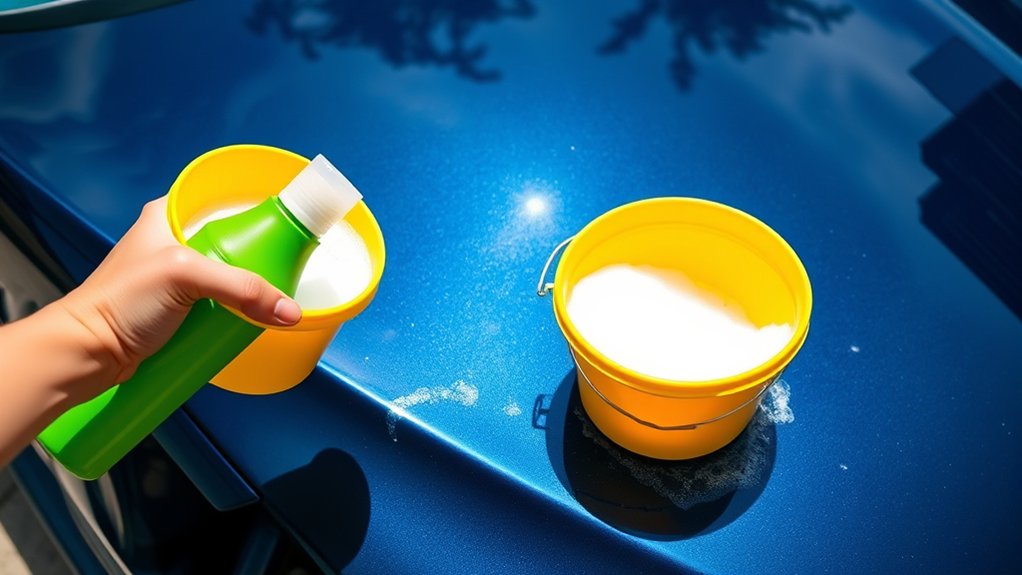
Two-bucket wash systems help prevent scratching by keeping dirt away from your wash mitt. Microfiber cloths or wash mitts gently lift dirt and grime, reducing the risk of scratches.
For stubborn spots, use dedicated bug and tar removers. Furthermore, rinsing your car with plenty of water before washing helps loosen dirt.
If you prefer eco-friendly options, diluted natural dish soap or eco-friendly car shampoos work well without harming your car’s surface. These alternatives provide a safe, effective clean while protecting your vehicle’s finish.
How to Properly Wash Your Car Safely at Home
To wash your car safely at home, start by choosing the right supplies like gentle car-specific soap and soft sponges.
Using proper techniques, such as washing from top to bottom and rinsing frequently, helps prevent scratches.
Following these steps will make sure your car gets clean without any damage.
Choosing the Right Supplies
Choosing the right supplies is essential for washing your car safely and effectively at home. To get a clean, damage-free result, focus on quality tools and products.
First, pick a gentle car wash soap made for automotive finishes. Regular dish soap can strip away protective coatings, so it’s better to use something designed for cars.
Next, use a soft microfiber wash mitt or sponge. This helps prevent scratches and keeps your car looking its best.
It’s also a good idea to set up a two-bucket system—one for soapy water and one for rinsing. This way, dirt doesn’t get reintroduced to your car’s surface.
Don’t forget a microfiber drying towel to avoid water spots and give your car a nice finish.
Avoid household cleaners like floor cleaner because they can damage your car’s paint.
Proper Washing Techniques
Start by rinsing your car thoroughly with water to remove loose dirt and debris, which can cause scratches during washing. Use a gentle stream to cover all surfaces, paying attention to the wheels and undercarriage.
Next, wash the car using a soft microfiber mitt or sponge and a pH-balanced car wash soap. Avoid harsh cleaners like floor cleaner. Work from the top down in sections, rinsing your sponge frequently to prevent dirt transfer.
Don’t forget to clean the wheels and tires separately with a dedicated brush. After washing, rinse the entire vehicle again to remove soap residue.
Finally, dry the car with a clean, soft microfiber towel to prevent water spots. Following these steps helps protect your car’s paint and keeps it looking its best.
Which Ingredients Make a Good Car Wash Soap?
Ever wondered what makes a car wash soap effective? The key ingredients ensure your vehicle gets clean without any damage.
First, surfactants are essential; they lift dirt and grease from the surface. Without them, grime just won gets moved around rather than removed.
Second, pH balance matters. A neutral or slightly alkaline formula helps prevent paint damage and keeps your car looking its best.
Third, added lubricants help reduce friction during washing, protecting your car’s finish. They make the process smoother and safer.
Good car wash soaps often include gentle cleansers that break down grime without stripping wax or sealants. That way, your protection stays intact.
Avoid harsh chemicals that can harm your paint or strip protective coatings. Stick with formulas that are effective yet gentle.
Look for products that combine strong cleaning power with paint-safe ingredients. This way, you get a thorough wash that preserves your car’s shine and longevity.
Can Using the Wrong Cleaner Lead to Costly Repairs?
Using the wrong cleaner can damage your car’s paintwork or cause corrosion and rust over time. These issues might not be obvious right away.
Choosing the right products is crucial to protect your investment. Using the proper cleaner helps keep your car looking good and prevents costly repairs later on.
Damage to Paintwork
Choosing the wrong cleaner can easily damage your car’s paintwork, leading to costly repairs down the line. Floor cleaners often contain harsh chemicals that strip away protective layers, causing dullness and scratches. To protect your paint, avoid cleaners that:
- Contain harsh acids or alkalis, which can eat into the paint surface.
- Include abrasive particles, risking scratches and swirl marks.
- Have high pH levels, which can weaken the clear coat over time.
Using these unsuitable cleaners speeds up paint deterioration, making the surface more vulnerable to chips and discoloration. Even a cleaner that seems gentle might cause harm if it’s not made for cars. Protect your investment by choosing products specifically designed for automotive finishes, so your paint stays vibrant and intact.
Corrosion and Rust Risks
When you use the wrong floor cleaner on your car, you risk exposing metal parts to moisture and chemicals that can cause rust and corrosion. Many floor cleaners have harsh ingredients not meant for car surfaces, especially metal parts.
These chemicals can break down protective coatings, allowing moisture to get in and lead to rust. Over time, corrosion weakens structural parts, making repairs more expensive.
Moisture trapped in hard-to-reach areas can speed up rust formation, especially in joints and seams. Using an inappropriate cleaner also strips away rust-proofing treatments, making your car more vulnerable.
To avoid these risks, stick to products designed specifically for automotive use. Proper cleaning and maintenance help protect your car’s metal parts and save you money on repairs caused by rust.
How Do Professional Car Wash Services Keep Your Car Safe?
Professional car wash services prioritize your vehicle’s safety by using gentle, high-quality cleaning agents and advanced techniques that prevent damage to your car’s paint and surfaces. They choose specialized shampoos and cleaners designed just for automotive finishes, steering clear of harsh chemicals that could cause corrosion.
They also use soft brushes and microfiber cloths to minimize scratching. Here are some key methods they follow:
- Use of pH-balanced detergents: These protect your car’s paint and clear coat.
- Proper rinsing techniques: They remove all residues to prevent streaks and corrosion.
- Controlled drying process: Using microfiber towels avoids water spots and surface damage.
These practices ensure your car stays clean without compromising its integrity or appearance.
Frequently Asked Questions
Can Floor Cleaners Remove Stubborn Stains From Car Paint Effectively?
Floor cleaners are generally not effective for removing stubborn stains from your car paint. They’re formulated for hard floors, not delicate car surfaces, and may contain harsh chemicals that damage the paint or clear coat.
Instead, use a dedicated car wash soap or a specialized stain remover designed for automotive finishes. This ensures you clean effectively without risking scratches, discoloration, or other damage to your vehicle’s paintwork.
Are There Specific Types of Floor Cleaners That Are Less Harmful to Cars?
Yes, some floor cleaners are less harmful to cars, especially those labeled as gentle or pH-balanced.
Look for products specifically designed for delicate surfaces or multipurpose cleaners that specify safe use on vehicles.
Always read labels carefully, avoid harsh chemicals like bleach or strong degreasers, and test a small area first.
Using the right cleaner helps protect your car’s paint and finish while keeping it clean.
How Do I Properly Rinse Floor Cleaner off My Car After Washing?
You should rinse your car thoroughly with plenty of clean water right after using floor cleaner. Start from the top and work your way down, making sure all residue is washed away.
Use a hose with a spray nozzle for better control and reach. Pay extra attention to crevices and seams to get all the cleaner out.
This helps prevent harmful chemicals from lingering. It also protects your paint and finish from damage or corrosion.
What Are the Signs My Car’s Paint Has Been Damaged by Improper Cleaning?
You’ll notice your car’s paint has been damaged if it looks dull, faded, or has visible scratches and etchings. Sometimes, there’s a chalky or streaky residue, and the surface may feel rough or uneven.
You might also see peeling or discoloration. These signs indicate that harsh cleaners, like floor cleaner, have stripped away the protective wax or damaged the clear coat.
This damage can lead to corrosion over time if not addressed.
Is It Safe to Use Diluted Floor Cleaner on My Car in an Emergency?
Using diluted floor cleaner on your car in an emergency isn’t the safest choice. While it might work temporarily, it can strip away wax or damage your paint if not properly diluted or used repeatedly.
If you must, dilute it heavily and rinse thoroughly. But it’s better to use a car-specific wash or just water and soap to protect your vehicle’s finish and avoid long-term damage.
Conclusion
Using floor cleaner on your car isn’t recommended because it can damage the paint and surfaces. It’s designed for floors, not vehicles, so it may cause more harm than good.
Did you know that the average car owner spends over $500 a year on paint repairs? Choosing the right car wash soap and proper techniques can help prevent costly fixes and keep your vehicle looking great.
Always go for products made specifically for cars—your car’s finish will thank you for it. Using the right car wash soap is a simple way to protect your investment and maintain its shine.