10 Best Tips You Can Use With a Carpet Cleaner on Car Seats
Many car owners struggle with keeping their car seats clean and fresh, especially when dealing with pet hair, stains, and dirt.
If you’re looking for an effective way to refresh your car’s interior, a carpet cleaner is a game-changer. You’re not alone—cleaning car seats can be tricky, but with the right techniques, you’ll get professional results at home.
To get the best results with your carpet cleaner on car seats, start by clearing and vacuuming the area thoroughly, focusing on pet hair and loose debris.
Pre-treat stains and choose a cleaner suited for automotive fabrics. Apply it sparingly, using a soft brush or microfiber cloth, then remove dirt with a damp cloth or wet vacuum.
Dry the seats completely with airflow tools to avoid mold. For more tips, keep going—there’s a lot more to uncover!
Key Takeaways
- Vacuum thoroughly before applying any cleaner to remove loose dirt and pet hair.
- Use targeted sprays and microfiber cloths to avoid oversaturating fabric.
- Work in small sections with a soft-bristle brush for effective stain removal.
- Avoid excessive moisture. Blot and dry seats promptly after cleaning.
- Make sure to dry completely using airflow or fans. This helps prevent mold and odors.
How to Prepare Your Car Seats for Deep Cleaning
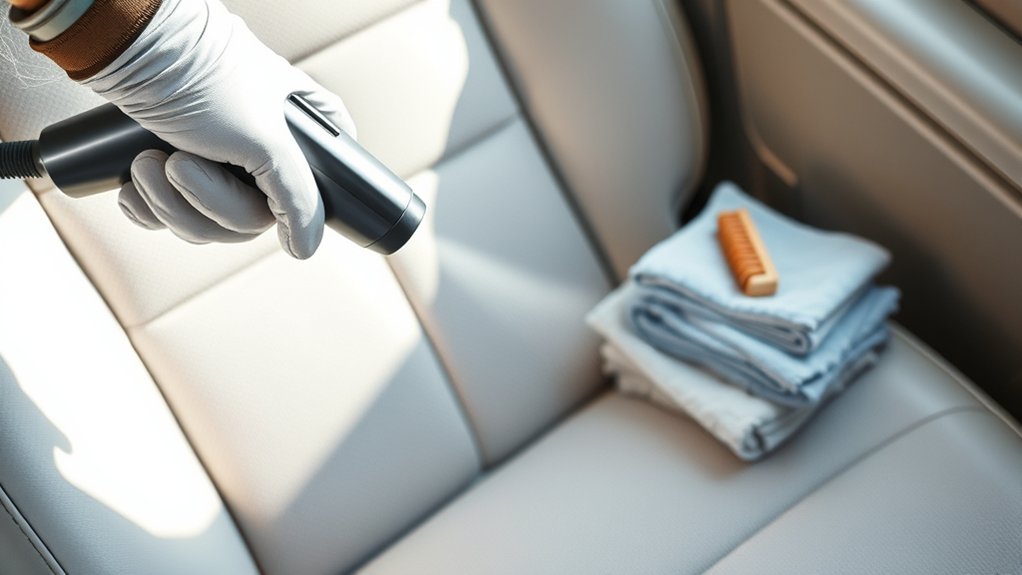
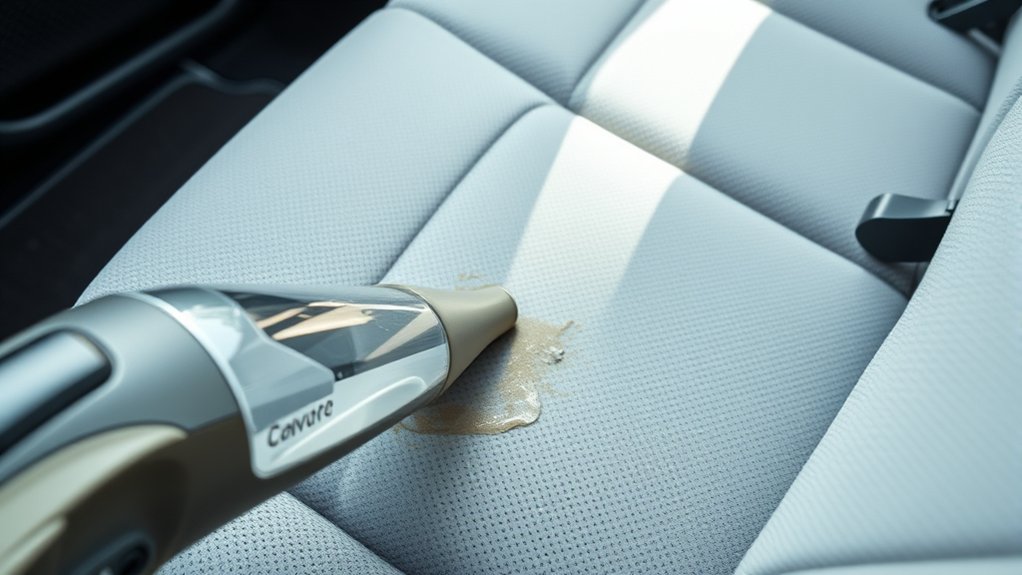
Before you start deep cleaning your car seats, it’s important to clear the area and remove any loose debris. Grab a vacuum with a brush attachment and thoroughly go over the seats, crevices, and seams.
This helps lift dirt, crumbs, and dust, making the cleaning more effective. If there are larger objects or trash, make sure to remove them first.
Check for pet hair or stubborn debris and use a lint roller or sticky tape to pick up those particles. Next, look for stains or spots that might need pre-treatment.
Removing loose debris ensures your carpet cleaner can work directly on embedded dirt, saving you time and preventing grime from spreading. Proper prep sets the stage for a spotless, fresh-looking car interior.
Choosing the Best Carpet Cleaner for Your Car Seats
Choosing the right carpet cleaner for your car seats can really impact how well you remove stains and dirt. Look for options made specifically for automotive fabrics—they’re usually gentler but still effective.
Think about whether you prefer a foaming spray, foam extractors, or liquid formulas. Your choice should match the type of stains and fabric sensitivity you’re dealing with.
Here’s a quick comparison:
| Feature | Best for |
|---|---|
| Foam Cleaner | Light stains, quick drying |
| Extractor Solution | Deep stains, heavy dirt |
| Enzymatic Formula | Organic stains, pet messes |
| Upholstery Safe | Delicate fabrics, leather seats |
| All-Purpose Cleaner | Versatile, multiple fabric types |
How to Apply Carpet Cleaner Effectively on Fabric Seats
To guarantee your carpet cleaner works effectively on fabric seats, start by thoroughly vacuuming the area to remove loose dirt and debris. This step prevents dirt from getting embedded deeper into the fabric during cleaning.
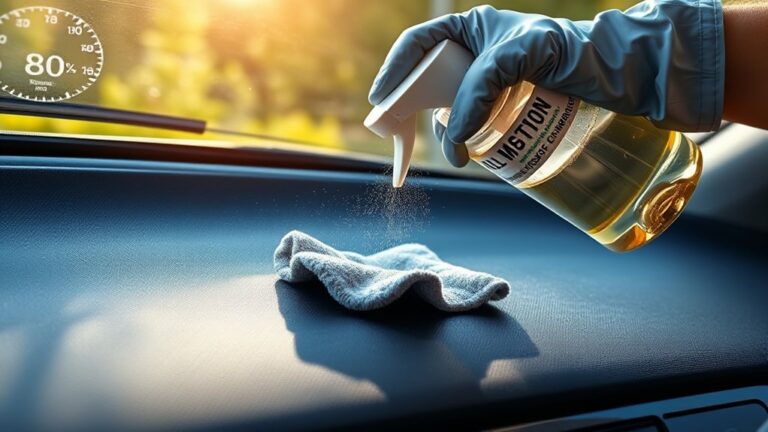
Next, lightly spray the cleaner onto the fabric, focusing on stained or heavily soiled spots. Avoid oversaturating the seats, as excess moisture can lead to mold or mildew.
Lightly spray cleaner on stains, avoiding oversaturation to prevent mold and mildew.
Use a soft-bristle brush or microfiber cloth to gently work the cleaner into the fabric, lifting dirt without damaging the fibers. Let the cleaner sit for a few minutes to loosen grime.
Finally, use a clean, damp cloth or a wet-dry vacuum to remove the cleaner and lifted dirt. Proper application guarantees thorough cleaning without oversaturation or leftover residue.
Tips for Removing Stubborn Stains From Car Seats
Stubborn stains on car seats can be tough, but acting quickly and using the right techniques can really help. First, blot the stain with a clean cloth to soak up excess liquid—avoid rubbing, as that can spread the stain.
Next, apply a mixture of mild detergent and water directly to the stain, then gently scrub with a soft brush or cloth. For tougher stains, you might want to try a specialized upholstery stain remover, just be sure to follow the instructions carefully.
To prevent the stain from setting, it’s best to work on it as soon as possible. You can also test cleaning solutions on a small, hidden area first to avoid any damage.
Using a steam cleaner can help with deep cleaning and stain lift. Be careful not to oversaturate the fabric, which could lead to mold. After cleaning, pat the area dry thoroughly to prevent moisture buildup.
How to Remove Pet Hair and Odors From Car Seats
Removing pet hair from your car seats is easiest with a rubber glove or a lint roller.
To eliminate stubborn odors, use a mixture of baking soda and fabric freshener, then vacuum thoroughly.
Proper cleaning techniques, like deep scrubbing and regular maintenance, keep your seats fresh and pet hair-free.
Effective Pet Hair Removal
Pet hair can quickly turn your car seats into a furry mess, especially if you have pets that love riding along. To remove pet hair effectively, start with a rubber glove or a damp sponge. The friction helps lift hair from fabric fibers.
You can also use a vacuum cleaner with a brush attachment to loosen and suck up stubborn hair. For quick results, try a lint roller or adhesive tape—press and lift to trap hair efficiently.
A slightly damp microfiber cloth can pick up lingering strands. For stubborn hair, consider using a pet hair removal brush designed specifically for upholstery.
Regularly maintaining your car seats with these tools keeps pet hair at bay and makes cleaning faster and easier.
Eliminating Persistent Odors
After you’ve removed pet hair, the next step is to tackle any lingering odors to freshen up your car seats. Start by vacuuming to pick up surface debris.
Mix equal parts water and white vinegar in a spray bottle. Lightly mist the seats—vinegar helps neutralize odors without leaving a strong smell. Let it sit for 10-15 minutes, then scrub with a soft-bristled brush or cloth.
For stubborn smells, sprinkle baking soda over the seats and leave it overnight. The baking soda absorbs odors. Vacuum thoroughly the next day to remove all residue.
If the smell still lingers, try using an enzymatic cleaner designed for pet odors. It breaks down odor-causing molecules at their source, leaving your car smelling fresh.
Proper Cleaning Techniques
To effectively clean pet hair and odors from your car seats, start by thoroughly vacuuming the surfaces with a brush attachment to lift loose hair and debris. Once cleaned, use a mixture of equal parts water and white vinegar in a spray bottle to neutralize odors.
For stubborn pet hair, lightly dampen a rubber glove and run your hand over the seats to gather hair quickly. To prevent future buildup, regularly shake out seat covers or use a lint roller. Consider using an enzymatic cleaner designed for pet stains and odors, which breaks down organic residues.
Use a stiff-bristled brush to loosen embedded hair. Apply a deodorizing spray for lingering smells. Consider steam cleaning for deep dirt and odors. Always test cleaning products on a small area first.
How to Dry Your Car Seats for Fast, Smudge-Free Results
Drying your car seats quickly and without smudges is key for that polished look. To do this, blot excess moisture with a clean, microfiber towel, pressing gently to soak up water without spreading dirt.
Avoid rubbing the fabric, since that can cause smudges or damage. After blotting, open the windows and turn on the AC or heater to help airflow and speed up the drying process.
Using a portable fan directed at the seats can also make a difference. For faster results, consider a wet/dry vacuum with a drying feature to remove remaining moisture.
Make sure the seats are completely dry before using or sitting on them again to prevent mold or stains. Patience and good air circulation are your best friends for a smudge-free, professional finish.
Troubleshooting: What to Do If Your Carpet Cleaner Isn’t Working
If your carpet cleaner isn’t working, start by checking the power connection to make sure it’s plugged in securely. Sometimes, it’s just a loose plug causing the problem.
Next, double-check that the cleaner settings are correct for what you’re trying to do. Also, make sure any filters or brushes are properly adjusted.
Fixing these simple issues can often get your cleaner back in action quickly.
Check Power Connection
When your carpet cleaner isn’t working, the first thing to do is check the power connection. Make sure the cord is securely plugged into a working outlet.
Sometimes, the outlet might be dead or overloaded. Try testing it with another device to see if it’s functioning properly. Also, inspect the power cord for any visible damage or fraying.
If your cleaner has a power switch, double-check that it’s turned on. Don’t forget to look for any tripped circuit breakers or blown fuses in your home’s electrical panel.
Lastly, verify that the extension cord you’re using is rated for the cleaner’s power needs. Faulty connections or damaged cords can prevent your cleaner from powering up.
Inspect Cleaner Settings
Sometimes, your carpet cleaner might not work properly because the settings are off. Just check the machine’s dial or control panel to make sure it’s set to the right cleaning mode.
If your cleaner has adjustable pressure or water flow, ensure they aren’t set too low. Low settings can make cleaning less effective. Also, verify that the detergent concentration is correct—using too little or too much can affect results.
Some cleaners have specific settings for different surfaces. Make sure you select the one suitable for car seats. Lastly, check that the brushes or nozzles are attached correctly and working properly.
Adjusting these settings often fixes performance issues. This way, your cleaner will operate efficiently and give your car seats the deep clean they need.
Boost Your Results With Extra Tools and Cleaning Products
Enhancing your cleaning results often requires more than just basic tools; incorporating extra supplies can make a big difference. Using specialized cleaning products and additional tools helps target stubborn stains and deep dirt more effectively.
For example, a microfiber cloth can lift residues without damaging fabric. A spray bottle lets you apply cleaning solutions precisely where needed. An upholstery brush helps loosen dirt in tight spots, making cleaning easier.
Enzyme-based cleaners are great for tackling organic stains like food or pet messes. These extras can boost your cleaning efficiency and leave your car seats looking fresh and spotless.
Keep these tools handy to customize your approach and get professional-looking results with less effort. Proper use of additional supplies guarantees a deeper, more thorough clean every time.
How Often Should You Clean Your Car Seats?
You should clean your car seats regularly to keep them looking fresh and prevent stains from setting in.
Look for signs like odors or visible dirt that tell you it’s time for a quick clean.
Regular maintenance doesn’t just keep your seats looking great — it also helps them last longer.
Recommended Cleaning Frequency
Cleaning your car seats regularly is key to keeping them looking good and smelling fresh. How often you clean depends on your driving habits and who uses the vehicle.
If you’ve got kids, pets, or often eat in your car, aim to clean every 1-3 months. For light use or occasional drivers, every 4-6 months should be enough. Regular cleaning stops dirt from settling deep into the fabric and keeps odors away.
To keep your car seats in great shape, clean up spills or stains right away. Vacuum weekly to pick up loose dirt. Deep clean every 3-6 months, depending on use. Spot treat high-traffic areas for extra care.
Sticking to a routine ensures your seats stay fresh and well-maintained.
Signs It’s Time To Clean
Knowing when to clean your car seats can save you from stubborn stains and lingering odors. If you see visible dirt or stains, it’s definitely time to clean.
Unpleasant smells that stick around even after airing out are a sign you need a deep clean. Plus, if you or your passengers are experiencing allergies or respiratory issues, it’s a good idea to clean more often.
Here’s a handy table to guide you:
| Signs to Clean | Frequency | Impact |
|---|---|---|
| Visible stains | Weekly or as needed | Prevents stains from setting |
| Unpleasant odors | After spills or monthly | Keeps interior fresh |
| Allergies or dust buildup | Monthly | Improves air quality |
Pay attention to these signs, and your car seats will stay fresh and inviting.
Regular Maintenance Benefits
Regularly maintaining your car seats by cleaning them at appropriate intervals can greatly extend their lifespan and keep your vehicle looking and smelling fresh. How often you clean depends on usage and messes, but most experts recommend cleaning every 3 to 6 months.
Regular cleaning prevents dirt buildup, reduces allergens, and preserves fabric or leather quality. It also helps prevent stains from setting in, making future cleanings easier. Keep an eye out for signs like lingering odors or visible dirt that indicate it’s time for a refresh.
To maximize benefits, consider these maintenance tips:
- Vacuum seats weekly to remove surface debris
- Spot clean stains immediately
- Use appropriate cleaning products regularly
- Deep clean with a carpet cleaner every few months
Common Mistakes to Avoid When Cleaning Car Seats
When you’re trying to get your car seats spotless, it’s easy to make mistakes that might make stains worse or even damage the fabric. One common mistake is using too much water or cleaner, which can cause mold or harm the material over time.
Another mistake is scrubbing too hard. That can tear the fabric or push dirt even deeper into the fibers. It’s better to use gentle, circular motions for cleaning.
Don’t forget to test your cleaner on a small hidden spot first. That way, you can avoid any discoloration or damage before doing the full clean. Using harsh chemicals can weaken the fabric or cause fading, so choose seat-safe cleaners instead.
Finally, make sure to dry the seats thoroughly after cleaning. Leaving moisture behind can lead to mold growth, which nobody wants. Following these simple tips can help keep your car seats clean and in great shape.
Frequently Asked Questions
Can I Use a Carpet Cleaner on Leather Car Seats?
You shouldn’t use a carpet cleaner on leather car seats because the harsh chemicals and too much moisture can damage the leather.
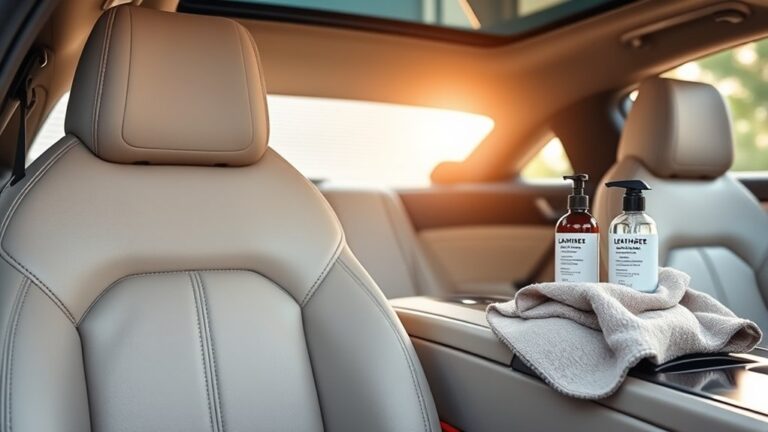
Instead, go for a leather cleaner that’s made specifically for leather surfaces. Gently apply it with a microfiber cloth, then wipe away any leftover residue.
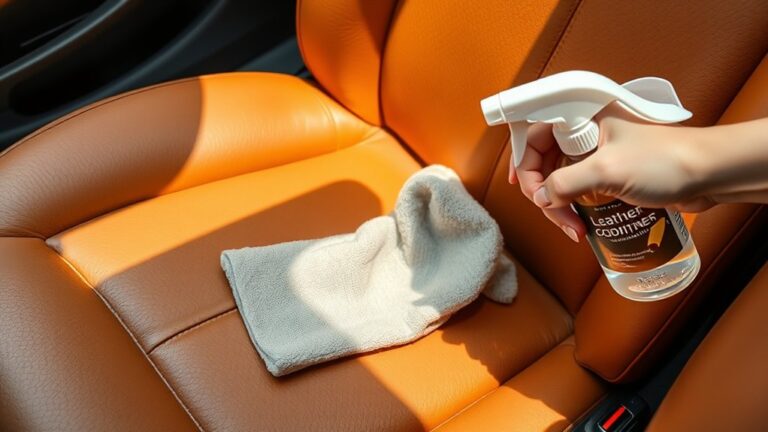
Regularly conditioning your leather seats is a good idea. It helps keep them soft and prevents cracking over time.
Always follow the instructions on the cleaner to avoid accidentally causing damage.
Is It Safe to Use Household Carpet Cleaners on Car Seats?
Using household carpet cleaners on car seats is like trying to fit a square peg into a round hole. It’s often unsafe because these cleaners can contain harsh chemicals that might damage your upholstery.
This is especially true for delicate fabrics or leather. Always check the label first, test a small area, and choose products made specifically for car seats.
That way, you keep your seats looking fresh and clean without risking damage.
How Long Should I Wait Before Using My Car After Cleaning Seats?
You should wait at least 2 to 4 hours before using your car after cleaning the seats. This gives the seats enough time to fully dry and helps prevent mold or mildew from growing.
To speed up the drying process, keep the windows open or use a fan inside your vehicle. Just make sure the seats are completely dry before you sit on them or start using the car again.
This way, you’ll ensure a clean and safe environment inside your vehicle.
Can I Clean Car Seats With a Steam Cleaner Instead of a Carpet Cleaner?
Yes, you can use a steam cleaner on your car seats, but make sure it’s suitable for upholstery.
Steam cleaners are great for removing dirt and stains without needing harsh chemicals, so they can be a good alternative.
Just check your seat fabric’s compatibility first, and be careful not to over-wet the seats. Over-wetting can cause mold or damage.
Always follow the manufacturer’s instructions and test a small area first to make sure the steam won’t harm your seats.
Are There Eco-Friendly Carpet Cleaners Suitable for Car Seats?
Yes, there are eco-friendly carpet cleaners suitable for car seats. You can look for products labeled biodegradable, non-toxic, and plant-based, which are gentle on your car’s interior and better for the environment.
Always check the label to verify it’s safe for upholstery and fabric. Using eco-friendly cleaners helps reduce chemical exposure, and many work just as well at removing dirt and stains.
This way, your car seats stay clean and safe without harming the environment.
Conclusion
With the right tools and techniques, your car seats can look brand new—bright and spotless.
But remember, patience matters more than speed, and gentle care beats harsh scrubbing.
By avoiding common mistakes and choosing the right cleaner, you’ll enjoy that clean, inviting interior without damage.
Cleaning isn’t just about removal but preservation.
So, take your time, stay consistent, and let your car’s interior shine—because a little effort now saves you effort later with a good carpet cleaner for car seats.