How to Safely Use Glass Cleaner in My Car
Are you tired of streaky, foggy car windows that make driving a hassle? You’re not alone—many people struggle to clean their car glass effectively and safely.
Using the right glass cleaner can make all the difference, but knowing how to do it properly is key.
To safely use glass cleaner in your car, choose an automotive-specific, alcohol- or water-based product that’s eco-friendly.
Remove loose items and vacuum the interior first.
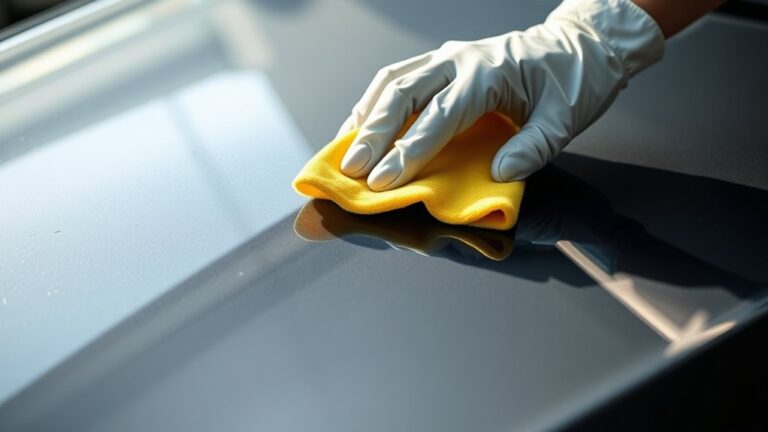
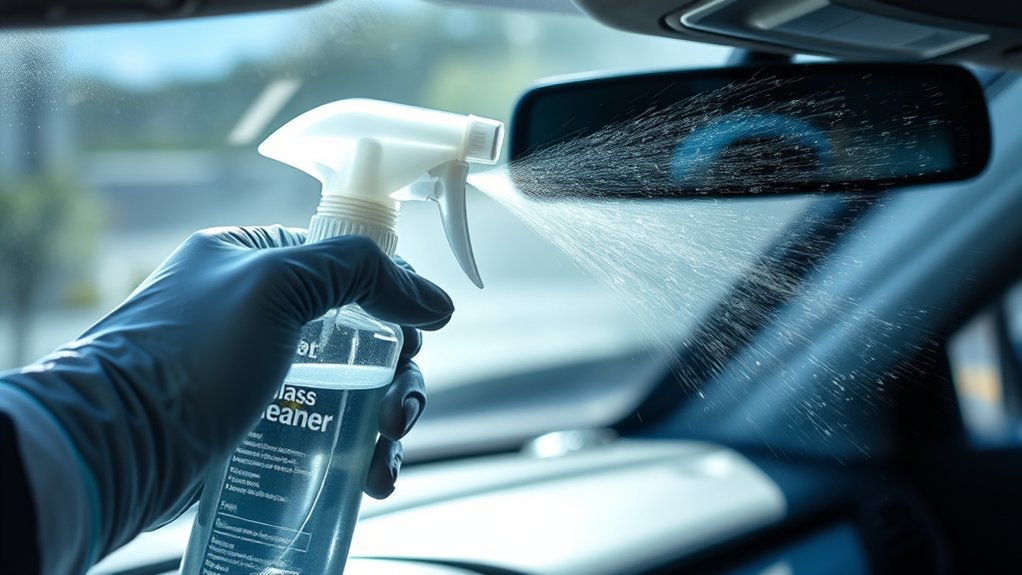
Spray the cleaner onto a clean microfiber cloth, not directly on the glass, and wipe in circular motions avoiding edges.
Avoid sunlight and harsh chemicals.
Store your cleaner in a cool, dry place out of children’s reach.
If you want to learn more about perfecting your process, keep exploring these tips.
Key Takeaways
- Always spray glass cleaner onto a microfiber cloth, not directly on the glass. This helps prevent excessive chemical contact and keeps things safer.
- Use a non-abrasive cloth and avoid rough materials. This way, you won’t scratch the glass surface accidentally.
- Try to work in a shaded area. Sunlight can cause the cleaner to dry too quickly, leading to streaks.
- Wear gloves to protect your skin and make sure the area is well-ventilated. This keeps you safe from fumes and irritation.
- Store the cleaner in a cool, labeled container. Keep it away from children and heat sources for added safety.
How to Choose the Best Glass Cleaner for Your Car’s Interior
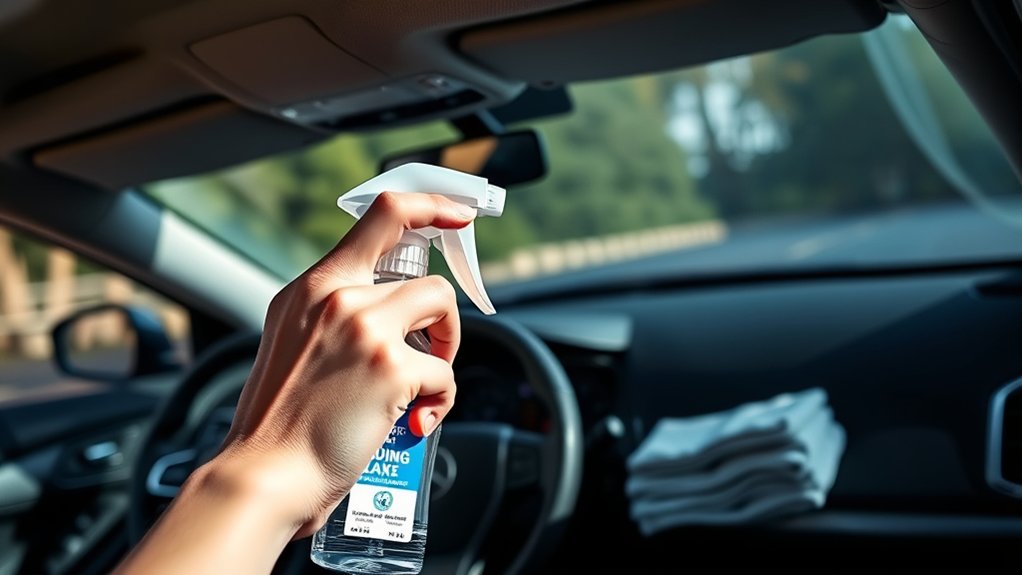
Choosing the right glass cleaner for your car’s interior is key to getting streak-free, clear windows. You want a product made specifically for automotive glass because it’s designed to prevent streaks and residue.
Avoid cleaners with ammonia or harsh chemicals. They can damage tinting or cause fogging over time. Instead, look for alcohol-based or water-based options that evaporate quickly and leave no streaks.
Check the label for eco-friendly or non-toxic labels if you’re worried about fumes. If your windows fog up often, consider a cleaner with anti-fog properties to keep them clear.
Always read reviews before buying to see if the product works well on car glass. A good quality cleaner will make your job easier and give you clear, streak-free results every time.
Preparing Your Car Interior for Cleaning
Before you start cleaning your car’s glass, it’s important to prepare the interior to ensure the process goes smoothly and your results are effective. Begin by removing any loose items like trash, personal belongings, or clutter that could get in your way.
Next, vacuum the seats and floor mats to eliminate dust, dirt, and debris that might smear or spread during cleaning. Finally, wipe down surfaces such as the dashboard and console with a damp cloth to remove dust and oils that can transfer onto your glass.
Proper preparation helps your glass cleaner work more efficiently and leaves a streak-free finish.
Applying Glass Cleaner Safely and Effectively
To apply glass cleaner safely and effectively, you should follow proper techniques that help prevent streaks and damage.
Use the right cleaning products made specifically for automotive glass. Spray them evenly across the surface to get the best results.
Be careful not to scratch or etch the glass by applying too much pressure or using abrasive materials.
Proper Application Techniques
Spraying glass cleaner directly onto the surface guarantees even coverage and prevents excess liquid from seeping into edges or seams. Hold the spray bottle about six inches from the glass and apply a light, even mist.
Use a clean microfiber cloth to spread the cleaner in a circular motion, ensuring full coverage. Avoid oversaturating the surface, which can lead to streaks or drips.
After applying, use a dry section of the cloth to wipe away any remaining residue. For best clarity, work in small sections and regularly change cloth areas.
This technique minimizes smudges and streaks, resulting in a crystal-clear finish. Maintain a consistent spraying distance for uniform coverage.
Use a lint-free microfiber cloth for wiping, and follow up with a dry cloth to buff and improve shine.
Use Suitable Cleaning Products
Choosing the right cleaning products is essential for safe and effective glass cleaning. You want a cleaner specifically formulated for automotive glass to avoid streaks and damage.
Avoid household cleaners with ammonia or harsh chemicals that can harm tinting or leave residues. Always check labels for compatibility with automotive glass.
If you’re unsure, go for a product labeled as safe for car windows. Using the wrong cleaner can cause smudges, reduce visibility, or damage the glass surface.
A quality, purpose-made glass cleaner guarantees a streak-free finish and quick evaporation. Remember, sticking to products designed for automotive use helps protect your windshield and side windows, making your cleaning safer and more effective.
Avoiding Glass Damage
Applying glass cleaner correctly is key to preventing damage and getting a streak-free shine. To protect your car’s glass, steer clear of abrasive materials that can scratch the surface.
Never spray cleaner directly on the glass. Instead, put it on a microfiber cloth to control the amount and avoid drips. Be careful around tinted windows because some cleaners can harm the tint over time.
Also, try not to clean in direct sunlight. The cleaner can dry too quickly, leaving streaks or spots. Use a soft, lint-free microfiber cloth instead of rough or paper towels.
It’s a good idea to test the cleaner on a small, hidden area first. Keep the cleaner away from edges and seals to prevent any deterioration.
Tools and Tips for a Streak-Free Finish
Using the right tools makes all the difference in achieving a streak-free finish. Focus on microfiber cloths and proper techniques to prevent smudges.
Remember to dry and polish the glass thoroughly. These tips will help your car windows look crystal clear every time.
Proper Cleaning Tools
To get a streak-free finish when cleaning your car’s glass, choosing the right tools is key. Use soft, lint-free microfiber cloths that won’t leave fibers behind or scratch the surface.
Pick a high-quality squeegee with a rubber blade for larger windows. This will give you even, smear-free results every time. A glass cleaning brush is also handy for reaching tricky spots and removing stubborn dirt.
Consider these tools for the best results:
- Microfiber cloths for gentle, streak-free wiping
- Squeegee with a rubber blade for big surfaces
- Glass cleaning brush for hard-to-reach areas
Using the right tools not only makes your glass look cleaner but also helps protect it from damage over time. Proper tools really make all the difference in achieving a professional, flawless finish.
Technique for Streak-Free
Achieving a streak-free shine takes more than just the right tools; your technique really matters. Start by spraying glass cleaner evenly onto the surface, but don’t oversaturate.
Use a microfiber cloth and fold it into sections. Work in small, circular motions to lift dirt and prevent streaks. Once the glass looks clear, switch to a clean, dry section of the cloth to buff the surface and boost clarity.
Keep these tips in mind: Spray lightly and evenly, avoiding drenching the glass. Wipe with a microfiber cloth in circular motions for even coverage. Use a dry cloth to buff away streaks and residue.
Finally, inspect the glass from different angles to ensure a clear, streak-free finish. Following these simple steps will give you a spotless, professional-looking shine.
Drying and Polishing
Once you’ve finished cleaning and wiping the glass to remove streaks, the next step is to dry and polish the surface thoroughly. Proper drying prevents water spots and guarantees a clear view.
Use a clean, microfiber cloth to gently absorb remaining moisture, avoiding scratches. For a streak-free shine, apply light pressure and use circular motions.
To improve clarity, consider finishing with a dry, lint-free cloth to buff the glass. Use a microfiber cloth for gentle, effective drying.
Employ circular motions to distribute polish evenly. Buff with a dry cloth for a crystal-clear finish.
Common Mistakes to Avoid When Cleaning Interior Glass
Many people make the mistake of using harsh or abrasive cleaners on interior glass, which can cause scratches and damage the surface. Instead, choose a gentle cleaner specifically made for automotive glass.
Avoid using paper towels or rough cloths that can leave tiny scratches. Never spray cleaner directly onto the glass; instead, spray it onto your cloth first. This prevents excess liquid from seeping into seals or electronics.
Be careful around edges and corners, where dirt and grime tend to gather. Don’t scrub aggressively. Use smooth, circular motions to lift dirt without causing harm.
Also, avoid cleaning the glass in direct sunlight, as this can cause streaks or quicker drying that leaves residue. Following these tips helps keep your interior glass clear and undamaged.
Troubleshooting: Fixing Streaks and Residue
Streaks and residue are common problems when cleaning interior glass, but they can often be fixed with a few simple techniques. First, make sure you’re using a clean, lint-free cloth or microfiber towel, as dirt or fibers can cause streaks.
Second, avoid spraying too much cleaner directly on the glass. Instead, mist it lightly to prevent excess liquid that can leave residue. Applying a glass-specific cleaner can also give you better results.
Finally, wipe in a circular motion followed by a vertical or horizontal pass to ensure even cleaning and lift particles that cause streaks. Use a dry, clean microfiber cloth for final buffing, and switch to distilled water if mineral deposits appear.
Safety and Storage Tips for Glass Cleaner in Your Car
Proper safety and storage practices are essential to keep you and your vehicle safe when handling glass cleaner. Always store the cleaner in a cool, dry place away from direct sunlight and out of children’s reach.
Avoid leaving it in your car’s trunk or glove compartment for long periods because temperature fluctuations can cause leaks or chemical changes. Use a clearly labeled container to prevent accidental misuse.
When applying the cleaner, wear gloves and make sure the area is well-ventilated so you don’t inhale fumes. Keep the container away from sunlight or heat sources to stay safe.
Frequently Asked Questions
Can I Use Household Glass Cleaner on My Car’s Interior Glass?
You can use household glass cleaner on your car’s interior glass, but just be careful. Make sure the cleaner is ammonia-free to avoid any damage or streaks.
Spray it onto a soft microfiber cloth instead of directly on the glass, and then gently wipe the surface. Be cautious not to let the cleaner touch the plastic or rubber parts, as it might cause deterioration.
Always test a small area first to make sure it won’t cause any unwanted damage. That way, you can clean your car’s glass safely and effectively.
Is It Safe to Use Glass Cleaner on Tinted Windows?
Using glass cleaner on tinted windows is generally safe if you pick the right product. You want to stay away from harsh chemicals that could damage the tint’s adhesive or color.
Choose a gentle, ammonia-free cleaner and spray it onto a soft cloth instead of directly on the glass. This helps protect your tint while keeping your windows clear and streak-free.
Regular, careful cleaning will keep your tinted windows looking sharp and in great shape.
How Often Should I Clean My Car’s Interior Glass?
You should clean your car’s interior glass at least once a month to keep visibility clear and prevent grime buildup.
If you notice streaks, smudges, or fogging, clean it more often. Use a gentle, ammonia-free glass cleaner and a microfiber cloth to avoid scratching the surface.
Regular cleaning not only improves your view but also helps maintain the overall cleanliness and appearance of your vehicle’s interior.
Can Glass Cleaner Damage My Car’s Dashboard or Upholstery?
Glass cleaner can damage your car’s dashboard or upholstery if it has harsh chemicals like ammonia or alcohol. These can cause fading, cracking, or staining over time.
To keep your interior safe, always read the labels carefully. Choose products made specifically for automotive use.
Avoid spraying the cleaner directly onto sensitive areas. Instead, spray it onto a soft cloth and gently wipe the surfaces.
This way, you protect your car’s interior and help it stay looking good longer.
What Should I Do if I Accidentally Ingest Glass Cleaner?
If you accidentally ingest glass cleaner, call poison control or get emergency medical help right away. Don’t try to make yourself vomit unless a medical professional tells you to.
Rinse your mouth with water to dilute the cleaner, but don’t swallow the water. Stay calm and give emergency responders any details about the product you consumed.
Getting medical help quickly is important to avoid serious health issues.
Conclusion
Properly choosing and using your glass cleaner not only guarantees crystal-clear visibility but also keeps you safe on the road. Did you know that some DIY solutions, like vinegar and water, can be just as effective as commercial cleaners?
By following these tips, you might discover that a simple, natural approach can give you spotless, streak-free windows without harsh chemicals. So, give it a try — your car and your eyes will thank you for it!