Can I Put Glass Cleaner in My Car
Many car owners struggle with keeping their vehicle’s glass crystal clear without causing damage.
It’s a common concern: can I just use household glass cleaner on my car? You’re not alone—most people want a quick fix but worry about harming their paint or interior.
You shouldn’t put household glass cleaner directly on your car’s surfaces. These cleaners may contain harsh chemicals like ammonia or alcohol that can damage your vehicle’s paint, tint, seals, or interior materials.
Instead, use automotive-specific glass cleaners or gentle solutions like vinegar and water applied with a soft cloth.
To avoid mistakes and learn safe cleaning tips, keep exploring how to protect your car’s surfaces effectively.
Key Takeaways
- Household glass cleaners may contain harsh chemicals that can be harmful to your car’s surfaces, seals, and tinting.
- It’s better to use automotive-specific cleaners to avoid any damage and make sure your car gets properly cleaned.
- Stay away from cleaners that contain ammonia, alcohol, or acetone, especially on your car’s glass and interior surfaces.
- Using the wrong cleaner can lead to streaks, clouding, or even long-term damage to your vehicle.
- For a safe and effective clean, try a mild solution like vinegar mixed with water or stick to a dedicated automotive glass cleaner.
What Is Glass Cleaner and How Does It Work?
Glass cleaner is a specially formulated liquid that helps remove dirt, grime, and streaks from your car’s windows and mirrors. It works by breaking down the oils, grease, and dirt that stick to glass surfaces.
Most glass cleaners contain solvents like alcohol or ammonia, which evaporate quickly, leaving behind a clear, streak-free finish. When you spray the cleaner onto your glass, it loosens the dirt, making it easier to wipe away.
The cleaner’s formulation helps prevent smudges and streaks, so you get good visibility while driving. It’s designed to be safe on smooth surfaces without damaging the glass.
Using it properly lets you achieve a clean, shiny look, which improves both safety and the appearance of your vehicle.
Is It Safe to Use Household Glass Cleaner on Car Windows?
Household glass cleaners often have different chemical formulations than those made for cars, which can cause issues on your vehicle’s windows. Using the wrong cleaner might lead to damage or streaking, risking your visibility and the window’s condition.
Consider safer, car-specific cleaning options to keep your windows clear without risking harm. These products are designed to be gentle on automotive glass while effectively removing dirt and grime.
Chemical Composition Differences
Because household glass cleaners often contain chemicals not meant for cars, their formulas can be quite different from those made specifically for automotive use. Household cleaners might include ammonia, vinegar, or other substances that aren’t optimized for car windows.
These ingredients can be harsher or more corrosive, which could cause problems when used on your car’s glass. Car-specific glass cleaners are designed to clean well while reducing streaks, residue, or damage.
They usually contain gentle surfactants and alcohols that evaporate quickly, leaving a clear, streak-free surface. Using a household cleaner with a different chemical makeup might seem easier, but it can lead to issues like clouding or damaging the glass over time.
Always check the label to make sure the cleaner is safe for automotive glass.
Potential Damage Risks
Using a household glass cleaner on your car windows can be risky, especially if it has harsh chemicals like ammonia or vinegar. These can damage rubber seals, window tint, or even your car’s paint if they seep beyond the glass.
Strong chemicals may also cause streaks, clouding, or scratching over time. Here’s a quick overview of some common chemicals and their potential damage:
| Chemical | Potential Damage |
|---|---|
| Ammonia | Fades tint and damages rubber seals |
| Vinegar | Erodes window tint and etches glass |
| Alcohol | Dries out rubber and causes cracking |
| Acetone | Discolors or damages plastic parts |
| Fragrance additives | Leave residues and cause streaks |
To keep your vehicle safe, stick to specialized car glass cleaners. They’re designed to protect your surfaces and avoid these risks.
Optimal Cleaning Alternatives
Opting for specialized car glass cleaners is the safest way to keep your windows spotless without risking damage. These products are designed to clean effectively without harming the glass or surrounding materials.
If you prefer alternatives, consider these options:
- Use a mixture of water and a small amount of mild dish soap for gentle cleaning.
- Rinse with plain water to remove loose dirt before applying any cleaner.
- Apply a vinegar-water solution (1:1 ratio) for streak-free clarity.
- Use a clean microfiber cloth to wipe the glass, avoiding abrasive materials.
Always test any solution on a small area first. Avoid household glass cleaners with ammonia or alcohol, as they can damage tinting or cause clouding.
Which Types of Glass Cleaners Are Safe for Cars?
When choosing a glass cleaner for your car, it’s important to pick products that are both safe and effective. Look for cleaners specifically designed for automotive use, as they won’t damage your vehicle’s tint or coating.
You’ll want a cleaner that’s ammonia-free because ammonia can weaken tint films and cause streaks. Spray-on, wipe-off formulas work best—they’re easy to use and leave a streak-free finish.
Go for cleaners with gentle, non-abrasive ingredients that won’t harm your glass or surrounding surfaces. Many automotive glass cleaners also have anti-fog or anti-static features, which help with visibility and reduce dust buildup.
Always read labels carefully and avoid household glass cleaners that contain harsh chemicals, as they might not be suitable for your car’s glass.
What Are the Risks of Using Household Glass Cleaner on Your Vehicle?
Using household glass cleaner on your car can risk damaging the paint if it contains harsh chemicals.
You might also notice residue or smudges that are harder to remove, leaving your windows streaky.
It’s important to evaluate these risks before using products not specifically designed for vehicles.
Potential Paint Damage Risks
Household glass cleaners often contain harsh chemicals like ammonia or vinegar, which can be harmful to your car’s paint. These ingredients can strip away the protective clear coat, leading to dullness or discoloration.
Using these cleaners regularly can cause several issues, like paint fading from chemical breakdown of the surface. It can also damage the pigment, resulting in uneven color patches.
Another risk is clear coat deterioration, which weakens the protective layer on your car. Surface etching can occur too, making the paint rough or developing tiny scratches.
All of these effects can hurt your vehicle’s appearance and resale value. To keep your car looking its best and avoid costly repairs, choose products specifically designed for automotive use.
Residue and Smudge Issues
Even though household glass cleaner might seem like a quick fix, it can leave behind stubborn residue and smudges that are tough to remove from your car’s surface. These residues can create a cloudy film, reducing visibility and making your windows look dull.
Smudges from improper cleaning can attract more dirt and dust, leading to a cycle of constant cleaning. If you use a cleaner not designed for automotive surfaces, the chemicals may not evaporate completely, leaving streaks and spots.
This can compromise your visibility and safety, especially during night driving or bad weather. To avoid these issues, opt for products specifically formulated for automotive glass or stick with water and a microfiber cloth for a safe, streak-free finish.
Ingredients to Avoid in Glass Cleaners for Cars
Certain ingredients in glass cleaners can damage your car’s windows or impair your visibility, so it’s important to know what to avoid. Some chemicals can cause streaks, corrosion, or fogging. Here are four ingredients to watch out for:
Avoid glass cleaners with ammonia, alcohol, acetone, or bleach to protect your car’s windows and visibility.
- Ammonia can break down coatings and cause glass fogging over time.
- Alcohol (denatured) dries out seals and can leave streaks.
- Acetone damages window tint and plastics.
- Bleach or chlorine-based cleaners corrode metal components and harm glass surfaces.
Avoid products with these ingredients to protect your windows’ clarity and integrity. Instead, opt for cleaners specifically formulated for automotive glass, which are designed to clean effectively without causing damage.
How to Safely Clean Your Car Windows and Mirrors
To clean your car windows and mirrors safely, start by choosing a cleaner made specifically for automotive glass.
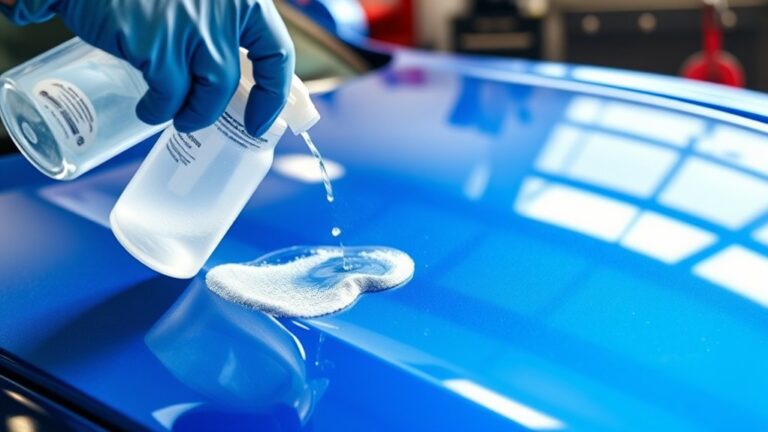
Use a clean microfiber cloth and spray the cleaner lightly, avoiding too much liquid that can cause streaks.
Wipe in a circular motion and dry with a separate cloth for a streak-free shine.
Choosing the Right Cleaner
Choosing the right cleaner is essential to safely and effectively clean your car’s windows and mirrors. You want a product that clears away dirt without damaging the glass or leaving streaks.
Consider these options:
- Glass-specific cleaners are formulated for clarity and a streak-free shine.
- Diluted vinegar solutions are an eco-friendly, effective alternative.
- Rubbing alcohol is good for removing greasy smudges.
- Avoid harsh chemicals like ammonia-based cleaners that can damage tint or glass.
Always check labels to make sure the cleaner is compatible with your car’s surfaces. Test a small area first to prevent damage. Using the wrong cleaner can cause streaks, discoloration, or corrosion.
Picking the right product guarantees your windows stay crystal clear and protected.
Proper Cleaning Techniques
Cleaning your car windows and mirrors properly is key to getting a clear, streak-free finish. Start by choosing a soft, lint-free cloth or microfiber towel to avoid scratching the glass.
Spray your glass cleaner directly onto the cloth, not the surface. This helps prevent overspray and drips. Wipe in circular motions to loosen dirt, then use vertical or horizontal strokes to remove any residue.
For stubborn spots, apply gentle pressure or repeat the process. Always clean in a shaded area to stop the cleaner from drying too quickly, which can cause streaks.
Dry the surface thoroughly with a clean cloth to ensure a sparkling, streak-free shine. Regular cleaning with proper techniques helps maintain clarity and keeps your windows looking like new.
Tips for a Streak-Free Finish on Automotive Glass
Achieving a streak-free finish on your automotive glass takes attention to detail and the right technique. Start by cleaning the glass with a quality glass cleaner and a microfiber cloth to ensure all dirt and grime are gone.
To prevent streaks, follow these tips: Use a clean, dry microfiber cloth for buffing. Spray cleaner evenly across the glass to avoid pooling. Wipe in a circular motion, then switch to vertical or horizontal strokes.
Use a clean microfiber cloth, spray evenly, and wipe in circular then straight motions for a streak-free shine.
Dry the glass thoroughly to prevent water spots. Avoid applying too much cleaner, as excess liquid can cause streaks. Work in shaded areas or during cooler parts of the day to slow evaporation.
Consistent, careful cleaning helps you achieve crystal-clear, streak-free automotive glass.
Are There Better Alternatives to Glass Cleaner for Car Windows?
Are there better alternatives to glass cleaner for your car windows? Yes, some options can clean effectively without leaving streaks or damaging the glass. A mixture of equal parts distilled water and white vinegar works well, cutting through grime and residue naturally.
You can also use a small amount of dish soap diluted in water for a gentle yet effective clean. Microfiber cloths are essential for wiping away dirt without scratching.
Commercial glass cleaning sprays made specifically for cars are often better than household cleaners because they’re formulated for automotive glass and won’t leave residues. Avoid harsh chemicals like ammonia or bleach, which can damage tinting or cause streaks.
These alternatives can keep your windows clear and spotless without risking damage.
Can Using the Wrong Glass Cleaner Damage Your Car’s Paint or Interior?
Ever wonder if using the wrong glass cleaner could harm your car’s paint or interior? It definitely can. Some cleaners have harsh chemicals that might damage painted surfaces or cause discoloration. Using a cleaner not made for cars could also weaken interior plastics or upholstery.
Here are four ways this can happen:
- Paint Damage: Acidic or abrasive cleaners can strip away clear coats or paint layers.
- Discoloration: Certain chemicals might fade or stain fabrics and plastics inside your car.
- Surface Corrosion: Harsh ingredients can corrode metal parts or electronic components.
- Residue Build-up: Some cleaners leave streaks or residues that attract dirt over time.
Always pick products labeled safe for automotive surfaces to avoid costly repairs.
How Often Should You Clean Your Car Windows and Mirrors?
Using the wrong glass cleaner can damage your car’s paint or interior, so it’s important to pick the right products and clean properly.
You should aim to clean your windows and mirrors at least once a month to keep visibility clear and ensure safety.
In areas with heavy pollution, dust, or pollen, cleaning every two weeks helps prevent buildup that can block your view.
If you notice streaks, smudges, or dirt, it’s a sign to clean them promptly.
Use a soft cloth or microfiber towel to avoid scratching and to get a streak-free shine.
Regular cleaning not only makes driving safer but also helps preserve the clarity of your glass surfaces over time.
Adjust how often you clean based on your environment and driving conditions.
What To Do If Your Glass Cleaner Causes Damage?
If your glass cleaner has caused damage to your car’s windows, paint, or interior surfaces, act quickly to reduce the harm. First, stop using the cleaner immediately. Then, rinse the affected area with plenty of water to wash away any residue.
Next, follow these steps:
- Assess the damage to see if it’s just superficial or if it’s more serious.
- Gently clean the area with a mild soap solution if the paint or surfaces are affected.
- Dry the area thoroughly to prevent further damage.
- Consult a professional if the damage looks severe or if you’re unsure what to do.
Quick, careful action will help protect your car’s finish and interior, saving you from bigger repairs later.
Final Tips for Safe and Effective Car Glass Cleaning
To keep your car’s windows spotless and streak-free, it’s important to follow some final tips for safe and effective cleaning. Always use a gentle, non-abrasive cloth and avoid harsh scrubbing.
Test your cleaner on a small area first to prevent any damage. Keep the windows cool during cleaning to avoid streaks and evaporation issues.
Use a proper technique: spray cleaner onto the cloth, not directly on the glass, and wipe in a circular motion. Here’s a quick guide:
| Tip | Why It Matters | Best Practice |
|---|---|---|
| Use the right cleaner | Prevents streaks | Choose glass-specific products |
| Keep windows cool | Avoid streaks | Clean in shade or early morning |
| Use soft cloths | Prevents scratches | Microfiber cloths are ideal |
| Wipe in circular motion | Guarantees clarity | No harsh rubbing |
Frequently Asked Questions
Can I Use Windshield Washer Fluid as a Glass Cleaner?
Yes, you can use windshield washer fluid as a glass cleaner. It’s designed to clean your car’s windshield effectively, so it works well on other glass surfaces too. Just spray it onto your windows and wipe with a clean cloth.
Keep in mind, some washer fluids have harsh chemicals. If you notice streaks or residue, consider switching to a dedicated glass cleaner for a clearer finish.
Are There Natural or Eco-Friendly Glass Cleaning Options for Cars?
Imagine cleaning your car’s windows with a gentle breeze—refreshing and eco-friendly. Yes, there are natural options like vinegar mixed with water or eco-friendly commercial glass cleaners.
These solutions effectively remove dirt and smudges without harmful chemicals. Using environmentally conscious cleaners not only protects your car and the planet but also keeps your view crystal clear.
It’s a small choice that can make a big difference.
How Do I Remove Stubborn Stains or Hard Water Spots?
To remove stubborn stains or hard water spots from your car’s glass, start by applying a dedicated glass cleaner or a mixture of vinegar and water. Let it sit for a few minutes, then gently scrub with a soft cloth or sponge.
For persistent spots, use a razor blade carefully to scrape off mineral deposits, making sure you don’t scratch the glass. Rinse thoroughly and wipe dry for a streak-free finish.
Is It Necessary to Use a Squeegee or Special Tools?
You don’t need fancy tools or a squeegee to get sparkling windows. A microfiber cloth works like a charm, helping you wipe away streaks and smudges easily.
Using a squeegee can be helpful for larger surfaces, but it’s not a must-have. Focus on cleaning gently and thoroughly, and you’ll have clear, streak-free windows.
Sometimes, simple tricks do the job better than overcomplicating things.
Can Using the Wrong Cleaner Affect My Car’s Electronic Sensors?
Using the wrong cleaner can definitely affect your car’s electronic sensors. Harsh chemicals or cleaners with ammonia can damage or interfere with sensors like rain sensors or camera systems.
You should always choose a cleaner specifically designed for automotive glass and avoid those containing alcohol or ammonia. When cleaning, spray the product on a soft cloth rather than directly on sensors to prevent accidental damage.
Conclusion
Using glass cleaner on your car is like choosing between a gentle breeze and a hurricane—careful selection makes all the difference. While household cleaners might seem convenient, they can cause scratches or damage, much like a storm wreaking havoc.
Instead, opt for safe, car-specific products that shine without harm. Think of your car’s windows as a clear, calm lake—keep them spotless with the right tools, and enjoy the view without worry.
Can I put glass cleaner in my car? Yes, but only if it’s a cleaner designed specifically for automotive glass. Using the right product ensures your windows stay clear and damage-free.