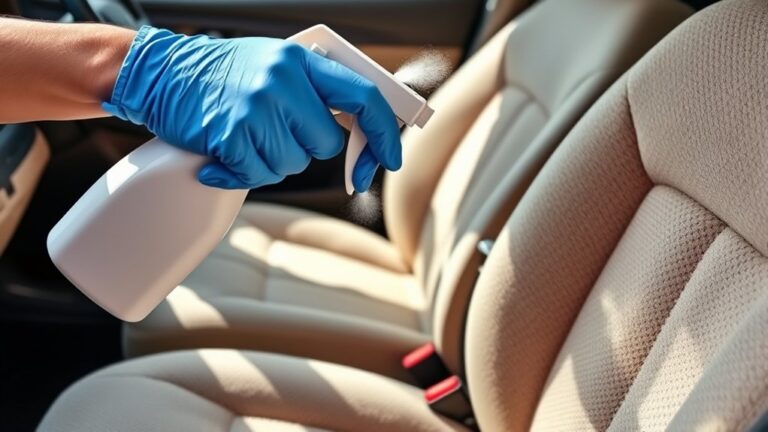
Can I Leave Cleaning Products in My Car Safely?
Many people struggle with keeping cleaning products safe in their cars, especially when trying to prevent damage or accidents. You’re not alone—storing chemicals properly can be tricky, but it’s really important.
Can I leave cleaning products in my car safely? You shouldn’t leave cleaning products in your car without proper precautions, as temperature changes and potential spills can cause serious safety and vehicle damage risks.
Chemicals can leak, become unstable, or produce harmful fumes, especially in high heat or cold. Storing products improperly might also lead to legal issues or insurance problems if leaks cause damage or injuries.
To stay safe, learn about the best storage methods—continue ahead for essential tips and precautions.
Key Takeaways
- Store cleaning products in leak-proof containers to prevent spills and leaks.
- Keep these containers in the trunk or designated compartments, away from direct sunlight and heat.
- Avoid storing hazardous chemicals like bleach or ammonia in temperatures that could make them more volatile.
- Label all containers clearly so you know what’s inside.
- Don’t mix different cleaning chemicals in your vehicle; it can be dangerous.
- Regularly check storage areas for cracks, leaks, or signs of chemical deterioration to stay safe.
Are Cleaning Products Safe to Keep in Your Car?
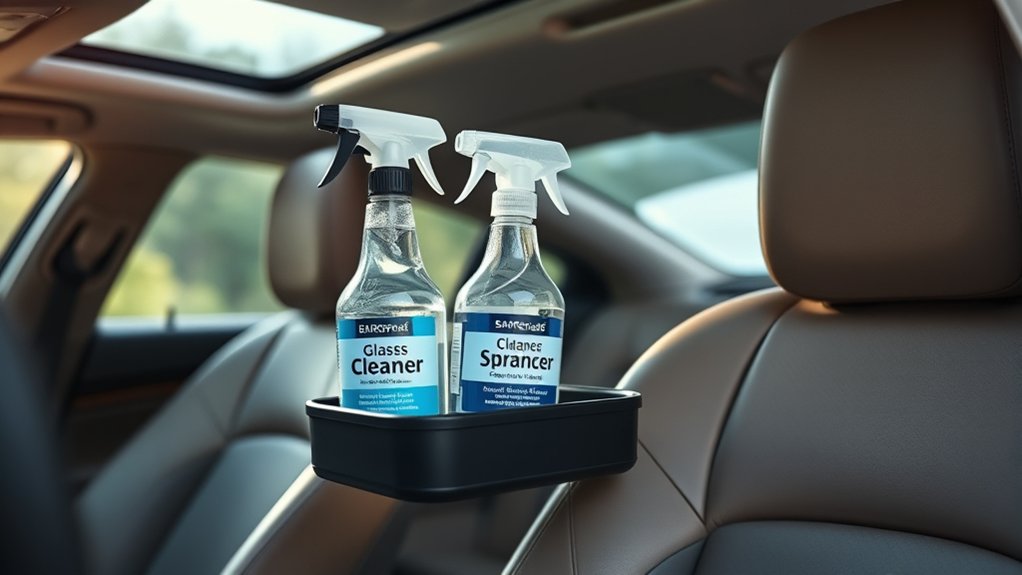
Are cleaning products safe to keep in your car? Generally, it’s not a good idea. Many cleaning products have chemicals that can be harmful if spilled or exposed to heat.
Storing cleaning products in your car is risky due to harmful chemicals and heat exposure.
They might release fumes that cause headaches or breathing issues, especially in the confined space of a vehicle. If they leak, the chemicals can damage your car’s interior or stain surfaces.
Plus, high temperatures inside your car can make some cleaning agents break down or become more volatile, which increases the risk of accidents. Even if you think a product is safe, spills or leaks could lead to damage or health hazards.
For safety, it’s better to store cleaning products in a secure, cool, and well-ventilated area outside your vehicle whenever possible.
What Types of Cleaning Products Do People Store in Vehicles?
Many vehicle owners keep a variety of cleaning products on hand to quickly address spills, stains, or dirt while on the go. Common items include microfiber cloths, multi-surface cleaners, and glass wipes.
You might also store disinfectant sprays for sanitizing high-touch areas like steering wheels and door handles. Some people keep stain removers for upholstery or carpet cleaners in case of accidents.
Air fresheners or odor eliminators are popular to keep the interior smelling fresh. Compact spray bottles or wipes are convenient for quick cleans, while larger containers are kept for more thorough cleaning sessions.
Just remember, storing these products safely in your vehicle is essential to prevent leaks, spills, or accidental exposure.
How Temperature Changes Affect Car Cleaning Chemicals
Temperature fluctuations can really affect how well your car cleaning chemicals work and how safe they are to use. When it’s hot, many cleaning products can break down, lose their strength, or become unstable, making them less effective.
On the flip side, extreme cold can cause liquids to freeze or get thick, which makes them harder to apply and can even cause containers to crack. Rapid temperature swings can also trigger chemical reactions that produce harmful fumes or degrade the product.
Some chemicals become more volatile when heated, increasing the risk of leaks or spills. To keep your cleaning products safe and effective, store them in a cool, stable spot.
Avoid leaving them in direct sunlight and check their condition regularly. Proper storage ensures your chemicals work properly when you need them.
What Are the Risks of Leaks and Spills in Your Car?
Leaking or spilling cleaning products in your car can be risky for safety and your vehicle’s health. Chemicals like disinfectants, window cleaners, or sprays can stain, corrode, or damage your upholstery, dashboard, and other interior surfaces.
If a spill happens, the chemicals might seep into cracks or seams, making cleanup tough and increasing the chance of long-term damage. Plus, leaks can make surfaces slippery, which increases the risk of slips and falls when you get in or out of your car.
More importantly, spilled substances can give off strong fumes that might affect your breathing or cause headaches. If a cleaning product is flammable or has volatile chemicals, leaks could also start a fire.
To keep yourself and your vehicle safe, handle and store cleaning products carefully. This helps minimize the chances of leaks and spills.
How Stored Cleaning Chemicals Can Damage Your Vehicle
Storing cleaning chemicals in your vehicle can cause immediate and lasting damage if they come into contact with interior surfaces. Chemicals like bleach, glass cleaner, or disinfectants can stain, discolor, or corrode your car’s upholstery, dashboard, and trim.
When these substances leak or spill, they often react with materials, causing peeling or cracking. Over time, repeated exposure can weaken plastic parts and damage fabrics.
You might also notice unpleasant odors that linger and are tough to remove. To avoid these issues, always store cleaning products securely in sealed containers, away from sensitive surfaces.
This prevents accidental contact and keeps your vehicle’s interior looking and functioning its best.
- Discoloration of upholstery and plastics
- Corrosion of metal parts
- Lingering chemical odors
Best Practices for Safely Storing Cleaning Supplies in Your Car
To keep your car’s interior safe from damage, it’s important to follow some simple rules when storing cleaning supplies. Always use a leak-proof container or a sealed plastic bin to prevent spills.
Use leak-proof containers and sealed bins to protect your car’s interior from spills and damage.
Store cleaning products in the trunk or a designated compartment, keeping them away from your vehicle’s upholstery and electronics. Label containers clearly so you know what’s inside and handle them with care.
Avoid storing multiple chemicals together to prevent any reactions if a container leaks. Keep cleaning supplies out of reach of children and pets for safety.
Regularly check your containers for cracks or leaks to catch any issues early. By following these best practices, you reduce the risk of damage or accidents, keeping your car clean and safe.
Are There Alternatives to Keeping Cleaning Products in Your Vehicle?
Instead of leaving cleaning products in your car, think about using portable cleaning kits that are easy to store at home. They make it simple to keep your vehicle tidy without cluttering your space.
Eco-friendly cleaning options are also a smart choice because they’re safer for your car and better for the environment. Plus, they help you stay prepared without the risks of storing liquids in your vehicle.
Portable Cleaning Kits
If you want a convenient way to clean your vehicle on the go, portable cleaning kits offer a practical solution. These compact sets include everything you need for quick cleanups without the risks of leaving bottles in your car. They’re perfect for spills, dirt, or fingerprints, especially during road trips or daily commutes.
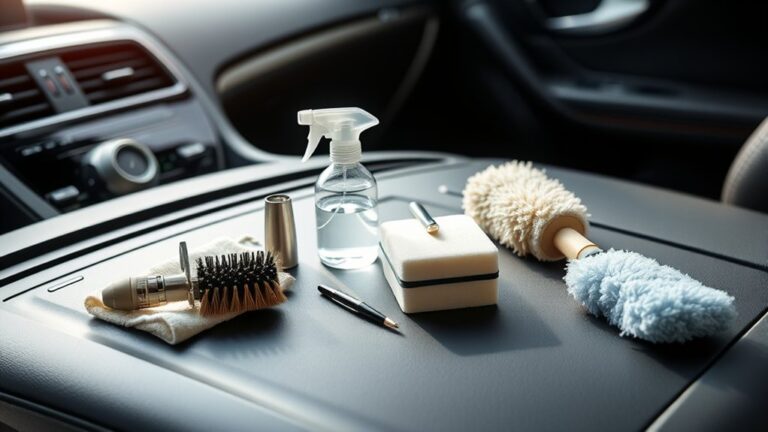
A typical kit might include microfiber cloths for gentle cleaning, small bottles of multi-purpose cleaner, and portable brushes or scrubbers. These kits are designed for ease and safety, making them a smart alternative to storing large cleaning products in your vehicle.
You can keep them in your glove compartment, trunk, or door pocket, ensuring you’re always prepared without risking chemical spills or damage.
Eco-Friendly Cleaning Options
Eco-friendly cleaning options offer a sustainable alternative to traditional chemical products for your vehicle.
You can choose natural solutions like vinegar and water, which work well for cleaning glass, surfaces, and upholstery. Baking soda is another versatile option; it deodorizes and cleans gently without leaving harmful residues.
Lemon juice provides a natural disinfectant and a fresh scent when diluted properly. These options are safer for your health and the environment, reducing chemical exposure and the risk of leaks or spills in your car.
By opting for eco-friendly cleaners, you minimize potential damage to your vehicle’s interior and avoid hazards linked to conventional cleaners.
Plus, these natural solutions are often more affordable and easy to prepare, making them a practical choice for keeping your car clean responsibly.
How Can You Identify Dangerous Cleaning Chemicals?
How can you tell if a cleaning chemical is dangerous? First, check the label for hazard warnings or symbols, like skulls or exclamation marks. These icons warn you about toxicity, irritation, or health risks.
Next, read the ingredient list—look out for chemicals like ammonia, bleach, or phthalates, which can be harmful. Finally, consider the product’s safety instructions; if it advises wearing gloves or ventilation, it’s probably dangerous if mishandled.
Check the ingredient list for harmful chemicals like ammonia or bleach and follow safety instructions to avoid danger.
- Look for warning labels and hazard symbols
- Review the ingredient list for harmful chemicals
- Follow safety instructions provided on the label
What Are the Legal and Insurance Risks of Storing Cleaners in Your Car?
Storing cleaning products in your car can lead to legal and insurance issues if something goes wrong. If a leak causes damage or injury, your insurance might not cover it, especially if storing chemicals breaks local laws or your policy rules.
You could get fined or face legal trouble if authorities find you improperly storing hazardous materials. To understand the risks, consider this:
| Risk Type | Potential Consequences |
|---|---|
| Legal Issues | Fines, citations, or criminal charges for improper storage |
| Insurance Denial | Claim rejection if storage violates policy or safety laws |
| Liability | Being legally responsible for damages or injuries caused by chemicals |
| Vehicle Damage | Costs for cleaning or repairing chemical-related damage |
Always check your local laws and insurance policy before storing cleaning products in your car.
What Should You Do If a Cleaning Product Leaks in Your Vehicle?
If a cleaning product leaks in your vehicle, acting quickly can prevent further damage and safety hazards. First, carefully contain the spill to stop it from spreading to other areas. Wear gloves to protect your skin from harmful chemicals.
Next, blot the affected area with paper towels or a clean cloth to soak up as much liquid as you can. Then, clean the spot with water and a mild soap to remove any leftover residue.
Be sure to ventilate your vehicle by opening windows or doors to get rid of fumes. If the spill is severe or involves toxic substances, it’s a good idea to consider professional cleaning services.
Tips for Quick, Safe Vehicle Cleaning on the Go
To clean your vehicle quickly and safely, store your cleaning supplies properly to prevent leaks or spills.
Always follow safe cleaning practices by reading labels and using only small amounts of products.
This way, you can keep your car spotless without risking damage or accidents while you’re on the go.
Proper Storage Techniques
When you’re cleaning your car on the go, choosing the right storage methods guarantees safety and convenience. Proper storage keeps cleaning products secure, prevents leaks, and minimizes hazards.
Use a sturdy, leak-proof container to prevent spills. Keep products in a designated compartment or a sealed bag to avoid accidental contact with other belongings. Label containers clearly so you can identify contents quickly.
Store all cleaning supplies away from children and pets, ideally in the trunk or a locked compartment. Regularly check for leaks or damage to containers, and keep the storage area clean and organized.
This approach assures your car stays safe and cleaning remains hassle-free during your busy day.
Safe Cleaning Practices
Quick, safe vehicle cleaning requires paying attention to your surroundings and using proper techniques. Always work in a well-ventilated area to avoid inhaling fumes, even with small amounts of cleaning products.
Wear gloves to protect your skin from chemicals and potential irritants. Use microfiber cloths or soft sponges to prevent scratches on your car’s surfaces.
Avoid spraying cleaners directly onto interior parts; instead, spray onto your cloth and wipe gently. Test new products on a small, hidden area first to check for damage or discoloration.
Keep cleaning solutions out of children’s reach, and never mix different chemicals, as dangerous fumes can result. Taking these precautions guarantees your quick clean-up is both effective and safe for you and your vehicle.
Frequently Asked Questions
Are There Specific Cleaning Products Recommended for Car Interiors?
You should use cleaning products specifically designed for car interiors to avoid damage. Look for gentle, pH-balanced cleaners for upholstery and carpets.
Use a dedicated vinyl or plastic cleaner for dashboards and door panels. Avoid harsh chemicals like bleach or ammonia, which can harm surfaces.
Always read labels, test on small areas first, and ensure proper ventilation during use to keep your car interior safe and clean.
Can Storing Cleaning Chemicals Void My Vehicle’s Warranty?
Storing cleaning chemicals in your car *can* potentially void your vehicle’s warranty if they cause damage. Manufacturers usually specify that you shouldn’t leave harmful chemicals that could leak or corrode parts.
To stay safe, keep cleaning products in sealed containers and store them away from sensitive areas. Always check your vehicle’s warranty terms, and avoid leaving chemicals that might spill or cause damage during extreme temperatures.
How Often Should I Inspect Stored Cleaning Supplies in My Car?
You should check your stored cleaning supplies in your car at least once a month. Regular inspections help you catch leaks, damage, or expired products early on. This way, you can prevent potential hazards before they become bigger issues.
Look for signs like corrosion, swelling, or discoloration. Also, make sure the caps are secure. If you notice any problems, replace or dispose of the supplies right away.
Keeping up with routine inspections helps keep your vehicle safe and ensures your cleaning supplies stay effective.
What Are the Most Common Accidents Caused by Cleaning Product Storage?
Imagine your car as a tiny, fragile boat sailing through a storm. The most common accidents happen when cleaning supplies leak, spill, or get exposed to heat, causing chemical reactions or corrosion.
You might accidentally knock over bottles, leading to dangerous spills, or expose containers to sunlight that causes them to burst. These accidents can damage your vehicle or pose health risks.
Always store cleaning products securely and away from direct heat or sunlight to prevent these mishaps.
Are Child-Proof Containers Necessary for Storing Cleaning Chemicals in Cars?
Child-proof containers are highly recommended for storing cleaning chemicals in your car. They help prevent children from accidentally opening and ingesting or spilling harmful substances.
Even if your kids aren’t with you often, accidents can happen unexpectedly. Using these containers adds an extra layer of safety, making sure your cleaning products stay secure and out of reach.
Prioritizing child-proof options helps protect your family from potential poisoning or injuries.
Conclusion
Storing cleaning products in your car is like keeping a wild animal in a delicate cage—full of potential danger. Temperature swings can turn safe chemicals into volatile threats, and leaks can cause chaos inside your vehicle’s interior.
Stay vigilant, label your cleaners clearly, and avoid leaving them in extreme heat or cold. Treat your car’s interior like a treasure chest—guard it carefully, and it’ll serve you well on every journey.