Can You Clean Car Seats With a Carpet Cleaner?
Many car owners know the struggle of keeping their seats clean and looking fresh. Spills, dirt, and everyday wear can make your car’s interior feel less inviting.
If you’re wondering whether a carpet cleaner can handle your car seats, you’re not alone. Many people struggle with finding the right way to refresh their seats without causing damage.
Yes, you can clean your car seats with a carpet cleaner, but it’s important to choose one suitable for your seat material, whether fabric, cloth, or leather.
Always vacuum thoroughly beforehand, test on a hidden area, and avoid oversaturation to prevent mold or damage. Proper application and drying are key, and eco-friendly cleaners are recommended.
Want to learn detailed steps to do it safely and effectively? Keep going for all the tips you need.
Key Takeaways
- Carpet cleaners work well for fabric and cloth car seats, as long as you follow the manufacturer’s instructions.
- It’s a good idea to test the cleaner on a small, hidden spot first. This helps prevent any damage or discoloration.
- Use cleaners that are made specifically for fabric. Steer clear of harsh chemicals on leather or vinyl seats.
- Be careful not to oversaturate the seats. Too much moisture can lead to mold, mildew, or damage to the foam padding underneath.
- After cleaning, make sure to dry the seats thoroughly and keep the area well-ventilated. This helps prevent mold growth and leftover residue.
Can You Use a Carpet Cleaner on Your Car Seats?
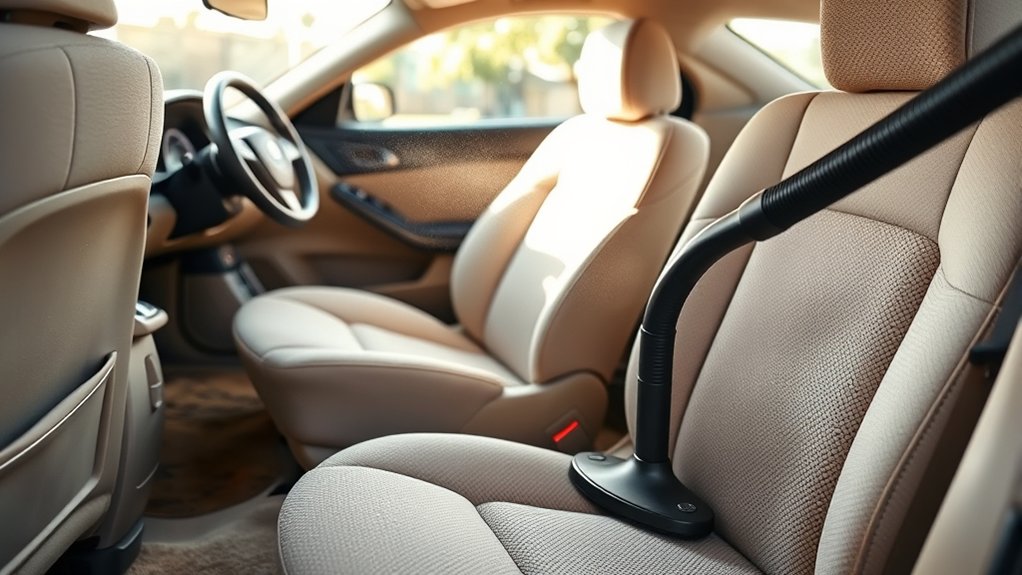
Can you use a carpet cleaner on your car seats? Yes, but it’s best to take some precautions. Most carpet cleaners work well on fabric and cloth seats, helping to remove dirt, stains, and odors.
Before you start, check your car’s owner manual to make sure your seats are compatible with the cleaner. It’s also a good idea to vacuum the seats thoroughly first to pick up loose debris.
Use a cleaner that’s suitable for upholstery or fabric. Before applying it widely, test it on a small, hidden area to avoid any discoloration. Be careful not to oversaturate the seats, as too much moisture can cause mold or mildew.
Follow the instructions on the cleaner carefully. Use a brush or cloth to work the cleaner into the fabric. After cleaning, make sure the seats dry completely for the best results.
What Types of Car Seats Can Be Cleaned With a Carpet Cleaner?
Most fabric and cloth car seats respond well to cleaning with a carpet cleaner, making them good candidates for this method. If your seats are made of woven or synthetic fabric, you can confidently use a carpet cleaner to remove dirt, stains, and odors. These cleaners are effective because they penetrate the fibers, lifting grime from deep within.
However, if your car seats are made of plush velour or heavily textured materials, it’s a good idea to test a small area first to make sure they won’t be damaged. While carpet cleaners work best on fabric or cloth seats, they aren’t suitable for leather or vinyl surfaces. Always check your seat’s material and manufacturer’s guidelines before cleaning to ensure safety and effectiveness.
Are Carpet Cleaners Safe for Fabric and Leather Car Seats?
Are carpet cleaners safe for fabric and leather car seats? Generally, yes, but it really depends on the cleaner and how you use it.
For fabric seats, most carpet cleaners are safe if you follow the manufacturer’s instructions and use a gentle setting. They do a good job of removing dirt, stains, and odors without damaging the fabric.
Leather seats require a bit more caution. Some carpet cleaners contain harsh chemicals that can dry out or discolor leather if used improperly. Always check if the cleaner is suitable for leather and test it on a small, hidden area first.
It’s best to use a cleaner specifically designed for leather when cleaning leather seats. Proper application and following instructions are key to keeping your seats clean and undamaged.
How Do You Prepare Your Car Seats Before Using a Carpet Cleaner?
Before you start cleaning, it’s important to prepare your car seats properly to get the best results and avoid any damage. First, remove all loose items from the seats, like trash, personal belongings, and car mats.
Next, vacuum thoroughly to pick up dust, dirt, and debris from the surface and crevices. Check the manufacturer’s instructions for your seats and carpet cleaner to make sure they’re compatible.
If your seats are fabric, consider spot-treating stains with a mild cleaner before doing a deep clean. For leather seats, wipe them down with a damp cloth to remove surface oils.
Make sure the seats are dry and free of excess moisture before applying the carpet cleaner. Proper preparation ensures effective cleaning and helps prevent any potential damage.
How to Clean Car Seats With a Carpet Cleaner: Step-by-Step
To start cleaning your car seats with a carpet cleaner, set up your workspace and gather your equipment.
Next, apply the cleaner evenly, making sure to cover all stained or dirty areas.
Finally, dry the seats thoroughly and check for any spots that might need a second treatment.
Prepare Your Cleaning Area
Start by clearing out the car seats completely, removing all loose items like trash, mats, and personal belongings. This makes it easier to access every part of the seats and creates a clear workspace.
Next, vacuum thoroughly to pick up dirt, dust, and debris embedded in the fabric. It’s important to remove loose particles so they don’t clog your carpet cleaner or interfere with the cleaning process.
If your car has pet hair or stubborn dirt, try using a brush or the upholstery attachment on your vacuum for better results.
Prepare your cleaning supplies nearby, including the carpet cleaner, brushes, and microfiber cloths. It’s also a good idea to protect your car’s interior surfaces with old towels or plastic sheets if needed.
These steps help ensure a smooth, efficient cleaning process and prevent messes during cleaning.
Apply Carpet Cleaner Properly
Begin by reading the instructions on your carpet cleaner to verify you’re using the correct settings and solutions. Pre-treat any stubborn stains with a spot remover, then fill the machine’s tank with the recommended cleaning solution.
Spray the carpet cleaner evenly over the car seats, holding the nozzle about 2-3 inches away. Avoid oversaturating, as excess moisture can seep into seat cushions. Use slow, overlapping passes to guarantee thorough coverage.
For heavily soiled areas, spend extra time to loosen dirt. Keep the nozzle moving to prevent over-wetting and streaks. If your cleaner has adjustable settings, select the appropriate one for upholstery.
Proper application helps lift dirt effectively without damaging the fabric or leaving residue.
Dry and Inspect Seats
After you’ve finished applying the carpet cleaner, let the seats dry thoroughly before inspecting them. This way, you can see the true results of your cleaning and spot any remaining stains or spots. Drying might take a few hours or even overnight, depending on how moist the seats are.
To speed up the process, you can use fans or open the car doors. Once the seats are completely dry, examine them closely. Look for any missed stains or areas that need a bit more attention.
If you find stubborn spots, don’t hesitate to repeat the cleaning on those areas. Before using the vehicle again, make sure the seats are fully dry to prevent mold or mildew growth. Proper drying and inspection help ensure your seats look fresh and feel clean.
What Detergents Work Best for Cleaning Car Seats With a Carpet Cleaner?
What detergents work best for cleaning car seats with a carpet cleaner? For effective cleaning, choose a mild, pH-balanced formula designed for upholstery or carpets. Look for products labeled safe for automotive fabrics to avoid damage.
Enzymatic cleaners are great for removing stains caused by food or pet accidents because they break down organic matter. If you’re dealing with dirt or grime, a general carpet cleaner with surfactants can lift stubborn soils.
Enzymatic cleaners effectively remove organic stains from food and pets, breaking down organic matter for thorough cleaning.
Avoid harsh chemicals like bleach or strong degreasers, which can discolor or weaken fabrics. Always check the manufacturer’s recommendations for your specific car seat material.
Dilute the detergent as instructed, and test it on a small, hidden area first to make sure it won’t cause discoloration or damage.
What Are the Risks of Using a Carpet Cleaner on Car Seats?
Using a carpet cleaner on your car seats can sometimes cause damage to the material, especially if the machine is too harsh or if you don’t use it properly.
You might also end up with leftover residue or unpleasant odors if you don’t rinse thoroughly.
Being aware of these risks can help you clean safely and effectively.
Potential Material Damage
While carpet cleaners can effectively remove dirt from car seats, they also pose risks to certain materials. Some fabrics, especially delicate or synthetic ones, may weaken or degrade when exposed to strong cleaning agents or excessive moisture.
Leather seats can suffer from cracking or discoloration if the cleaner’s pH balance isn’t compatible or if they’re overly saturated. Vinyl surfaces might peel or warp over time due to harsh chemicals or prolonged moisture exposure.
Moreover, foam padding beneath upholstery can absorb too much liquid, leading to mold growth or sagging. If you use a carpet cleaner improperly, you risk permanent damage that can affect the seat’s structure and appearance.
Always check the manufacturer’s recommendations and consider testing a small, inconspicuous area first.
Residue and Odors
Even if you follow the instructions carefully, a carpet cleaner can leave behind residue that’s hard to see but still affects your car seats. This leftover soap or cleaning solution can attract dirt and dust over time, making your seats look dull and dingy again faster than expected.
Moreover, improper rinsing or overuse can trap moisture, leading to unpleasant odors that linger long after cleaning. These smells, often caused by mold or mildew, can be tough to eliminate and may get worse if not addressed quickly.
Residue buildup can also irritate your skin or cause allergies, especially if it contains harsh chemicals. To avoid these risks, make sure to rinse thoroughly and consider using eco-friendly, residue-free cleaners designed for auto interiors.
How to Protect Leather and Delicate Upholstery When Cleaning?
Protecting leather and delicate upholstery during cleaning is key to avoiding damage and keeping them looking great.
Start by testing any cleaning solution on a small, hidden area first. This helps you check for discoloration or deterioration before treating the whole surface.
Use a gentle, pH-balanced cleaner made specifically for leather or delicate fabrics. Stay away from harsh chemicals and too much water, as they can weaken or stain the material.
When cleaning, apply the solution with a soft cloth or sponge. Gently wipe the surface without scrubbing too hard to prevent damage.
Always follow the manufacturer’s instructions for your furniture or upholstery.
After cleaning, use a clean, damp cloth to remove any leftover residue. Then, dry the surface thoroughly with a soft towel.
Regular maintenance and careful cleaning are the best ways to keep your leather and delicate upholstery looking their best and lasting longer.
How Long Does It Take for Car Seats to Dry After Cleaning?
Drying times for your car seats depend on factors like humidity, temperature, and how you cleaned them. Usually, it takes anywhere from a few hours up to over a day for the seats to be completely dry.
You can speed things up by ensuring good ventilation and quickly blotting away excess moisture. These small steps can make a big difference in drying time.
Factors Influencing Drying Time
Several factors directly impact how quickly your car seats dry after cleaning. The type of fabric plays a role; plush or thick materials absorb more water and take longer to dry. The cleaning method used affects drying time too. Deep extraction leaves more moisture than light cleaning.
Ambient temperature and humidity are essential. Warmer, dry air speeds up evaporation, while cold, humid conditions slow it down. Airflow is also important; using fans or opening windows increases air circulation, helping seats dry faster.
Finally, the amount of moisture applied during cleaning influences drying duration. Over-wetting extends the process. By understanding these factors, you can better estimate and manage your car seats’ drying time, ensuring they’re ready for use sooner.
Estimated Drying Duration
On average, car seats take between 4 to 8 hours to dry completely after cleaning, but this can vary based on several factors. If you’ve used a powerful carpet cleaner and the seats are well-ventilated, they might dry closer to the 4-hour mark.
Humidity, temperature, and airflow have a big impact on drying time. Higher humidity or cooler temperatures can make the process take longer. Using fans or opening windows can speed things up, while damp seats in a closed environment may take more time.
Thinner or more absorbent seat covers tend to dry faster than thicker or synthetic materials. Keep in mind that rushing the drying process could lead to mold or mildew. Patience is key for thorough drying.
Tips to Speed Up Drying
To speed up the drying process, take practical steps that boost airflow and cut down moisture. First, open all car doors and windows to let fresh air circulate and ventilate the space.
Using fans or a portable air mover inside the vehicle can help move air around more efficiently. If possible, park your car in a shaded, sunny spot since sunlight helps speed up evaporation.
Removing excess water with a wet/dry vacuum or towels reduces overall moisture. Turning on the car’s heater or air conditioning can also help dry the seats faster.
Finally, avoid sitting on the seats until they’re completely dry to prevent mold or odors. These simple tips can help get your car seats dry and ready to go sooner.
Can a Carpet Cleaner Remove Stains and Odors From Car Seats?
Wondering if a carpet cleaner can effectively remove stains and odors from your car seats? The answer is yes, with some caveats. Carpet cleaners are designed to lift dirt, stains, and odors from fabrics, making them a good option for car seats. However, their effectiveness depends on the stain type, age, and material.
For example, fresh spills usually come out easily, while set-in stains may need multiple treatments. To understand better, here’s a quick guide:
| Stain Type | Effectiveness | Additional Tips |
|---|---|---|
| Fresh spills | High | Blot before cleaning |
| Grease stains | Moderate | Use degreasing solutions |
| Odors | Good | Add odor-neutralizing agents |
| Old stains | Limited | Might need specialized products |
| Pet stains | Variable | Pre-treat with enzymatic cleaners |
In general, carpet cleaners work well on lighter, fresh stains and odors. For tougher or older stains, you might need specialized products or professional help.
What Are the Best Alternatives to Carpet Cleaners for Car Seat Cleaning?
If carpet cleaners aren’t quite cutting it for your car seats, there are some great alternatives that can give you better results. One option is using a handheld upholstery cleaner, which targets stains directly and can reach those tight spots more easily.
For light cleaning, mix mild dish soap with water and apply it with a microfiber cloth. This lifts dirt without oversaturating the fabric. Vinegar and baking soda also work well for odors and mild stains—just spray vinegar, sprinkle baking soda, let it sit, then vacuum it up.
Alternatively, a steam cleaner designed for upholstery can loosen deep-seated grime effectively. Just make sure to check your car seat manufacturer’s cleaning recommendations before trying these methods to avoid any damage and get the best results.
Tips for Maintaining Clean Car Seats Over Time
Maintaining clean car seats over time requires consistent effort and mindful habits. Regularly vacuum your seats to remove dirt and debris before stains set in. Use seat covers or blankets, especially if you have kids or pets, to protect the fabric.
Address spills immediately with a clean cloth and appropriate cleaner to prevent staining. Moreover, schedule periodic deep cleaning with a carpet or upholstery cleaner to keep seats fresh.
Here are some tips to help you stay on top of seat cleanliness:
- Vacuum weekly to prevent dirt buildup
- Use protective covers during high-traffic times
- Clean spills within minutes for best results
- Deep clean every few months to maintain freshness
Frequently Asked Questions
Can Carpet Cleaners Damage Car Seat Stitching or Fabric?
Carpet cleaners can damage your car seat stitching or fabric if used improperly. Using too much water or harsh cleaners might weaken the stitching or cause fibers to fray.
Always test a small, hidden area first and opt for a gentle, upholstery-specific cleaner. Keep the cleaner moving to avoid over-saturating the fabric.
Make sure to let your seats dry thoroughly to prevent any damage. Proper technique is key to keeping your car seats looking their best.
Are There Specific Settings on Carpet Cleaners for Car Seats?
Yes, some carpet cleaners have specific settings made for car seats. Look for models with adjustable pressure, gentle or delicate modes, and detachable nozzles.
These features help you clean effectively without damaging the fabric or stitching. It’s best to start with the lowest pressure and test a small area first.
Using the right settings makes sure your car seats get clean without risking any damage. It makes the cleaning process safer and more efficient.
How Often Should You Clean Car Seats With a Carpet Cleaner?
You should clean your car seats with a carpet cleaner every three to six months, depending on how often you use your vehicle and how messy your environment gets.
Regularly cleaning spills, dirt, and stains helps prevent buildup and keeps your seats looking fresh.
If you have pets, kids, or allergies, consider cleaning more often.
Consistent care maintains the fabric, prolongs its life, and guarantees a healthier, more comfortable ride.
Can You Use a Carpet Cleaner on Car Seats With Pet Hair?
Yes, you can use a carpet cleaner on car seats with pet hair. First, vacuum thoroughly to remove loose hair and debris.
Then, use a pet-friendly upholstery cleaning solution in your carpet cleaner. Spray it evenly, scrub gently with a brush, and extract the moisture along with pet hair.
This method helps lift hair and dirt without damaging your seats, leaving them clean and fresh.
Do Carpet Cleaners Remove Mold or Mildew From Car Seats?
Carpet cleaners can help fight mold and mildew, but they might not completely remove stubborn spores. It’s best to start with a thorough dry and clean first. Then, apply a mold-killing solution before using the cleaner.
Keep in mind, persistent mold may need professional treatment to fully get rid of it. Regular cleaning and good ventilation can help prevent mold and keep your car seats fresh and fungus-free.
Conclusion
If you follow the right steps, using a carpet cleaner can breathe new life into your car seats, making them feel fresh and inviting. Think of it as giving your vehicle a much-needed spa day — a little effort goes a long way.
Just remember to be patient with drying times and choose the right cleaner for your seats.
With a little care, your car’s interior will shine brighter than a diamond in the rough. Using a carpet cleaner is an effective way to clean your car seats and keep your interior looking its best.