Can Fuel Injector Cleaner Hurt Your Car Safely?
Are you tired of struggling with engine hesitation, rough idling, or poor fuel economy? You’re not alone—many car owners want to keep their engines running smoothly without risking damage.
Fuel injector cleaner is a popular solution, but questions about safety often pop up.
Using fuel injector cleaner correctly and as recommended generally won’t harm your car. However, strong or overused cleaners can damage seals, injectors, or rubber components and may dislodge debris, leading to clogs or leaks.
Always follow the manufacturer’s instructions and choose reputable products suited for your vehicle.
If you want to guarantee safe, effective maintenance and learn how to avoid potential risks, keep exploring—there’s more to uncover.
Key Takeaways
- When used as directed, fuel injector cleaners are generally safe for your vehicle.
- However, overusing them or using very strong cleaners can potentially damage seals, injectors, or rubber parts.
- Using low-quality or incompatible products might lead to clogging or leaks, which can cause more problems.
- To stay safe, always follow the manufacturer’s instructions and use the right amount.
- Regular maintenance and cautious application can help prevent any engine damage from happening.
How Do Fuel Injector Cleaners Work and What Are Their Main Ingredients?
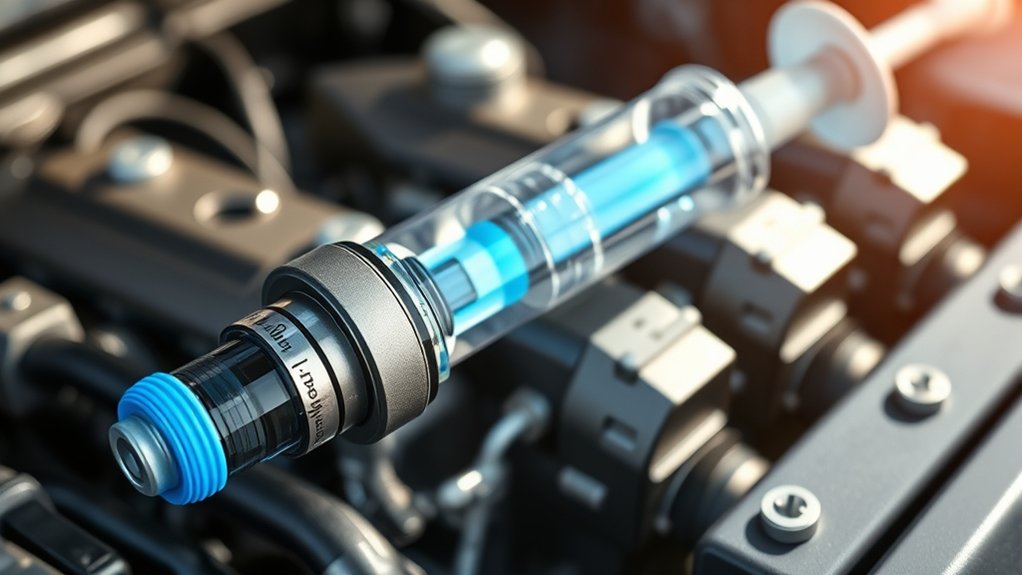
Fuel injector cleaners work by dissolving and removing deposits that build up inside your fuel injectors over time. These deposits can clog or block your injectors, leading to poor engine performance and decreased fuel efficiency.
The main ingredients in these cleaners often include solvents like hydrocarbons, detergents, and sometimes alcohols, which effectively break down carbon deposits. Detergents help clean the injectors’ nozzles and internal components, restoring proper spray patterns.
Hydrocarbon-based solvents dissolve stubborn buildup, while alcohols can enhance cleaning power and evaporation. When you add a fuel injector cleaner to your tank, these ingredients blend with your fuel, traveling through the system to clean and maintain injectors.
Proper use guarantees your engine runs smoothly and maintains peak fuel delivery.
Are Fuel Injector Cleaners Safe for Your Car? Risks You Should Know
Are fuel injector cleaners safe for your car? Generally, they are safe when used correctly and as recommended.
However, there are risks to be aware of. If you use cleaners that are too strong or not suitable for your vehicle, you could damage sensitive components like seals or injectors.
Overuse or aggressive cleaning can dislodge debris, which might clog filters or cause injector leaks. Some cleaners contain harsh chemicals that could harm rubber or plastic parts over time.
Always check your vehicle’s manual and follow the manufacturer’s guidelines. Using the wrong product or too much of it can lead to costly repairs.
While fuel injector cleaners can be safe, it’s important to choose the right product and use it responsibly to avoid potential risks.
When Is It Safe to Use Fuel Injector Cleaners Without Causing Damage?
Knowing the right time to use fuel injector cleaners can help prevent damage to your vehicle. You should consider using a cleaner when you notice symptoms like rough idling, poor acceleration, or decreased fuel efficiency.
It’s best to apply the cleaner during regular maintenance, such as every 3,000 to 5,000 miles, or as recommended by your car’s manufacturer. Avoid using injector cleaners if your engine is already experiencing severe issues, like ongoing misfires or damaged injectors, without consulting a mechanic.
Furthermore, don’t use cleaners if your fuel system is already contaminated with debris or if your vehicle is under warranty, as improper use could void coverage. Timing your application correctly guarantees you clean your injectors effectively without risking damage.
Signs That Fuel Injector Cleaners Might Be Hurting Your Engine
Even though fuel injector cleaners are meant to boost engine performance, using them improperly or too often can cause problems. You might notice your engine idling roughly or stalling, which means it’s not running smoothly.
If your vehicle hesitates or suddenly loses power, it could be a sign the cleaner is causing more harm than good. Increased fuel usage or black smoke from the exhaust are other warning signs to watch out for.
Additionally, engine knocking or strange noises could mean the cleaner is negatively affecting your fuel system. Paying attention to these signs can help you figure out if your fuel injector cleaner is hurting your engine instead of helping it.
Stay alert to these symptoms so you can protect your vehicle’s health.
How to Use Fuel Injector Cleaners Properly and Safely
To make sure you’re using fuel injector cleaners safely and effectively, it’s important to follow the manufacturer’s instructions carefully.
Start by confirming your fuel tank is nearly empty before adding the cleaner. Pour the recommended amount directly into the tank, and avoid overdoing it.
Some cleaners are meant to be added during refueling, so don’t mix different products unless the instructions say it’s okay.
If your vehicle needs a specific cleaning process, follow it exactly. Always wear gloves and work in a well-ventilated area to avoid inhaling fumes.
After adding the cleaner, drive normally to let it circulate through the injectors. Avoid aggressive driving or high speeds immediately afterward.
Proper use ensures your injectors get cleaned without risking damage or unnecessary wear.
Choosing the Right Fuel Injector Cleaner: Tips for Safe Use
Selecting the right fuel injector cleaner is essential for safe and effective maintenance. To choose wisely, consider these tips:
- Check Compatibility: Make sure the cleaner works with your vehicle’s make and model to prevent potential damage.
- Read Labels Carefully: Look for products that meet industry standards and avoid harsh chemicals that could harm your engine.
- Opt for Reputable Brands: Trust well-known brands with proven track records for quality and safety.
- Follow Manufacturer Recommendations: Use the cleaner as directed, and avoid overuse or mixing different types, which could cause problems.
Expert Opinions: Do Fuel Injector Cleaners Help or Harm Your Vehicle?
Experts are divided on whether fuel injector cleaners actually improve engine performance or if they might cause harm over time.
Some say they help keep your fuel system clean, which can boost efficiency and smoothness.
But others warn about potential risks like clogging or chemical damage, especially if used improperly.
It’s really important to look at their advice and consider the pros and cons before trying these products.
Effectiveness of Fuel Cleaners
Many vehicle owners wonder if fuel injector cleaners really make a difference, and opinions among auto pros vary. Some say these cleaners can boost engine performance, while others doubt how effective they truly are. To get a better idea, consider these points:
- Cleaning Power: Well-formulated cleaners can dissolve deposits and help restore injector flow.
- Fuel Efficiency: Clean injectors might help your engine run more smoothly, saving you money on fuel.
- Performance Boost: Some people notice smoother acceleration after using them.
- Limitations: How well they work depends on how severe the deposit buildup is. They’re not magic cures for big problems.
While they can be helpful for regular maintenance, their impact drops if your injectors are badly clogged. In the end, regular use may improve performance, but don’t expect instant fixes for serious issues.
Potential Risks Involved
While fuel injector cleaners can offer benefits, there are potential risks to consider. Using the wrong cleaner or applying it improperly might cause damage to your engine components.
Some cleaners contain harsh chemicals that can degrade rubber seals or cause clogging if deposits are loosened too aggressively. Overusing these products may lead to buildup in places you don’t want, like fuel lines or filters, which could reduce fuel flow.
If your vehicle already has underlying issues, relying on injector cleaners might hide problems and delay necessary repairs. Always pick products that are suited for your car’s make and model and follow the manufacturer’s instructions carefully.
Ignoring these precautions could lead to costly repairs or decreased engine performance.
Expert Recommendations
Consulting automotive professionals reveals that fuel injector cleaners can be beneficial when used correctly, but they aren’t a one-size-fits-all solution. Experts recommend following manufacturer instructions carefully to avoid potential harm.
They emphasize that regular use may improve engine performance and fuel efficiency. However, overuse or improper application can cause injector damage or clogging.
Some vehicles, especially newer models, may not need frequent cleaning. Professional assessment is essential if you’re experiencing rough idling or poor acceleration.
Ultimately, trusted mechanics advise using fuel injector cleaners as part of routine maintenance, but only when necessary. Understanding your vehicle’s needs and following expert guidance guarantees you reap benefits without risking harm.
Frequently Asked Questions
Can Using Too Much Fuel Injector Cleaner Damage My Engine?
Using too much fuel injector cleaner can potentially damage your engine. Overdoing it might cause the buildup of too many cleaning agents, which could clog your injectors or even cause corrosion.
It can also strip away important lubrication inside the fuel system. To keep your engine safe, just follow the manufacturer’s instructions carefully.
Use the recommended amount and avoid applying it too often or excessively. Moderation helps you enjoy cleaner injectors without risking damage.
Are There Any Vehicles That Should Avoid Fuel Injector Cleaners?
Some vehicles, especially those with direct fuel injection systems or older engines, should avoid fuel injector cleaners.
Studies show that 15% of engine problems relate to improper cleaning. If your car has sensitive components or isn’t compatible with chemical additives, using cleaners might cause damage.
Always check your owner’s manual or consult a mechanic before using injector cleaners to ensure they’re safe for your specific vehicle.
How Often Should I Use a Fuel Injector Cleaner Safely?
You should use a fuel injector cleaner every 3,000 to 5,000 miles, or roughly every three to six months, depending on your driving habits.
Regular use helps keep your injectors clean and your engine running smoothly. Always follow the product instructions and check your vehicle’s manual.
Overuse can cause issues, so don’t go beyond the recommended frequency. Consistent, moderate cleaning maintains peak engine performance safely.
Do Fuel Injector Cleaners Affect Fuel Efficiency or Emissions?
Fuel injector cleaners can improve your car’s fuel efficiency and reduce emissions when used properly. They help clean clogged injectors, allowing for better fuel flow and combustion.
However, overusing them or using low-quality products might cause damage or inconsistent performance. Always follow the manufacturer’s recommendations.
If you notice issues after using a cleaner, it’s a good idea to consult a mechanic. This way, you can ensure your engine stays in top condition.
Can Homemade Fuel Injector Cleaning Solutions Harm My Car?
Homemade fuel injector cleaning solutions can harm your car if you’re not careful when making them. Using the wrong ingredients or mixing them at the wrong concentrations might clog your injectors or damage sensors.
You could also introduce debris or contaminants that harm delicate engine parts. It’s generally safer to stick with commercially formulated cleaners designed specifically for your vehicle.
Or even better, have a professional clean your injectors. This way, you can avoid potential damage and keep your car running smoothly.
Conclusion
While fuel injector cleaners can boost your engine’s performance, misuse or overuse might do more harm than good. Think of them as a double-edged sword—you need to use them carefully to get benefits without risking damage.
When used properly, they can keep your engine running smoothly. But if you apply them recklessly, they could cause costly harm. So, stay informed, follow instructions, and don’t hesitate to ask experts for advice.
Remember, your car’s health depends on how you handle fuel injector cleaner safely.