7 Factors That Affect How Much Car Cleaning Does Cost
Many car owners find themselves surprised by how quickly the costs can add up when it comes to car cleaning. It’s easy to wonder what influences the final bill and how you can save some money. You’re not alone—understanding these factors can make a big difference.
Your car cleaning costs depend on several factors. Vehicle size and shape, along with its condition—whether it’s dirty, damaged, or needs special treatments—play a big role. The types of services you choose, like waxing or interior reconditioning, also influence the price.
Location and market competition can raise or lower costs. High-quality products and extra features, such as customization, add to expenses. Keep investigating to uncover how each element impacts your total bill.
Key Takeaways
– Vehicle size, shape, and condition really shape how complex the cleaning process will be and what it costs.
A larger or oddly shaped car might take more time and effort to clean properly.
If your vehicle has stains, odors, or damage, it can add to the overall price.
Extra services like coatings or repairs also bump up the cost.
Equipment quality, product choice, and using premium materials all affect what you’ll pay.
High-end tools and products tend to come with a higher price tag.
Location, market demand, and how complicated the service is can cause prices to vary.
You might find that cleaning costs more in busy or high-demand areas.
Finally, if you want customization or specialized treatments for your vehicle, expect to pay more.
These needs can make the overall cost of car cleaning go up.
Why Does Vehicle Size and Type Affect Detailing Costs?
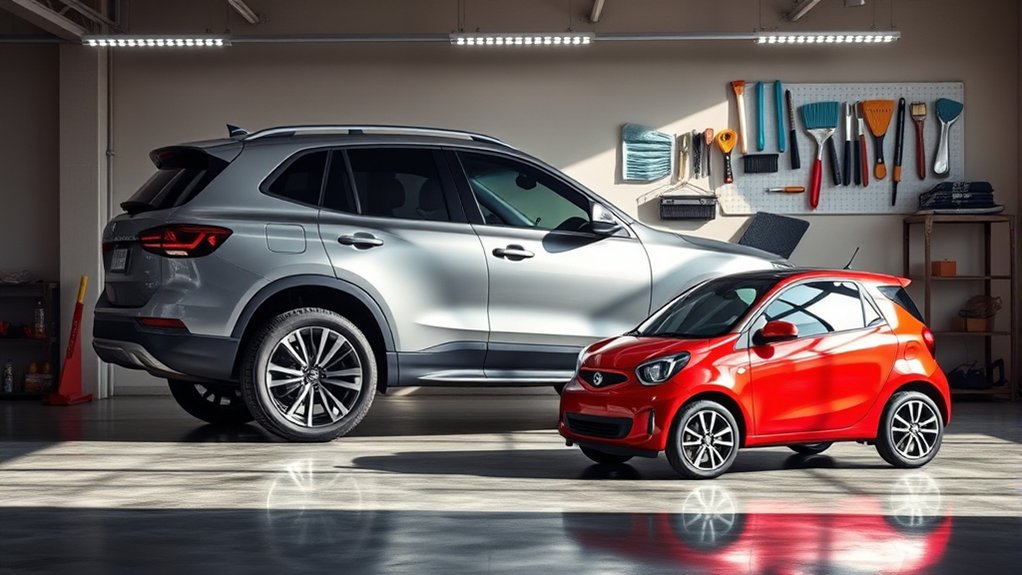
The size and type of your vehicle directly impact the cost of detailing because larger or more complex models need more time, effort, and materials. Vehicle size determines the surface area; bigger vehicles like SUVs and trucks have more exterior and interior surfaces, which increases labor costs.
On the other hand, smaller vehicles like compact sedans tend to be less expensive to detail because they have simpler surface areas. The type of vehicle also matters—luxury and specialty models often require extra care and specialized products, raising the overall costs.
The shape and features of the vehicle, such as multiple doors or unique surfaces, add to the complexity. This means more attention and effort are needed, which can make the detailing process more labor-intensive and costly.
How Does the Vehicle’s Condition Impact the Price?
The condition of your vehicle really affects cleaning costs. If it’s heavily soiled, stained, or has strong odors, you’ll probably pay more for a thorough clean.
Exterior damage or corrosion also needs extra work, which can bump up the overall price. So, the better shape your car is in, the less you’ll likely spend on cleaning.
Level of Dirtiness
A vehicle’s level of dirtiness directly influences cleaning costs because heavily soiled vehicles demand more time and effort to restore. If your car is covered in mud or pet hair, it increases labor intensity, raising the overall cleaning cost.
Stains, odors, or mold growth on interior surfaces add complexity, often requiring specialized treatments that boost prices. Exterior contamination like oxidized paint or heavy dirt also demands extra effort, which can markedly increase your bill.
When your vehicle is in poor condition, more extensive cleaning, including stain removal or odor treatment, becomes necessary. In contrast, a clean, well-maintained car needs fewer treatments, keeping costs lower.
The dirtiness level determines how much work is involved, directly impacting the total cost of the cleaning service.
Presence of Stains or Odors
When your vehicle has stubborn stains or strong odors, cleaning costs can skyrocket because these issues need extra treatments and specialized equipment. You might need deep cleaning for tough stains or odor treatment for persistent smells.
Here are some common factors that raise the price:
- Stains on upholstery or carpets may need stain removal or deep shampooing, costing an extra $75–$200.
- Odors like pet hair or mold often require specialized products and additional labor, adding $50–$200+.
- Persistent odors such as cigarette smoke might need ozone treatments or odor neutralizers, raising costs by $100–$300.
- Severe stains or odors demand more time, specialized equipment, and extra labor, increasing the overall price considerably.
Exterior Damage Extent
Extensive exterior damage can really drive up cleaning costs because it requires more labor and specialized treatments. If your vehicle has noticeable damage like scratches, fading paint, or oxidation, you should expect higher prices.
Stubborn stains, rust, or surface deterioration often need rust removal or paint correction, which can significantly increase the repair bill. Damaged paint might need polishing or repainting, adding to the cost.
The more worn out your vehicle’s surface is, the more time and resources are needed. This includes using specialized equipment for rust removal or heavy dirt. Overall, the level of exterior damage directly affects how much you’ll spend on cleaning, since more damaged surfaces need extra work to restore their look.
What Types of Detailing Services Can Change Your Total Cost?
Certain detailing services can significantly affect your total car cleaning costs, especially if you choose premium or specialized treatments. These options can really add up and impact your overall bill.
For example, an exterior wash is pretty straightforward but can get costly if you decide to add paint correction or apply a ceramic coating. These upgrades can make a big difference in price.
When it comes to interior detailing, things like upholstery shampooing or vent cleaning usually cost between $50 and $150. These services can quickly raise your total if you opt for more extensive work.
Headlight restoration is another add-on that can cost anywhere from $75 to $200. Choosing this service will bump up your overall expenses.
Then there are more advanced service packages that include engine bay cleaning or wheel and tire cleaning. These can increase the total cost by $300 to over $1,000, depending on what’s included.
Opting for these detailing services or additional treatments will directly influence your final bill.
How Do Location and Market Competition Influence Prices?
Where you get your car cleaned can really change how much you pay. Urban areas usually charge more because of higher costs and demand, while rural regions tend to be cheaper.
Market competition also makes a big difference. When there are more providers around, you’re more likely to find better deals.
Regional Cost Variations
Location has a big impact on car cleaning costs, with urban areas usually charging more than rural regions. In cities, higher costs for rent, utilities, and wages raise service prices.
Economic factors also play a role. Wealthier areas tend to have higher rates, and market competition can go both ways: tough competition might lower prices, but high demand and limited supply in expensive regions push prices up.
For example, mobile detailing services often charge more for the convenience of coming to you, especially in densely populated or high-cost areas. Overall, local economic conditions and supply and demand shape the prices you’ll see for car cleaning services.
Market Demand Impact
How does market demand and competition influence car cleaning prices? In urban areas, high demand and lots of service providers lead to price differences.
As more providers compete, some lower their rates to attract customers, while others, especially those offering luxury or specialized services, may charge more.
Regional differences also matter. Higher costs in city centers, like rent and utilities, push prices up.
Mobile detailers in competitive markets often charge more for the convenience of on-site service, which impacts overall costs.
Customer demand in busy areas drives premium pricing because people value quick, convenient, and high-quality service more.
Why Do Experience and Expertise Matter in Car Detailing?
Experience and expertise are key when it comes to car detailing because skilled pros work more efficiently and accurately. With years of practice, they’ve honed their skills and mastered techniques that ensure great results.
Their knowledge of the best products and advanced services like paint correction or ceramic coating means they can offer personalized solutions. Plus, experienced detailers usually have better equipment, leading to longer-lasting outcomes.
Here’s why expertise really matters:
- They work faster without sacrificing quality.
- They know the right techniques for different surfaces.
- Their skills help minimize the risk of damage.
- They deliver results that last longer and look better.
Choosing an experienced detailer means paying for skill, precision, and top-tier results.
How Do Products and Materials Used Affect Your Bill?
The quality of products and materials used during your car’s cleaning directly impacts the final bill. Premium detailing products like ceramic coatings, advanced waxes, and paint sealants cost more but provide longer-lasting protection and shine.
Specialized materials such as leather conditioners and stain removers improve your vehicle’s interior and add to the overall expense. Using professional-grade equipment guarantees top results but also increases costs.
Eco-friendly products and hypoallergenic options tend to be priced higher due to their formulation and environmental benefits. Choosing high-end materials, like luxury waxes or high-quality sealants, boosts the service cost but offers superior protection.
Ultimately, the selection of these products and materials influences both the quality and the price of your car’s cleaning.
What Role Do Additional Services and Customization Play in Pricing?
Additional services and customization options significantly affect the total cost of car cleaning because they require specialized materials, extra labor, and more time. When choosing services like ceramic coating, paint protection film, or interior restoration, prices can range from $75 to over $2,500 depending on how complex the service is.
Customization tailored to your vehicle’s needs often involves premium materials and specialized techniques, which can increase prices. Here are some key points:
- Extra services like headlight restoration cost more because they are technically involved.
- Customization requires more labor, which directly impacts the overall price.
- Personalized packages often include higher material expenses, such as ceramic coating.
- Service complexity, like applying paint protection film, results in higher charges.
Frequently Asked Questions
What Is the 30-60-90 Rule for Cars?
The 30-60-90 rule for cars explains how your vehicle’s value drops over time: about 30% after the first year, 60% after three years, and 90% after ten. It’s a handy way to estimate depreciation.
This can help you decide when to sell or trade in your car. Keep in mind, actual value loss depends on your car’s condition, mileage, and current market trends.
Following this rule can also encourage you to keep up with timely maintenance to preserve your car’s value.
What Are Three Factors That Affect the Total Price of a Car?
A stitch in time saves nine, and the same goes for car maintenance.
Three factors that influence the total price include the vehicle’s size, since larger cars like SUVs tend to cost more to clean. The condition of the vehicle also matters, as dirtier cars need extra work.
Lastly, the type of service you choose makes a difference, whether it’s a basic wash or a full detailing. These elements all directly impact how much you’ll pay for cleaning.
How Much Should I Tip for a $100 Car Detail?
For a $100 car detail, tipping between $15 and $20 is standard. That’s about 15-20% of the total.
If the service was really good or they did something extra, consider tipping more than 20%.
If the bill already includes gratuity, you don’t need to tip again.
In cities or for luxury services, tipping at the higher end of the range is pretty common.
What Is the $3000 Rule for Cars?
A penny saved is a penny earned, and the $3000 rule can help you plan for your car’s long-term costs. It suggests you’ll spend about 10% of your vehicle’s purchase price on maintenance and repairs over its lifetime.
For example, a $30,000 car would cost roughly $3,000 in total upkeep, including cleaning. This rule helps you budget for routine expenses so your car stays in good shape without any surprises.
Conclusion
In the end, understanding these factors helps you make smarter choices about car cleaning costs. Think of it like caring for a noble steed—your vehicle deserves the best, whether it’s a quick shine or a full royal treatment.
By considering size, condition, and the services you need, you can avoid surprises and keep your car gleaming. This way, your ride stays as shiny as a knight’s armor in the sun.
With a little knowledge about what affects car cleaning costs, you’ll be better equipped to keep your vehicle looking its best without breaking the bank.