Can I Use Normal Glass Cleaner on My Car?
Many car owners struggle with finding the right way to keep their windows crystal clear without causing damage. It’s frustrating to deal with streaks, residues, or even worse—damaged tint or paint. You’re not alone in facing this challenge.
Using regular household glass cleaner on your car windows isn’t recommended. These cleaners often contain harsh chemicals like ammonia or alcohol-based solvents that can damage tinted windows, protective coatings, and even the car’s paint.
They may leave streaks or residues, impairing visibility and safety. It’s better to use cleaners specifically designed for vehicles or safe alternatives like water and mild soap.
To uncover effective tips for maintaining clear, streak-free windows, keep exploring.
Key Takeaways
– Household glass cleaners often contain ammonia, which can damage tinted windows and protective coatings on car glass.
They may leave streaks or residues, making it harder to see clearly while driving.
Harsh chemicals in household cleaners can also weaken your car’s paint and rubber seals over time.
Car-specific glass cleaners are designed to handle road grime and resist water spots better.
Using the wrong cleaner regularly might lead to costly repairs and reduce the clarity of your glass.
Can I Use Household Glass Cleaner on My Car Windows?
Can you use household glass cleaner on your car windows? While it might seem convenient, it’s not always the best idea. Household glass cleaners contain chemicals designed for household windows, which may be too harsh for your car’s glass and paint.
These cleaners often have ammonia, which can damage tinted windows or strip protective coatings on your car’s surface. Plus, some formulas leave streaks or residues that are hard to remove from automotive glass.
Using the wrong cleaner could impair your visibility or harm your vehicle’s paint. For the best results, stick to products made specifically for cars. They’re designed to clean well without risking damage, keeping your windows clear and scratch-free.
How Household and Car Glass Cleaners Differ
Household and car glass cleaners are made differently to fit their specific uses. Household cleaners often have chemicals that might be too harsh for automotive surfaces. Car cleaners, on the other hand, are designed to be gentle on vehicle glass and coatings.
Knowing these differences can help you pick the right product. This ensures your glass stays clean and undamaged, whether it’s in your home or your car.
Chemical Composition Differences
While both household and car glass cleaners are made to make your windows shine, their chemical compositions are quite different. Household glass cleaners usually contain ammonia or alcohol-based solvents, which evaporate quickly and leave a streak-free finish on indoor surfaces.
They’re designed for use on windows, mirrors, and other indoor glass items. Car glass cleaners, on the other hand, often use specialized ingredients like alcohol-based solvents combined with surfactants that tackle stubborn dirt, grease, and road grime.
They also include additives to prevent streaks outside and resist rain or water spots. The formulas are built to withstand extreme weather and environmental exposure.
Using the wrong cleaner could damage your car’s glass, either by leaving streaks or causing surface harm.
Intended Surface Compatibility
Although both types of glass cleaners are designed to make your windows sparkle, they are formulated specifically for different surfaces. Household glass cleaners usually contain ingredients that are safe for mirrors, tiles, and other household surfaces.
They might include additives that can damage or degrade the materials found on your car’s exterior or interior. Car glass cleaners are specially formulated to remove road grime, bug splatter, and brake dust without harming the automotive glass, tint films, or rubber seals.
Using a household cleaner on your car may leave residue or streaks, or worse, degrade the tint or rubber. To get the best cleaning without causing damage, always choose a cleaner made for automotive surfaces. This helps protect your car’s glass and keeps it clear over time.
What Are the Effects of Using Household Glass Cleaner on Car Windows?
Using regular glass cleaner on your car windows can cause some problems. It might strip away protective coatings, making your glass more prone to scratches and damage over time.
Household cleaners often have chemicals that can leave residues, which can cause streaks or cloudiness and make your visibility worse.
These cleaners might also contain ammonia or harsh solvents that can weaken or damage rubber seals, window tinting, or paint around your windows.
This can lead to reduced clarity and visibility, increasing safety risks.
It can also accelerate the deterioration of your glass and seals, leading to more costly repairs down the line.
Plus, long-term use of the wrong cleaner may damage your vehicle’s exterior and interior components.
Being careful about the cleaner you use helps keep your windows clear and your car safe to drive.
Is Using Regular Glass Cleaner Risky for Your Car’s Glass and Paint?
Regular glass cleaner can pose risks to your car’s paint and glass if it contains harsh chemicals like ammonia or strong solvents. These ingredients can strip away wax, dull the paint, or even cause discoloration.
On the glass, they might leave streaks or cause cloudiness over time. To help you understand the potential dangers, here’s a quick comparison:
| Ingredient | Effect on Car | Recommendation |
|---|---|---|
| Ammonia | Dulls paint | Avoid using on car surfaces |
| Strong solvents | Damages paint | Use specialized car cleaners |
| Alcohol-based | May cause streaks | Use with caution |
Choosing the right cleaner ensures your car stays shiny and protected, helping you avoid costly repairs.
Signs That Your Glass Cleaner Is Damaging Your Car Windows
If your glass cleaner is causing damage, you’ll notice some clear signs on your car windows. First, look for streaks or haziness that just won’t go away, which can make driving visibility worse.
Next, check for tiny scratches or etching on the glass surface. These are signs the cleaner might be too harsh and damaging the glass over time.
You might also see a dull or cloudy look developing, indicating that the protective coating on your windows is being stripped away.
These signs show that your cleaner could be harming your glass, causing micro-abrasions or removing protective layers.
Spotting these issues early helps prevent more damage and keeps your windows clear and safe to see through.
Make sure to inspect your windows regularly and change your cleaning routine if you notice any of these signs.
Tips for Safely Cleaning Car Windows Without Special Products
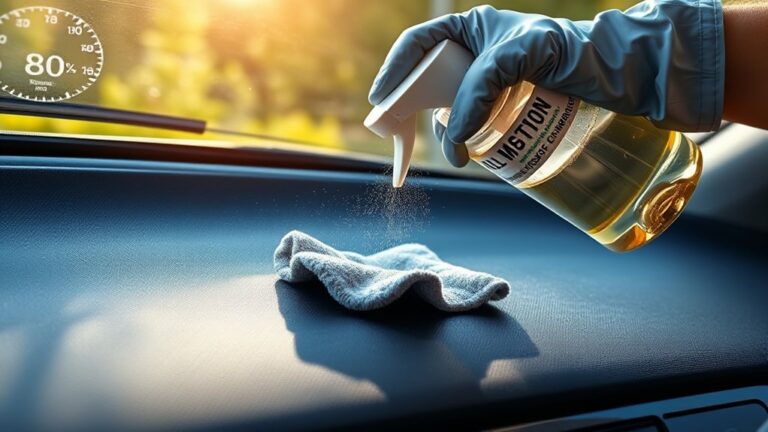
Wondering how to keep your car windows clean without relying on special products? Use a simple mixture of water and mild dish soap or vinegar. Spray the solution onto the glass and wipe with a microfiber cloth for streak-free results.
Always clean in a circular motion to avoid smudges and ensure even coverage. Avoid harsh chemicals or abrasive materials that can scratch or damage your windows. Use a dry, clean cloth to buff away any streaks or remaining residue.
For stubborn spots, gently scrub with a soft sponge or cloth. Never spray directly onto the glass; instead, apply the cleaner to your cloth. Regular cleaning with these safe methods helps maintain clear visibility and keeps grime buildup at bay.
When Is It Safe to Use Household Glass Cleaner on Your Car?
Household glass cleaners can be convenient for cleaning your car windows, but it’s important to know when it’s safe to use them. You can consider using them if:
- The cleaner is ammonia-free, which helps prevent damage to tint or paint.
- You test it on a small, hidden area first to make sure it doesn’t cause streaks or discoloration.
- The cleaner is labeled safe for automotive glass or is gentle enough for delicate surfaces.
If these conditions are met, it’s generally safe to use household glass cleaner on your car. However, avoid cleaners with harsh chemicals or abrasives, as they can harm your vehicle’s finish.
Always check the product labels and do spot tests before applying the cleaner to the entire window.
Choosing the Best Glass Cleaner for Your Vehicle
Choosing the right glass cleaner for your vehicle is key to getting clear, streak-free windows without damaging your car’s surfaces. Look for formulas specifically made for automotive glass, as they’re designed to remove dirt, grime, and grease without leaving behind residue or streaks.
Avoid cleaners with ammonia because they can harm tint jobs and sensitive surfaces. Instead, go for alcohol-based or water-based cleaners that are safe for automotive use. Choose sprays that evaporate quickly and don’t need a lot of wiping.
Checking reviews and product labels can help you find effective, safe options. Also, pick a cleaner that’s compatible with your window’s material—whether it’s tinted or treated—to prevent any damage.
Investing in a good cleaner ensures your windows stay clear and your visibility stays perfect.
Common Mistakes to Avoid When Cleaning Car Windows
Using the right glass cleaner is essential, but even the best products can cause streaks or damage if you make common mistakes when cleaning. First, avoid cleaning windows in direct sunlight, as the heat makes the cleaner evaporate quickly and leaves streaks.
Second, don’t use abrasive materials like rough cloths or brushes that can scratch the glass surface. Third, resist the urge to scrub aggressively; gentle, circular motions work better and prevent damage.
Don’t forget to clean the edges and seals, since dirt and grime tend to collect there. Following these tips helps you get a streak-free, clear view and keeps your windshield and windows in good shape longer.
With proper technique and some awareness, you can achieve professional-looking results right at home.
Final Tips for Maintaining Crystal-Clear Car Windows
To keep your car windows crystal clear, establish a regular cleaning routine that targets both the glass and its edges. Use a microfiber cloth and a gentle cleaner, avoiding harsh chemicals that can damage the glass or trim.
Always clean in a circular motion to prevent streaks and ensure even coverage. Don’t forget to clean the wiper blades regularly—they can spread dirt and streaks.
Clean in circular motions and regularly wipe wiper blades to prevent streaks and dirt spread.
When washing, dry the windows thoroughly to prevent water spots. Applying a glass sealant or protective coating can also help repel dirt and reduce grime buildup.
Parking in shaded areas during cleaning prevents quick drying and streaking. Consistent maintenance keeps your visibility ideal and extends the lifespan of your windows.
Stick to these tips, and your car’s glass will stay spotless and clear.
Frequently Asked Questions
Can Using Household Glass Cleaner Void My Car’s Warranty?
Using household glass cleaner on your car’s windows usually won’t void your warranty, but it’s a good idea to check your vehicle’s manual just to be safe.
Some cleaners have chemicals that could damage the tint or paint if you’re not careful.
If you’re unsure, go for a cleaner that’s made specifically for automotive glass.
That way, you keep your warranty intact and make sure your windows stay clean without risking any damage.
Are There Any Environmental Concerns With Using Household Glass Cleaner on Cars?
Yes, there are environmental concerns with using household glass cleaner on your car. For example, if you use a cleaner with ammonia or harsh chemicals, these can runoff into storm drains, polluting water sources and harming aquatic life.
These chemicals can also contribute to air pollution. To minimize impact, opt for eco-friendly cleaners or use minimal amounts, and make sure to dispose of them properly to protect the environment.
How Often Should I Clean My Car Windows to Prevent Damage?
You should clean your car windows every two to four weeks to prevent grime buildup and keep your view clear. Regular cleaning helps get rid of dirt, bugs, and pollutants that can cause scratches or damage over time.
Use a gentle cleaner made specifically for automotive glass, and steer clear of abrasive materials. Consistent cleaning not only keeps your windows clear but also helps them last longer.
This way, you’ll always have a safe, unobstructed view while driving. Plus, your car will look better and stay in good shape longer.
Will Household Glass Cleaner Remove Stubborn Stains or Bugs?
Household glass cleaner can remove stubborn stains and bugs from your car windows, but it might not be the best option long-term. Some cleaners have chemicals that could damage tinted windows or leave residues. That can make future cleaning more difficult.
For tough stains or bug splatters, it’s better to use a cleaner made specifically for cars. These are gentler on your glass and help you get a clear, streak-free finish without risking damage.
Is It Safe to Use Household Glass Cleaner on Tinted Car Windows?
Using household glass cleaner on tinted car windows isn’t recommended. Many contain chemicals like ammonia, which can damage the tint over time.
Instead, try a cleaner specifically made for automotive windows or a gentle, ammonia-free solution. This helps keep your tint’s color and quality intact.
Always check labels before using any product on your tinted windows to prevent accidental damage and ensure clear visibility.
Conclusion
Using household glass cleaner on your car might seem harmless, but it’s like inviting chaos to your crystal-clear windows.
Imagine streaks, scratches, and foggy glass turning your sleek ride into a murky mess—ruining your view and your style in an instant.
Stick to the right cleaners, and you’ll keep your windows shining brighter than a diamond, ensuring every drive feels like a smooth, panoramic adventure.
Can you use normal glass cleaner on your car? It’s best to avoid it.
Opt for cleaners specifically made for automotive glass to protect your car’s clarity and keep the world in perfect view!