Who Cleans Up After Car Accidents?
Dealing with the aftermath of a car accident can be overwhelming. You’re not alone—many people struggle with understanding who actually cleans up after such incidents.
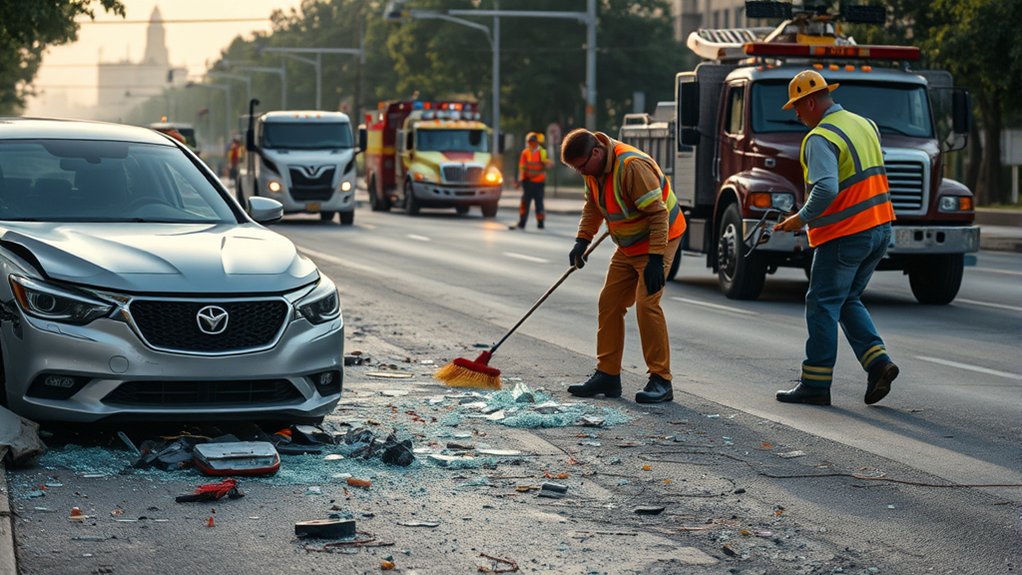
After a car accident, emergency responders, tow truck operators, and cleanup crews handle the scene. They remove debris, secure hazardous materials, and clear damaged vehicles to restore safety.
Fire departments may get involved if there are fires or spills. Insurance companies coordinate and approve necessary cleanup efforts.
Handling hazardous materials and following environmental regulations are essential.
If you keep going, you’ll uncover more about how professionals manage the aftermath efficiently and safely.
Key Takeaways
- Emergency responders assess hazards, secure the scene, and coordinate cleanup efforts.
- Tow truck operators remove damaged vehicles and debris from the accident site.
- Specialized hazardous materials teams handle spills and contaminated debris safely.
- Insurance companies coordinate and approve cleanup services, working with professional vendors.
- Professional cleanup crews restore safety, remove hazards, and ensure environmental regulations are met.
Who Is Responsible for Post-Accident Cleanup?
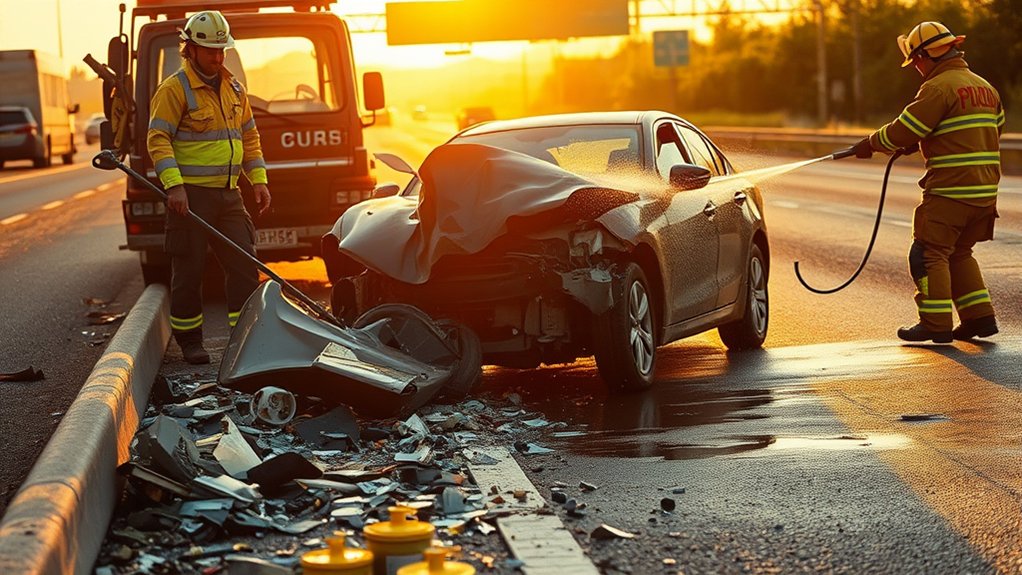
After a car accident, figuring out who handles the cleanup is key to restoring safety and order. Usually, emergency responders like police and fire crews arrive first on the scene. They assess hazards, secure the area, and clear any immediate dangers.
If the accident involves a commercial vehicle or property damage, the vehicle owner or driver often takes charge of the initial cleanup. This can include removing debris or damaged parts.
Insurance companies may also coordinate cleanup efforts, especially if repairs are needed. Sometimes, cleanup becomes a shared responsibility among responders, vehicle owners, and property managers.
The main goal is to make sure the scene is safe, debris is cleared, and the road is back to normal as quickly as possible.
What Do Tow Truck Operators Do During Cleanup?
Once emergency responders have secured the scene and assessed the hazards, tow truck operators step in to handle the removal of damaged vehicles. You arrive with your tow truck, ready to assess the situation quickly.
Your first task is to attach the vehicle securely using specialized hooks or chains, making sure it’s stable for transport. Then, carefully lift the vehicle, whether by flatbed or dollies, and load it onto your truck.
Secure the vehicle with hooks or chains, then carefully load it onto your truck for transport.
Throughout the process, stay alert for traffic and hazards. Communicate with authorities to coordinate safe removal. Your goal is to clear the roadway efficiently and minimize traffic disruptions.
After securing the vehicle, you transport it to a designated impound lot or repair facility. This completes the cleanup effort quickly and safely.
How Are Hazardous Materials Removed After an Accident?
When hazardous materials are involved in an accident, specialized cleanup teams jump into action to safely remove and contain them. They wear protective gear and use advanced equipment to handle dangerous substances like fuel, chemicals, or corrosive fluids.
First, they assess the scene to identify what types and how much hazardous material is there. Then, they contain spills with barriers and absorbents made for specific chemicals.
The team carefully removes contaminated debris and fluids, making sure they don’t spread further. They also neutralize or stabilize hazardous substances if needed.
Once the dangerous materials are safely collected, they are taken to approved disposal facilities. This careful process helps prevent environmental contamination and protects public health.
It also ensures the accident site is thoroughly cleaned and safe for normal use again.
When Do Fire Departments Get Involved in Cleanup?
Fire departments step in based on emergency response protocols when accidents involve fires, hazardous materials, or injuries requiring immediate aid.
The level of their involvement depends on the incident type, especially when specialized cleanup is needed.
They coordinate with cleanup crews to ensure the scene is cleared safely and efficiently.
Emergency Response Protocols
Emergency response protocols decide when fire departments need to step in after car accidents, mainly when there are immediate safety risks. They’re called upon if there’s a fire, fuel leaks, or hazardous materials involved.
Fire crews arrive quickly to assess the scene, focusing on safety and damage control. They might contain spills, disconnect batteries, or put out fires before other teams get there.
Here’s a table showing common situations that require fire department involvement:
| Situation | Immediate Action | Responsible Party |
|---|---|---|
| Fuel or oil leaks | Contain and stop leaks | Fire Department |
| Vehicle fires | Extinguish flames | Fire Department |
| Hazardous material leaks | Isolate and decontaminate | Fire Department |
| Structural instability after crash | Secure scene and prevent collapse | Fire Department |
Types of Incidents
Certain types of incidents automatically trigger fire department involvement, especially those that pose immediate safety hazards or involve hazardous materials.
If a crash results in a fuel spill, the fire department is called to contain and clean up the flammable liquid to prevent fires. When airbags rupture or chemicals like battery acid leak, firefighters step in to manage the dangerous substances.
Incidents with fires, explosions, or structural damage also require their presence to control flames and secure the scene. Moreover, accidents involving injuries that need extrication or medical aid often bring fire crews to assist paramedics.
These incidents demand a quick, specialized response to protect public safety and prevent further hazards. Fire department intervention is essential whenever hazardous materials or life-threatening conditions are involved.
Coordination With Cleanup Crew
Coordination with cleanup crews is crucial when a crash involves hazardous materials or lots of debris that need special handling. Fire departments step in when dangerous substances like fuel spills or chemicals threaten safety or the environment.
They assess the scene, contain hazards, and decide if additional specialists are needed. Sometimes, they work with environmental agencies or hazmat teams for more complex situations.
Their main goal is to ensure safety, prevent further accidents, and get the scene cleaned up efficiently.
| Situation | Response Action |
|---|---|
| Hazardous materials present | Fire department manages containment |
| Major debris and wreckage | Fire crews assist with cleanup |
| Chemical spills | Specialized hazmat teams get involved |
| Environmental risk | Coordination with environmental agencies |
What Environmental and Safety Regulations Apply to Accident Cleanup?
When cleaning up after a car accident, you need to follow environmental hazard mitigation and spill containment standards to prevent further contamination.
Handling hazardous materials safely is crucial to protect both workers and the environment. Knowing the applicable regulations helps ensure the cleanup is effective and compliant.
Environmental Hazard Mitigation
Environmental and safety regulations are key in guiding accident cleanup efforts to prevent further harm. You need to follow strict protocols when handling hazardous materials like fuel, oil, and chemicals to protect ecosystems and public health.
Regulations require proper disposal of contaminated fluids and materials to ensure they don’t enter water sources or soil. Wearing appropriate protective gear is also essential to minimize exposure to toxins.
Agencies like the EPA set standards for containment, cleanup procedures, and reporting. Following these rules helps you avoid fines and legal penalties.
Your goal is to effectively mitigate environmental hazards while keeping workers and the community safe. Strictly adhering to these regulations ensures the cleanup minimizes ecological impact and complies with safety laws.
Spill Containment Standards
Spill containment standards are crucial for making sure cleanup efforts stop hazardous substances from spreading and causing more environmental harm. They set rules for how spills should be contained, managed, and disposed of to minimize impact.
Agencies like the EPA and OSHA have regulations that specify what secondary containment systems should include, such as barriers, booms, or absorbent materials. Proper training is also required so responders know how to handle spills efficiently.
Here’s a quick summary of the key aspects:
| Standard Aspect | Regulation Details |
|---|---|
| Containment Requirements | Use barriers, booms, or absorbents to prevent spread |
| Response Training | Mandatory for cleanup personnel |
| Disposal Procedures | Proper disposal of contaminated materials |
Hazardous Material Handling
Handling hazardous materials during accident cleanup involves strict adherence to regulations designed to protect both people and the environment. You must follow federal, state, and local environmental and safety laws, such as OSHA standards and EPA regulations.
These rules specify proper procedures for handling, storing, and disposing of hazardous substances like fuel, oil, and chemicals. It’s important to use appropriate personal protective equipment and specialized cleanup materials to prevent exposure and spills.
Proper documentation and reporting are also essential, ensuring accountability and compliance. If hazardous materials are involved, you may need to coordinate with certified hazardous waste handlers.
Failing to follow these regulations can lead to fines, legal action, or environmental damage. That’s why you must prioritize safety and regulatory compliance during cleanup.
How Do Insurance Companies Coordinate Cleanup Services?
When a car accident happens, insurance companies jump into action to coordinate cleanup services. They work with specialized vendors who handle debris removal, fluids, and damaged parts.
Once notified, the insurance company evaluates the situation and approves the necessary services. They usually have established relationships with cleanup crews, so they can dispatch them quickly.
The insurer communicates directly with the cleanup team, sharing details about the scene and what’s needed. They also coordinate with local authorities if required to make sure everything complies with safety rules.
Their main goal is to minimize downtime, reduce hazards, and restore safety so you can get back on track quickly and with peace of mind.
What Are Common Challenges During Accident Cleanup?
Accident cleanup often presents unexpected obstacles that can delay restoring safety and normalcy. One challenge is dealing with hazardous materials like fuel, oil, or broken glass, which require careful handling and specialized equipment.
You might also face unpredictable weather conditions, such as rain or snow, making cleanup more difficult and increasing safety risks. Finding all debris and damaged parts can be tough, especially in busy or poorly lit areas.
Damaged infrastructure, like guardrails or pavement, may need repairs before cleanup is complete. Emotional stress is another hurdle, as crews work under pressure to clear the scene quickly while ensuring safety.
These challenges demand skill, attention to detail, and patience to overcome effectively.
Why Hire Professional Cleanup Services?
Hiring professional cleanup services guarantees that the aftermath of a car accident is managed safely and efficiently. Professionals have the training and equipment to handle hazardous materials like blood, oil, and debris, reducing health risks for you and others.
They know how to properly assess the scene, ensuring no dangerous residues remain. Furthermore, experts work quickly to restore your property, minimizing downtime and stress.
Their experience helps prevent further damage to your vehicle and surroundings. By hiring professionals, you avoid potential legal liabilities linked to improper cleanup, which could lead to fines or lawsuits.
Ultimately, professional cleanup services give you peace of mind, knowing the job is done right, safely, and in compliance with health and safety regulations.
What Can You Expect During the Post-Accident Cleanup Process?
After a car accident, the cleanup process involves several carefully planned steps to restore safety and order to the scene. First, professionals assess the area to identify hazards like spilled fluids, debris, or broken glass.
They then remove debris, clear the road, and contain any hazardous substances to prevent further accidents. If needed, they use specialized equipment to extract fluids and clean contaminated surfaces.
Throughout this process, you can expect the team to work efficiently, minimizing disruptions and ensuring safety for everyone involved. Once the scene is cleared of hazards and debris, they perform a thorough cleaning to remove stains and residues.
The goal is to restore the scene to a safe, clean state, ready for traffic to resume smoothly.
Frequently Asked Questions
Who Bears the Financial Cost of Accident Cleanup?
You usually bear the financial cost of accident cleanup if you’re at fault or if the damages aren’t covered by insurance.
Insurance companies typically cover cleanup costs if the accident is insured, but you might still have to pay deductibles or out-of-pocket expenses.
In some cases, the vehicle owner or driver may be responsible for paying for cleanup if liability isn’t clear or if insurance denies coverage.
Are There Specific Tools Used for Cleaning Different Types of Debris?
Yes, specific tools are used for cleaning different types of debris. You’ll find brooms and shovels for shattered glass, heavy-duty vacuums for tiny particles, and absorbent pads for spilled liquids.
Ironically, despite your best efforts, some debris like glass or oil can be stubborn. They often need specialized equipment like power washers or industrial-grade absorbents.
The right tools make cleanup more efficient, but a little patience is always part of the process.
How Long Does the Cleanup Process Typically Take?
The cleanup process usually takes a few hours, but it can vary depending on the accident’s severity and debris type. You might find it quicker if only small debris needs removal, but more extensive accidents with fluids or large debris could take longer.
You’ll need to guarantee the area is thoroughly cleaned and safe before reopening the road. Staying patient and trusting professionals will help ensure everything is properly handled.
What Training Do Cleanup Crews Undergo?
Cleanup crews undergo specialized training that covers hazardous material handling, safety protocols, and proper cleaning techniques. You’ll learn how to identify different types of debris and fluids, use protective gear effectively, and follow strict regulations to prevent contamination.
Furthermore, crews are trained in accident scene safety to protect themselves and others. This thorough training guarantees they handle each situation professionally, efficiently, and safely, minimizing health risks and restoring the scene quickly.
Can Cleanup Services Handle Biohazardous Materials?
Yes, cleanup services can handle biohazardous materials. Think of them as the superheroes of the accident scene, equipped with specialized training and gear to safely manage blood, bodily fluids, and other hazardous substances.
They follow strict protocols to prevent contamination and guarantee safety for everyone involved. You can count on their expertise to clean up thoroughly, so the site is safe and sanitized, just like new.
Conclusion
After an accident, think of cleanup as restoring a shattered mirror, with each piece representing safety, the environment, and order. Your role is to trust the professionals who piece it back together, making sure everything is safe again.
They know how to handle the mess and restore normalcy, so the road is safe and the surroundings are whole once more. With their expertise, chaos turns into clarity, and the road ahead becomes a path toward renewal.
Rest assured, every effort is a step toward mending what was broken. When it comes to cleanup after car accidents, trusting the professionals is the key to guiding you forward.