How to Use Carpet Cleaner on Your Leather Car Seats Safely
Many car owners struggle with keeping their leather seats clean and looking brand new. It’s a common concern—using the wrong cleaner can damage the delicate surface or leave residue.
Don’t worry, you’re not alone in wanting safe, effective methods for cleaning your leather car seats.
To safely use a carpet cleaner on leather car seats, choose a product specifically made for leather or delicate surfaces, avoiding harsh chemicals like bleach or ammonia.
Before cleaning, vacuum and wipe the seats with a damp cloth, then test the cleaner in a hidden spot.
Use a soft cloth to apply the cleaner gently, and follow up by conditioning the leather to keep it soft and protected.
Still unsure? Keep going to uncover all the essential steps for safe, effective cleaning.
Key Takeaways
- Use only cleaners specifically formulated for leather or delicate surfaces. Steer clear of harsh chemicals like ammonia or bleach, which can damage your leather.
- Before applying the cleaner to the entire seat, test it on a hidden area first. This helps you check for any adverse reactions and avoid surprises.
- Remove surface dirt with a vacuum or soft brush. Doing this first helps prevent scratching the leather during cleaning.
- When applying the cleaner, do so gently with a soft cloth. Afterward, follow up with a leather conditioner to keep the seats soft and supple.
- Be careful not to soak the leather. Keep moisture to a minimum during cleaning to avoid damage or drying out your seats.
Can You Safely Use Carpet Cleaner on Leather Seats?
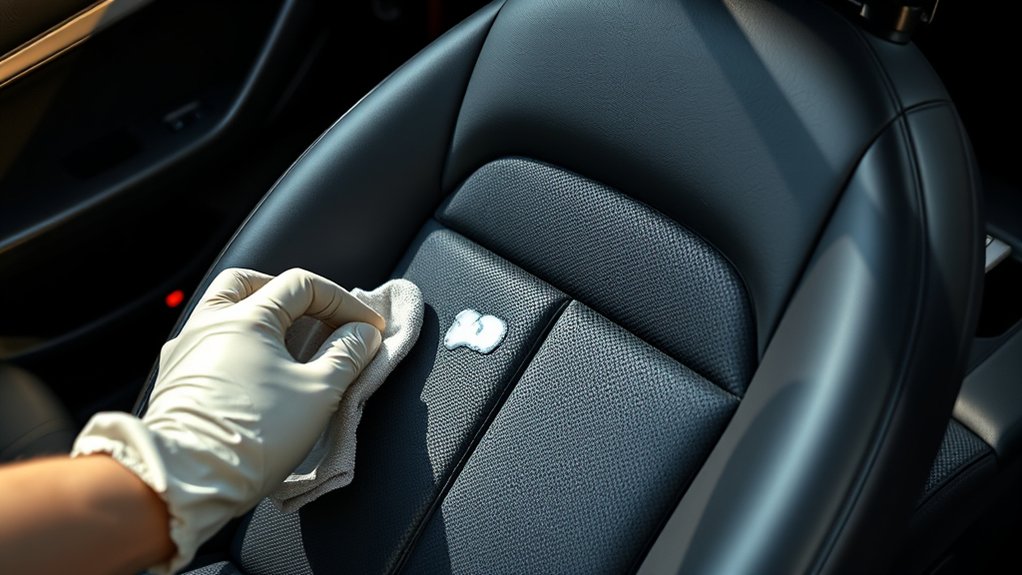
Is it safe to use carpet cleaner on leather seats? Generally, no. Most carpet cleaners contain harsh chemicals and strong detergents that can damage leather’s delicate surface.
Leather is porous and reacts differently than fabric, so using the wrong cleaner can cause cracking, fading, or drying out the material. Before trying to clean your leather seats, check the product label for any mention of leather safety.
If you’re unsure, it’s better to use a cleaner specifically designed for leather. Using an inappropriate cleaner risks permanent damage, which can reduce both the look and lifespan of your seats.
Always choose products made for leather, and test any cleaner on a small, hidden area first to be safe.
How to Check If Your Leather Seats Are Suitable for Carpet Cleaner
Before reaching for a carpet cleaner, it’s important to determine if your leather seats can handle it. Start by checking your vehicle’s owner’s manual for specific cleaning recommendations.
Always check your vehicle’s manual before using a carpet cleaner on leather seats.
Look for any warnings about using certain cleaning products on your leather. Examine the leather’s condition—if it’s cracked, peeling, or overly worn, a carpet cleaner may do more harm than good.
Test a small, hidden area first by applying a tiny amount of cleaner and observing for adverse reactions like discoloration or damage. If the leather feels sticky or shows signs of damage, avoid using a carpet cleaner altogether.
When in doubt, consult a professional to assess whether your seats are suitable for that type of cleaning. Proper evaluation helps prevent costly repairs.
Choosing the Best Carpet Cleaner for Leather Surfaces
Selecting the right carpet cleaner for your leather surfaces is key to keeping them looking good and lasting longer. Look for products made specifically for leather or labeled as safe for delicate surfaces.
Avoid harsh chemicals like ammonia or bleach, as they can damage the leather’s finish. Instead, pick a cleaner with gentle, pH-balanced ingredients that remove dirt without stripping oils or causing discoloration.
Be sure to read reviews and check the manufacturer’s instructions to ensure the product is compatible with leather seats. It’s a good idea to test the cleaner on a small, hidden area first to avoid any unwanted reactions.
If you’re unsure, go for a cleaner recommended by your vehicle’s manufacturer or a trusted leather care brand. Making the right choice helps keep your leather seats clean, soft, and looking like new.
Preparing Leather Seats Before Cleaning
Properly preparing your leather seats guarantees a thorough and safe cleaning process. Start by removing all loose debris, crumbs, and dust using a soft brush or vacuum with a brush attachment. This helps prevent scratching the leather during cleaning.
Next, wipe down the seats with a damp microfiber cloth to eliminate surface dirt and oils. Avoid soaking the leather; use just enough moisture to clean without causing damage.
Use a damp microfiber cloth to gently remove surface dirt and oils from leather seats.
If needed, lightly dampen the cloth with distilled water to prevent mineral deposits. Inspect the seats for stains or spots, and note any areas that might need specialized treatment later.
Ensuring the surface is free of loose dirt and lightly cleaned sets the stage for a more effective, damage-free cleaning with your carpet cleaner.
Step-by-Step: How to Use Carpet Cleaner Safely on Leather
To clean leather seats safely, start by choosing a carpet cleaner that’s gentle and suitable for leather.
Next, prepare the surface by wiping it down with a damp cloth to remove dust and debris.
Finally, apply the cleaner lightly and wipe with a soft cloth, being careful not to scrub or use excessive pressure.
Select Appropriate Cleaner
Start by choosing a cleaner specifically formulated for leather if you want to avoid damage. Regular carpet cleaners can be too harsh and may cause cracking or discoloration.
Look for products labeled as safe for leather or designed for automotive interiors. Read the label carefully to ensure it targets dirt and stains without harming the material.
Avoid cleaners with harsh chemicals like ammonia or bleach, as they can strip the leather’s natural oils. Test the cleaner on a small, hidden area first to check for any adverse reactions.
If you’re unsure, opt for a pH-balanced leather cleaner recommended by the manufacturer. Using the right product helps preserve your seats’ appearance and extend their lifespan.
Always follow the instructions on the cleaner’s label for the best results.
Prepare Leather Surface
Before applying any cleaner, it’s essential to prepare your leather seats to guarantee the cleaning process is effective and safe. Start by removing loose dirt and debris with a soft brush or vacuum. This helps prevent scratching the leather during cleaning.
Next, gently wipe the surface with a damp microfiber cloth to eliminate surface dust and oils. Finally, inspect the seats for cracks or damage and clean these areas carefully to avoid making any issues worse.
- Remove loose dirt and debris with a soft brush or vacuum
- Gently wipe the surface with a damp microfiber cloth
- Check for cracks or damage and clean these areas cautiously
Apply and Wipe Gently
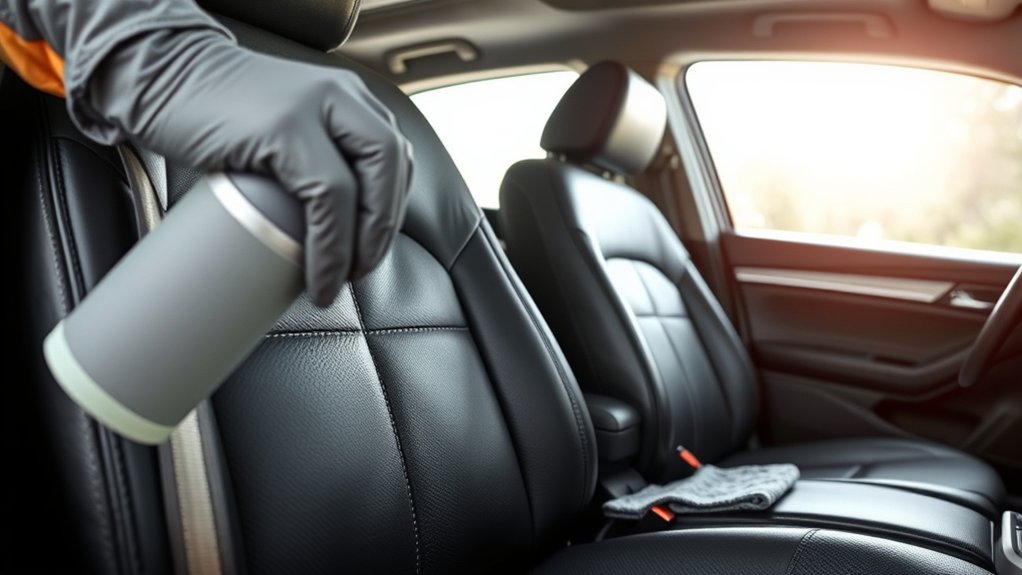
Apply the carpet cleaner sparingly onto a clean, microfiber cloth or sponge, rather than pouring it directly onto the leather. Gently dab or wipe the cleaner onto the surface, focusing on stained or dirty areas.
Use light pressure to avoid damaging the leather or pushing dirt further in. Work in small sections, ensuring even coverage without over-saturating.
Once you’ve applied the cleaner, grab a separate, clean microfiber cloth and wipe the area gently in a circular motion. This helps lift dirt without scratching the surface.
Avoid scrubbing aggressively, as this can harm the leather’s finish. The key is to be gentle and precise, ensuring a thorough clean without compromising the leather’s integrity.
Tips to Avoid Damaging Your Leather During Cleaning
To prevent damage to your leather seats, it’s important to choose the right cleaning products and steer clear of harsh chemicals. Strong cleaners can strip away natural oils, leading to cracking or discoloration. Always go for mild, leather-specific products instead.
Use gentle, leather-specific cleaners to protect your seats from damage and maintain their natural beauty.
Avoid using abrasive scrubbers or too much water, which can seep into seams and loosen the leather. Instead, use a soft cloth or sponge and keep your cleaning gentle and minimal.
Here are some tips to keep in mind:
- Test any cleaner on a small, hidden area before applying it everywhere
- Use a soft cloth or sponge, not abrasive brushes
- Never soak the leather—keep your cleaning light and careful
How to Protect and Condition Leather After Cleaning
After cleaning your leather seats, it’s important to protect and condition them to keep their softness and prevent cracking. Use a good-quality leather conditioner made for automotive seats.
Apply a small amount to a soft cloth and gently rub it into the leather in circular motions. This helps hydrate the leather and restore its natural oils and flexibility.
Let the conditioner sit for a few minutes, then buff away any excess with a clean cloth. Regular conditioning creates a protective barrier against dirt, UV rays, and everyday wear.
Be careful not to over-condition, as that can leave a sticky residue. Regular care will keep your seats looking new, soft, and resilient over time, maintaining their great condition after each clean.
Troubleshooting Leather Discoloration and Damage
Discoloration and damage can happen if you don’t understand their causes or how to prevent them.
You need to identify whether UV rays, cleaning products, or moisture are to blame. Knowing these factors helps you avoid making issues worse and keeps your leather seats looking their best.
Identifying Discoloration Causes
Leather seats can develop discoloration for various reasons, and figuring out the cause is key to cleaning effectively and keeping them looking good. Knowing what caused the discoloration helps you pick the right cleaning method and avoid making it worse.
Common causes include sunlight, which can fade or darken the leather; dyes from clothing, bags, or other seats transferring onto the surface; and chemical reactions from cleaning products or spills.
Preventing Leather Damage
To keep your leather seats looking their best, it’s important to prevent damage before it happens. Regularly clean and condition your seats using products specifically designed for leather. Avoid harsh chemicals or abrasive scrubbers that can cause discoloration or scratches.
Keep direct sunlight off your seats because UV rays can fade and dry out the leather, leading to cracks. Use sunshades or park in shaded areas whenever you can.
Be cautious with spills—clean them immediately to prevent staining or stains from setting in. Also, avoid placing heavy or sharp objects on the seats that could cause tears or indentations.
With consistent care and preventive measures, you’ll extend the life of your leather seats and keep them looking great.
FAQS: Cleaning Leather Seats With Carpet Cleaner
Are you wondering if carpet cleaner is safe for your leather car seats? It can be, but you need to know the right approach. First, always check the product label for compatibility with leather surfaces.
Second, spot test in a hidden area to prevent discoloration or damage. Finally, avoid harsh chemicals like bleach or ammonia, which can dry out or crack your seats.
Here are some tips to keep in mind:
- Use a gentle, pH-balanced cleaner
- Apply with a soft cloth and avoid excessive moisture
- Follow up with a leather conditioner for protection
Frequently Asked Questions
Can Carpet Cleaners Remove Tough Stains From Leather Seats?
Yes, carpet cleaners can remove tough stains from leather seats if you’re careful. Just make sure to choose a cleaner made specifically for leather or test a small, hidden area first to avoid any damage.
Use a soft cloth or sponge to gently apply the cleaner, and be careful not to use too much moisture. After cleaning, wipe the seats with a dry cloth.
You might also want to apply a leather conditioner afterward. It helps keep the material soft and protected from future stains.
Are There Specific Carpet Cleaners Recommended for Leather Seats?
Yes, there are specific carpet cleaners recommended for leather seats. Look for products labeled as safe for leather or designed for delicate surfaces.
Always choose a cleaner that’s gentle, free of harsh chemicals, and pH-balanced. It’s a good idea to test it on a small, hidden area first.
Using the right cleaner helps prevent damage, preserves your leather’s softness, and keeps your seats looking their best without risking discoloration or cracking.
How Often Should I Clean Leather Car Seats With a Carpet Cleaner?
Back in the day, cleaning leather seats was a rare chore, but now you should do it every 3 to 6 months. Use a gentle carpet cleaner specifically designed for leather, and avoid harsh chemicals.
Regular cleaning prevents dirt buildup and helps maintain your seats’ suppleness. If you notice stains or grime, clean them sooner.
Consistent maintenance keeps your leather seats looking fresh and extends their lifespan.
What Are the Signs of Damage After Cleaning Leather Seats?
After cleaning your leather seats, keep an eye out for signs of damage like cracking, dryness, or discoloration.
You might notice the leather feels rough or stiff, which means it’s lost moisture or has been over-cleaned.
If the surface looks dull or uneven, that could be a sign the cleaning was too harsh.
Always inspect closely, and if you see any of these signs, try applying a leather conditioner to restore moisture and keep your seats in good shape.
Is It Necessary to Test a Small Area Before Full Cleaning?
Yes, testing a small area before full cleaning is important. You should apply the cleaner to a hidden spot on your leather seats first, then wait a few minutes.
This lets you see if there’s any discoloration, damage, or bad reaction. If the leather looks fine, you can go ahead with cleaning the entire seat.
Always be cautious to protect your leather upholstery and avoid any surprises.
Conclusion
Think of your leather seats as the heart of your car’s cabin—delicate yet essential. When you treat them with care, you’re not just cleaning surfaces; you’re nurturing the soul of your vehicle. Using the right cleaner and gentle methods preserves their strength and beauty, much like tending to a fragile flower.
With patience and respect, you ensure your car’s interior remains a sanctuary. It reflects your care and attention and becomes a true symbol of your journey. Remember, using a proper cleaner on your leather car seats is key to keeping them looking great and lasting longer.