Can Window Cleaner Be Used on Cars?
Many car owners know the frustration of streaky, cloudy windows after cleaning. You’re not alone—keeping your car’s glass crystal clear can be a real challenge.
You should avoid using regular household window cleaners on your car, as they often contain ammonia or vinegar that can damage automotive glass, tint films, paint, and seals.
These cleaners may cause streaks, haziness, or long-term harm to your vehicle’s surfaces. Instead, opt for products specifically designed for automotive use, which are safer and more effective.
Stay with us to uncover how to keep your car windows crystal clear without risking damage.
Key Takeaways
- Regular household window cleaners often contain ammonia or vinegar, which can damage automotive glass and tint films.
- Automotive glass is designed to be tough, but using the wrong cleaner can cause streaks or surface damage.
- It’s best to use car-specific window cleaners that are non-abrasive, residue-free, and pH-balanced. These help protect your paint, seals, and tint.
- DIY solutions with vinegar or harsh chemicals can risk damaging rubber seals, plastics, or the tint. That’s why commercial products made for cars are a safer choice.
- When cleaning, use microfiber cloths and avoid ammonia-based cleaners. This helps protect tinted windows and gives you streak-free results.
Is It Safe to Use Regular Window Cleaner on Car Windows?
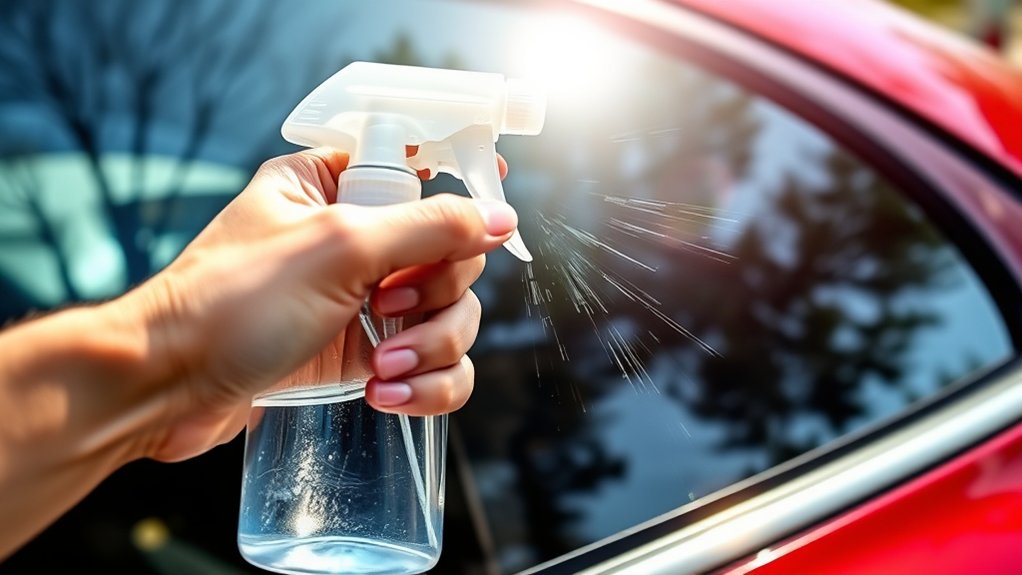
Is it safe to use regular window cleaner on your car windows? Generally, it’s not recommended. Household cleaners often contain chemicals like ammonia or vinegar, which can damage automotive glass and tint films.
These substances may cause streaks, haziness, or deterioration over time. Car windows are exposed to different environmental factors than household windows, so they need specialized cleaning products.
Using the wrong cleaner could also harm the rubber seals or plastic components around the glass. If you want your car windows to stay clear and undamaged, stick to cleaners specifically formulated for automotive glass.
These products are designed to remove dirt and grime without risking harm to the glass or its coatings. In the end, choosing the right cleaner helps maintain your vehicle’s appearance and safety.
How Does Automotive Glass Differ From Household Glass?
You’ll notice that automotive glass is made differently than household glass, with distinct materials for added strength. It’s designed to withstand impacts and last longer on the road.
Plus, automotive glass offers clearer visibility, which is really important for safe driving. It helps you see better and stay safe behind the wheel.
Material Composition Differences
Automotive glass is quite different from household glass in both what it’s made of and how it’s made. This is mainly to handle the safety and durability needs of vehicles.
Vehicle glass is usually laminated or tempered, which makes it stronger and safer in crashes. Laminated glass, used for windshields, has a plastic layer that keeps shards together if broken. This helps reduce injury risk.
Tempered glass, used for side and rear windows, is heat-treated so it shatters into small, blunt pieces instead of sharp shards. Household glass generally doesn’t have these treatments and is mainly made for clarity and looks.
It’s usually thinner and less resistant to impacts or temperature changes. These differences make sure automotive glass can handle the demands of driving while keeping safety and structural integrity.
Strength and Durability
Because automotive glass is designed to withstand the stresses and impacts of driving, it’s much stronger and more durable than household glass. This strength comes from its construction, which includes layers, special treatments, and thicker materials. You should recognize that this durability improves safety and longevity.
Consider these key points:
- Layered Construction – Laminated glass with a plastic layer prevents shattering into dangerous shards.
- Tempered Glass – Heats and cools quickly to increase impact resistance and break into small, less harmful pieces.
- Thickness – Automotive glass is thicker, providing better resistance to stress and impacts.
- Special Coatings – Often treated to resist UV rays, scratches, and extreme weather, extending lifespan.
Understanding these differences helps you realize why household glass isn’t suitable for automotive use.
Clarity and Visibility
While household glass prioritizes clarity for everyday use, automotive glass is specially designed to offer peak visibility in diverse driving conditions. Car windows are often curved and tinted to reduce glare and improve safety.
They’re made with laminated or tempered glass, which keeps clarity even when exposed to weather and vibrations. Unlike household glass, automotive glass minimizes distortions that could impair your view, especially at high speeds.
This clarity helps you see road signs, other vehicles, and pedestrians clearly. Tinted layers also reduce glare from headlights and sunlight, enhancing visibility without sacrificing sharpness.
What Are the Risks of Using Regular Window Cleaner on Your Car?
Using regular window cleaner on your car might seem convenient, but it comes with some risks that can harm your vehicle’s surfaces.
First, it can strip away the protective wax coating, making your car more vulnerable to dirt and rust over time.
Second, many window cleaners contain ammonia, which can damage tinted windows, leading to fading or peeling.
Third, harsh chemicals might dull or scratch your car’s paint if you’re not careful.
Finally, using these cleaners too often can cause streaks or residue buildup, actually reducing visibility instead of improving it.
These risks show why using the right products is really important for keeping your car looking good and lasting longer.
Skipping specialized cleaners might save you a bit now, but it could lead to costly damage down the line.
What Features Make a Window Cleaner Safe for Cars?
To keep your car’s windows safe, choose a cleaner with a non-abrasive formulation that won’t scratch the glass.
Look for products that leave a residue-free finish to avoid streaks and fogging.
Additionally, eco-friendly ingredients ensure you’re cleaning responsibly without harming the environment.
Non-Abrasive Formulation
A window cleaner designed for cars needs a non-abrasive formula to avoid scratches and damage on the vehicle’s glass and paint. You want something that cleans well without being harsh or gritty. Look for products with gentle, smooth ingredients that lift dirt without scratching surfaces.
Here are four key features to consider:
- No abrasive particles that can scratch glass and paint.
- pH-balanced formulas that prevent corrosion or dullness.
- Alcohol or ammonia-free ingredients to avoid damaging paint and fumes.
- Light, streak-free cleaners that leave a clear, shiny surface.
Choosing a non-abrasive cleaner helps keep your car’s finish looking its best. It protects both the appearance and the value of your vehicle.
Residue-Free Finish
Guaranteeing a residue-free finish is essential because leftover streaks or spots can diminish your car’s appearance and hinder visibility. A good window cleaner for cars should evaporate quickly without leaving any film behind.
Look for formulas specifically designed to dry clear and streak-free, which often contain ingredients that break down dirt without leaving residues. Avoid products with heavy oils or waxes that can leave greasy marks.
The cleaner should also be compatible with your car’s glass surfaces without causing haziness or film buildup over time. When applying, use a clean microfiber cloth and wipe in straight, even strokes.
This guarantees the surface is thoroughly cleaned and dries spotless, giving you a crystal-clear view and a polished look.
Eco-Friendly Ingredients
Choosing a window cleaner with eco-friendly ingredients guarantees you’re not just protecting your car’s glass, but also the environment. These cleaners avoid harsh chemicals that can harm wildlife and pollute waterways. When selecting one, look for natural, biodegradable ingredients that break down safely.
Eco-friendly cleaners often contain plant-based surfactants, essential oils, and non-toxic solvents. Consider these features:
- Biodegradability – Ensures the product breaks down naturally, reducing environmental impact.
- Non-toxicity – Safer for you, your family, and pets.
- Free from volatile organic compounds (VOCs) – Limits air pollution and health hazards.
- Cruelty-free – Made without animal testing, supporting ethical practices.
Opting for eco-friendly ingredients helps protect the planet while keeping your car sparkling clean.
Are DIY Window Cleaning Solutions Safe for Car Windows?
Are DIY window cleaning solutions safe for car windows? It depends on the ingredients you use. Many homemade recipes mix vinegar, water, and a bit of dish soap, which can work well for cleaning.
But some ingredients might damage the glass or the rubber seals over time. Vinegar’s acidity can break down rubber and plastic parts if used too much. Plus, homemade solutions aren’t always tested as thoroughly as commercial products.
This means they might leave streaks or residue on your windows. If you want to try DIY cleaners, make sure they are balanced and use them sparingly. Always test a small area first to see if there are any reactions.
When in doubt, sticking to products made specifically for car windows is the safest choice. That way, you get great results without risking damage.
How Can I Achieve a Streak-Free Car Window Clean?
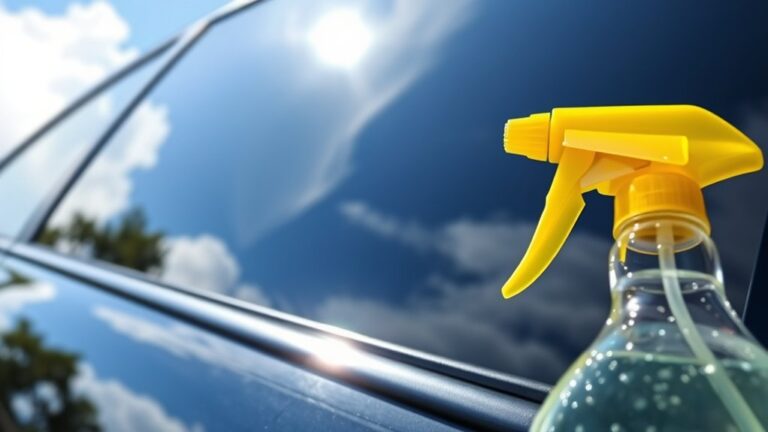
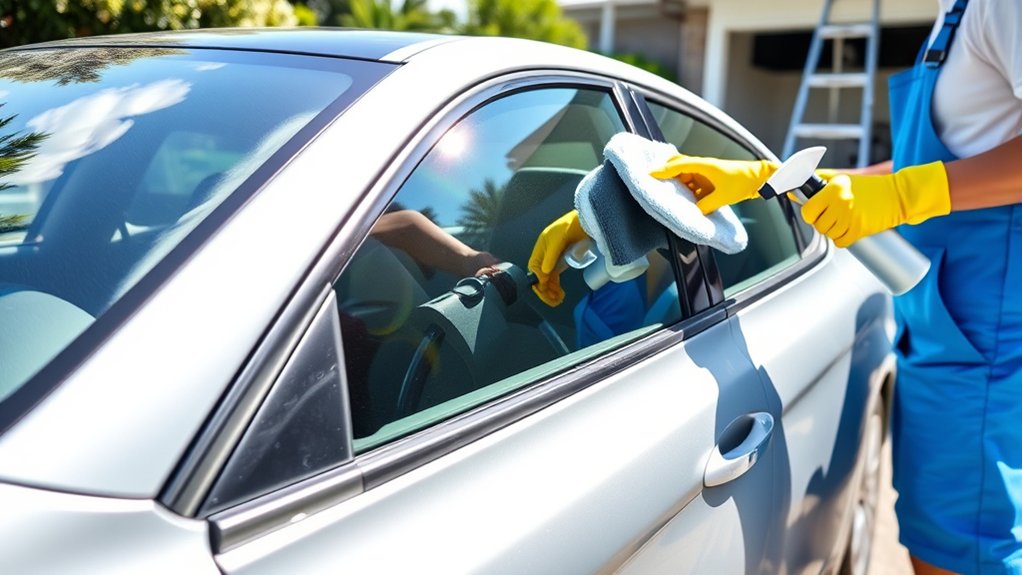
How can you make certain your car windows come out crystal clear and streak-free? Start by choosing a clean, soft microfiber cloth to avoid scratches. Use a high-quality glass cleaner and spray it evenly across the surface.
Choose a soft microfiber cloth and high-quality cleaner for crystal-clear, streak-free car windows.
Follow these steps for a perfect finish:
- Wipe in a circular motion to loosen dirt and prevent streaks.
- Use vertical and horizontal strokes to make sure no spots are missed.
- Dry with a separate, dry microfiber cloth to avoid leftover moisture.
- Inspect under natural light to catch any streaks or smudges, then touch up as needed.
These simple tips help you achieve a flawless, streak-free shine every time, making your windows crystal clear and improving your driving visibility.
How Should I Properly Apply Window Cleaner to My Car Windows?
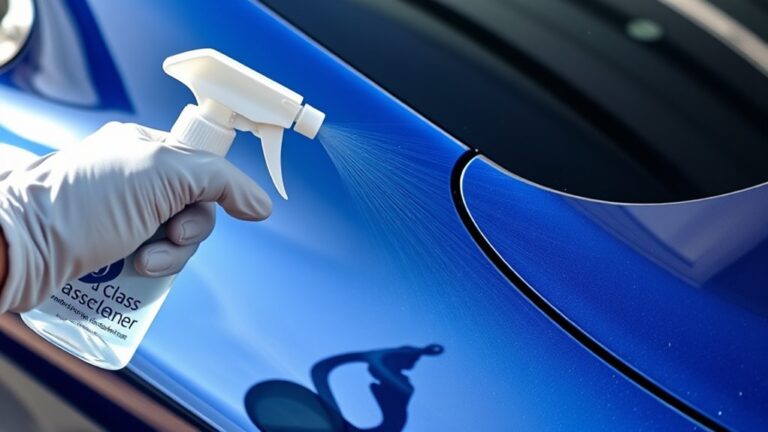
Start by choosing a window cleaner made specifically for cars to prevent streaks and damage.
Use soft, lint-free cloths or applicator pads to spread the cleaner evenly over the glass.
Make sure to follow safe cleaning tips, like working in the shade and avoiding direct sunlight, for the best results.
Choose Appropriate Cleaner
Choosing the right window cleaner is key to cleaning your car’s glass effectively and safely. Not all cleaners work well on automotive surfaces, so pick one made for car windows or glass.
Avoid ammonia-based cleaners because they can damage window tint and rubber seals. Look for streak-free formulas to reduce smudges and improve visibility.
It’s a good idea to choose eco-friendly options since they’re safer for both the environment and your vehicle. Always check the label to make sure the cleaner is compatible with automotive glass.
Use Proper Application Tools
Using the right application tools guarantees you get a streak-free, spotless finish on your car windows. Start with a soft microfiber cloth or a dedicated glass cleaning cloth—it’s gentle and won’t scratch the surface.
For larger windows, a spray bottle or a foam applicator works best to evenly distribute the cleaner. Avoid abrasive sponges or paper towels, which can leave lint or scratches.
Hold the spray nozzle close to the glass and apply a few light, even sprays. Use a clean, dry microfiber cloth to wipe the cleaner in circular motions, then switch to a dry section of the cloth for a final buff.
Proper tools ensure the cleaner works effectively, leaving your windows crystal clear without streaks or residue.
Follow Safe Cleaning Techniques
Before applying window cleaner to your car windows, make sure the surface is cool, shaded, and free of dirt and debris. This helps prevent streaks caused by quick evaporation.
To follow safe cleaning techniques, keep these points in mind:
- Spray the cleaner lightly—don’t oversaturate—to avoid runoff and mess.
- Use a clean, soft cloth or microfiber towel for wiping. Abrasive materials can scratch the glass.
- Wipe in circular motions, then follow with vertical or horizontal swipes for a streak-free finish.
- Avoid applying cleaner in direct sunlight, as it can cause quick evaporation and uneven cleaning.
What Common Mistakes Should I Avoid When Cleaning Car Glass?
Cleaning your car’s glass might seem straightforward, but some common mistakes can leave streaks and reduce visibility. One mistake is using household glass cleaners that contain ammonia, which can damage your tint and paint.
Also, avoid cleaning in direct sunlight because the cleaner dries too quickly, causing streaks. Using rough cloths or paper towels can scratch the glass, so opt for microfiber cloths instead.
Don’t forget to clean the edges thoroughly; dirt hiding there can leave streaks and smudges. Rushing the process can also lead to poor results, so take your time for a thorough clean.
When Is It Best to Consult a Professional for Car Window Cleaning?
Have you ever tried cleaning your car windows only to end up with streaks or missed spots? Knowing when to call a professional can save you time and frustration. Consider consulting a pro if:
If streaks or missed spots persist, it’s time to call a professional for expert help.
- The windows are heavily stained or have stubborn residue that won’t come off with regular cleaning.
- You notice scratches or chips that might need specialized repair before cleaning.
- You don’t have the right tools or experience to get streak-free results.
- You’re preparing for an important event or sale, and crystal-clear windows really matter.
A professional has the expertise, equipment, and products to handle tricky spots safely. When in doubt, it’s better to get expert help than risk damaging your windows or wasting your effort.
How Can I Maintain Crystal-Clear Car Windows Over Time?
Maintaining your car windows in pristine condition requires consistent care beyond just occasional cleaning. To keep them crystal clear, regularly wipe down the glass with a microfiber cloth to remove dust and smudges.
Use a gentle, streak-free cleaner designed for automotive glass, avoiding harsh chemicals that can damage the surface. Apply the cleaner evenly and wipe in a circular motion for a streak-free finish.
Protect your windows from dirt and grime buildup by parking in shaded areas whenever possible and avoiding driving through muddy or dusty conditions. Consider applying a water-repellent treatment to improve visibility during rain.
Routine maintenance like these practices helps prevent scratches, mineral deposits, and cloudiness. This ensures your windows stay clear and safe for driving over time.
How Often Should I Clean My Car Windows for Optimal Visibility?
Wondering how often you should clean your car windows to keep visibility at its best? It’s a good idea to do it at least once every two weeks. Regular cleaning helps prevent dirt, grime, and streaks from building up, so your view stays clear.
Think about the weather — rain and snow can bring dirt and mineral deposits that need more frequent cleaning. In urban areas with lots of pollution or dusty roads, you might want to wash them more often.
During winter, road salt and mud can make your windows dirty faster, so regular cleaning becomes even more important. If you notice smudges or streaks that block your view, clean the windows right away.
Sticking to a routine keeps you safe on the road by ensuring your windows stay clear and your vision remains unobstructed.
Frequently Asked Questions
Can Using Regular Window Cleaner Damage My Car’s Paint or Interior?
Using regular window cleaner on your car can potentially damage the paint or interior if it contains harsh chemicals like ammonia or alcohol. These ingredients can strip away wax, dull your paint, or harm interior surfaces.
To keep your car looking its best, use cleaners specifically designed for automotive paint and interior. Always test a small area first and follow the manufacturer’s instructions for safe cleaning.
Are There Specific Cleaning Products Recommended for Tinted Car Windows?
Yes, there are specific cleaning products recommended for tinted car windows. You should choose a gentle, ammonia-free glass cleaner that’s safe for tint films, ensuring your windows stay crystal clear without damage.
Think of it like nurturing a delicate flower—using the right product preserves its beauty and longevity. Always read labels carefully, test in a small area first, and avoid harsh chemicals that can peel or cloud your tinted windows over time.
How Do Weather Conditions Affect the Effectiveness of Car Window Cleaning?
Weather conditions have a big effect on how well your car windows stay clean. When it’s rainy or humid, dirt and grime tend to stick more, making it harder to get a streak-free shine.
Bright sunlight can cause your cleaner to dry too quickly, leaving streaks behind. To get the best results, try to clean your windows when it’s mild, dry, and shady.
Avoid extreme temperatures because they can make cleaning and drying more difficult. Overall, choosing the right weather makes a big difference in how clean your windows stay.
Is It Necessary to Use Special Tools for Cleaning Car Windows?
Using special tools for cleaning car windows isn’t always necessary, but it can make a big difference. Imagine trying to remove stubborn grime with just a cloth—you might miss spots or leave streaks.
A squeegee or microfiber cloth can help you get a streak-free finish quickly. These tools reach tight corners and lift dirt better, making your windows look crystal clear.
Can Using the Wrong Cleaner Void My Car’s Warranty?
Using the wrong cleaner on your car can potentially void your warranty, especially if it damages the paint or other surfaces.
Car manufacturers often specify recommended cleaning products, so if you use something incompatible, it might be seen as misuse.
To avoid issues, always choose cleaners designed for automotive use, follow the instructions carefully, and check your vehicle’s warranty terms.
When in doubt, consult your car’s manual or a professional.
Conclusion
In conclusion, using regular window cleaner on your car might seem convenient, but it’s like trying to fit a square peg in a round hole. You could end up causing more harm than good.
Stick to products designed specifically for automotive glass, and follow proper cleaning techniques. This way, you avoid shortcuts that might damage your car’s windows.
With the right care, your car windows will stay crystal clear. This gives you visibility so sharp it could cut through fog, making every drive safer and more enjoyable.