How Do You Safely Use Glass Cleaner on Car Windows?
Many car owners know the frustration of streaky, cloudy windows that obscure their view. Keeping your car windows crystal-clear can feel like an ongoing battle, especially with stubborn smudges and dirt. If you’re tired of lackluster results, you’re not alone — a good glass cleaner can make all the difference.
To safely clean your car windows, choose an ammonia-free, water-based glass cleaner designed for automotive use to protect coatings and tint. Before cleaning, inspect for damage and remove loose debris with a microfiber cloth or compressed air.
Park in the shade and wait until the surface is cool. Spray cleaner onto a separate cloth, not directly on the glass, and wipe in a top-to-bottom or quadrant pattern.
Finish by buffing with a dry cloth to prevent streaks, ensuring crystal-clear results, and uncovering more tips along the way.
Key Takeaways
- Use ammonia-free, automotive-specific glass cleaners to avoid damaging coatings, tints, and seals.
- Spray the cleaner onto a microfiber cloth instead of directly on the glass. This helps prevent oversaturation.
- Clean your windows in shaded areas and when the surface is cool. This way, you’ll avoid streaks and the cleaner drying too quickly.
- Wipe in a systematic pattern, either top-to-bottom or in quadrants. Use separate cloths for applying the cleaner and buffing the glass.
- Make a habit of inspecting your windows regularly for any damage. Keeping up with good cleaning practices will help you maintain clear, streak-free windows.
Why Choosing the Right Car Window Cleaner Matters
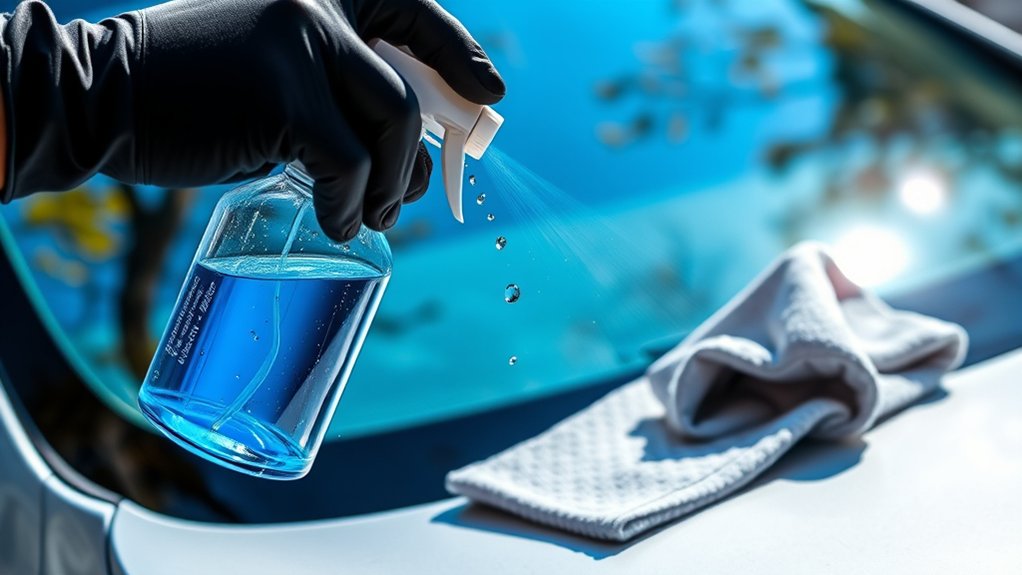
Choosing the right car window cleaner is important because using the wrong product can cause long-term damage to your vehicle’s glass and coatings.
Automotive glass cleaners are specifically made to give you streak-free glass without harming your window tint or protective layers. Unlike household cleaners like Windex, which have harsh chemicals, car-specific cleaners are ammonia-free, so they won’t damage window films, adhesives, or seals.
Picking the right cleaner helps keep your windows crystal clear and preserves their hydrophobic coatings. These coatings improve visibility and protect your glass from dirt and water.
Using the proper product also helps maintain the integrity of these protective layers, preventing fogging or streaks that can reduce safety. When you choose a good automotive glass cleaner, you protect your investment and enjoy clear, streak-free visibility every time.
How to Prepare Your Car and Tools for Safe Cleaning
Start by gathering all your cleaning supplies, like spray bottles, microfiber cloths, and a brush or compressed air, to keep everything organized.
Check your windows for dirt or debris to prevent scratching during cleaning.
Finally, park your car in a shaded area to slow down the cleaner’s drying process and avoid streaks.
Gather Proper Cleaning Supplies
Have you gathered the right supplies to guarantee a safe and effective window cleaning process? Proper preparation starts with collecting the essential cleaning supplies.
Use automotive glass cleaner that’s ammonia-free to protect your tint and coatings. Keep soft microfiber cloths designed for automotive glass nearby to prevent scratches and ensure a streak-free finish.
Prepare a dedicated spray bottle filled with cleaner, separate from household products, to avoid cross-contamination. Make sure your proper tools include a clean, shaded spot for your vehicle to prevent quick-drying cleaner and streaks.
- Automotive glass cleaner for safe, streak-free results
- Microfiber cloths for gentle, scratch-free cleaning
- Proper tools to streamline your cleaning process
- A clean spray bottle for precise application
- A shaded area to prevent streaking
Inspect Window Surface
Before you start cleaning your car windows, it’s important to inspect the surface for any chips, cracks, or damage. Damaged glass can get worse during cleaning, so check carefully. Look for signs of damage that might need professional repair first.
Use a clean, soft microfiber cloth or a dedicated glass cleaning tool to avoid scratches. Remove loose debris, dirt, or dust with a gentle brush or compressed air before applying cleaner.
Here’s a quick guide:
| Step | What to Do | Why it Matters |
|---|---|---|
| Inspect | Look for chips or cracks | Prevents damage from worsening |
| Remove debris | Brush or blow off dust | Ensures thorough cleaning |
| Check cleaner | Use ammonia-free, automotive cleaner | Protects tint and coatings |
This simple step keeps your cleaning safe and effective.
Prepare in Shade
Cleaning your car windows in a shaded area is essential to get a streak-free finish. A shaded environment helps your cleaning products from drying too quickly, so you avoid streaks and missed spots.
Park your car away from direct sunlight and wait for the surface to cool down if it’s been in the sun. Make sure the windows are cool to the touch before applying any cleaning products. This prevents evaporation and uneven cleaning.
Using a shaded workspace lets you see your progress clearly and reduces fogging issues. It also ensures your cleaning products work effectively and helps you maintain a cool surface for even cleaning.
Plus, you’ll be able to see every detail clearly during the process and protect your car’s finish from heat damage.
How to Pick an Ammonia-Free, Auto-Safe Glass Cleaner
When choosing a glass cleaner, look for labels that clearly say “ammonia-free” to protect your window tint and coatings.
Check the ingredients for water-based, non-abrasive formulas that are free of harsh solvents and dyes.
Make sure the product is formulated for automotive use.
Reputable brands with clear instructions and safe labels help guarantee you’re using a product that resists streaks and won’t damage your windows.
Ingredients to Avoid
Choosing an auto-safe glass cleaner means paying close attention to its ingredients. You want to avoid harsh chemicals that can damage your vehicle’s protective layers or tint film.
Steer clear of household cleaners like Windex, which often contain ammonia, even if they’re labeled as “safe for tinted windows.” These ammonia-free products are designed to be gentler but still require careful ingredient checks.
Watch out for harmful substances such as acetone, bleach, or strong solvents. They can cause tint bubbling, cracking, or discoloration over time.
To keep your windows pristine and protected, select cleaners with water-based formulas and gentle surfactants. Always read labels and reviews to ensure the product is specially formulated for automotive glass and safe for your vehicle’s delicate coatings.
Benefits of Ammonia-Free
Opting for an ammonia-free glass cleaner is a smart choice for maintaining your vehicle’s windows and tints. An ammonia-free auto glass cleaner is specially formulated to be gentle yet effective, providing streak-free results without risking damage to your vehicle glass or window tint protection.
These cleaners avoid harsh chemicals that can cause bubbling, cracking, or fading of window films over time. Instead, they use gentle, quick-evaporating ingredients that preserve the integrity of factory coatings, UV layers, and hydrophobic surfaces.
Choosing an auto-safe, ammonia-free cleaner guarantees long-term clarity and protection for your vehicle’s glass. It makes it easier to keep your windows spotless without compromising their condition.
This approach helps maintain your car’s appearance and the longevity of your window tints.
Recognizing Safe Labels
To guarantee you’re selecting a truly safe glass cleaner for your vehicle, it’s essential to pay close attention to the labels and packaging. Look for labels that clearly state “ammonia-free” to protect tinted windows and coatings.
Choose auto glass cleaners designed specifically for vehicle use, ensuring compatibility with tint and sensitive glass surfaces. Carefully read the ingredient list to avoid harmful chemicals like ammonia, alcohol, or aggressive solvents that can damage your window films.
Check customer reviews and manufacturer recommendations to confirm safety and effectiveness. Opt for auto-specific glass cleaners with certifications or endorsements from automotive safety organizations.
Feel confident in your choice with clear, trustworthy labels. Protect your investment with proven safe formulas. Safeguard coatings and glass care routines.
Avoid costly damage from damaging chemicals. Trust products backed by automotive experts.
Step-by-Step: Cleaning Your Car Windows Without Streaks or Damage
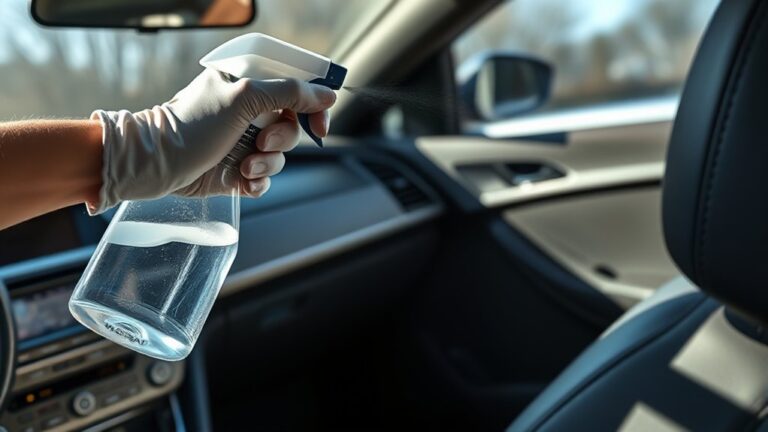
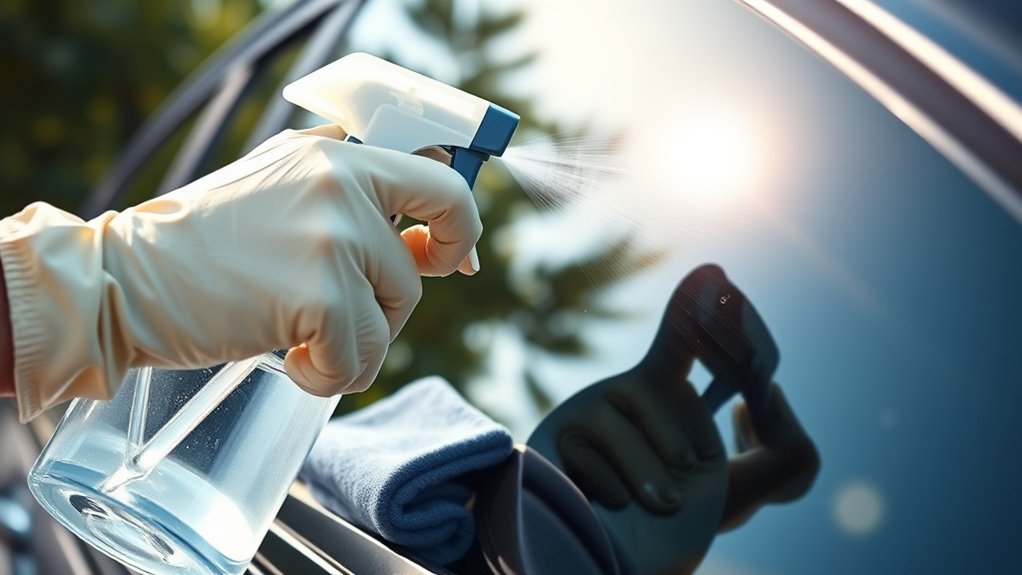
Cleaning your car windows without leaving streaks or causing damage requires a careful, systematic approach. First, spray the auto glass cleaner onto a clean microfiber towel rather than directly onto the glass. This prevents oversaturation and protects any coatings on the glass.
Wipe the glass in a top-to-bottom or quadrant pattern to guarantee even cleaning and avoid missed spots. Use gentle, overlapping motions, especially around edges and tint film, to prevent swirl marks and streaks.
After cleaning, buff the glass with a dry microfiber towel to remove residue and achieve a streak-free shine. If possible, clean in shaded areas or during cooler parts of the day to reduce quick evaporation, which can cause streaks.
Following these steps helps keep your auto glass clear and protected.
Top Mistakes to Avoid When Cleaning Your Car Windows
Many common mistakes can ruin your car window cleaning results and even damage the glass or tint. Using household glass cleaner with ammonia on tinted windows can cause fading, bubbling, and peeling.
Spraying cleaner directly onto the glass instead of onto a microfiber cloth often leads to streaks and uneven results. Relying on abrasive materials like paper towels or rough cloths can scratch the glass and leave swirl marks.
Cleaning windows in direct sunlight allows the cleaner to dry too quickly, creating streaks and foggy spots. Over-saturating the glass or applying too much pressure can damage coatings and reduce clarity.
To avoid these mistakes, always choose the right cleaner, use soft cloths, and clean in shaded areas. Protect your windows from common errors that can ruin their clarity and appearance.
Tips to Keep Your Windows Clear and Smudge-Free Over Time
Maintaining clear, smudge-free windows takes consistent effort and the right techniques. Use a dedicated automotive glass cleaner that’s ammonia-free to avoid damaging your tint and coatings.
Keep your windows spotless with ammonia-free cleaner and proper technique for a streak-free shine.
Spray the cleaner onto a clean microfiber cloth, not directly onto the window. This helps control the application and reduces the chances of streaks.
Follow a systematic cleaning pattern—top to bottom and left to right—to make sure every area gets cleaned thoroughly. Use two separate microfiber cloths: one for applying the cleaner and another for buffing.
This method helps you achieve a streak-free, crystal-clear finish. Clean your windows in the shade to prevent the cleaner from evaporating too quickly, which can cause streaks or fogging.
Sticking to these tips will keep your automotive glass clear and smudge-free over time.
Frequently Asked Questions
Is Glass Cleaner Safe to Use on a Car?
Yes, glass cleaner is safe to use on your car if you pick the right kind. Look for automotive-specific, ammonia-free cleaners made for vehicle windows.
Avoid household glass cleaners with ammonia because they can damage tint and coatings over time. Always check the label before applying.
Use a soft, clean cloth to prevent scratches. Regularly cleaning with the proper product helps keep your visibility clear and protects your car’s windows.
How to Properly Clean Car Windows With Glass Cleaner?
Think of cleaning your car windows as painting a masterpiece—every stroke counts. Spray glass cleaner onto a microfiber cloth, not directly on the glass. Then, clean in neat, overlapping lines across each quadrant.
Work in the shade or on a cool day to prevent streaks. Always buff with a dry cloth afterward for that crystal-clear finish. Your windows will sparkle like a mirror reflecting pure perfection.
What Do Professionals Use to Clean Car Windows Without Streaks?
Professionals use ammonia-free, automotive-specific glass cleaners to avoid streaks and damage. They apply the cleaner onto a clean, lint-free microfiber cloth instead of spraying directly onto the glass. This helps prevent oversaturation and drips.
They work systematically, section by section, and use multiple cloths—one for applying the cleaner and another for buffing. This ensures a streak-free, crystal-clear finish every time.
Cleaning in shaded areas and avoiding circular motions also help achieve the best results, leaving your windows spotless and streak-free.
How Do Auto Detailers Clean Glass?
Think of cleaning your car windows like polishing a gem—you want clarity and brilliance. Auto detailers spray ammonia-free, automotive-specific glass cleaner onto a lint-free microfiber cloth, not directly on the glass.
They work systematically in sections, wiping in overlapping motions and paying special attention to edges and wiper tracks.
Finally, they buff with a dry cloth, revealing a streak-free, crystal-clear surface that shines like a jewel.
Conclusion
Think of cleaning your car windows like tending to a delicate garden. Using the right tools, gentle care, and patience will help you keep your view crystal clear, just like a pristine pond reflecting the sky.
Avoid rushing or using harsh chemicals. Instead, opt for a glass cleaner specifically designed for car windows and use a soft, clean cloth. This way, you’ll prevent streaks and scratches.
Remember, a little careful attention today guarantees your view remains unobstructed tomorrow. Safely using glass cleaner on your car windows keeps them bright and clear for miles ahead.