How to Use All-Purpose Cleaner Safely on My Car Exterior
Many car owners want that sleek, shiny exterior but often feel overwhelmed about the best way to clean it safely. You’re not alone—figuring out how to use all-purpose cleaner without causing damage can be tricky. Luckily, with the right steps, you can keep your car looking its best without stress.
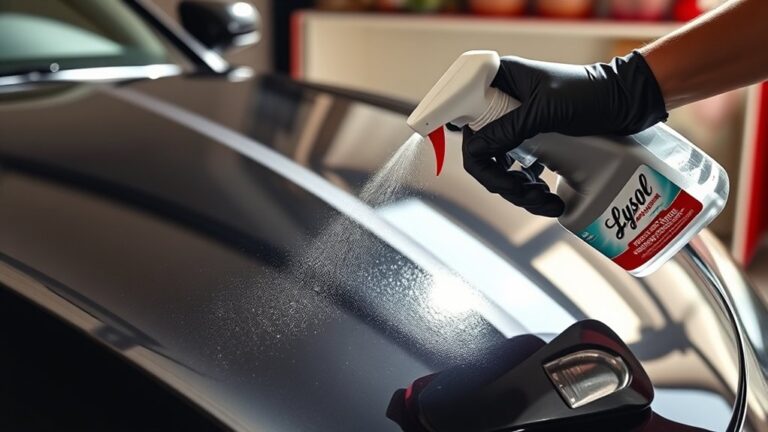
To use all-purpose cleaner safely on your car’s exterior, start by verifying it’s suitable for automotive use and dilute it as instructed, usually between 1:1 and 1:4.
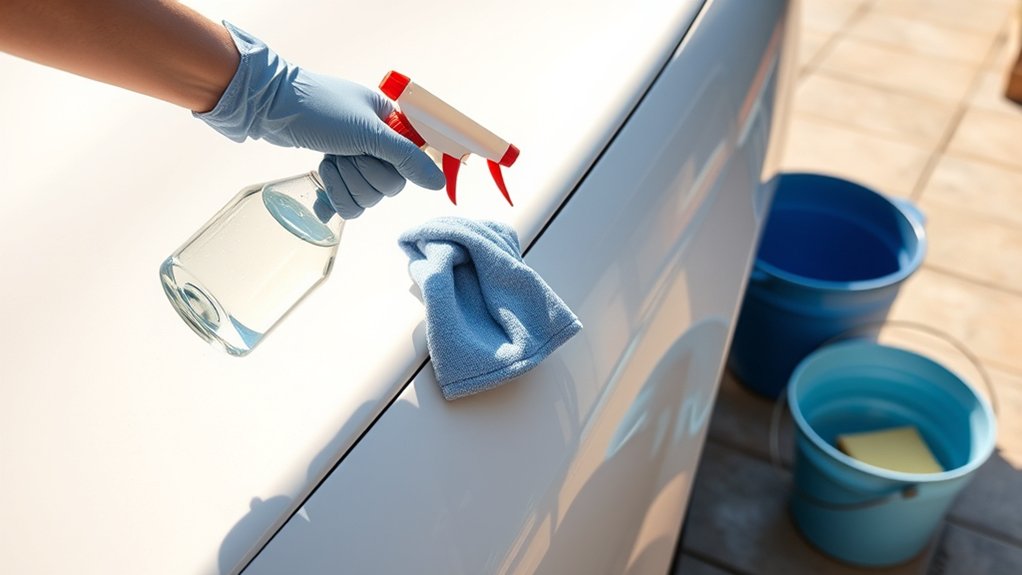
Rinse the car thoroughly, then gently apply the cleaner with a soft sponge or microfiber cloth, working in sections. Rinse each area well and dry with a clean microfiber towel to prevent streaks.
If you want to avoid damage or missed spots, there’s more to take into account as you continue.
Key Takeaways
- Avoid using all-purpose cleaner in direct sunlight because it can cause streaks and may damage the surface.
- Before applying it all over, test the cleaner on a small, hidden spot. That way, you can see if it causes any unwanted reactions.
- Make sure to dilute the all-purpose cleaner as the manufacturer recommends. This helps keep it gentle on your car’s paint.
- Use a soft sponge or microfiber cloth to apply the cleaner. Work in sections to avoid leftover residue.
- After cleaning, rinse thoroughly with water. This ensures all the cleaner is removed and helps prevent streaks or a dull finish.
Why Is Using the Right All-Purpose Cleaner Important for Your Car?
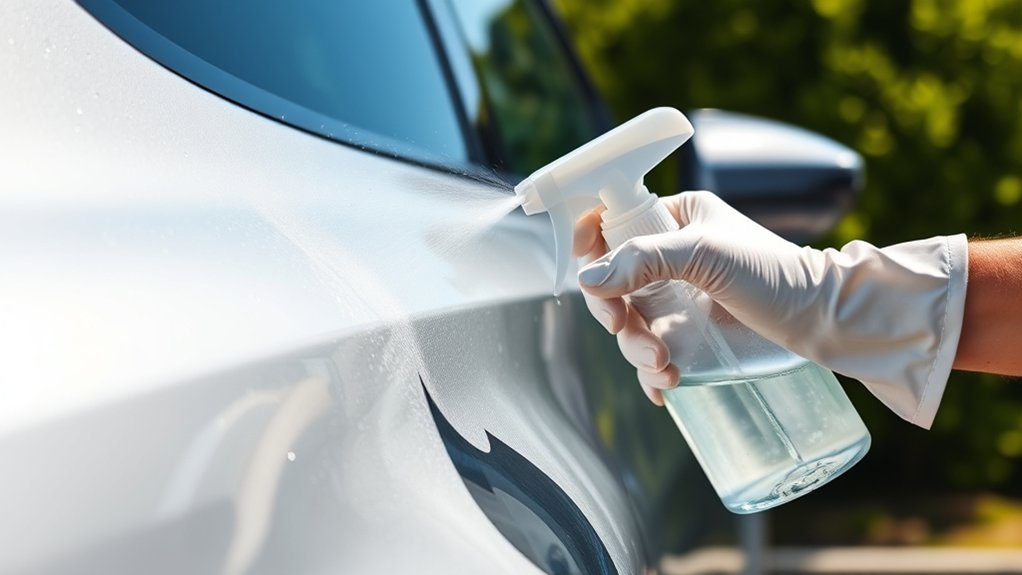
Why is it so important to choose the right all-purpose cleaner for your car? Because using the wrong one can damage your vehicle’s paint, trim, or clear coat.
Some cleaners have harsh chemicals that might strip away protective layers or cause discoloration, leading to costly repairs. The right cleaner, on the other hand, is specially formulated to be effective yet gentle on automotive surfaces.
It ensures dirt, grime, and stains come off without harming your car’s finish. Plus, a suitable all-purpose cleaner helps maintain your vehicle’s resale value by keeping it looking good over time.
Choosing the correct product means you’ll clean safely and efficiently, avoiding accidental damage and helping your car stay its best longer.
How to Choose Safe, Automotive-Grade All-Purpose Cleaners
When choosing an all-purpose cleaner for your car, make sure it’s compatible with automotive finishes to avoid any damage.
Check the ingredient label to confirm it’s safe and free from harsh chemicals that could harm your paint or clear coat.
Stay away from cleaners with strong abrasives or corrosive ingredients to keep your car’s exterior looking its best.
Verify Automotive Compatibility
To make sure you’re using a safe all-purpose cleaner on your car, start by checking if it’s labeled as automotive-grade or designed for vehicle use. Automotive-grade cleaners are made to be safe on car paints and finishes, helping to reduce the risk of damage.
Read the label carefully for terms like “car-safe” or “specifically made for vehicles.” Avoid household or industrial cleaners that aren’t meant for automotive surfaces, as they may contain harsh chemicals that could harm your paint or clear coat.
If you’re unsure, check the manufacturer’s instructions or contact the company directly. Using an approved automotive cleaner helps ensure compatibility and keeps your vehicle’s exterior protected from potential damage caused by incompatible cleaning agents.
Check Ingredient Safety
Always check the ingredient list to guarantee the cleaner is safe for automotive use. Look for products specifically labeled as safe for cars or automotive surfaces.
Avoid cleaners containing harsh chemicals like ammonia, bleach, or high concentrations of acids, as these can damage your paint or clear coat.
Instead, opt for gentle, biodegradable ingredients that are effective yet safe for your vehicle’s exterior. Check for labels indicating the product is non-abrasive and pH-balanced.
Reading the ingredient list helps you identify potentially harmful substances before applying the cleaner to your car. If you’re unsure about an ingredient, research it or consult your vehicle’s manufacturer recommendations.
Using a safe, automotive-grade cleaner protects your car’s finish while ensuring effective cleaning without risking damage or discoloration.
Avoid Harsh Chemicals
Choosing the right all-purpose cleaner means avoiding harsh chemicals that can harm your car’s finish. Look for products labeled as safe for automotive use or specifically designed for cars.
Avoid cleaners with strong acids, alkalis, or solvents like ammonia and bleach, which can strip paint and damage clear coats. Instead, go for mild, biodegradable formulas that clean effectively without aggressive ingredients.
Check the ingredient list to make sure it doesn’t contain irritants or harmful chemicals. Using a cleaner with gentle, car-safe ingredients helps preserve your vehicle’s paint and finish over time.
Getting Your Car Ready for Exterior Cleaning
Before you start cleaning your car’s exterior, it’s important to give it a good rinse to remove loose dirt and debris. Use a hose with a gentle spray to cover the whole surface, focusing on the wheel wells and lower panels where dirt tends to build up. This step helps prevent scratching the paint while you clean.
If you spot stubborn mud or bugs, gently scrub those areas with a soft brush or sponge. Be sure to remove any loose leaves, twigs, or debris that might scratch the surface later. After rinsing, lightly dry the car with a microfiber cloth if water spots start to appear.
Preparing your car this way makes the cleaning process safer and more effective. It also helps protect your paint and keeps your car looking its best.
How to Dilute and Apply All-Purpose Cleaner Safely
To use all-purpose cleaner safely, you need to get the right dilution ratio for your car’s surface. Follow the instructions on the label carefully, and avoid using it straight from the bottle.
When applying, use gentle techniques to prevent damage and guarantee even coverage.
Proper Dilution Ratios
Using the right dilution ratio is key for safe and effective cleaning. Check your cleaner’s label for recommended ratios—these usually range from 1:1 to 1:4 (cleaner to water).
For light dirt, go with a more diluted mix like 1:4 to avoid damage and save product. For tougher grime, a 1:1 ratio works better but still isn’t harsh.
Always measure carefully with a clean spray bottle or measuring cup. Too concentrated can strip paint or cause streaks, while too diluted might not clean well.
Test your mixture on a small, hidden area first. Adjust the ratio based on how dirty your car is, making sure you use enough cleaner without risking damage.
Proper dilution maximizes cleaning power while keeping your car’s exterior safe.
Safe Application Techniques
Proper dilution and careful application are essential to guarantee your car’s exterior stays safe during cleaning. Always follow the manufacturer’s instructions for mixing the all-purpose cleaner to prevent damage.
Before applying, rinse your car with water to remove loose dirt. Use a soft sponge or microfiber cloth to apply the diluted cleaner gently, working in small sections.
Avoid scrubbing too hard, which can scratch the paint. Keep the cleaner away from delicate areas like rubber seals and vents.
Rinse each section thoroughly with water before moving on to the next to prevent streaks and residue buildup. After cleaning, dry your car with a clean microfiber towel to prevent water spots.
Proper technique guarantees your car stays spotless without risking damage.
Common Mistakes to Avoid When Using All-Purpose Cleaner on Your Car
One common mistake is applying all-purpose cleaner directly to a dirty or hot surface, which can cause streaks or damage the paint. Always pre-wash and cool your car before applying cleaner to prevent streaking and paint damage.
Using too much cleaner can also lead to residue build-up, making surfaces look dull. Moreover, neglecting to test the cleaner on a small area may cause discoloration or damage.
Skipping the pre-wash allows dirt to get trapped beneath the cleaner, which can scratch the paint. Always follow the manufacturer’s instructions to avoid potential damage or ineffective cleaning.
Rinsing and Drying Your Car Properly After Cleaning
After cleaning, gently rinse your car to remove all soap and cleaner residue. Be careful not to scratch the surface while rinsing.
Dry your vehicle with a microfiber towel to avoid water spots and streaks. Use soft, blotting motions to keep your car looking its best.
Gentle Rinsing Techniques
To guarantee your car’s paint stays shiny and scratch-free, it’s essential to rinse it gently and dry it properly after cleaning. Use a soft hose or a gentle spray nozzle to rinse, avoiding high-pressure jets that can cause scratches.
Work from the top of the car downward, ensuring dirt and soap are washed away gradually. Be patient and thorough, paying attention to crevices and panels.
When rinsing, keep the water flow steady but gentle; avoid sudden sprays or direct force. This careful approach prevents damaging the paint or pushing debris into the surface.
After rinsing, promptly move to drying to prevent water spots. Proper rinsing techniques protect your car’s finish and keep it looking its best.
Proper Drying Methods
Once you’ve rinsed your car thoroughly, focus on drying it properly to prevent water spots and streaks. Use a clean, absorbent towel or chamois to gently blot and wipe the surface.
Start at the top and work your way down, making sure all water drips are absorbed. Avoid letting water sit on the paint because minerals can cause spots.
Use light, consistent pressure to prevent scratching. If water beads remain, re-wipe those areas to remove any leftover moisture.
For larger or stubborn water droplets, a microfiber cloth can help you get a streak-free finish. Proper drying not only makes your car look shiny but also protects the paint from mineral deposits that could damage it over time.
Use of Microfiber Towels
Microfiber towels are essential tools for rinsing and drying your car effectively. They absorb water quickly and help prevent scratches that can happen with other materials. Use a clean, dry microfiber towel to gently blot or wipe your car’s surface after rinsing. For the best results, switch towels if they become too wet or dirty.
| Step | Tip | Why |
|---|---|---|
| Rinsing | Use a gentle spray to remove soap | Prevents streaks and spots |
| Drying | Pat the surface instead of rubbing | Avoid scratches and swirl marks |
| Towel Maintenance | Wash microfiber towels regularly | Keeps them effective |
How to Check for Damage or Residue Post-Cleaning
After you finish cleaning your car’s exterior, it’s important to carefully inspect the surface for any signs of damage or leftover residue. Check the paint for scratches, discoloration, or dull patches that might indicate damage. Also, look for streaks, spots, or film that could suggest residue still exists. Good lighting helps reveal any inconsistencies or leftover cleaner.
Consider these steps:
- Gently run your hand over the surface to feel for roughness or sticky spots.
- Look closely for streaks or uneven coloring.
- Inspect crevices and around trims for missed residue.
- Use a clean microfiber cloth to wipe and double-check for any remaining residue or smudges.
This careful inspection helps ensure your car looks flawless and stays protected.
Best Tools and Products to Enhance Your Car Exterior Cleaning
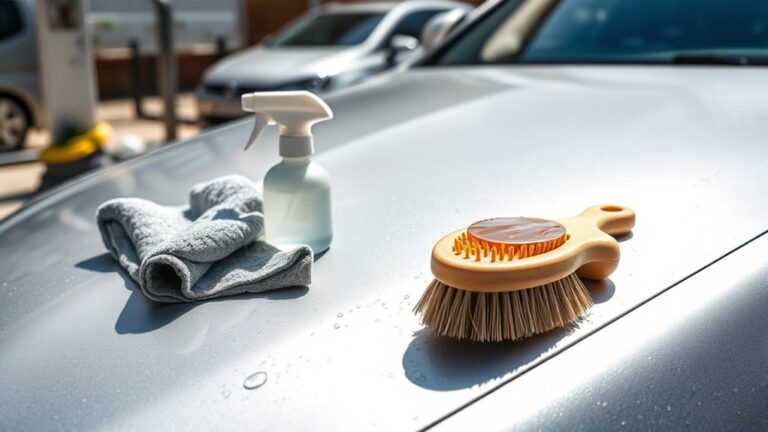
To achieve a spotless, professional-looking finish, choosing the right tools and products can make all the difference. Start with a high-quality microfiber wash mitt or sponge, which lifts dirt without scratching your paint.
Use a dedicated car wash soap or a gentle all-purpose cleaner formulated for automotive surfaces. These are more effective and safer than household cleaners.
A soft-bristled wheel brush helps clean wheels and tires thoroughly, while a foam cannon or spray gun can evenly distribute cleaning solutions for larger areas.
For drying, use a microfiber drying towel to prevent water spots. Moreover, investing in a clay bar can remove embedded contaminants, leaving your paint smooth.
These tools and products work together to improve your cleaning process and protect your car’s exterior.
When Should You Avoid Using All-Purpose Cleaner on Your Car?
All-purpose cleaners are versatile, but there are times when using them on your car can do more harm than good. You should avoid using them in these situations:
- On delicate paint finishes. They can strip protective coatings or cause dullness, which isn’t great for your car’s look.
- On rubber or plastic trim. Some formulas might cause fading or cracking over time, so be cautious.
- In direct sunlight. Hot surfaces make the cleaner dry quickly, leaving streaks or spots that are hard to remove.
- On heavily stained or greasy areas. They might not be strong enough, and you’ll need specialized cleaners for proper cleaning.
Using all-purpose cleaner improperly can damage your car’s exterior. It’s often better to choose products made specifically for automotive surfaces. When unsure, test on a small, hidden spot first to be safe.
What to Do If Your Car’s Paint Gets Damaged During Cleaning
If you notice your car’s paint shows signs of damage during cleaning, it’s important to act quickly to minimize further harm. Stop washing right away and carefully inspect the affected area.
Rinse the damaged spot with clean water to wash away any residual cleaner or debris. Avoid scrubbing, as this can make the damage worse.
Rinse gently with water and avoid scrubbing to prevent further paint damage.
If you see scratches or chips, consider applying touch-up paint that matches your car’s color. For deeper damage, it’s best to seek professional repairs to prevent rust or bigger issues.
It’s also a good idea to take photos of the damage for insurance purposes, just in case you need to file a claim.
Moving forward, switch to gentler cleaning methods. Use a pH-balanced car wash soap and soft microfiber cloths to protect your paint.
Regular maintenance and careful cleaning will help keep your car’s paint looking good and prevent damage in the future.
Frequently Asked Questions
Can All-Purpose Cleaner Remove Stubborn Stains From My Car’s Exterior?
Yes, all-purpose cleaner can help remove stubborn stains from your car’s exterior. Just apply it directly to the stained area and let it sit for a few minutes.
Then, gently scrub with a soft brush or cloth. Be sure to rinse thoroughly with water afterward to prevent any residue from lingering.
However, be cautious about how strong the cleaner is. It’s a good idea to test it on a small, hidden spot first to make sure it won’t damage your car’s paint.
Is It Safe to Use All-Purpose Cleaner on Tinted Windows?
Using all-purpose cleaner on tinted windows isn’t recommended because it can damage the tint film. The chemicals might cause discoloration or peeling over time.
If you need to clean your tinted windows, go for a gentle glass cleaner made specifically for tinted surfaces. Always spray the cleaner onto a soft cloth first.
Then, wipe gently to avoid scratching or harming the tint. This way, you keep your windows clean without risking damage.
How Often Should I Clean My Car’s Exterior With All-Purpose Cleaner?
You should clean your car’s exterior with all-purpose cleaner once every two to four weeks. Regular cleaning helps get rid of dirt, grime, and pollutants that can harm your paint over time.
But be careful not to over-clean, as that can strip away protective coatings. Always read the cleaner’s instructions and try it on a small area first.
When cleaning, use a soft cloth or sponge, rinse well, and dry thoroughly. This helps prevent water spots and streaks, leaving your car looking great.
Can All-Purpose Cleaner Harm My Car’s Rubber or Plastic Trim?
All-purpose cleaner can harm your car’s rubber or plastic trim if you don’t use it correctly.
To prevent damage, avoid letting the cleaner sit on these surfaces for too long, and always rinse thoroughly afterward.
It’s best to test a small, hidden area first.
When used properly, the cleaner cleans effectively without causing harm, keeping your car looking fresh without risking damage to the trim.
What Should I Do if I Accidentally Use Too Much Cleaner?
If you accidentally use too much cleaner, rinse the area thoroughly with water immediately. Use a gentle spray or a damp cloth to wash away the excess cleaner and prevent potential damage.
Then, dry the surface with a clean, soft towel. If you notice any residue or streaks, just repeat the rinsing process.
Acting quickly helps protect your car’s paint, trim, and other surfaces from harm caused by the excess cleaner.
Conclusion
Remember, your car’s exterior is like a canvas waiting to shine—gentle care and the right cleaner are your brushes. When using all-purpose cleaner, choose one that’s safe for automotive paint and follow the instructions carefully.
Apply the cleaner with a soft sponge or microfiber cloth, using gentle motions. This helps protect the paint and keeps your car looking its best. Avoid harsh scrubbing or using household cleaning products that aren’t meant for cars.
By selecting the right all-purpose cleaner and applying it properly, you protect your car’s beauty like a guardian of a precious gem. Skipping steps or rushing can cause damage, so take your time.
Remember, using all-purpose cleaner safely on your car exterior is key to maintaining its shine. Treat it with respect, and your car will reward you with a radiant, lasting glow that tells your story of care.