How to Use 70 Second Cleaner Safely on My Car
If you’ve ever tried to give your car a quick shine and ended up with streaks or missed spots, you’re not alone. Many car owners struggle to find a safe and effective way to clean their vehicles without damaging the paint or wasting time.
That’s where 70 Second Cleaner comes in — a handy product designed to make car cleaning easier and safer.
To use 70 Second Cleaner safely on your car, start by preparing your workspace in a shaded, well-ventilated area and gather all supplies.
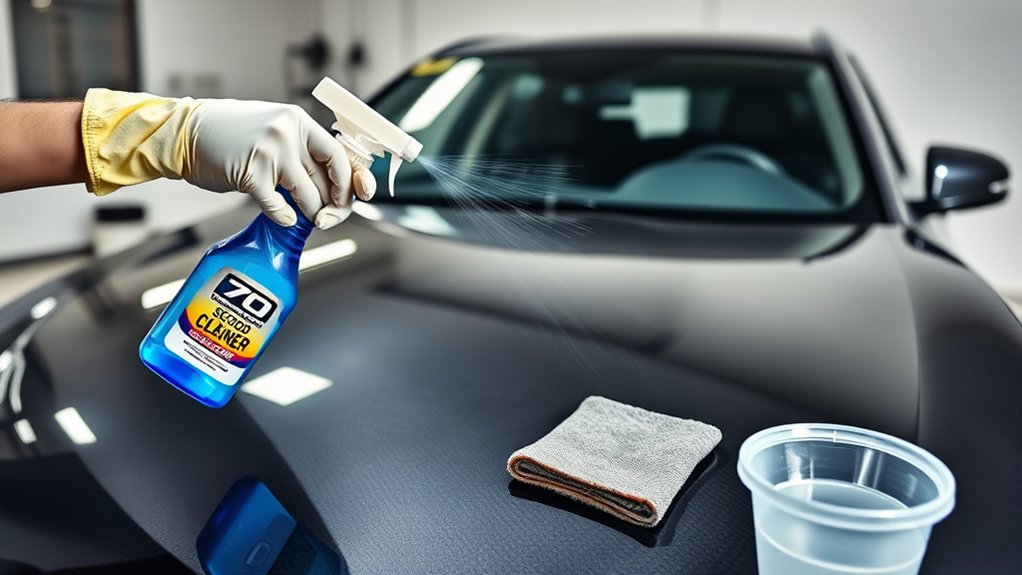
Shake the bottle well, hold the nozzle about six inches from the surface, and spray a light, even coat without oversaturating. Let it sit for about 70 seconds, then wipe with a microfiber cloth in small sections.
Avoid mistakes like cleaning in direct sunlight or using rough cloths to prevent damage—keep going to learn more tips.
Key Takeaways
- Shake the cleaner bottle well before use to make sure everything’s mixed properly.
- Hold the spray about six inches from the car surface and give it a light, even coat.
- Let the cleaner sit for around 70 seconds—don’t wipe it off too soon.
- Use a microfiber cloth to wipe in small sections, and avoid oversaturating the area.
- Make sure you’re working in a well-ventilated space, wear gloves, and try to avoid cleaning in direct sunlight.
What You Need to Know About Using 70 Second Cleaner Safely
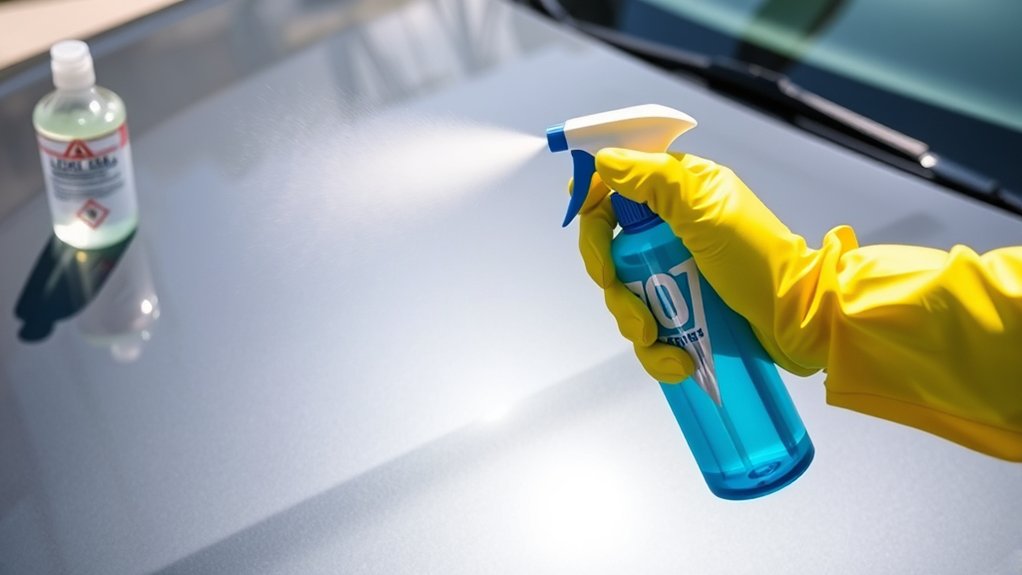
Before using 70 Second Cleaner on your car, it’s important to know how to do it safely. Always wear gloves to protect your skin from chemicals, and work in a well-ventilated area to avoid inhaling fumes.
Always wear gloves and work in a ventilated area for safe car cleaning with 70 Second Cleaner.
Read the product label carefully, paying attention to any warnings or instructions. Test the cleaner on a small, hidden spot first to make sure it won’t damage or discolor your paint.
Avoid using it on hot surfaces or in direct sunlight, since this can cause the cleaner to evaporate quickly or leave stains. Keep the cleaner away from your eyes and mouth, and wash your hands afterward.
Following these safety tips helps protect both you and your vehicle, ensuring a safe and effective cleaning experience.
Preparing Your Car and Workspace Before Cleaning
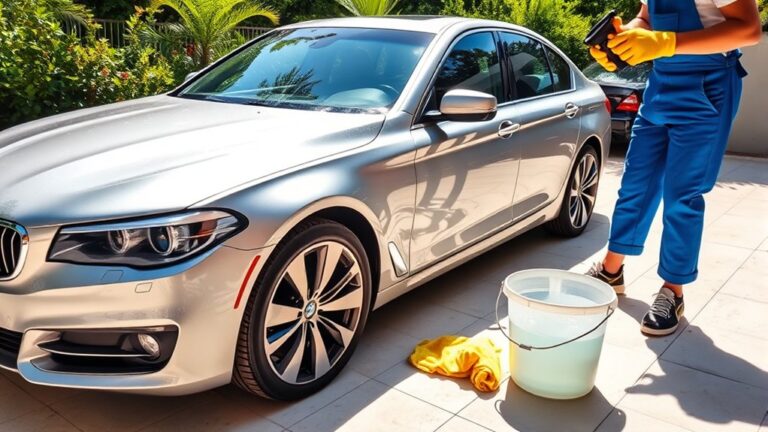
Getting your car and workspace ready sets the stage for a smooth cleaning process. First, park your car in a shaded area away from direct sunlight to prevent quick drying of cleaner. Clear the area of any clutter and ensure good ventilation.
For the workspace, gather all supplies—cleaners, microfiber towels, and gloves—and lay them out within easy reach. Protect surrounding surfaces with drop cloths or old sheets if needed.
| Item | Purpose | Tips |
|---|---|---|
| Microfiber Towels | For wiping and drying | Use multiple for best results |
| Gloves | Protect your skin | Wear to avoid irritation |
| Drop Cloths | Protect surrounding areas | Prevent accidental spills |
How to Apply 70 Second Cleaner the Right Way
Once your workspace is set up and your car is ready, it’s time to apply the 70 Second Cleaner. Shake the bottle well to make sure the formula is mixed properly.
Hold the spray nozzle about six inches from the surface you want to clean. Spray a light, even coat onto the area, covering dirt and grime thoroughly. Be careful not to oversaturate, as too much product can be wasteful or cause streaks.
Let the cleaner sit for about 70 seconds to break down the dirt. During this time, don’t touch or wipe the area. Once the time is up, use a clean microfiber cloth or sponge to wipe away the cleaner and loosened debris.
Work in small sections for the best results and make sure to be gentle but thorough in your wiping.
Common Mistakes to Avoid During Car Cleaning
One common mistake to avoid is oversaturating the surface with cleaner, which can lead to streaks or waste product. Using too much doesn’t improve cleaning and makes it harder to wipe off completely. Always apply the cleaner sparingly and evenly.
Another mistake is neglecting to test the product on a small area first. This helps you confirm it won’t damage your car’s finish. Also, avoid cleaning in direct sunlight, as heat can cause the cleaner to dry too quickly, leaving streaks.
Rushing through the process can result in missed spots and uneven cleaning. Finally, don’t forget to use soft, microfiber cloths to prevent scratching the surface. Taking your time and following proper technique guarantees a safer, more effective cleaning experience.
How to Spot and Fix Damage After Cleaning
After cleaning your car, it’s important to carefully examine the surface for any signs of damage or imperfections that may have occurred during the process. Look closely for scratches, swirl marks, or discoloration, especially in areas where the cleaner was applied more vigorously.
If you notice damage, don’t panic. Some issues can be fixed easily. Use a microfiber cloth to gently buff out minor scratches or spots, and consider applying a touch-up paint for deeper scratches.
Avoid aggressive scrubbing, which can make the damage worse. Regularly inspecting your car helps catch problems early and prevents long-term harm.
Check for areas with unusual shine or dullness to spot potential issues. Test small sections first before applying any repair products to ensure they won’t cause further damage.
For deep or extensive damage, it’s best to seek professional help. Catching problems early makes a big difference in keeping your car looking great.
Tips to Protect Your Car’s Finish Long-Term
To keep your car’s finish looking great long-term, focus on proper application techniques and consistent maintenance.
Applying products correctly helps prevent damage and ensures you get lasting protection. It’s all about doing it right the first time.
Regular cleaning and waxing are key to preserving that shiny look. Plus, they help shield your vehicle from environmental harm.
Proper Application Techniques
Applying the 70 Second Cleaner correctly is key to protecting your car’s finish over time. Start with a clean, dry surface to get the best results.
Spray the cleaner evenly across the area, but don’t oversaturate. Use a soft cloth or microfiber towel to gently wipe it in a circular motion. Work in small sections to make sure you cover everything thoroughly.
Proper technique helps lift dirt without scratching your paint. Always use a clean cloth to prevent transferring dirt, and try to work in shaded areas to avoid quick evaporation.
Follow the recommended dwell time to get the most cleaning power out of the product.
Regular Maintenance Practices
Maintaining your car’s finish over time means staying consistent with care and habits. Regular washing gets rid of dirt, grime, and contaminants that can damage the paint if you ignore them. Use a gentle, pH-balanced soap and soft microfiber cloths to avoid scratches.
Applying wax every few months creates a protective barrier. It shields your car from UV rays, bird droppings, and environmental pollutants. Whenever possible, park in shaded areas to cut down sun exposure.
Avoid harsh cleaning products that can strip the finish. Keep an eye out for chips or scratches, and fix them quickly to stop rust. Regular maintenance keeps your car looking great, boosts resale value, and helps your paint last longer.
Frequently Asked Questions
Is 70 Second Cleaner Safe for All Car Paint Types?
Yes, 70 Second Cleaner is generally safe for all car paint types when used as directed. It’s a good idea to test it on a small, hidden area first to make sure it works well with your paint.
Avoid applying it in direct sunlight or on hot surfaces, and don’t let it sit too long. Following the instructions carefully helps protect your car’s paint and makes sure you get a good clean without causing damage.
Can I Use 70 Second Cleaner on Tinted Windows?
Yes, you can use 70 Second Cleaner on tinted windows, but be careful. It’s a good idea to test a small, hidden area first to make sure it doesn’t cause any discoloration or damage.
Try not to let the cleaner sit on the tint for too long. Rinse thoroughly to remove any residue. If you see any adverse effects, stop using it right away.
Consider using a cleaner specifically designed for tinted windows if you notice any issues.
How Often Should I Use 70 Second Cleaner?
You should use 70 Second Cleaner once every couple of weeks or as needed, depending on how dirty your car gets.
Overusing it can cause streaks or damage to your car’s paint or windows. Always follow the manufacturer’s instructions and test on a small area first.
Regular cleaning helps maintain your car’s appearance without risking harm, so don’t go overboard.
Does 70 Second Cleaner Contain Any Harmful Chemicals?
Yes, 70 Second Cleaner contains chemicals that can be harmful if misused. It usually has surfactants, solvents, or other cleaning agents that might cause skin irritation or breathing problems.
To stay safe, always read the label, wear gloves, and use it in a well-ventilated area. Avoid inhaling fumes and keep it away from children and pets.
Handling it properly reduces health risks and ensures it cleans effectively.
Can I Use 70 Second Cleaner on Interior Surfaces?
Yes, you can use 70 Second Cleaner on your car’s interior surfaces. Just be sure to test a small, hidden spot first to check for any reactions or discoloration.
Spray lightly and wipe with a clean, soft cloth. Avoid oversaturating the area and keep the product away from electronic parts.
Make sure to ventilate your car during and after cleaning. This helps it dry properly and reduces any fumes.
Conclusion
Using 70 Second Cleaner safely can keep your car looking its best without damage. Just remember to prepare properly, apply it carefully, and avoid common mistakes. Proper cleaning can even extend your car’s paint life by up to 30%.
By following these tips, you’ll protect your car’s finish long-term and enjoy a spotless ride. Stay vigilant and take your time during each step. Your car will thank you with a brilliant shine that lasts, thanks to safe and effective use of 70 Second Cleaner.