Are Clorox Wipes Good for Cleaning Car Interior?
Many car owners find themselves wondering how to keep their vehicle clean and disinfected without damaging delicate surfaces. You’re not alone—finding the right cleaning products that are safe yet effective can be a real challenge.
Clorox wipes can be useful for disinfecting your car interior, but you should use them carefully. They’re safe on plastics and vinyl if you avoid excessive scrubbing and test in hidden areas first.
However, they may damage sensitive materials like leather and rubber, and strong chemicals can cause discoloration or cracking.
To keep your car safe, investigate better alternatives and tips—there’s more to learn that can help you clean effectively without harm.
Key Takeaways
- Clorox wipes are great for disinfecting hard plastic and vinyl surfaces inside your car.
- However, they can damage or discolor leather and rubber if you use them too much or in the wrong way.
It’s best to avoid using Clorox wipes on electronic components or delicate finishes.
Before cleaning the entire interior, try a small, hidden spot first. This helps you see if the material reacts negatively.
For regular cleaning, softer options like microfiber cloths with gentle cleaners are much safer.
Are Clorox Wipes Safe to Use Inside Your Car?
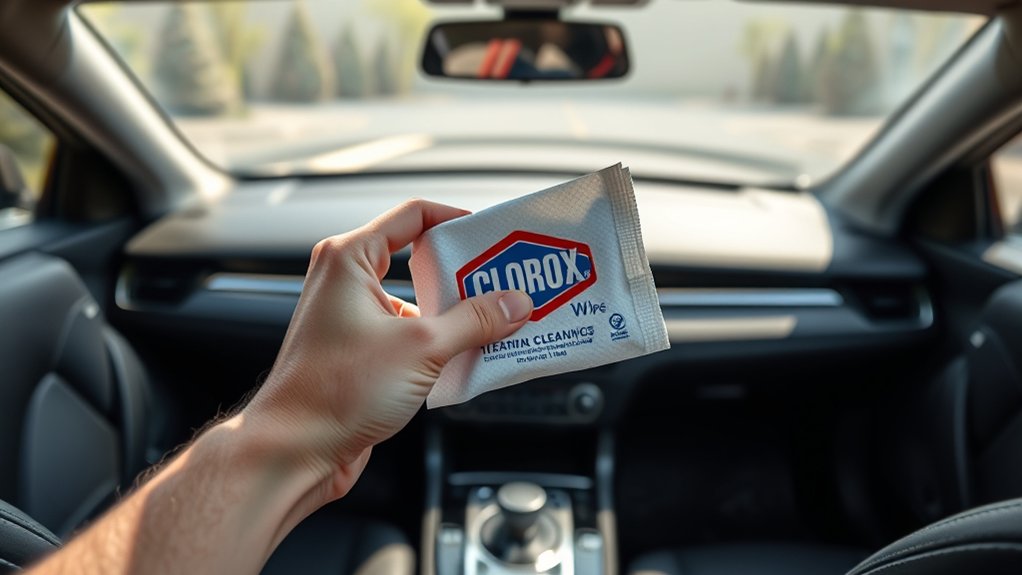
Are Clorox Wipes safe to use inside your car? Generally, yes, but with caution. Clorox Wipes contain disinfectants and chemicals that can effectively clean surfaces, but they may also harm certain materials in your car.
Clorox Wipes are generally safe for car surfaces but use with caution to prevent damage.
If you use them on plastic or vinyl surfaces, they’re usually safe. Just avoid excessive scrubbing or leaving wipes on delicate fabrics or leather for too long.
Always read the label for specific instructions and test a small, hidden area first to make sure no damage occurs. Keep the wipes away from electronic components, vents, and areas with sensitive finishes.
While they’re convenient for quick disinfecting, moderation and proper use are key. This way, your car interior stays clean without any unintended harm.
What Risks Do Household Cleaners Pose to Your Car Interior?
While household cleaners like bleach, ammonia, or multi-surface sprays seem handy for quick cleanup, they can pose significant risks to your car’s interior. These chemicals are often too harsh for surfaces like vinyl, leather, or fabric, causing deterioration, discoloration, or cracking.
They can also weaken adhesives holding parts together, leading to peeling or damage. Plus, strong fumes from these cleaners may linger, causing unpleasant odors or respiratory irritation.
If not properly diluted, they can even cause staining or surface corrosion. Using inappropriate cleaners risks compromising your car’s interior look and feel.
To keep your vehicle looking its best, it’s essential to choose products specifically designed for automotive use and follow manufacturer instructions carefully.
How Do Clorox Wipes Impact Different Car Surfaces?
Clorox wipes are convenient for quick surface cleaning, but their impact on different car surfaces can vary a lot. On hard plastics and vinyl, they usually work well, removing dirt and germs without causing damage if used sparingly.
On rubber or softer materials, frequent use can lead to drying, cracking, or fading over time. Leather surfaces are especially sensitive; the harsh chemicals can strip oils, which may cause dryness or discoloration.
Rubber and leather surfaces can be damaged by frequent Clorox wipe use, risking dryness, cracking, or discoloration.
Glass and metal surfaces typically tolerate wipes well, but you might end up with streaks or residue if you don’t wipe them clean. Always test a small area first and avoid scrubbing too hard.
A careful approach helps prevent damage while keeping your car interior clean and hygienic.
What Are Safer Alternatives to Clorox Wipes for Cleaning Your Car?
Looking for safer ways to clean your car interior without risking damage from harsh chemicals? You can choose gentle, natural cleaning options that work well and are less harmful.
Diluted vinegar solutions can disinfect surfaces without causing damage. Microfiber cloths are perfect for trapping dirt and grime without scratching. Castile soap mixed with water offers a versatile, gentle cleaner.
Adding essential oils like tea tree or eucalyptus provides natural antibacterial properties. Baking soda is also great for deodorizing and cleaning carpets or upholstery.
These alternatives help keep your car fresh and clean while avoiding the risks linked to strong chemicals.
How to Disinfect Your Car Without Causing Damage
To disinfect your car safely, choose gentle, effective disinfectants that won’t harm surfaces. This way, you can clean without worry.
Use proper cleaning techniques like lightly wiping and avoiding excessive moisture. This helps protect your interior from damage.
Pay attention to different surface types and select the right methods. That way, you keep your car clean without causing any harm.
Choosing Safe Disinfectants
Choosing the right disinfectant for your car interior is crucial to avoid damage while making sure germs are eliminated effectively. You want products that work well but are gentle on surfaces like plastic, leather, and fabric.
Look for disinfectants labeled safe for electronics and automotive use. Avoid harsh chemicals like bleach or ammonia, which can cause discoloration or deterioration of your car’s interior.
Instead, opt for options with proven effectiveness and low toxicity. Ingredients like isopropyl alcohol (at least 70%), hydrogen peroxide, or EPA-registered disinfectants formulated for sensitive surfaces are good choices.
Choose products labeled safe for automotive surfaces. Make sure they contain at least 70% alcohol for proper disinfection.
Avoid abrasive cleaners and harsh chemicals. Look for EPA-approved disinfectants for COVID-19, and consider fragrance-free options if you’re concerned about sensitivities.
Proper Cleaning Techniques
Start by removing loose dirt and debris from your car interior with a vacuum or soft brush to prevent scratching surfaces during cleaning. Use gentle, circular motions when wiping down dashboards, seats, and door panels. Avoid harsh scrubbing, which can damage delicate materials.
For a safer clean, choose cleaning products suitable for your surfaces and follow manufacturer instructions. Here’s a quick guide to help you pick the right method:
| Surface Type | Cleaning Tip |
|---|---|
| Plastic & Vinyl | Use a damp microfiber cloth and a mild cleaner |
| Leather & Upholstery | Opt for a specialized cleaner and avoid excess moisture |
| Glass & Mirrors | Wipe with a glass cleaner and a lint-free cloth |
| Dashboard & Controls | Lightly dampen a cloth and avoid excess liquid |
This approach ensures effective disinfection without harming your car’s interior.
Protecting Interior Surfaces
Disinfecting your car’s interior without causing damage requires careful attention to the cleaning methods and products you use. Always test a small, hidden area first to avoid unexpected reactions.
Use gentle cleaning solutions and avoid harsh chemicals that can degrade materials. Keep your microfiber cloths clean and soft to prevent scratching surfaces.
Be mindful of electronic components by avoiding excessive moisture. Regularly apply protectants designed for specific surfaces like leather or vinyl to keep them flexible and shiny.
Choose pH-balanced cleaners suited for interior surfaces. Avoid abrasive scrubbers that can scratch or damage the material.
Don’t oversaturate fabric or leather with liquids, and make sure your cleaning tools are clean and dry. Always follow the manufacturer’s guidelines for cleaning products to keep your car in top shape.
Can Overusing Disinfectants Harm Your Car’s Interior Materials?
While disinfectants like Clorox wipes are great for killing germs in your car, overdoing it can actually harm the interior materials. Using too much may weaken or discolor surfaces like plastic, vinyl, and fabric.
Repeatedly applying strong chemicals can cause cracking, fading, or deterioration over time. To avoid damage, it’s best to use disinfectants sparingly and follow the manufacturer’s instructions.
Here’s a quick overview of the potential risks:
| Material | Effect of Overuse | Best Practice |
|---|---|---|
| Plastic | Fading, cracking | Use gentle cleaners sparingly |
| Vinyl | Drying, peeling | Limit disinfectant use |
| Fabric | Staining, weakening | Use appropriate fabric cleaner |
| Rubber | Hardening, cracking | Avoid frequent disinfectant use |
Being careful with disinfectants helps keep your car’s interior in great shape.
Choosing the Right Cleaning Products for Your Vehicle’s Interior
When selecting cleaning products for your car’s interior, it’s important to choose agents that are safe for your specific materials. Always check for compatibility to avoid damage.
Follow safety precautions to protect yourself during cleaning. Making informed choices helps keep your vehicle looking great without risking harm.
Suitable Cleaning Agents
Choosing the right cleaning products is key to keeping your vehicle’s interior looking good without causing damage. You want solutions that clean well but won’t harm surfaces or finishes.
Look for gentle, pH-balanced cleaners made specifically for cars. Stay away from harsh chemicals like bleach or ammonia, which can break down materials over time.
Instead, try automotive interior sprays, mild all-purpose cleaners, or microfiber-safe wipes. These are designed to lift dirt without removing protective coatings.
When picking cleaning agents, make sure they work with the surfaces you’re cleaning, like plastics, leather, or fabric. Using the wrong product could cause discoloration or cracking.
Always test a small area first to avoid surprises. Using the right products helps keep your vehicle fresh and well-maintained.
Material Compatibility Tips
Selecting cleaning products that are compatible with your vehicle’s interior materials is essential to prevent damage. Different surfaces like leather, vinyl, plastic, and fabric need specific cleaners to avoid discoloration, cracking, or deterioration.
Harsh chemicals can weaken leather or cause plastics to fade. Always check product labels for compatibility with your interior surfaces. When in doubt, test a small, hidden area first to see how it reacts.
Use gentle cleaners designed for car interiors, and avoid abrasive scrubbing tools that can scratch delicate surfaces. Remember, what works on one material may harm another, so choosing the right product is key.
Proper product choice helps preserve your car’s interior in top condition and maintains its appearance and longevity.
Safety Precautions
To guarantee your safety and protect your vehicle’s interior, it’s essential to use cleaning products that are specifically designed for automotive surfaces. Always read labels carefully before applying any product, confirming it’s safe for your car’s materials.
Wear gloves to prevent skin irritation and work in a well-ventilated area to avoid inhaling fumes. Test a small, hidden area first to check for any adverse reactions. Keep cleaning products out of reach of children and pets.
Avoid mixing different chemicals, as this can cause dangerous reactions. Additionally, steer clear of abrasive scrubbers or harsh chemicals that could damage your surfaces.
Staying informed about proper cleaning techniques helps secure your safety and keeps your vehicle’s interior looking great for years to come.
Tips for Maintaining a Clean and Safe Car Interior
Keeping your car interior clean and safe needs regular care and some smart habits. Start by wiping down high-touch surfaces like the steering wheel, gear shift, and door handles once a week with disinfectant wipes.
Regularly wipe high-touch surfaces to keep your car clean and hygienic.
Vacuum seats, carpets, and mats regularly to get rid of dirt and germs that can hide there. Use microfiber cloths to dust dashboards and vents so dust doesn’t build up.
Keep a small trash bag or container to avoid clutter and spills. Try not to eat in your car to keep crumbs and stains at bay. Air out your vehicle now and then to cut down on odors and improve air quality.
If you notice spills or stains, clean them right away to stop stains from setting. Regular maintenance not only keeps your car looking good but also helps reduce health risks over time.
Should You Hire a Professional for Deep Cleaning or Disinfection?
Wondering whether you should hire a professional for deep cleaning or disinfection? If your car has stubborn stains, odors, or contamination, a pro can make a big difference.
They have specialized equipment, stronger cleaning agents, and the expertise to handle tough grime effectively. Think about hiring a professional if:
- You’re short on time or don’t have the right cleaning tools
- The interior is heavily stained or moldy
- You want guaranteed sanitation, especially after illness
- You need detailed cleaning in hard-to-reach areas
- You’re getting your car ready for sale or a long trip
Hiring experts ensures thorough sanitation, reduces your effort, and lowers the risk of damage from improper cleaning. If you want a pristine interior and peace of mind, professional deep cleaning could be your best bet.
Frequently Asked Questions
Can Clorox Wipes Remove Stubborn Stains From Car Upholstery Effectively?
Clorox wipes can sometimes remove stubborn stains from car upholstery, but they might not be the best choice for delicate fabrics. Their strong disinfectant properties can help eliminate germs and surface grime, but they may cause discoloration or damage to certain materials.
It’s better to test a small hidden area first or opt for specialized upholstery cleaners to guarantee thorough cleaning without risking harm to your car’s interior.
Are There Specific Clorox Products Designed for Automotive Use?
There aren’t specific Clorox products made exclusively for automotive use. While Clorox wipes are great for disinfecting surfaces, they’re not designed for car interiors, especially delicate materials like leather or vinyl.
Using them might cause damage or discoloration. Instead, opt for products specifically formulated for automotive cleaning. These are safer and more effective, helping keep your car’s interior clean without risking damage.
How Often Should I Disinfect My Car Interior With Wipes?
You should disinfect your car interior with wipes once a week or whenever you see dirt, spills, or germs. Regular cleaning helps keep bacteria at bay and makes your car feel fresher.
Focus on high-touch areas like the steering wheel, door handles, and seats. These spots get touched the most and can spread germs quickly.
Be careful not to overdo it with disinfectants, as too much can damage surfaces over time. Always follow the instructions on the product for safe and effective cleaning.
Do Clorox Wipes Leave Any Residue on Car Surfaces?
Clorox wipes can leave a slight residue on car surfaces if you’re not careful. To avoid this, wipe evenly and follow up with a dry cloth to pick up any leftover product.
Be cautious when using them on delicate materials like leather or screens, as too much residue might cause damage or stickiness.
Always test a small area first to make sure your cleaning is safe and residue-free.
Are Clorox Wipes Safe to Use Around Children and Pets in the Car?
Think of using Clorox Wipes around your children and pets as walking a tightrope. While they’re effective for disinfecting, they contain chemicals that could irritate sensitive skin or cause health issues if inhaled or ingested.
You should use them cautiously, making sure surfaces are well-ventilated and dry before your little ones or animal friends come near. Always read the label to understand the proper use.
Consider gentler, pet-safe alternatives for regular cleaning to keep everyone safe and comfortable.
Conclusion
Think of your car’s interior as a delicate garden—you need gentle care to keep it thriving. While Clorox wipes might seem like quick fixes, they can damage your car’s surfaces if used recklessly.
Instead, choose safer, nurturing methods to maintain its beauty and health. Use products specifically designed for car interiors to avoid harmful chemicals. Regular gentle cleaning keeps things fresh without risking damage.
Remember, a well-tended garden blooms longer and stronger. Treat your car’s interior with the same kindness and attention. For lasting freshness and safety, avoid using Clorox wipes and opt for appropriate cleaning methods.