Who Cleans Up Fatal Car Accidents?
Dealing with the aftermath of a fatal car accident is something no one wants to face, but many people struggle with understanding what happens next. If you’ve ever wondered who steps in after such a tragedy, you’re not alone. The process can seem overwhelming, but knowing the roles involved can bring some clarity.
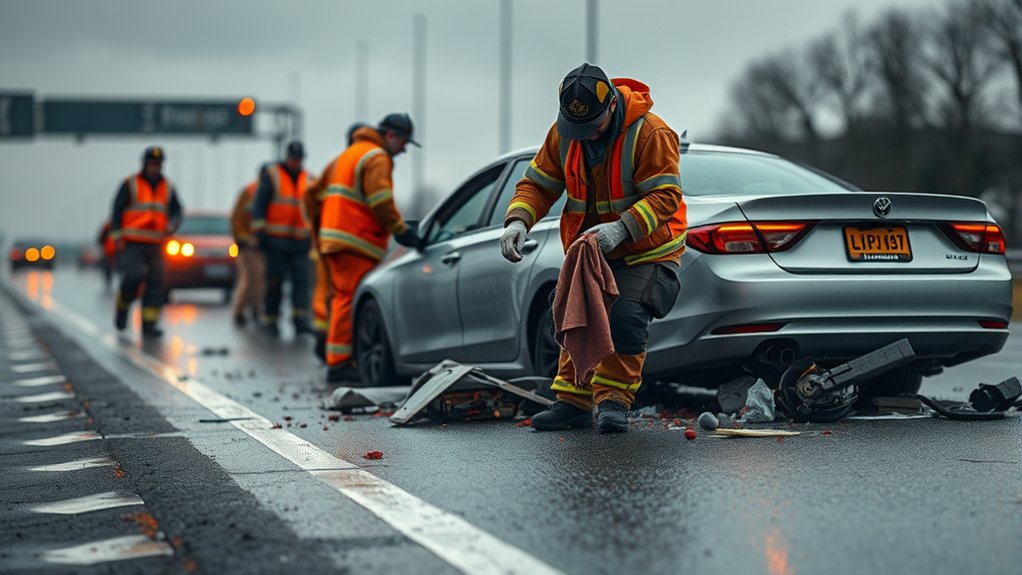
When a fatal car accident happens, specialized cleanup crews and law enforcement are responsible for restoring the scene and ensuring safety. Emergency responders assess hazards, control traffic, and secure evidence, while crime scene cleanup companies safely remove biological hazards and restore the area.
Insurance may cover some costs, but emotional and cultural sensitivities also matter.
To fully understand how these teams work together and what to expect afterward, keep exploring the details involved.
Key Takeaways
- Crime scene cleanup companies are the specialists when it comes to removing biological hazards and restoring accident sites after fatal crashes.
- Emergency response teams and law enforcement are the ones who secure and document the scene. They also coordinate the cleanup efforts to make sure everything is handled properly.
- Local authorities usually take care of debris and hazardous materials. Their main goal is to ensure safety and prevent any contamination.
- If the accident was caused by the vehicle owner or driver, they might be responsible for the cleanup costs. Insurance often covers these expenses.
- Forensic teams analyze physical evidence at the scene. Their work helps reconstruct what happened and guides the cleanup process.
Who Is Responsible for Car Accident Scene Cleanup?
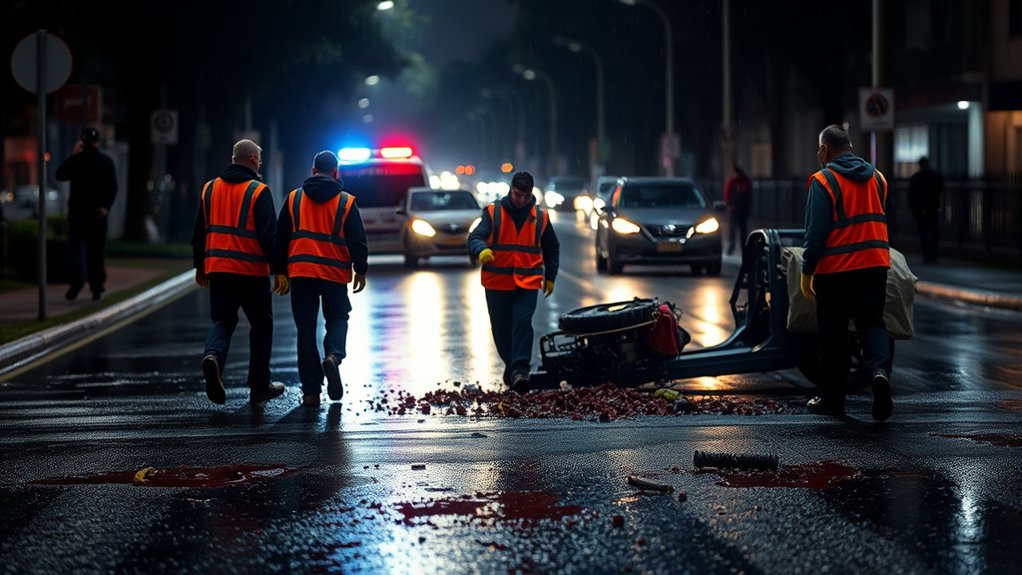
When a car accident happens, figuring out who’s responsible for cleaning up the scene can be tricky. Usually, local authorities like police or municipal cleanup crews handle the debris, spilled fluids, and damaged vehicles.
If the accident involves a commercial property, the property owner or business might need to take care of the cleanup. Sometimes, the vehicle owner or driver is expected to help or cover the costs, especially if they caused the accident.
Insurance companies also step in to help cover cleanup expenses. But generally, unless it’s specified by law or a contract, you aren’t personally responsible for the cleanup unless you were directly involved in the incident or damage.
Emergency Response Teams and Scene Management
Emergency response teams are essential for managing car accident scenes to ensure safety and efficiency. When they arrive, they quickly assess the situation, provide medical aid, control traffic, and secure the area.
Their main goal is to prevent secondary accidents and protect everyone involved. They work with police and fire crews to set up a safe perimeter and gather initial information.
Their primary focus is preventing secondary crashes and safeguarding all involved.
You’ll see them work quickly to clear hazards like fuel leaks or debris while making sure injured parties get prompt care. They also document the scene for investigations, which helps determine fault and necessary actions.
Their organized scene management reduces chaos, allowing other responders to do their jobs effectively. Overall, their fast and structured approach is vital for safety, investigation, and cleanup efforts.
What Do Crime Scene Cleanup Companies Do?
Crime scene cleanup companies step in after law enforcement and emergency responders have finished their work to thoroughly clean and restore the affected area. You might think their job is just cleaning, but they handle much more—removing blood, bodily fluids, and biological hazards safely.
They use specialized equipment and disinfectants to eliminate pathogens, making sure the space is safe and sanitary. Their work is essential for public health and emotional healing, as they help restore a sense of normalcy.
| Emotional Impact | Actions Taken | Final Outcome |
|---|---|---|
| Fear and grief | Remove biological hazards | Restored safety |
| Shock and trauma | Disinfect and sanitize | Peace of mind |
| Loss and sadness | Clear the scene of any remnants | Closure and healing |
How Do Law Enforcement Preserve and Investigate the Scene?
When law enforcement arrives at an accident scene, they start by securing the area to prevent any more harm and to protect evidence.
They then systematically collect and photograph everything they find, making sure they don’t miss a thing.
Every detail they document helps piece together what happened and why, which is crucial for the investigation.
Securing the Accident Site
To preserve the integrity of the accident scene, law enforcement officers quickly establish a perimeter to keep unauthorized people out and prevent contamination of evidence. They use barriers, tape, and patrols to control access, allowing only essential personnel inside.
Officers make sure bystanders, reporters, and witnesses stay at a safe distance so they don’t disturb anything important. They also document the scene’s initial state with photographs and notes before anything is moved or changed.
This helps keep a clear record of how the scene looked originally. Additionally, officers coordinate with other emergency responders to manage traffic and prevent further accidents.
Securing the scene is crucial for a thorough investigation. It ensures evidence stays intact and the scene’s integrity is preserved for accurate analysis.
Collecting Evidence Methodically
Once the scene is secured, law enforcement officers start collecting evidence carefully to make sure nothing gets missed. They photograph the whole scene from multiple angles, capturing details like skid marks, vehicle positions, and debris.
They also gather physical evidence such as broken parts, fluids, or personal items, labeling each piece for easy reference. Footprints, tire tracks, and other impressions are documented or preserved to prevent disturbance.
Officers wear gloves and use tools to handle evidence, avoiding contamination. They record measurements and note the exact locations of key items, creating a detailed map of the scene.
This thorough process helps preserve the scene’s integrity and provides crucial information for later analysis to determine what happened and who might be responsible.
Documenting Scene Details
After gathering physical evidence and photographing the scene, law enforcement officers focus on documenting every detail thoroughly. You’ll see them record measurements, note skid marks, and sketch the scene with precision. This detailed documentation helps reconstruct the accident and determine causes.
They also take notes on vehicle positions, road conditions, and nearby landmarks. To organize this process, consider this table:
| Evidence Type | Description | Purpose |
|---|---|---|
| Photographs | Visual records from multiple angles | Preserve scene details for analysis |
| Measurements | Distance between objects and marks | Reconstruct accident dynamics |
| Notes and sketches | Descriptions and diagrams of the scene | Provide context for evidence |
This meticulous recording guarantees investigators have an accurate account, which is vital for legal proceedings and cleanup planning.
How Do Forensic Teams Help Reconstruct the Accident?
Forensic teams play a crucial role in reconstructing car accidents by carefully analyzing physical evidence from the crash site. They gather this data to piece together how the accident happened, helping to determine who was at fault and how safety measures can be improved.
They do this by examining skid marks and tire tracks to estimate speeds and braking actions. They also look at vehicle damage patterns to identify points of impact and the directions of movement.
Additionally, forensic teams take photographs and measurements of the scene to create accurate 3D models. These models allow for detailed analysis and help recreate the events leading up to the crash.
Safety Protocols for Scene Cleanup Crews
As a cleanup crew member, you must wear the appropriate protective gear to safeguard yourself from hazards.
You’ll need to follow strict contamination control procedures to prevent the spread of harmful substances.
Furthermore, knowing emergency response protocols guarantees you can act quickly and safely if an unexpected situation arises.
Protective Gear Requirements
When scene cleanup crews respond to a car accident, wearing proper protective gear is essential to keep themselves safe from bloodborne pathogens, chemicals, and debris. Your gear acts as a barrier, preventing exposure to hazardous materials. Confirm you wear:
- Protective gloves to guard against blood, bodily fluids, and chemicals.
- Face shields or masks to prevent splashes or inhalation of airborne contaminants.
- Disposable coveralls or suits to protect your skin and clothing from contamination.
Using this gear minimizes health risks and maintains safety standards. Always double-check that your protective equipment fits correctly and is intact before starting cleanup.
Proper gear not only protects your health but also confirms compliance with safety protocols.
Scene Contamination Control
Once you’ve put on your protective gear, keeping scene contamination controlled should be your main focus. Carefully contain all debris, bodily fluids, and hazardous materials within designated areas.
Use proper disposal methods to prevent cross-contamination. Make sure contaminated waste is sealed and labeled correctly. Regularly check your gloves, suits, and masks for tears or breaches, and replace them if needed.
Avoid touching uncontaminated surfaces or equipment with contaminated gloves. Clean tools and equipment thoroughly after use, following safety protocols.
Keep your workspace organized and clear to prevent accidental spreading of contaminants. Staying vigilant and disciplined helps protect yourself, your team, and the environment.
Proper scene contamination control is essential for a safe and effective cleanup process.
Emergency Response Procedures
Emergency response procedures are essential to ensure scene cleanup crews can act quickly and safely during and after a car accident. Following established protocols helps minimize hazards and protect everyone involved.
Start by assessing the scene for immediate dangers like fires, fuel leaks, or unstable vehicles. Once you’ve identified hazards, secure the area by setting up barriers and redirecting traffic to prevent further accidents.
Next, communicate with emergency services to coordinate cleanup efforts and access any necessary resources. These steps help reduce the risks of contamination or injury.
Staying alert and following these procedures ensures a quick, organized response that prioritizes safety and efficiency. This approach ultimately protects both the cleanup crew and the public.
When Does Insurance Cover Cleanup Costs?
Insurance typically covers cleanup costs if the accident was caused by another driver’s negligence or if your policy includes broad coverage.
Likewise, if you have comprehensive or collision coverage, your insurer might cover cleanup costs, especially if you’re at fault or if the accident involves damage to your vehicle.
However, coverage can vary depending on your policy details and local regulations. It’s important to review your policy or contact your insurer promptly after an accident to understand what’s covered.
Keep in mind that some policies exclude cleanup costs entirely, leaving you responsible for the expenses.
Addressing Emotional and Cultural Sensitivities in Cleanup
When managing cleanup after a car accident, it’s important to be aware of the emotional and cultural sensitivities of everyone involved. People handle trauma in different ways, and their cultural backgrounds shape how they cope with tragedy. Approach each situation with empathy and patience, and listen carefully to concerns or preferences.
Keep these points in mind:
- Respect cultural mourning practices and avoid pushing unfamiliar procedures.
- Use sensitive language and steer clear of graphic descriptions that might upset someone.
- Be mindful of emotional reactions, offering support or space whenever needed.
What to Expect During and After Scene Cleanup
As the cleanup process begins, you’ll notice that safety and thoroughness are top priorities. Professionals will quickly assess the scene, wearing protective gear to prevent contamination or injury.
Expect them to carefully remove debris, fluids, and damaged materials, often using specialized tools and cleaning agents. You might see large equipment like vacuums or extraction machines in action.
After cleanup, the area will be sanitized and disinfected to guarantee it’s safe for future use. Once finished, the scene will be restored as much as possible to its original state, though some damage may remain.
Throughout the process, you’ll observe a focus on efficiency and respect, ensuring that the scene is handled professionally and with sensitivity to those affected.
Frequently Asked Questions
Are Specialized Hazardous Materials Trained Personnel Always Required for Cleanup?
Specialized hazardous materials-trained personnel aren’t always required for cleanup, but it depends on the situation.
If hazardous substances like fuel, chemicals, or blood are involved, trained responders are necessary to guarantee safety and proper disposal.
For minor debris or non-toxic materials, regular cleanup crews may handle the scene.
Ultimately, authorities assess each accident to determine whether specialized skills are needed to protect public health and the environment.
How Quickly Are Cleanup Crews Typically Dispatched After an Accident Occurs?
Typically, cleanup crews are dispatched within 30 to 60 minutes after an accident occurs. In many urban areas, response teams often arrive on the scene within just 15 minutes.
Their quick arrival helps ensure hazardous materials are removed fast. They work efficiently to clear debris, handle dangerous substances, and restore the area.
This rapid response minimizes danger and helps get traffic flowing again quickly. Your safety depends on their swift action and prompt attention.
What Legal Liabilities Do Cleanup Companies Face After Scene Restoration?
You face legal liabilities if cleanup companies don’t follow proper procedures or neglect safety standards after restoring a scene. They need to stick to environmental laws and correctly dispose of hazardous materials.
If they ignore these rules, they could be held responsible for contamination or harm. It’s really important that cleanup crews stay within legal boundaries to avoid lawsuits, fines, or even criminal charges.
This helps ensure safety for everyone involved and keeps things running smoothly.
Do Cleanup Companies Handle Biohazard Disposal Related to Fatal Accidents?
Yes, cleanup companies handle biohazard disposal related to fatal accidents. Think of their work as tending a garden after a storm—carefully removing what’s harmful to make way for new growth.
They follow strict protocols to safely contain and dispose of biohazards like blood and bodily fluids. This ensures the scene is thoroughly sanitized.
Their work protects public health and prevents contamination. It allows communities to heal and move forward.
Are There Any National Standards Governing Accident Scene Cleanup Procedures?
Yes, there are national standards that govern accident scene cleanup procedures. Organizations like OSHA set safety and health regulations, ensuring proper handling of biohazards, bloodborne pathogens, and hazardous materials.
Cleanup companies follow strict protocols to protect both workers and the environment. These standards help make sure the cleanup is thorough, safe, and compliant with legal requirements.
Having these standards in place gives you peace of mind during such a sensitive process.
Conclusion
So, when it’s all said and done, you might think the cleanup is straightforward. But behind the scenes, a complex web of responders, investigators, and cleanup crews work tirelessly, each with an essential role.
As you consider the aftermath, wonder what’s truly involved in restoring safety and dignity. Because behind every accident scene, there’s a story — and the question remains: who really takes responsibility when the dust settles?
And that’s where the specialized work of accident scene cleanup comes in. They handle the difficult task of cleaning up and restoring the scene, ensuring safety and respect.
So, the next time you see a crash site cleared, remember that professional accident scene cleanup crews are the ones who truly take responsibility when the dust settles.