Can You Use Any Glass Cleaner on Car Windows?
Many car owners find themselves frustrated when streaks or smudges keep ruining their view while driving.
You’re not alone—choosing the right glass cleaner for your car windows can feel overwhelming with so many options out there.
Can You Use Any Glass Cleaner on Car Windows?
You shouldn’t use any glass cleaner on your car windows, as many household products contain harsh chemicals like ammonia or abrasive ingredients that can damage the glass or tint films.
Instead, choose a cleaner formulated specifically for automotive glass, which is designed to clean without streaks or residue.
Using the wrong product can cause scratches, clouding, or sealing issues over time.
Keep going to learn more about choosing the best cleaners for your car windows.
Key Takeaways
- Not all household glass cleaners are safe for car windows. Many contain harsh chemicals that can damage automotive glass or tint films.
- It’s best to use ammonia-free and pH-balanced cleaners that are specifically formulated for automotive glass. This helps prevent streaks and damage.
- Stay away from cleaners with abrasives, bleach, or high alcohol content. These can scratch or weaken your car windows over time.
- DIY solutions like vinegar or diluted alcohol might work, but they can leave residue or streaks if not used carefully.
- For the best results, professional-grade or specialized automotive glass cleaners are recommended. They help ensure clarity and safety when cleaning your car windows.
What Makes a Glass Cleaner Safe and Effective for Car Windows?
A glass cleaner is safe and effective for car windows when it easily removes dirt and grime without damaging the glass or surrounding materials.
Look for formulations that are ammonia-free, since ammonia can cause streaks and degrade tint films.
A good cleaner should have a balanced pH level to prevent corrosion or scratches. It should also contain ingredients that break down grease and dirt easily, making cleaning quick and effortless.
Plus, the cleaner should dry quickly without leaving residue or streaks, so your windows stay clear and your visibility stays sharp.
Always choose a product designed specifically for automotive glass, as these are made to handle the unique surfaces and materials in your car.
Avoid harsh chemicals that could harm the glass or damage tinted or surrounding trim.
Can You Use Household Glass Cleaners on Your Car?
Using household glass cleaners on your car might seem convenient, but it can cause damage or leave streaks that impair visibility. These cleaners often contain ingredients that may harm your car’s finish or leave unwanted residue.
It’s better to choose products made specifically for automotive glass. They’re designed to give you clear, streak-free windows without risking damage.
Potential Damage Risks
While household glass cleaners might seem like a convenient choice, they can pose significant risks to your car’s windows. Using the wrong cleaner can lead to damage that’s costly to fix.
- Corrosion of the glass surface. Harsh chemicals can weaken the glass, causing pitting or cracking over time.
- Damage to window tinting. Many household cleaners contain ammonia, which can peel or discolor tinted windows.
- Degradation of rubber and seals. Some cleaners contain ingredients that break down rubber seals, leading to leaks or window malfunction.
These risks show why using the right product matters. Sticking to automotive-specific cleaners helps protect your windows and keeps them clear and intact for the long haul.
Residue and Streaks
Household glass cleaners often leave behind streaks and residue that can impair your visibility while driving. When you use these cleaners on your car windows, they might not evaporate completely or could leave a thin film.
This film can cause glare from headlights or sunlight, making it harder to see clearly. Residue buildup can also attract dust and dirt, which means you’ll need to clean more often.
If you notice streaks after cleaning, it’s a sign the product isn’t suited for automotive glass. To avoid this, use a cleaner specifically designed for car windows or a streak-free formula.
Proper cleaning guarantees clear visibility and safer driving conditions. So, don’t settle for household products that leave smudges or haze.
Suitable Alternatives
Many people wonder if they can save money by using household glass cleaners on their car windows. While it might seem convenient, not all household cleaners are suitable. Some alternatives can work effectively if chosen carefully.
- Vinegar and Water Solution: Mix equal parts vinegar and water for a natural, streak-free clean that cuts through grime.
- Rubbing Alcohol: Diluted rubbing alcohol can remove grease and smudges without leaving residue.
- Commercial Glass Cleaners: Some household brands are designed for automotive use and can be safe if labeled as safe for vehicle glass.
Always check labels and test on a small area first. Using the wrong cleaner can damage coatings or cause streaks, so choose wisely.
What Are the Risks of Using the Wrong Glass Cleaner?
Using the wrong glass cleaner on your car windows can cause serious damage and affect your visibility. Harsh chemicals like ammonia or bleach can strip away protective coatings or leave streaks that make it harder to see clearly.
Using the wrong cleaner can damage your windows and impair your visibility.
Some cleaners might leave a film or residue that attracts dirt, reducing clarity over time. Incompatible cleaners can also cause discoloration or corrosion of window tinting and rubber seals.
Using an abrasive cleaner increases the risk of scratching the glass, which can cause permanent damage and obstruct your view. This not only makes driving unsafe but can also lead to costly repairs or replacements.
Always opt for a cleaner specifically formulated for automotive glass. Doing so helps you avoid these risks and keeps your visibility clear and safe.
Which Ingredients Make a Glass Cleaner Suitable for Automotive Windows?
Look for glass cleaners with effective cleaning agents that remove dirt and grime easily.
Make sure they contain non-abrasive ingredients to prevent scratching your windows.
Most importantly, the components should be safe for glass surfaces to keep your car looking clear and shiny.
Effective Cleaning Agents
A glass cleaner suitable for automotive windows must contain specific ingredients that effectively remove dirt and streaks without damaging the surface. These ingredients break down grime while leaving a streak-free finish.
- Isopropyl Alcohol: It dissolves grease, grime, and fingerprints quickly, guaranteeing a clear view.
- Surfactants: They lift dirt and oils from the glass, making cleaning more efficient.
- Water and Mild Solvents: These dilute cleaning agents and help prevent fogging or streaking.
Look for cleaners with balanced formulas that combine these ingredients. Avoid harsh chemicals that can damage your window’s surface or leave residues. The right blend guarantees your car windows stay spotless, clear, and safe for driving.
Non-Abrasive Components
Choosing the right ingredients ensures your glass cleaner stays gentle on car windows while still getting rid of dirt effectively. Look for non-abrasive components that clean without scratching or damaging the glass surface.
These usually include mild surfactants that break down grime without needing harsh scrubbing. Stay away from abrasive substances like gritty particles, as they can scratch the glass and reduce visibility.
Alcohols or alcohol-based solutions are common because they evaporate quickly and leave no sticky residue. Gentle solvents also help dissolve grease and stubborn stains without harming the glass.
Safe for Glass Surface
Three key ingredients make a glass cleaner safe for automotive windows: non-abrasive surfactants, gentle solvents, and alcohol-based solutions. These components make sure your windows stay clear without getting damaged.
Non-abrasive surfactants break down dirt without scratching the glass surface, helping protect your view. Gentle solvents dissolve grime effectively but won’t corrode or weaken the glass.
Alcohol-based solutions help in quickly evaporating moisture and residue, leaving a streak-free finish. To stay safe, look for cleaners with these ingredients.
- Non-abrasive surfactants that clean without scratching.
- Mild solvents that break down stubborn dirt gently.
- Ethanol or isopropanol for fast evaporation and streak-free results.
Choosing cleaners with these ingredients keeps your windows clean and intact.
How to Properly Apply Glass Cleaner for a Streak-Free Finish
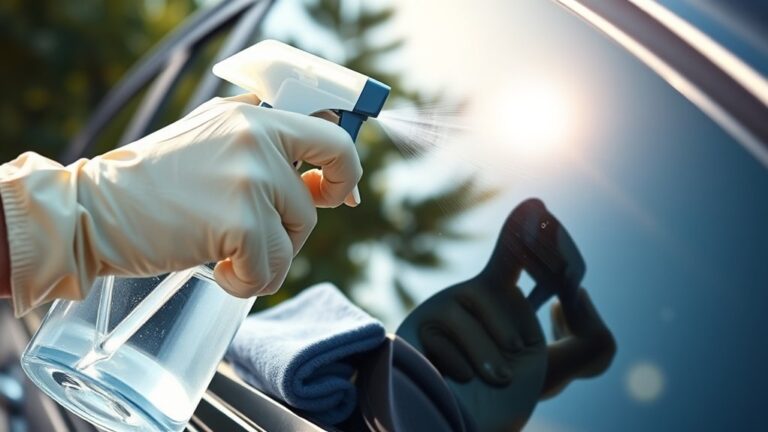
To get a streak-free finish when applying glass cleaner to your car windows, start by cleaning the glass in sections. Spray the cleaner evenly onto the surface, but don’t use too much—excessive spray can drip and cause streaks.
Use a clean microfiber cloth or a dedicated glass towel to wipe the surface in a circular motion. After that, switch to a dry part of the cloth and wipe again in a vertical or horizontal direction to remove any leftover residue.
Be gentle—pressing too hard can leave marks. For stubborn spots, spray a little more cleaner and let it sit for a few seconds before wiping again.
Consistent, gentle motions will help your windows come out crystal clear and streak-free.
Are Commercial Glass Cleaners Better Than DIY Solutions?
Are commercial glass cleaners genuinely better than DIY solutions? It really depends on what you need.
Commercial cleaners often have special ingredients that handle tough grime and leave a streak-free shine. Here are three reasons they might be a better choice:
- Consistency: They’re formulated to give reliable results every time.
- Power: They usually contain stronger cleaning agents that cut through stubborn dirt, bugs, and grease.
- Convenience: These cleaners come ready to use, saving you time and effort.
That said, DIY solutions like vinegar and water can work well for regular cleaning, especially if you prefer natural options. Ultimately, it’s about how much cleaning power you need and your ingredient preferences.
What Features Should You Avoid in Car Window Cleaners?
Avoid cleaners with harsh or abrasive ingredients that can damage your car’s glass or leave scratches. Stay away from products containing ammonia or bleach, as they can degrade tint films and harm the glass surface over time.
Avoid harsh, abrasive cleaners containing ammonia or bleach to protect your car’s glass and tint over time.
Also, steer clear of overly oily or greasy formulas that might leave streaks or residue, making visibility worse. High alcohol content can dry out rubber seals and cause cracking, so watch out for that.
Fragranced or heavily scented cleaners can sometimes leave a film or residue that’s hard to wipe away. Be cautious of cleaners with added dyes or coloring; these can stain or cloud the glass.
Ultimately, choosing a cleaner free of aggressive chemicals and unnecessary additives helps protect your windshield and side windows.
How Do Weather Conditions Affect Window Cleaning Results?
Weather conditions really impact how well your window cleaning turns out. When it’s humid, your cleaner can dry too slowly, which might leave streaks behind. Direct sunlight can make cleaning solutions evaporate quickly, stopping you from getting a good clean.
Wind can also be a problem—it blows dust and debris onto your windows right after you’ve cleaned them, undoing your hard work. To get the best results, try cleaning on cloudy days to avoid quick evaporation and streaks.
It’s best to avoid cleaning in strong wind since it stirs up dirt and debris. Look for a calm, cool day with low humidity for the perfect drying time and clear, streak-free windows.
Tips for Removing Stubborn Streaks and Residue From Car Windows
Stubborn streaks and residue can be frustrating to remove, but with the right techniques, you can get crystal-clear windows. Start by using a clean microfiber cloth to wipe away loose dirt and grime.
Apply a quality glass cleaner directly to the cloth, not the window, to prevent streaks. Use horizontal strokes on the driver’s side and vertical strokes on the passenger side to help spot any missed areas.
Apply glass cleaner to the cloth, not the window, and use different strokes on each side to spot missed areas easily.
For stubborn spots, dampen a cotton swab or soft brush with cleaner and gently scrub the area. Rinse the cloth often to avoid spreading residue around.
Finally, buff the glass with a dry microfiber cloth in circular motions to eliminate streaks. Patience and proper technique will help you achieve streak-free, crystal-clear car windows.
Can Using the Wrong Cleaner Damage Your Car’s Glass or Coatings?
Using the wrong cleaner on your car’s glass can cause damage that’s often hard to spot at first but can lead to long-term problems. You might not notice it right away, but harmful ingredients can weaken or etch the glass surface over time. For example:
Harsh chemicals like ammonia or bleach can cause glass etching, which makes the glass look cloudy permanently. Alcohol-based cleaners might also strip away protective coatings, reducing both durability and clarity.
Abrasive cleaners or scrubbing pads can scratch the glass, making it easier for streaks and damage to occur. Picking the wrong product can hurt your windows and any coatings that keep them protected. This can decrease visibility and safety over time.
Always choose gentle, glass-specific cleaners to avoid these issues.
Best Practices for Maintaining Clear and Safe Car Windows
To keep your car windows clear and safe, developing consistent cleaning habits and using proper techniques is key. Regularly wash your windows with a gentle cleaner and a soft cloth to prevent grime from building up.
Always wipe in a circular motion to avoid streaks and achieve a spotless finish. Steer clear of harsh chemicals that could damage coatings or reduce visibility.
Protect your windows from scratches by using quality tools and applying gentle pressure. Remember, clean windows aren’t just about looks—they’re crucial for safety.
Here’s a quick reminder of the best practices:
| Practice | Benefit | Impact |
|---|---|---|
| Regular cleaning | Keeps clarity | Better visibility |
| Use proper tools | Prevents scratches | Longer-lasting glass |
| Gentle wiping | Reduces streaks | Clear, safe view |
| Avoid harsh chemicals | Protects coatings | Preserves glass integrity |
| Consistent routine | Ensures reliable windows | Safer driving experience |
When Should You Seek Professional Help for Car Window Cleaning?
Have you ever tried cleaning your car windows only to find stubborn stains or hazy spots that just won’t come off? If so, it’s time to consider professional help. You should seek expert assistance if:
- The haze or streaks persist despite multiple cleaning attempts.
- Your windows have deep scratches or chips that might need repair.
- You notice water spots or mineral deposits that won’t respond to regular cleaning.
Professional cleaners have specialized tools and products that can safely remove tough grime without damaging the glass. If you’re unsure about the severity of damage or how to clean delicate areas like the edges or seals, consulting a pro is a smart move. It ensures your windows stay clear and intact.
Don’t hesitate when in doubt. Getting professional help can save you time and prevent costly repairs.
Frequently Asked Questions
Can Using Household Glass Cleaner Damage Your Car’s Tinted Windows?
Using household glass cleaner on tinted windows can damage them, especially if it contains ammonia or harsh chemicals. These ingredients can cause the tint film to peel, crack, or discolor over time.
To keep your windows looking good, choose a cleaner made specifically for tinted glass or use a simple mixture of water and a gentle, non-ammonia cleaner.
Avoid using abrasive cloths because they can scratch the tint and make it look dull.
Are There Eco-Friendly Glass Cleaners Suitable for Automotive Use?
Yes, eco-friendly glass cleaners are available for automotive use. These products usually have natural, biodegradable ingredients that clean well without harmful chemicals.
You can find them at auto stores or online. Just make sure they’re labeled safe for car windows and tinted surfaces.
They’ll help you get a streak-free shine while being gentle on the environment and your vehicle’s interior.
How Often Should I Clean My Car Windows for Optimal Visibility?
You should clean your car windows at least once every two weeks for ideal visibility. This frequency helps prevent dirt, grime, and streaks from building up, which can impair your view and compromise safety.
Sometimes, a sudden rain or dirt storm makes you realize how much clearer your windows are after cleaning. Regular cleaning guarantees you always have a clear line of sight, making driving safer and more enjoyable.
Do Different Weather Conditions Require Different Window Cleaning Methods?
Yes, different weather conditions do require different cleaning methods for your car windows. In rainy or muddy weather, you should clean your windows more often with a glass cleaner that fights streaks and water spots.
During winter, use a de-icing spray before cleaning to prevent ice buildup. In sunny weather, a quick wipe can help avoid streaks and smudges caused by heat.
Adjust your cleaning routine to keep visibility clear and safe in every weather condition.
Can Using the Wrong Cleaner Affect Your Windshield’s Warranty?
Using the wrong cleaner can potentially affect your windshield’s warranty. If the cleaner damages the glass or its coating, the manufacturer might deny warranty claims related to that damage.
Always check your vehicle’s manual or ask your dealer to see which cleaners are safe. Avoid harsh chemicals or ammonia-based products, as they can harm the glass or its protective coatings.
Using the wrong cleaner can lead to costly repairs and warranty issues, so it’s best to choose wisely.
Conclusion
Remember, using the wrong glass cleaner on your car windows is like throwing gasoline on a fire—you’ll just cause damage or get streaks that seem to last forever. Stick to cleaners made specifically for automotive glass. Apply them properly for the best results.
When in doubt, don’t hesitate to seek professional help. Your car’s glass deserves the best care. Using the right cleaner keeps your windows crystal clear and shining bright.
Can you use any glass cleaner on car windows? Not really. Always choose products formulated for automotive glass to avoid damage and streaks. Your car’s windows will thank you.