How Do You Use All-Purpose Cleaner on Your Car Exterior Safely?
Many car owners want that shiny, spotless exterior but struggle with finding safe and effective cleaning methods. You’re not alone—knowing how to clean your car without causing damage can feel overwhelming.
To use all-purpose cleaner safely on your car exterior, start by gathering supplies and working in a shaded, cool area.
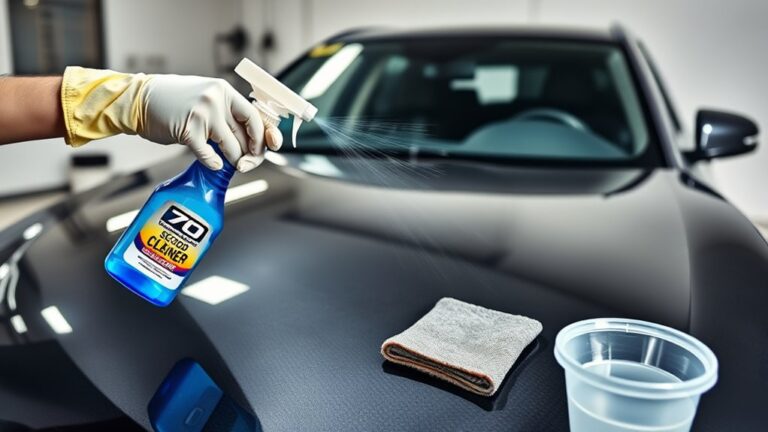
Dilute the cleaner following the instructions, then apply it evenly from top to bottom with a sponge or cloth. Gently scrub in circular motions and rinse thoroughly with water, starting from the top.
Dry with a microfiber towel to prevent water spots. Keep watching to uncover more tips for a spotless and protected car finish.
Key Takeaways
- Dilute the all-purpose cleaner according to the label instructions before applying it to your car.
- It’s best to clean your car in a shaded, cool area. This helps prevent streaks and protects the paint from damage.
- Use gentle, circular motions with a sponge or cloth to spread the cleaner evenly over the surface.
- Rinse thoroughly with water, starting from the top and working downward. This helps remove all the residue.
- Finally, dry your car with a soft microfiber towel. Pat gently to avoid scratches or water spots.
How Does All-Purpose Cleaner Work on Car Surfaces?
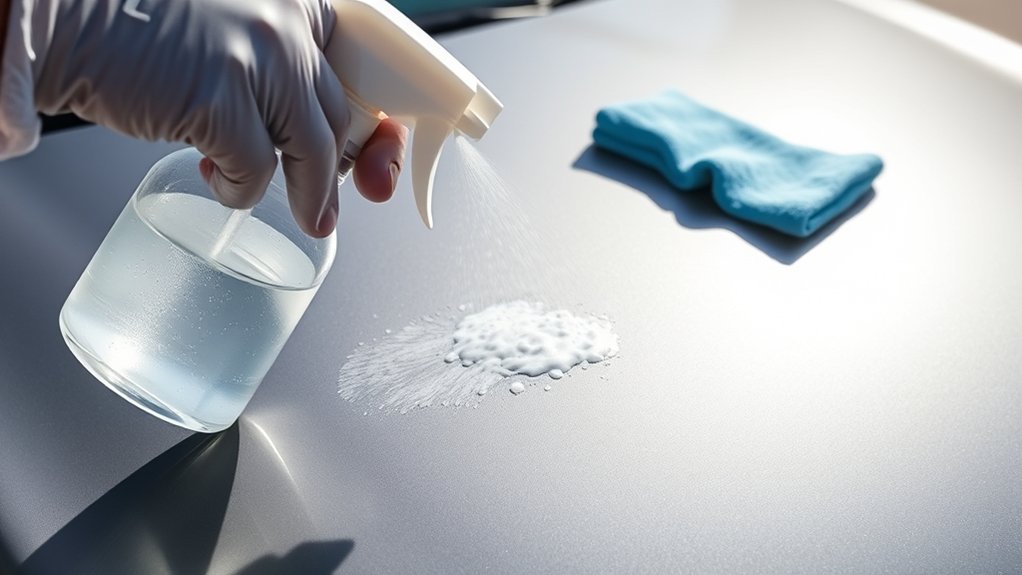
All-purpose cleaners work by breaking down dirt, grease, and grime on your car’s surface through a combination of surfactants and solvents.
Surfactants are molecules that latch onto greasy or oily substances, lifting them away from the paint and making them easier to rinse off.
Surfactants cling to grease and oil, lifting dirt for easy rinsing and a clean, polished finish.
Solvents help dissolve stubborn residues, like tree sap or bird droppings, that don’t come off with water alone.
When you spray or apply the cleaner, these ingredients work together to loosen and lift dirt particles so they can be rinsed away smoothly.
This process guarantees a thorough clean without damaging your car’s paint or clear coat.
Using an all-purpose cleaner properly, you can effectively remove everyday grime and keep your vehicle looking fresh and well-maintained.
Preparing Your Car and Supplies for Safe Cleaning
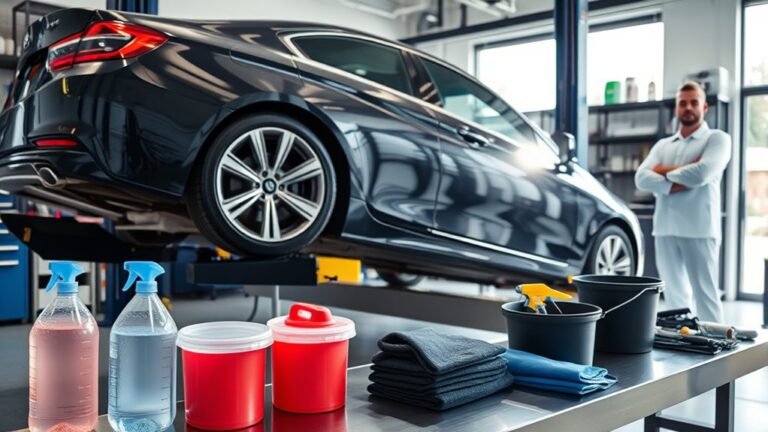
Before you start cleaning, gather all your supplies and make sure your car is in a good spot. Have your all-purpose cleaner, soft microfiber cloths, a bucket of water, and a hose or spray nozzle ready.
It’s best to clean in a shaded area so the cleaner doesn’t dry too fast and cause streaks. Also, check that your car is cool to the touch to avoid water spots or paint damage.
Remove loose debris like leaves or dirt with a gentle brush or compressed air. Parking on a level surface helps keep things safe and easy during the cleaning process.
How to Apply All-Purpose Cleaner Safely on Your Car
Once your car is prepped and in a good spot, it’s time to apply the cleaner carefully. First, dilute the all-purpose cleaner according to the instructions on the label.
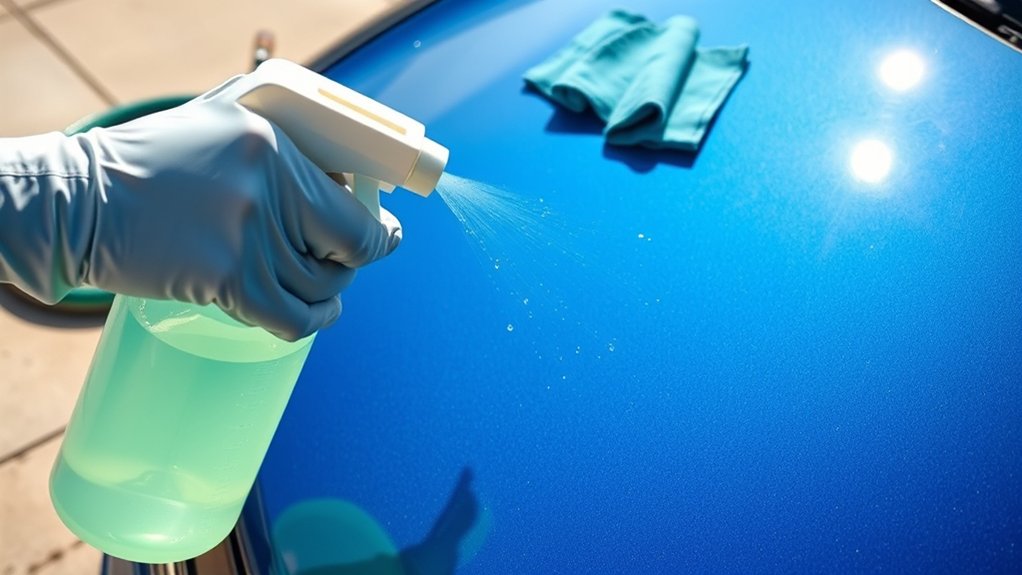
Use a sponge, soft cloth, or spray bottle to apply the cleaner evenly across the exterior, starting from the top and working down. This helps prevent dirt from spreading to cleaner areas.
Avoid spraying directly onto sensitive spots like vents or electrical components. Keep the cleaner away from rubber seals and trim to prevent any damage.
Use gentle, circular motions to work the cleaner into the surface, making sure everything gets covered. Be careful not to press too hard, as that could scratch the paint.
Once everything is coated evenly, let the cleaner sit for a moment before rinsing or moving on to the next step.
Rinse and Dry Your Car Properly to Avoid Damage
Make sure to rinse your car gently with plenty of water to remove all cleaner residue without causing scratches. Use soft, overlapping strokes and avoid high-pressure jets that can damage the paint.
After rinsing, dry your car with a clean microfiber towel. This helps prevent water spots and keeps your finish looking shiny and new.
Gentle Rinsing Techniques
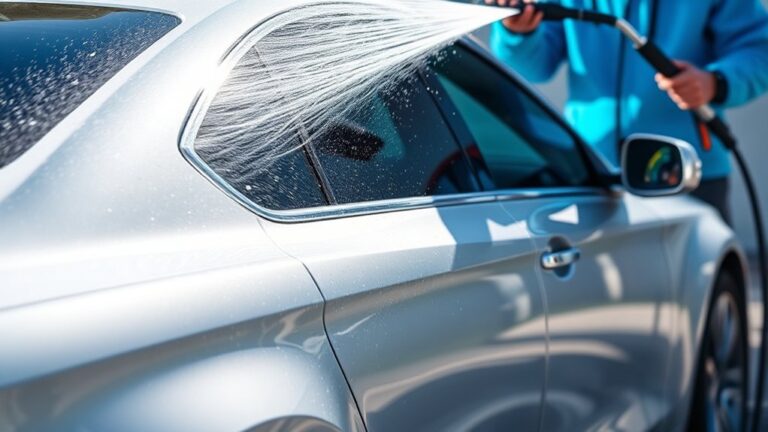
To prevent scratches and water spots, it’s important to rinse your car gently and thoroughly. Use a hose with a spray nozzle set to a gentle, wide spray pattern to avoid high-pressure jets that could damage the paint.
Start rinsing from the top of your car and work downward. This helps prevent dirt from spreading to clean areas. Make sure to cover all surfaces, including the roof, hood, and trunk.
Keep the water flowing smoothly and avoid stopping or making abrupt movements. Pay close attention to crevices and panel gaps where dirt can hide. If you see stubborn debris, rinse around it carefully instead of scrubbing, which might cause scratches.
Proper, gentle rinsing keeps your car clean without risking damage.
Proper Drying Methods
After rinsing your car, proper drying is key to avoiding water spots and streaks. Use a clean, soft microfiber towel or chamois to gently dry the surface.
Start from the top and work your way down, lifting off water without dragging dirt across the paint. Avoid air drying, which can leave spots, especially if the water is mineral-rich.
Pat the surface rather than rubbing aggressively to prevent scratches. Keep your drying cloth clean and switch to a dry section often.
For hard-to-reach areas, use a smaller towel or a blower to remove excess water. Proper drying gives your car a polished look and helps protect the paint, keeping it shiny over time.
Common Mistakes to Avoid When Using All-Purpose Cleaner
While all-purpose cleaner can be effective for cleaning your car’s exterior, using it incorrectly can cause damage or leave streaks. First, avoid applying the cleaner in direct sunlight or on a hot surface, as this can cause streaking or paint damage.
Avoid applying all-purpose cleaner in direct sunlight or on hot surfaces to prevent streaks and paint damage.
Don’t use too much cleaner; a little goes a long way. Over-saturating the surface can lead to residue that’s hard to rinse off. Also, never use harsh scrubbing tools or abrasive sponges, which can scratch the paint.
Be cautious about letting the cleaner sit too long on the surface—prolonged contact might harm the finish. Finally, avoid mixing all-purpose cleaner with other chemicals, as this can produce harmful reactions or reduce cleaning effectiveness.
Proper application and attention to these details help protect your car’s exterior.
How to Keep Your Car Shiny After Washing
Keeping your car shiny after washing takes more than just rinsing off dirt. To keep that glossy finish, you need to add some extra steps.
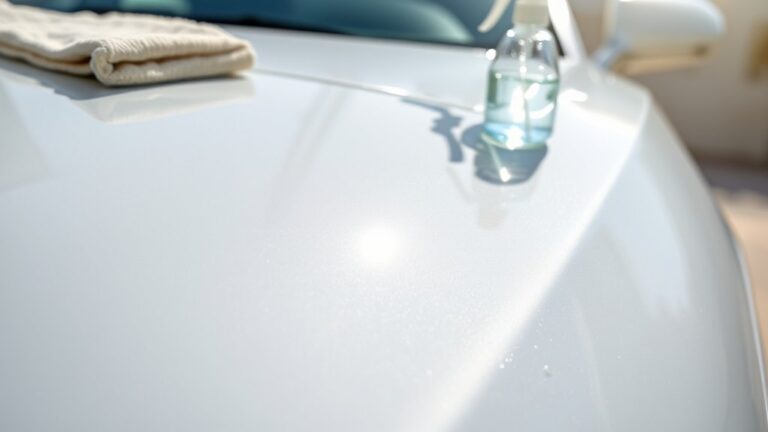
First, dry your car thoroughly with a microfiber cloth to prevent water spots. Then, apply a quality wax or sealant to protect the paint and boost shine. This creates a barrier against dirt and UV rays.
Finally, regularly use a quick detailer spray to polish your car. It helps restore luster and removes any residue or smudges, keeping your car looking freshly detailed.
Imagine your car gleaming under the sunlight, with a smooth, reflective surface that turns heads. You’ll have sparkling paint that catches every ray of sunshine and a sleek, mirror-like finish that feels great to the touch.
A glossy surface like that makes your car stand out on the road and keeps it looking its best every time you drive.
When to Seek Professional Car Detailing Help
Even with regular washing, waxing, and quick detailer touches, some car issues can’t be fully addressed at home. If your vehicle has deep scratches, stubborn stains, or extensive paint damage, it’s time to see a professional.
Likewise, if your car’s clear coat is peeling or there’s rust forming, a professional detailer has the tools and expertise to fix these problems safely. Complex interior issues like persistent stains or mold also require specialized cleaning.
Don’t risk causing further damage by attempting repairs beyond your skill level. When in doubt, consulting a professional guarantees your car gets proper care without harming its finish or value.
Recognizing these signs helps you maintain your car’s appearance and longevity effectively.
Frequently Asked Questions
Is All-Purpose Cleaner Safe for Painted Car Surfaces?
All-purpose cleaner can be safe for painted car surfaces if you pick a gentle, non-abrasive formula. Always check the label to make sure it’s suitable for automotive paint.
It’s a good idea to test a small, hidden area first to see if there are any adverse reactions. Use the cleaner sparingly and avoid letting it sit on the surface for too long.
After cleaning, rinse your car thoroughly with water and dry it. This helps prevent streaks or any leftover residue.
Can All-Purpose Cleaner Be Used on Car Windows?
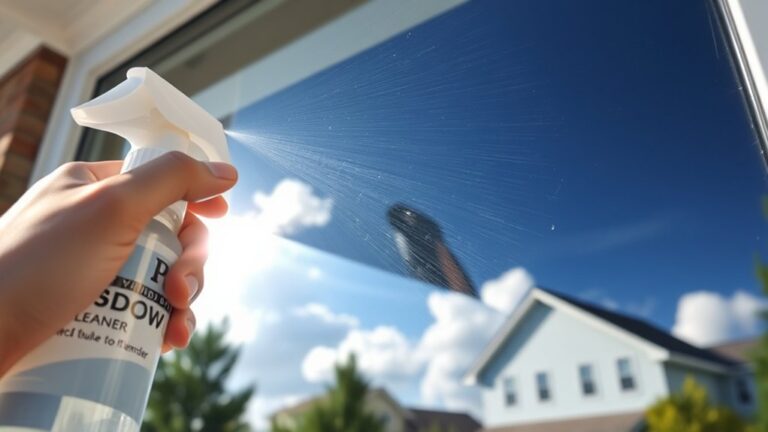
Yes, you can use all-purpose cleaner on your car windows, but you need to be careful. Dilute the cleaner according to the instructions and avoid letting it sit on the glass too long.
Spray it gently onto the windows and use a soft, microfiber cloth to wipe away dirt and grime. Always rinse thoroughly with water afterward and dry with a clean cloth to prevent streaks or residue.
How Often Can I Safely Use All-Purpose Cleaner on My Car?
You can safely use all-purpose cleaner on your car’s exterior about once every two weeks. Using it more often can strip away protective wax and damage the paint over time.
Always test a small area first, and avoid using it in direct sunlight or on hot surfaces. After cleaning, follow up with a proper wax or sealant to protect your car’s finish.
Regular gentle cleaning keeps your car looking great without risking damage.
Are There Any Specific All-Purpose Cleaners Recommended for Cars?
Imagine giving your car the gentle touch it deserves. While many all-purpose cleaners work well, look for ones labeled safe for automotive use or specifically designed for cars.
Brands like Meguiar’s All Purpose Cleaner or Chemical Guys All Purpose Cleaner are trusted choices. Always read the label, test in a small area first, and use a soft cloth or sponge.
This way, your car shines without risking damage.
What Should I Do if All-Purpose Cleaner Damages My Car’s Paint?
If all-purpose cleaner damages your car’s paint, act quickly. Rinse the area with plenty of water to wash away any remaining cleaner.
Avoid scrubbing the spot, as that can make the damage worse. Instead, gently rinse and pat it dry.
Next, try applying a good quality automotive polish or touch-up paint to help restore the finish.
If the damage seems deep or extensive, it’s a good idea to consult a professional auto body shop for advice or repairs.
Always test cleaners on a small, hidden area first to prevent future issues.
Conclusion
Think of your car as a mirror of your care. Gentle cleaning reveals its true shine, just like kindness reflects inner beauty. When you use all-purpose cleaner wisely, you’re nurturing your vehicle’s surface and preserving its essence beneath the dirt.
With patience and proper care, your car’s exterior can glow like a guiding light. This helps others appreciate the effort you put into keeping it pristine. Using all-purpose cleaner safely ensures your car stays looking great longer.
Ultimately, your attention turns routine cleaning into a symbol of pride and respect. Proper use of all-purpose cleaner is key to maintaining that polished, impressive look.