How Do You Use All-Purpose Cleaner Safely on Your Car?
Many car owners want their vehicles to look spotless without risking damage to the paint or interior. If you’re trying to keep your car clean using all-purpose cleaner, you’re not alone—many people struggle with finding safe and effective methods.
To use all-purpose cleaner safely on your car, start by evaluating your cleaning needs and choosing a mild or eco-friendly formula. Always follow the label instructions for proper dilution and test it on a small, hidden area first.
Wear gloves and rinse thoroughly after application. Avoid cleaning in direct sunlight and use clean, soft cloths to prevent scratches.
Want to learn more tips to keep your car spotless and protect its finish? Keep exploring for expert advice.
Key Takeaways
- Follow the label instructions for dilution and application to avoid over-concentrating the cleaner.
- Test the cleaner on a small, hidden area of the car first. This helps you check for any damage or discoloration before applying it more broadly.
- Wear gloves and eye protection during application. This will help prevent skin and eye irritation.
- Rinse thoroughly with water after cleaning. Make sure to remove all residue to prevent streaks or damage.
- Avoid cleaning in direct sunlight. Cleaning in the shade helps prevent streaks and ensures even results.
How to Choose the Best All-Purpose Cleaner for Your Car
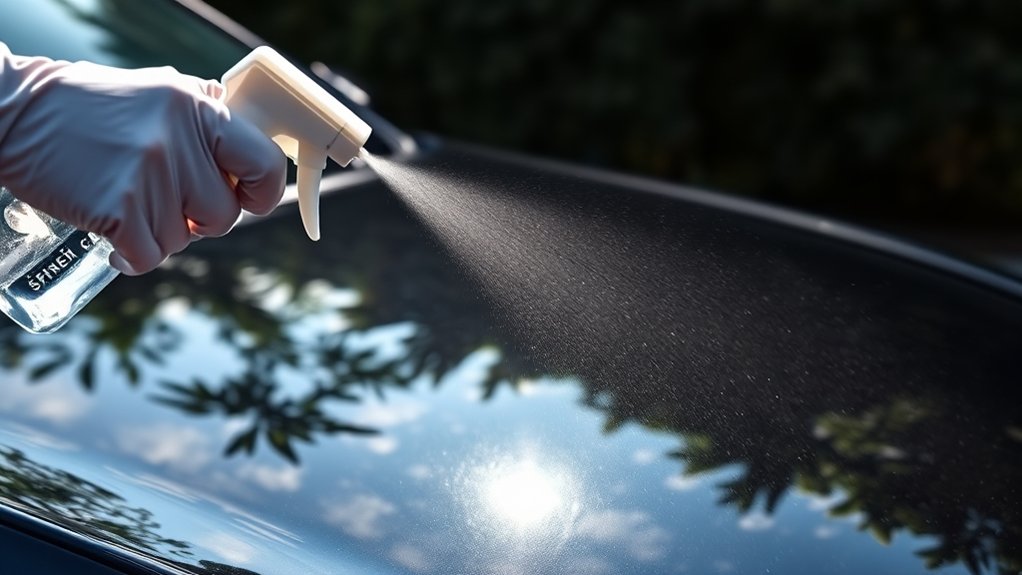
Choosing the right all-purpose cleaner for your car starts with understanding your specific needs and the types of dirt or stains you’ll be tackling. Think about whether you mostly need to remove dust, grease, or stubborn stains.
Select your car cleaner based on your specific dirt and stain removal needs for effective, safe cleaning.
If your car faces frequent mud or grime, look for a cleaner with strong degreasing power. For light dirt or dust, a milder formula works best to prevent damage.
Pay attention to the cleaner’s ingredients. Avoid harsh chemicals that could harm your car’s paint or interior surfaces. Check labels to ensure compatibility with your vehicle’s material, whether it’s painted metal, plastic, or fabric.
Also, consider eco-friendly options if you’re concerned about environmental impact. Choosing wisely guarantees effective cleaning without risking damage to your car’s finish or materials.
Preparing Your Car Before Cleaning
Start by gathering all your supplies, like your all-purpose cleaner, microfiber cloths, and a brush.
Next, remove loose dirt and debris from the surface to avoid scratching the paint.
Doing these steps guarantees a thorough and safe cleaning process.
Gather Necessary Supplies
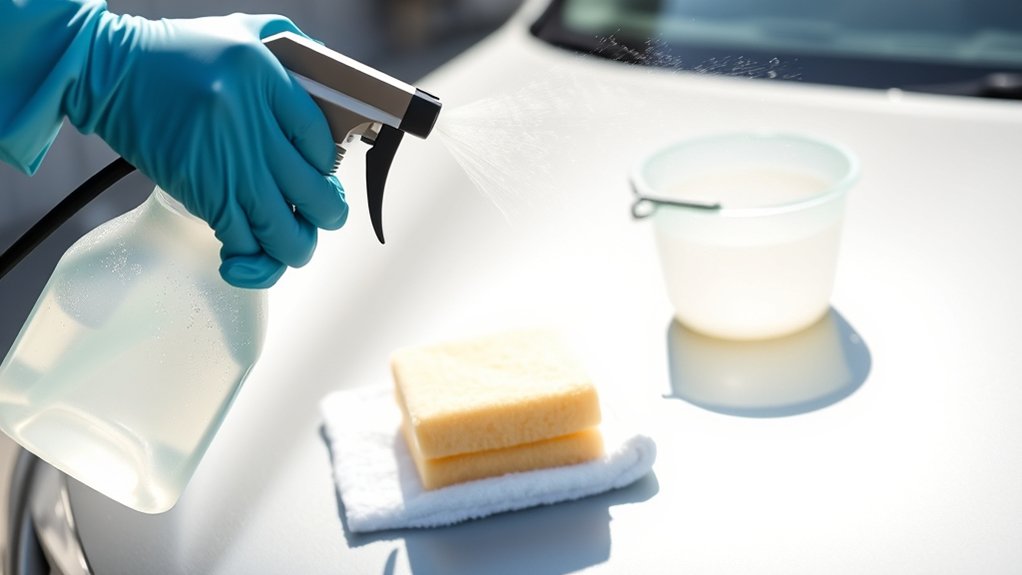
Before you start cleaning your car, gather all the supplies you’ll need to make the process smooth and efficient. Start with a bucket filled with water and a mild car-specific or all-purpose cleaner.
Grab soft microfiber cloths or sponges to avoid scratching the paint. Have a spray bottle for targeted cleaning and a separate brush or detailing tool for tight spots.
Prepare a hose or access to a water source for rinsing. Don’t forget to wear gloves to protect your skin and old towels or drying cloths to wipe down surfaces afterward.
Keep your trash bag or container handy for any debris or waste. Gathering everything beforehand helps you stay organized and ensures you won’t need to stop mid-cleaning to find supplies.
Remove Surface Debris
Once you’ve gathered your supplies, the next step is to clear off any loose surface debris from your car. Use a soft brush or a microfiber cloth to gently sweep away dirt, leaves, and dust from the exterior surfaces.
Pay special attention to the grille, wheels, and door jambs, where debris tends to build up. Removing loose debris prevents scratching and helps your cleaner work more effectively.
For stubborn dirt or bugs, rinse these areas with water beforehand. Inside, vacuum seats, carpets, and mats to remove loose dirt and debris.
Clearing surface debris not only prepares your car for a thorough clean but also helps prevent scratches caused by rubbing dirt into the paint during washing. This step creates a clean base for the rest of your detailing process.
The Right Way to Apply All-Purpose Cleaner Safely
To apply all-purpose cleaner safely, you should use the right dilution techniques to avoid damage.
Make sure to follow the instructions on the label for safe application methods, like spraying or wiping.
Properly diluting and applying the cleaner will give you the best results without risking harm to your car’s finish.
Proper Dilution Techniques
Proper dilution is essential to guarantee you use all-purpose cleaner safely and effectively on your car. Always read the instructions on the label to determine the correct water-to-cleaner ratio.
Typically, you’ll want to mix a small amount of cleaner with water, making sure it’s not too concentrated. Using a solution that’s too strong can damage your car’s paint and trim, while a weak mixture might not clean well.
Use a clean bucket or spray bottle to prepare your solution. If you’re unsure, start with a more diluted mix and adjust if needed. Proper dilution helps you avoid waste and reduces the risk of accidental damage.
Safe Application Methods
When applying all-purpose cleaner to your car, taking the right safety precautions guarantees you avoid damage and personal hazards.
First, test the cleaner on a small, hidden area to confirm it won’t harm the paint. Always wear gloves and eye protection to prevent skin and eye irritation.
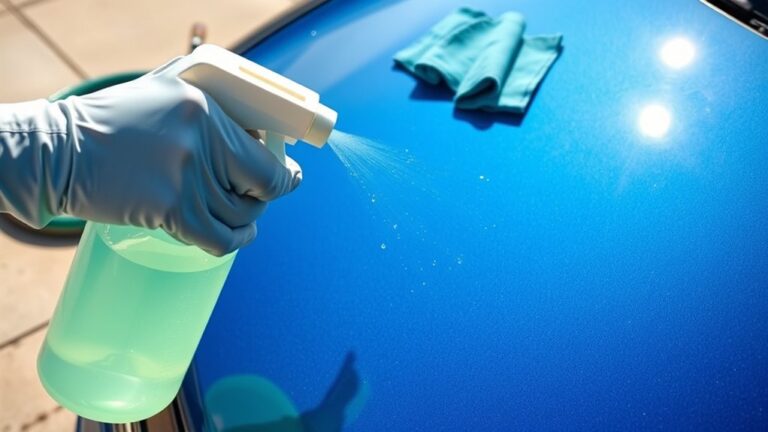
Use a spray bottle to evenly distribute the cleaner, avoiding oversaturation. Work in a shaded area to prevent the cleaner from drying too quickly or causing streaks.
Rinse thoroughly with water afterward to remove any residue. Keep the cleaner away from your face and avoid inhaling fumes.
Properly diluted, applied carefully, and rinsed well, your car stays clean without risking damage or personal harm.
How to Rinse and Dry Your Car After Cleaning
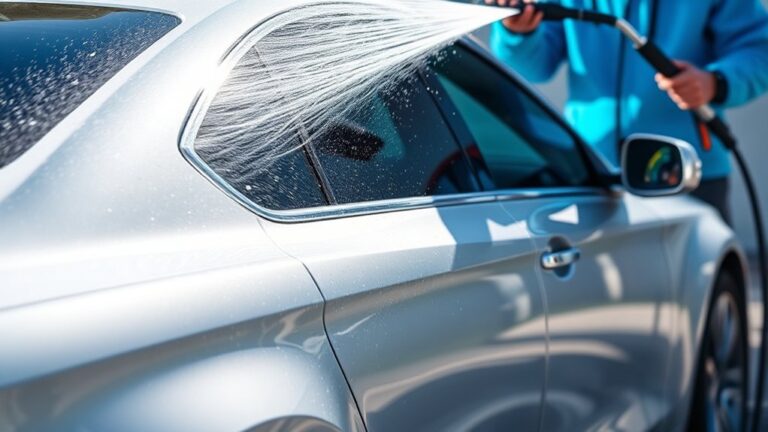
After washing your car, it’s really important to rinse thoroughly to wash away any leftover soap and dirt. Use a gentle stream of water from a hose, starting at the top and working your way down.
Make sure to cover all surfaces, including the wheels and undercarriage, to prevent streaks and spots. Once rinsed, switch to drying your car promptly to avoid water spots.
Use a clean, soft microfiber towel or chamois to gently dry the surface, pressing lightly to soak up the water. Pay special attention to crevices and door jambs where water tends to collect.
Keep drying until the surface feels smooth and free of any moisture. Proper rinsing and drying help protect your paint and leave your car looking shiny and clean.
Common Mistakes to Avoid When Using All-Purpose Cleaner on Your Car
Using all-purpose cleaner on your car can work well, but it’s easy to make mistakes that might harm your paint or leave streaks. One common mistake is using a cleaner that’s too harsh or concentrated, which can strip away protective coatings.
Another mistake is not testing the cleaner on a small area first, risking discoloration or damage. You should also avoid cleaning in direct sunlight, as this makes the cleaner dry too quickly and leaves streaks.
Using a dirty cloth or sponge can spread dirt and cause scratches on your paint. Finally, rushing the process or skipping proper rinsing can leave residues that dull your car’s finish.
Being mindful of these pitfalls helps ensure a safe and effective cleaning.
Tips to Protect Your Car’s Paint and Maintain Its Shine
To keep your car looking its best after cleaning, focus on protecting the paint and maintaining its shine. Always wash your car in the shade or during cooler parts of the day to prevent water spots and streaks.
Use a soft microfiber cloth or sponge to avoid scratches, and dry your car thoroughly with a clean, dry towel. Applying a wax or paint sealant periodically adds a protective layer against dirt, UV rays, and weather damage.
Avoid harsh scrubbing or abrasive cleaners that can strip the paint’s protective coating. Regularly inspect your car’s surface for chips or scratches and touch them up promptly.
These simple steps help preserve your car’s vibrant finish and keep it looking polished and new.
How Often Should You Clean Your Car With All-Purpose Cleaner?
How often you should clean your car with all-purpose cleaner depends on your driving habits and environment. If you’re driving daily in urban areas with pollution or on muddy roads, you’ll need to clean more often—probably every week.
For those who drive less often in cleaner areas, cleaning bi-weekly or once a month might be enough. Regular cleaning helps prevent dirt buildup, which can damage your paint and interior over time.
Less frequent driving in cleaner areas means cleaning every few weeks helps protect your car’s paint and interior.
Think about these factors:
- Commuting in heavy traffic daily
- Living in dusty or polluted areas
- Parking outdoors versus in a garage
- Having children or pets inside the vehicle
- Recent exposure to mud, bird droppings, or tree sap
Adjust your cleaning schedule based on these conditions to take the best care of your car.
Frequently Asked Questions
Can All-Purpose Cleaner Be Used on Car Windows and Mirrors?
Yes, you can use all-purpose cleaner on your car windows and mirrors, but be careful. Spray a small amount onto a soft cloth instead of directly on the glass to avoid overspray on other surfaces.
Gently wipe the glass, then use a clean, dry cloth to buff and remove streaks. Always test a small area first to make sure the cleaner doesn’t cause any damage or streaking.
Is It Safe to Use All-Purpose Cleaner on Car Tires?
Yes, you can use all-purpose cleaner on your tires, but don’t get too excited. The cleaner might strip away some rubber oils and cause premature wear or cracking if used too often.
Are There Any Surfaces in My Car I Should Avoid Cleaning With All-Purpose Cleaner?
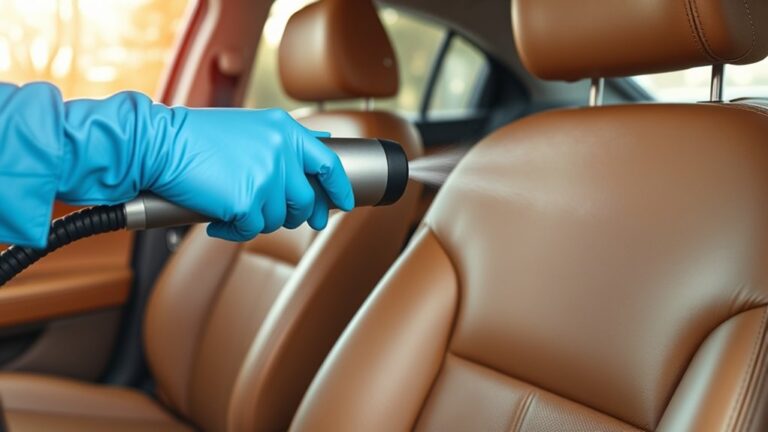
Yes, you should avoid using all-purpose cleaner on your car’s interior leather, delicate plastics, and electronics. These surfaces can be sensitive to harsh chemicals, which may cause discoloration or damage.
When cleaning, test a small area first and use a gentle cloth. Always follow the manufacturer’s instructions and choose products specifically designed for delicate surfaces.
This way, you can keep your car looking its best without risking any harm.
How Do I Test the Cleaner’s Compatibility With My Car’s Paint?
To test if the cleaner works with your car’s paint, start by applying a small amount to an unseen area like under the trunk or door jamb.
Give it a few minutes to see if there’s any discoloration, streaking, or damage. If everything looks fine, it should be safe to use on larger, visible spots.
Always follow the instructions on the cleaner and rinse well afterward to avoid any leftover residue.
Can All-Purpose Cleaner Remove Stubborn Stains or Just Surface Dirt?
All-purpose cleaner can help remove stubborn stains, but its effectiveness depends on the type of stain and cleaner strength. You should apply a small amount to a hidden area first to test its power.
For tough stains, let the cleaner sit for a few minutes before scrubbing gently. Avoid overuse, and always rinse thoroughly to prevent residue buildup, which helps keep your car’s paint protected.
Conclusion
Think of cleaning your car with all-purpose cleaner like tending a delicate garden. You need the right tools, gentle hands, and patience. When done correctly, your car’s paint gleams as if it’s been kissed by the morning sun.
Just like a gardener knows when to water and when to pause, knowing how to safely use all-purpose cleaner keeps your vehicle looking fresh and vibrant. Using it properly turns everyday maintenance into a simple act of care and preservation.