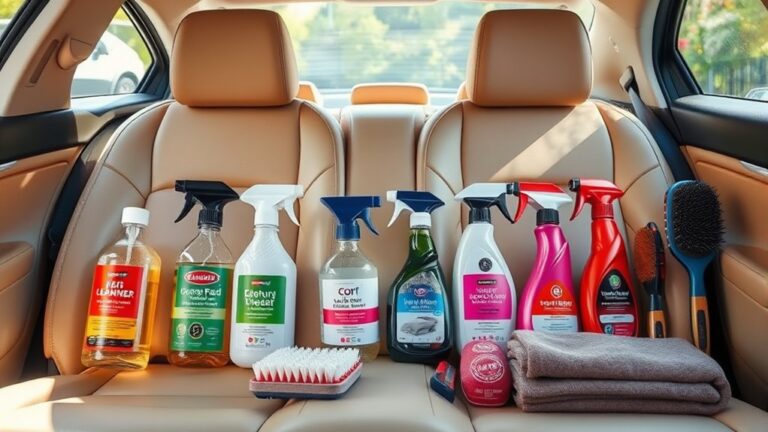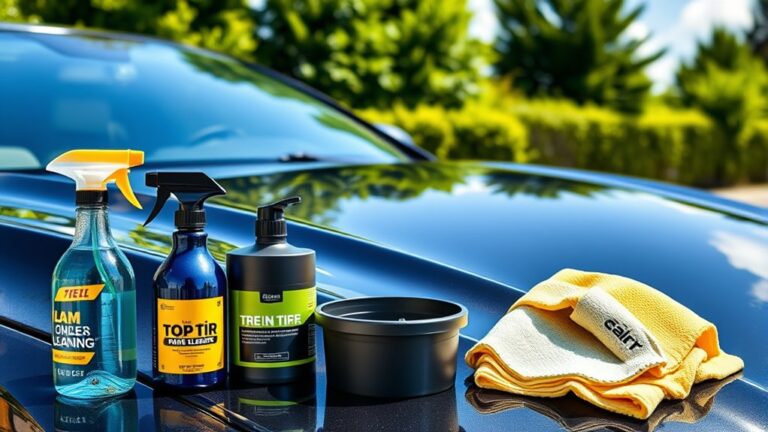
Can You Use Glass Cleaner on Car Windows?
Are you tired of streaky, cloudy car windows after cleaning? You’re not alone—many people struggle with finding the right product that keeps their windows spotless without causing damage.
Using household glass cleaner on your car windows might seem like a quick fix, but it often leads to more problems.
Using household glass cleaner on your car windows isn’t recommended because it can cause streaks, cloudiness, and damage to tints or coatings.
These cleaners often contain harsh ingredients like ammonia that can wear down rubber seals and lead to long-term damage, increasing repair costs.
Instead, opt for products labeled for automotive use and follow proper cleaning techniques.
Want to know how to keep your car windows spotless without risking damage? Keep exploring for expert tips and safer options.
Key Takeaways
- Household glass cleaners with ammonia or harsh solvents can damage your car window tint and coatings.
- It’s better to use automotive-specific glass cleaners that are labeled safe for tinted windows. Avoid any products that contain ammonia.
- Before using any cleaner, test it on a small, hidden area first. This way, you can make sure it won’t harm your glass.
- When cleaning your car windows, do it in shaded areas. Use a microfiber cloth for a streak-free finish.
- If you have stubborn stains, deep scratches, or fogged internal glass, it’s a good idea to seek professional help.
Is Household Glass Cleaner Safe for Car Windows?
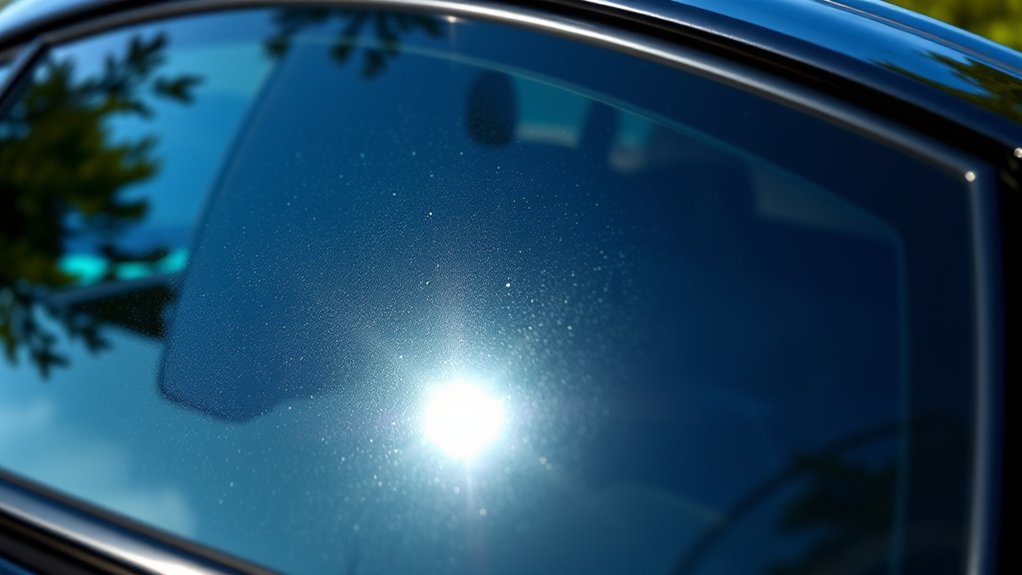
Many people wonder whether household glass cleaners are safe to use on car windows. The truth is, most household cleaners contain chemicals that can damage your car’s glass over time.
Household glass cleaners can harm your car’s windows and should be avoided.
They often include ammonia or other harsh solvents that may cause streaks, cloudiness, or even corrosion of the glass or rubber seals. These cleaners are made for household windows and mirrors, which are usually less exposed to weather and dirt than car windows.
Using them on your vehicle could leave unwanted residue or cause damage that’s costly to fix. If you want to keep your car’s windows clear and in good shape, it’s best to choose a cleaner made specifically for cars.
This way, you protect your investment and get a streak-free shine without risking damage.
What Are the Risks of Using Household Glass Cleaner on Your Car?
Using household glass cleaner on your car might seem like a quick fix, but it can actually cause some problems. Many household cleaners contain harsh chemicals like ammonia or alcohol that aren’t good for your car’s windows.
These substances can damage the tint or coating over time, causing it to peel or fade. That can make it harder to see out of your windows and reduce your privacy.
Plus, the strong formulas often leave streaks, smudges, or residue, which can make visibility worse. Some cleaners can also wear down the rubber seals around your windows, leading to leaks or wind noise.
Using products not made for cars increases the risk of long-term damage, and repairs can get pricey. It’s better to pick cleaning solutions specifically designed for automotive glass to keep your windows clear and undamaged.
Which Glass Cleaners Are Safe for Car Windows?
Wondering which glass cleaners are safe for your car windows? Look for products labeled specifically for automotive use or those that are ammonia-free.
Ammonia-based cleaners can damage tinting and strip protective coatings, so avoid them. Instead, choose gentle, non-abrasive cleaners made for car glass.
Avoid ammonia cleaners; opt for gentle, non-abrasive car glass cleaners to protect tinting and coatings.
Many automotive glass cleaners contain safe solvents that effectively remove dirt and grime without harming the surface. Check the ingredients list, and if you’re unsure, test the cleaner on a small, hidden area first.
Avoid household cleaners with harsh chemicals or abrasive ingredients. Using the right cleaner keeps your windows clear and undamaged, helping maintain both visibility and your car’s glass coatings.
How Do You Properly Clean Car Windows Without Streaks?
To clean your car windows without streaks, start by choosing a cleaner that’s safe and effective.
Use proper techniques like wiping with a microfiber cloth and avoiding circular motions, which can cause streaks.
When done right, your windows will look crystal clear and streak-free.
Use the Right Cleaner
Choosing the right cleaner is essential for achieving streak-free car windows. You want a product that effectively removes dirt and grime without leaving residue. Look for cleaners labeled specifically for automotive glass, as they’re formulated to avoid streaks and smudges.
To get the best results, consider these factors:
First, avoid ammonia-based cleaners because they can damage tint film and cause streaks. Next, pick a streak-free formula designed for automotive glass. It’s also helpful to choose a product with quick-drying features to minimize water spots.
Before using, test the cleaner on a small area first to check for any adverse reactions. Using the proper cleaner made for car windows ensures a clearer view and a streak-free finish without risking damage.
Proper Cleaning Techniques
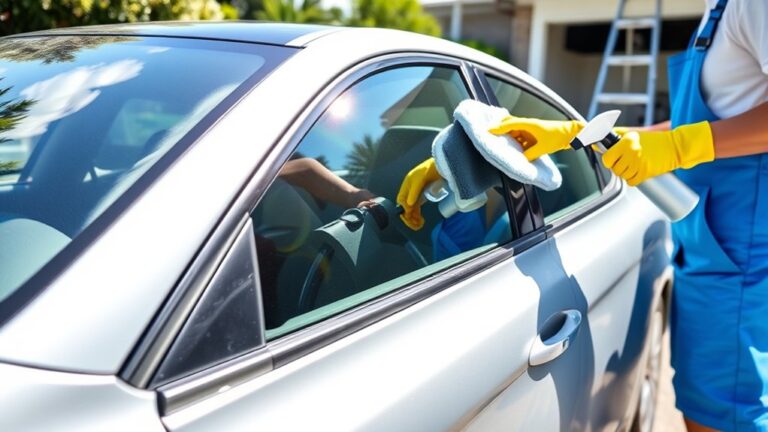
After selecting the right cleaner, applying proper cleaning techniques guarantees your car windows come out spotless and streak-free. Start by washing the glass in gentle, circular motions to loosen dirt. Use a microfiber cloth or a soft, clean cloth to prevent scratches.
Avoid cleaning in direct sunlight, as heat can cause the cleaner to dry too quickly, leaving streaks. Instead, clean one small section at a time and then immediately buff with a dry cloth to remove any residue. For stubborn spots, apply a little more cleaner and gently scrub.
Always wipe in a consistent pattern, either horizontal or vertical, to ensure even coverage. Finish by inspecting the window from different angles and buff out any remaining streaks for crystal-clear results.
What Are the Best Alternatives to Glass Cleaner for Car Windows?
If you’re looking for alternatives to glass cleaner for your car windows, natural solutions like vinegar and water can work well. They’re affordable and easy to make at home.
Commercial window cleaners are also available, offering quick and effective results. They can be a handy option if you’re in a hurry.
You can even make your own cleaning mixture using simple ingredients. This way, you can keep your windows spotless without relying solely on store-bought products.
Natural Cleaning Solutions
Regarding cleaning car windows naturally, there are several effective alternatives to chemical glass cleaners that are gentle on surfaces and the environment. You can try:
- White vinegar and water: Mix equal parts, spray, and wipe for a streak-free shine.
- Lemon juice and water: Combine a few drops of lemon with water for a natural degreaser.
- Baking soda paste: Mix with water, apply to stubborn spots, then wipe clean.
- Rubbing alcohol: Dilute with water to effectively remove grime and smudges.
These options are eco-friendly, cost-effective, and free of harsh chemicals. Using natural solutions helps preserve your car’s windows and reduces your environmental impact. It makes your cleaning routine safer for both you and the planet.
Commercial Window Cleaners
When looking for good alternatives to traditional glass cleaners, some commercial options really stand out for cleaning car windows without leaving streaks or residues. These products are made specifically for automotive use, so they’re gentle but effective.
Some cleaners have alcohol-based formulas that evaporate quickly, helping you avoid streaks. Others include foaming agents that lift dirt easily without scratching the glass.
Always pick a product labeled safe for automotive glass to get the best results.
| Product Type | Benefits |
|---|---|
| Alcohol-based cleaners | Fast evaporation and streak-free finish |
| Foaming glass sprays | Easy to apply and lift stubborn grime |
| Ammonia-free formulas | Gentle on tint and seals |
Homemade Cleaning Recipes
Many car owners prefer homemade cleaning solutions for their windows, especially when they want to avoid chemical residues or save some money. These recipes are simple, effective, and eco-friendly.
Here are some top alternatives:
Vinegar and Water: Mix equal parts white vinegar and water for a natural, streak-free clean.
Rubbing Alcohol Solution: Combine two-thirds rubbing alcohol with one-third water for quick evaporation and clarity.
Dish Soap and Water: Add a few drops of dish soap to water to break down grime and dirt easily.
Baking Soda Paste: Make a paste with baking soda and water for stubborn spots, then wipe clean.
These options provide versatile, chemical-free cleaning that keeps your windows clear without any harmful residues.
How Often Should You Clean Your Car Windows?
You should clean your car windows regularly to keep visibility clear and stay safe on the road. How often you do this depends on your environment and how much you drive.
If you commute daily or park in busy areas, aim to clean your windows once a week to get rid of dirt, dust, and smudges. After heavy rain or snow, check for water spots or grime and clean as needed.
If you notice streaks or your view isn’t as sharp, it’s time for a quick wipe. Regular cleaning prevents buildup that can block your view, especially when driving at night.
Occasional deep cleaning, like every two to four weeks, helps keep the glass transparent. Staying consistent with cleaning ensures your windows stay clear and your view remains unobstructed.
Common Mistakes to Avoid When Cleaning Car Windows
Cleaning your car windows might seem straightforward, but avoiding common mistakes ensures you don’t end up with streaks, scratches, or residue that can impair visibility.
First, don’t use ammonia-based cleaners on tinted windows because they can damage the tint. Second, avoid cleaning in direct sunlight, which causes quicker drying and streaks.
Third, don’t scrub aggressively; gentle wiping helps prevent scratches. Fourth, steer clear of using dirty cloths or paper towels, which can spread dirt and cause micro-scratches.
Instead, use a clean microfiber cloth and a suitable cleaner, applying it evenly. Taking these precautions keeps your windows clear, scratch-free, and streak-free, giving you peak visibility and safety on the road.
When Should You Seek Professional Help for Car Window Cleaning?
Certain situations call for professional assistance to guarantee your car windows are thoroughly and safely cleaned. If your windows have stubborn stains like tree sap, bird droppings, or hard mineral deposits, it’s best to seek experts.
Deep scratches or cloudy film buildup that won’t come off with regular cleaning also require professional tools and expertise. Moreover, if you notice cracks or chips near the glass edges, avoid cleaning yourself to prevent further damage.
When your windows are heavily fogged or have internal moisture buildup, professionals can handle the cleaning process safely without risking damage.
Finally, if you’re unsure about the right cleaning products or techniques, it’s wise to consult professionals who have the right equipment and experience to maintain your windows without causing harm.
Frequently Asked Questions
Can Using Household Glass Cleaner Damage Your Car’s Window Tint?
Yes, using household glass cleaner can damage your car’s window tint. Many of these cleaners contain ammonia or harsh chemicals that can cause the tint film to peel, crack, or discolor over time.
To keep your tint looking good, use a cleaner made specifically for automotive windows or a mild, non-ammonia cleaner. It’s a good idea to test a small area first before cleaning the entire window.
Avoid abrasive scrubbing, which can also harm the tint. Following these tips will help keep your car’s windows clear and the tint intact.
Are There Specific Ingredients in Glass Cleaners to Avoid on Car Windows?
Yes, you should avoid glass cleaners with ammonia or alcohol-based ingredients on your car windows. These chemicals can damage window tinting and cause it to peel or discolor over time.
Look for ammonia-free, non-abrasive cleaners specifically made for automotive use. Always check labels carefully, and test a small area first to prevent any damage.
Using the right cleaner helps keep your windows clear and your tint intact.
How Does Temperature Affect Cleaning Car Windows With Glass Cleaner?
Sure, blasting your windows with glass cleaner in freezing temperatures turns your car into a frosty mirror, while on scorching days, it’s like trying to wipe away a heatwave.
Ideally, you clean when the glass’s temperature hovers between 50-70°F. Otherwise, you risk streaks, smudges, or the cleaner evaporating instantly, leaving you frustrated and your windows dirtier than before.
Can Glass Cleaner Be Used on Car Mirrors and Other Glass Surfaces?
Yes, you can use glass cleaner on your car mirrors and other glass surfaces. Just spray the cleaner onto a clean cloth or directly onto the surface, then wipe in circular motions.
Avoid using too much liquid to prevent streaks or drips. Make sure to use a product safe for automotive glass, and dry the surface thoroughly for a clear, streak-free shine.
Is It Safe to Use Glass Cleaner on Heated or Frozen Car Windows?
No, it’s not safe to use glass cleaner on heated or frozen car windows. When windows are hot, the cleaner can evaporate quickly, which might cause streaks or even damage.
On frozen windows, the cleaner may freeze, making it useless and potentially harming the glass. Always wait until your windows are at room temperature before cleaning.
And avoid using any cleaning products on icy or very hot glass surfaces to keep your windows safe and clear.
Conclusion
Using the right cleaner for your car windows is essential. Household glass cleaners can sometimes cause damage or streaks. Did you know that improper cleaning can reduce visibility and compromise safety?
Stick to products designed specifically for automotive use, and clean your windows regularly to maintain clear views. By avoiding common mistakes and knowing when to seek professional help, you’ll keep your car looking great.
Using the proper glass cleaner for your car windows ensures safety and clarity every time.