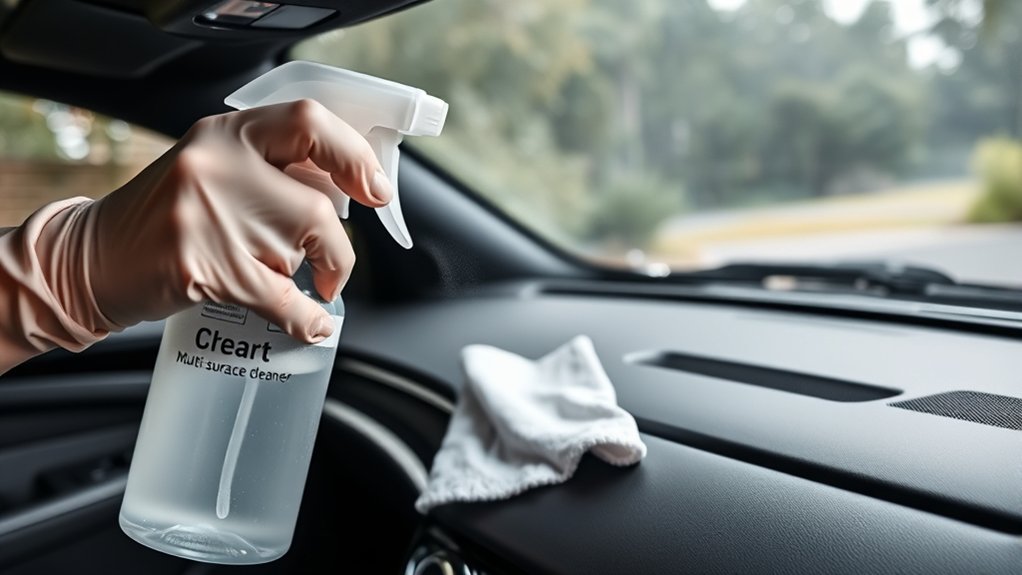
How to Safely Use Multi-Surface Cleaner on Car Interiors
Many car owners struggle with keeping their car interiors spotless without causing damage. Using the wrong cleaning products can sometimes do more harm than good, leaving you frustrated and unsure of what to do next.
To safely use a multi-surface cleaner on your car interior, first identify each material—leather, fabric, or plastic—and choose a compatible cleaner.
Always test it on a hidden spot first to see how it reacts. Spray the cleaner onto a soft cloth rather than directly on surfaces. Avoid oversaturating any area, as too much liquid can cause damage.
Use gentle, circular motions when cleaning. This helps lift dirt without scratching or harming delicate surfaces.
Once done, dry everything thoroughly to prevent moisture buildup.
For the best results, proper application and post-cleaning care are essential. Keep exploring for more detailed tips to protect your car’s interior effectively.
Key Takeaways
- Always test the cleaner on a hidden spot first. This helps you see if it’s safe for your surface and avoids any damage.
- Spray the cleaner onto a soft cloth instead of directly on the surface. It gives you better control and prevents over-saturating the area.
- Use gentle, circular motions and a light touch. This way, you can lift dirt without harming delicate materials.
- After cleaning, make sure to dry everything thoroughly. Opening a window can help with airflow and keeps moisture from building up.
- Don’t forget to regularly clean high-touch areas. Using the right protectants can help keep surfaces in good shape and stop dirt from settling in again.
Why You Need to Be Careful When Using Multi-Surface Cleaners in Your Car Interior
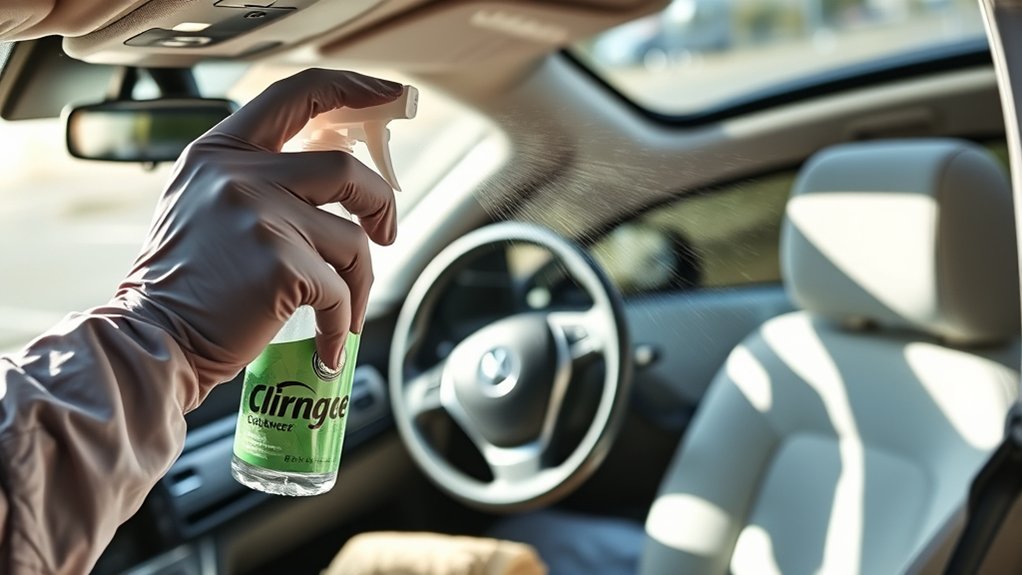
While multi-surface cleaners can make cleaning your car interior easier, you need to be careful with how you use them. These cleaners often contain chemicals that might damage delicate surfaces or leave residues if not used properly.
Applying too much product or using it on the wrong surfaces can lead to discoloration, staining, or deterioration over time. You also risk fumes that could irritate your eyes or respiratory system if you don’t ventilate the car well.
Overusing cleaners or applying them improperly can cause damage, stains, or health hazards inside your car.
Some cleaners might strip away protective coatings on plastics or vinyl, which can shorten their lifespan. Always read labels carefully, test on small areas first, and follow the manufacturer’s instructions.
Being cautious ensures you clean effectively without unintentionally harming your car’s interior surfaces.
Identify Different Surfaces and Materials Inside Your Car
Before applying any multi-surface cleaner, it’s important to identify the different materials inside your car. Your dashboard, door panels, seats, and steering wheel may be made of various materials like plastic, vinyl, leather, or fabric.
Each surface reacts differently to cleaning products, so knowing what you’re dealing with helps prevent damage. For example, leather needs gentle cleaning and conditioning, while plastic surfaces can usually handle more robust cleaners.
Fabric seats require vacuuming first and specific fabric cleaners. Observe the texture, color, and finish of each material. Check for labels or manufacturer instructions if available.
Correct identification guarantees you choose the right cleaning approach for each surface, maintaining your car’s interior appearance and longevity.
How to Choose the Right Multi-Surface Cleaner for Your Vehicle
How do you choose the right multi-surface cleaner for your vehicle? First, think about the surfaces you’ll be cleaning. Some cleaners are gentle enough for delicate materials, while others pack a punch.
Check the label to see if the cleaner is compatible with plastics, leather, or fabric. Consider your specific needs—do you want a product that also deodorizes or removes stains? Price and brand reputation are important too.
Test Your Cleaner on a Hidden Spot First
Find a hidden area, like under a seat or in a corner, to test your cleaner. Apply a small amount and wait a few minutes to see if it causes discoloration.
This quick check helps prevent damage to visible surfaces.
Find Hidden Area
Have you ever wondered if your cleaner might cause damage or discoloration? Before using it on visible areas, find a hidden spot to test.
Look for an inconspicuous corner or underside of your interior surfaces—places you rarely see. Spray a small amount of cleaner there and wait a few minutes.
Check if there’s any change in color, texture, or finish. If the surface stays the same, it’s safe to go ahead. If discoloration or damage shows up, avoid using that cleaner on more visible parts.
Testing in hidden areas helps prevent costly mistakes and makes sure your cleaner won’t harm your car’s interior. Always take this extra step to protect your vehicle and keep it looking its best.
Check for Discoloration
Discoloration is a clear sign that your cleaner might not be suitable for your car’s interior. Before using it widely, test it on a hidden spot first.
Pick an inconspicuous area, like under the seat or inside a door panel. Apply a small amount of cleaner and wait a few minutes.
Then, watch for any color change or damage. If you see discoloration, avoid using it on visible surfaces.
Use the table below to compare cleaner types and their potential effects:
| Cleaner Type | Risk of Discoloration |
|---|---|
| Alcohol-based | Moderate |
| Vinegar solutions | Low |
| Ammonia-based | High |
| Commercial cleaners | Varies by brand |
| Water only | None |
Testing helps keep your car’s interior pristine and prevents unexpected damage.
Learn the Proper Way to Apply Cleaners Without Causing Damage
To clean your car’s interior safely, it’s important to apply cleaners carefully so you don’t cause any damage. First, test the cleaner on a hidden spot to see if it causes any reactions.
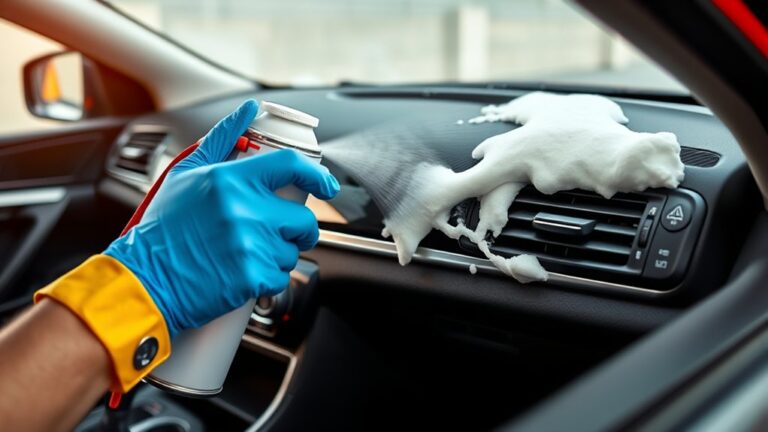
Use a spray bottle to apply the cleaner evenly, but avoid oversaturating the surface. When applying, spray the cleaner onto a soft cloth instead of directly onto surfaces. This gives you better control and prevents excess liquid from seeping into seams or electronics.
Remember these tips:
- Use a light touch and don’t press too hard.
- Keep the cleaner away from sensitive areas like vents and electronic controls.
- Wipe in gentle, circular motions to lift dirt without scratching surfaces.
Following these steps will help keep your car interior clean and undamaged.
Use Gentle Techniques and Soft Cloths for Safe Cleaning
After testing your cleaner on a hidden spot and applying it carefully, the next step is to use gentle techniques and soft cloths to prevent damage. Use a microfiber or soft cloth to wipe surfaces gently, avoiding too much pressure that could scratch or harm the material.
Light, circular motions help lift dirt without abrasive rubbing. For stubborn spots, let the cleaner sit briefly before softly dabbing or wiping. Always avoid harsh scrubbing, which can damage delicate surfaces like leather or plastic.
Keep the cloth damp but not soaked to prevent oversaturation that might seep into seams or vents. Using gentle techniques and soft cloths ensures your interior stays clean without risking scratches, discoloration, or other damage.
This way, your car looks fresh and well-maintained for the long run.
Common Mistakes to Avoid When Cleaning Your Car Interior
One of the most common mistakes people make when cleaning their car interior is using too much cleaner or oversaturating surfaces. This can cause streaks, residue, and even damage to delicate materials.
To avoid this, don’t spray the cleaner directly onto surfaces. Instead, spray it onto a cloth first. Also, steer clear of harsh or abrasive tools that can scratch or harm your interior.
Rushing through the cleaning process often leads to missed spots or uneven results. Keep these tips in mind:
- Use a damp cloth rather than soaking surfaces
- Test cleaners on small, hidden areas first
- Follow manufacturer instructions for each product
Sticking to these practices will help you get a safe, effective clean without risking damage.
Finish With Proper Drying and Post-Cleaning Care Tips
After cleaning, make sure you dry all surfaces thoroughly to prevent streaks and moisture buildup. Using a clean, microfiber cloth will help absorb excess water and avoid damage.
Regularly maintaining your car’s interior will keep it looking fresh and extend the life of your cleaning efforts. Taking these small steps can make a big difference in keeping everything in top shape.
Proper Drying Techniques
To guarantee your car interior dries thoroughly and stays in top condition, focus on proper drying techniques right after cleaning. Start by gently blotting excess moisture from surfaces with a clean microfiber cloth.
Next, open all windows and doors to encourage airflow, which helps speed up the drying process. If you can, use a fan or a portable air blower to circulate air inside the vehicle.
Avoid leaving surfaces wet for too long, as this can lead to mold or unpleasant odors. Remember these tips:
- Blot surfaces gently with a microfiber towel
- Keep windows open for better ventilation
- Use a fan or air blower if you have one
These steps help prevent streaks, water spots, and lingering dampness, making sure your car interior stays fresh and clean.
Post-Cleaning Maintenance
Once you’ve finished drying your car interior, maintaining its cleanliness becomes easier with some simple post-cleaning care tips. First, leave the windows slightly open for a few minutes to let any residual moisture escape, helping to prevent mold or mildew growth.
Use a soft cloth to gently buff surfaces, restoring their shine and removing streaks. Regularly check high-touch areas like steering wheels and door handles, wiping them down weekly to prevent buildup.
Consider applying a protectant or conditioner suitable for your interior materials to keep surfaces supple and resistant to dirt. Avoid eating or drinking inside your car to minimize messes.
Finally, schedule routine cleanings to keep your car looking fresh and to extend the life of your interior surfaces.
Frequently Asked Questions
Can Multi-Surface Cleaners Cause Long-Term Damage to Car Electronics?
Yes, multi-surface cleaners can cause long-term damage to car electronics if you’re not careful. If you accidentally spill or spray cleaner onto sensitive parts, it can lead to corrosion or malfunction over time.
To prevent this, spray the cleaner onto a cloth first, then gently wipe the surfaces. Keep liquids away from vents, screens, and connectors to protect your electronics and keep your car in good shape.
Are There Eco-Friendly or Non-Toxic Multi-Surface Cleaners Suitable for Cars?
Yes, there are eco-friendly and non-toxic multi-surface cleaners perfect for your car. You can choose plant-based formulas that gently lift dirt without harsh chemicals, making your vehicle safer for you and the environment.
These cleaners often come with natural fragrances and are free from harmful residues. By opting for them, you protect your car’s interior and contribute to a greener planet.
All while enjoying a fresh, clean ride.
How Often Should I Clean Different Areas of My Car Interior?
You should vacuum and wipe down your car interior weekly to keep dust and dirt at bay.
For the dashboard and console, clean every two weeks or as needed to prevent grime buildup.
Seat and fabric cleaning depends on usage, but aim for once a month.
Regular cleaning not only keeps your car looking fresh but also helps it last longer and stays healthier inside.
What Precautions Should I Take When Cleaning Leather or Fabric Seats?
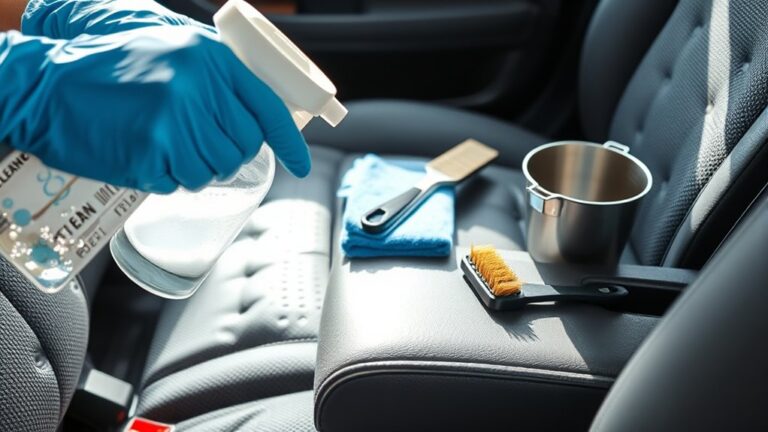
When cleaning leather or fabric seats, it’s important to take precautions to prevent any damage. Always test your cleaner on a hidden spot first to see how the material reacts. This way, you can avoid unwanted discoloration or deterioration.
Use gentle, non-abrasive tools and be careful not to soak the seats with too much liquid. Excessive moisture can harm the fabric or leather over time.
Make sure to protect your seats from harsh chemicals, and keep the area well-ventilated during cleaning. Ignoring these steps could cause lasting damage, so pay attention to every detail.
Can I Use Multi-Surface Cleaner on Car Dashboards With Special Coatings?
Yes, you can use a multi-surface cleaner on car dashboards with special coatings, but it’s best to check the manufacturer’s instructions first.
It’s a good idea to test the cleaner on a small, hidden area first to make sure it won’t damage or discolor the coating.
Use a soft cloth and apply the cleaner lightly. Avoid scrubbing too hard, as that could cause damage.
Regularly inspect the surface to prevent buildup or potential harm, helping keep your dashboard looking its best.
Conclusion
Remember, a little care goes a long way in keeping your car interior spotless and damage-free. By understanding your surfaces, choosing the right cleaner, and testing first, you guarantee safety and longevity.
It’s funny how a simple swipe with the right technique can transform your ride, making it look brand new. Trust your instincts, stay gentle, and enjoy the satisfying sparkle of a well-maintained vehicle.
When using multi-surface cleaner on car interiors, always read the label for specific instructions. Test it on a small area first to ensure it won’t cause any damage. This step is key to safe cleaning.
With the right approach, your car’s interior will stay fresh and clean longer. So, next time you clean, remember that using multi-surface cleaner properly will keep your vehicle looking its best. Happy cleaning!