How to Use Lysol All Purpose Cleaner Safely in My Car
Are you tired of driving around in a car that just doesn’t feel clean? Many people struggle with keeping their vehicles fresh and germ-free, especially when using harsh chemicals that might damage delicate surfaces.
If you’re looking for an effective yet safe way to clean your car, Lysol All Purpose Cleaner might be just what you need.
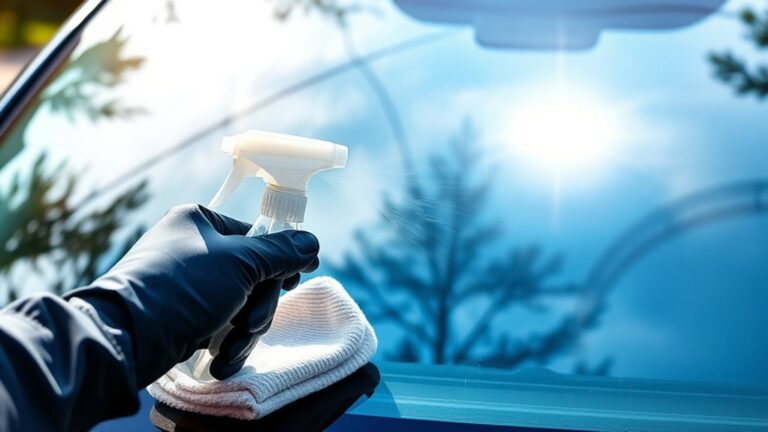
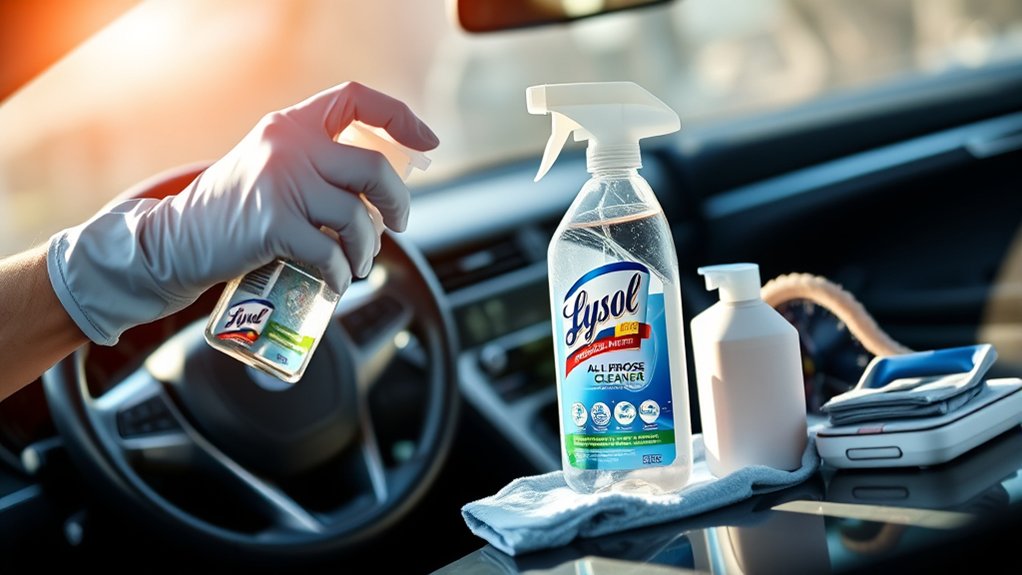
To use Lysol All Purpose Cleaner safely in your car, first, make certain you dilute it properly according to the label instructions. Spray lightly on hard, non-porous surfaces like dashboards and control panels, avoiding delicate materials such as leather and fabric upholstery.
Always test a small, hidden area first to ensure there’s no damage or discoloration. Guarantee good ventilation during and after cleaning, and let surfaces air dry for at least 10 minutes.
If you want to learn how to do this effectively and avoid common mistakes, keep going.
Key Takeaways
- Use on hard, non-porous surfaces like dashboards. Try to avoid delicate materials such as leather and fabric upholstery.
- Always dilute Lysol according to the label instructions. It’s also a good idea to test a small, hidden area first to make sure it won’t cause any damage.
- Spray lightly and wipe surfaces with a clean cloth. Let everything dry for at least 10 minutes before touching it again.
- Make sure your car is well-ventilated. Open windows and run the ventilation system during and after cleaning.
- Don’t overdo it. Avoid spraying directly on electronics and try not to touch surfaces until they are fully dry.
Why Using Household Cleaners Like Lysol in Your Car Can Be Risky
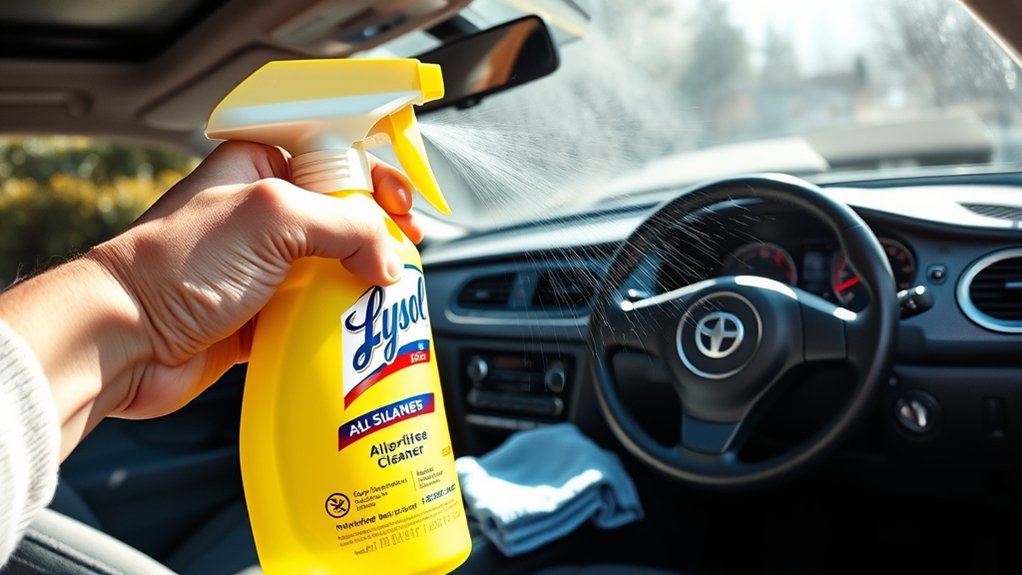
Although household cleaners like Lysol are effective for cleaning surfaces at home, using them in your car can be risky. Cars have materials that might react badly to strong chemicals, which can cause damage or discoloration.
Lysol contains disinfectants and fragrances that may not be suitable for delicate surfaces like leather, plastic, or fabric upholstery in your vehicle. Overusing or improperly applying it can leave chemical residues that might irritate your skin or eyes.
Spraying Lysol inside your car without proper ventilation can cause fumes to build up, posing health risks. Remember, what’s safe for household surfaces isn’t always safe for your car’s interior.
It’s best to consider cleaning options specifically designed for automotive use to keep your car safe and clean.
How to Choose the Right Surfaces to Clean With Lysol
Wondering which surfaces are safe to clean with Lysol? Focus on non-porous, hard surfaces that can handle disinfectants. These include your car’s dashboard, steering wheel, door handles, and control panels.
Use Lysol on hard, non-porous surfaces like dashboards and door handles for safe, effective disinfection.
Avoid using Lysol on delicate or porous materials, like fabric seats or soft touch surfaces, as it might cause damage or discoloration. Always check the manufacturer’s guidelines for specific materials.
If you’re unsure, test a small, hidden area first to see if there are any adverse effects. Keep in mind that Lysol is meant for surfaces resistant to liquids and chemicals.
This ensures effective cleaning without risking damage to your car’s interior. Being selective helps you clean safely and effectively.
How to Test Small Areas First to Avoid Damage
Start by choosing a hidden spot to test the Lysol cleaner so any potential damage stays out of sight. Use only a small amount of cleaner to see how the surface reacts.
Watch for discoloration or changes in texture before applying it to visible areas. This way, you can avoid any surprises or damage on the more noticeable parts.
Choose Hidden Spot First
Before applying Lysol cleaner to your car, it’s important to test a small, hidden spot first. Picking a discreet spot helps you see how your car’s material reacts without risking obvious damage. Look for an inconspicuous place, like the inside edge of a door panel or under a seat.
Here are some simple steps:
- Choose a spot with similar material and color to the areas you plan to clean.
- Apply a tiny amount of Lysol cleaner using a soft cloth or cotton swab.
- Wait a few minutes to check for any discoloration, peeling, or damage.
This cautious approach helps you avoid costly mistakes and keeps your car’s interior looking its best.
Apply Minimal Cleaner Amount
To prevent over-saturating your car’s surfaces, always apply a minimal amount of Lysol cleaner when testing small areas. Use a damp cloth or cotton swab to lightly dab the cleaner onto a hidden spot, like under the seat or door jamb. This way, you avoid potential damage or discoloration.
Here’s a simple guide to help you:
| Surface Type | Test Area Size | Expected Reaction |
|---|---|---|
| Plastic Interior | Small patch | No discoloration |
| Fabric Seats | Hidden spot | No staining |
| Vinyl Surfaces | Discreet section | No warping |
Being cautious guarantees you protect your car’s surfaces while cleaning effectively.
Observe for Discoloration
Always test a small, hidden area first when using Lysol cleaner on your car’s surfaces. This helps you spot any discoloration or damage before you do a full clean.
Choose a spot like the corner of a seat or under a panel. Spray a little Lysol and wait 5-10 minutes to see what happens.
Watch for any color change or damage. If nothing happens, it’s safe to go ahead. If you see fading or staining, avoid using Lysol on that surface or try a different cleaner.
This simple step protects your car’s interior and makes sure your cleaning is both safe and effective. Remember, testing small areas is a quick way to prevent costly damage later.
Preparing Your Car Interior for Lysol Cleaning
Before you start cleaning with Lysol, clear out any clutter from your car interior.
Next, vacuum thoroughly to remove dust, dirt, and debris.
This prep helps ensure a more effective and even cleaning process.
Clear Out Clutter
Start by removing all clutter from your car interior, like trash, loose papers, and personal items. Clearing space helps you focus on cleaning effectively and keeps debris from messing with disinfecting surfaces.
To make things easier, follow these steps:
- Gather all loose items and sort them into designated spots or containers.
- Toss out trash and anything you no longer need.
- Store essential belongings in your trunk or glove compartment.
Vacuum Thoroughly
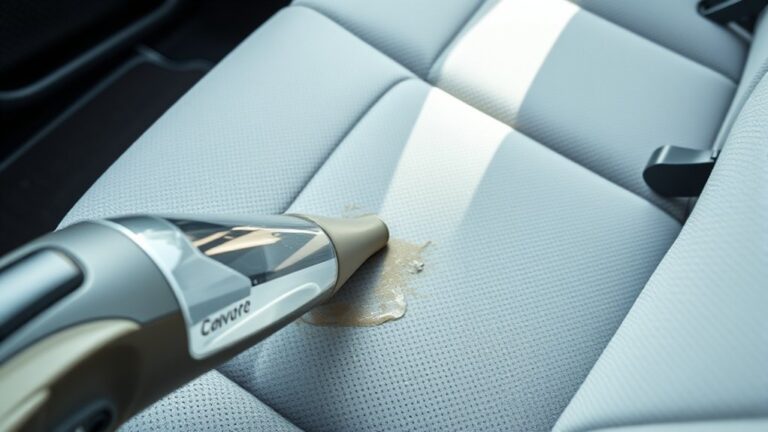
Vacuum your car thoroughly to remove dirt, crumbs, and debris from carpets, seats, and floor mats. Use a handheld or upright vacuum with attachments to reach tight spaces, under seats, and between seat cushions.
Focus on areas where dust and debris tend to build up, like cup holders, vents, and door pockets. A clean surface helps Lysol cleaner work better without trapping dirt or spreading germs.
Take your time and don’t forget to vacuum the trunk and storage compartments. This step prepares your car for cleaning and helps keep the inside healthier.
Once you’ve finished, your interior will be ready for disinfecting, so the Lysol cleaner can do its job thoroughly.
How to Properly Dilute Lysol for Safe Car Use
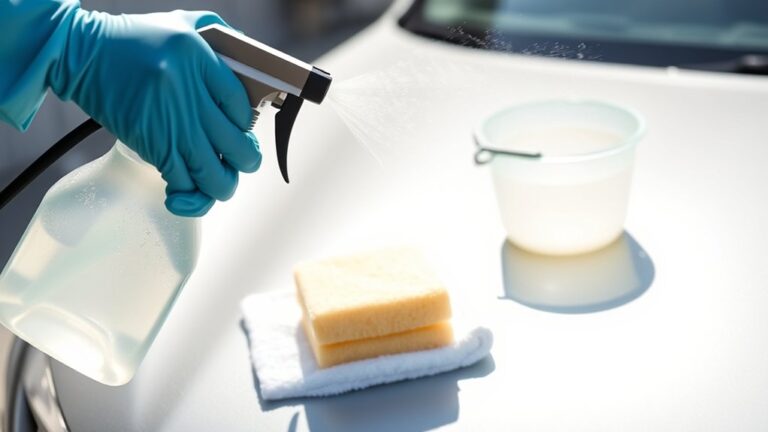
To use Lysol cleaner safely in your car, it’s important to dilute it properly. This helps prevent damage to surfaces and keeps health risks at bay. Proper dilution makes sure you get effective cleaning without causing corrosion or residues.
Here’s how to do it:
Follow the instructions on the label for the correct dilution ratio. Usually, that means mixing a specific amount of Lysol with water.
Use a clean spray bottle to mix the Lysol and water thoroughly before spraying. This ensures even distribution and effectiveness.
Before applying to a visible area, test a small, hidden spot. This helps you check for any reactions or discoloration first.
Step-by-Step: How to Apply Lysol Safely in Your Car
Before applying Lysol, make sure your car is well-ventilated and free of loose items. Spray the cleaner evenly on surfaces, avoiding excess to prevent runoff.
Finally, let the disinfected areas dry completely before using your car again.
Prepare Your Vehicle Properly
Making certain your vehicle is ready for Lysol cleaning starts with a quick inspection to identify any surface dirt or debris. You want the surfaces to be as clean as possible before applying the cleaner for maximum effectiveness.
Start by removing trash and personal items. Then, use a microfiber cloth to wipe down loose dust and dirt from seats, dashboards, and vents.
Finally, vacuum the carpets and upholstery to eliminate embedded debris. This preparation helps prevent dirt from spreading or becoming ingrained during cleaning.
Keep in mind that a well-prepared vehicle not only improves the cleaning process but also prolongs the lifespan of your surfaces.
Taking these simple steps guarantees your Lysol application is thorough and effective, leaving your car fresh and sanitized.
Apply Cleaner Correctly
With your vehicle already prepped and free of loose dirt, it’s time to apply Lysol cleaner effectively. Start by spraying the cleaner evenly onto surfaces, but avoid over-saturating. Focus on high-touch areas like the dashboard, steering wheel, and door handles.
Use a clean microfiber cloth or sponge to wipe down the surfaces, ensuring the cleaner spreads evenly. For fabric seats or carpets, lightly mist and then gently scrub if needed. Remember to keep the nozzle at a safe distance to prevent overspray.
| Surface Type | Application Tip |
|---|---|
| Hard plastics | Spray lightly and wipe with a cloth |
| Upholstery & fabric | Light mist and gentle scrub if necessary |
| Leather | Use minimal spray; wipe immediately |
| Carpeted areas | Mist sparingly, then blot with a cloth |
| High-touch spots | Spray directly, then wipe thoroughly |
Allow Proper Drying Time
After applying Lysol cleaner, it’s essential to let the surfaces dry completely before using your vehicle. Proper drying ensures the disinfectant works effectively and helps prevent residue transfer.
To speed up drying and stay safe, follow these steps:
- Allow at least 10 minutes for the surfaces to air dry, especially in well-ventilated areas.
- Avoid touching the cleaned surfaces during this time to prevent recontamination.
- Use a clean, dry microfiber cloth if you need to wipe down surfaces to remove excess moisture, but only after the initial drying period.
Patience during this step makes sure the disinfectant has enough contact time to eliminate germs and reduces the risk of skin irritation or slipping hazards later.
How to Ventilate Your Car During and After Cleaning
Ventilating your car during and after cleaning is essential to remove fumes and improve air quality. Open all windows and doors to create a steady airflow, helping to disperse any chemical vapors from Lysol.
Ventilate your car thoroughly during and after cleaning to eliminate fumes and freshen the air.
If possible, turn on the car’s ventilation system and set it to fresh air, not recirculate. Keep the windows open for at least 10-15 minutes during cleaning, especially if you’ve used a strong disinfectant.
After cleaning, continue to air out the vehicle for additional time, ideally 30 minutes or more, before driving or closing it up. Proper ventilation reduces inhalation of fumes and helps your car smell fresh.
Regular airing also speeds up drying and minimizes lingering chemical odors.
Common Mistakes to Avoid When Using Lysol in Your Vehicle
While airing out your vehicle helps reduce fumes, it’s easy to make mistakes that can compromise safety or effectiveness when using Lysol. First, avoid overusing the spray, as applying too much can cause residue buildup and damage to interior surfaces.
Second, don’t spray Lysol directly onto electronic components or sensitive materials. Instead, use a cloth to prevent liquid from seeping in and causing problems.
Third, make sure to let surfaces dry completely before touching or using the vehicle again. Not doing so can cause skin irritation or inhalation of fumes.
Being mindful of these mistakes ensures you clean effectively without risking damage or health issues. Remember, proper use and caution are key to keeping your car both clean and safe.
How to Rinse and Dry Surfaces After Cleaning With Lysol
To guarantee your surfaces are thoroughly cleaned and safe, it’s important to rinse off any remaining Lysol residue with a damp cloth or sponge. Gently wipe the cleaned areas to remove leftover cleaner and prevent buildup.
Make sure to use a clean, damp cloth each time to avoid spreading dirt or germs. After rinsing, dry the surfaces with a soft towel or microfiber cloth to prevent water spots and moisture buildup.
Proper drying also helps inhibit mold or bacteria growth in damp areas. Pay attention to seams and crevices where moisture can hide.
Taking these steps guarantees your car surfaces are not only clean but free of any residual chemicals. This helps maintain a safe environment and extends the longevity of your vehicle’s interior.
Tips for Maintaining a Germ-Free and Clean Car Interior Long-Term
Maintaining a germ-free and clean car interior over the long term takes consistent effort and good habits. To keep your vehicle hygienic, establish a routine that includes regular cleaning and disinfecting. Here are three key tips:
- Clean high-touch surfaces weekly. Wipe down the steering wheel, gear shift, door handles, and seats with disinfectant to prevent germ buildup.
- Use protective covers. Invest in washable seat and steering wheel covers to reduce direct contact with dirt and germs.
- Keep clutter minimal. Regularly remove trash and unnecessary items to prevent dust buildup and make cleaning easier.
Sticking to these habits helps maintain a healthier, more sanitized environment inside your car.
When to Seek Professional Help for Car Interior Cleaning
Despite your best efforts to keep your car interior clean and germ-free, there are times when professional cleaning becomes necessary. If you notice stubborn stains that won’t come out with regular cleaning or persistent odors that linger despite your efforts, it’s time to call in experts.
Significant dirt buildup in hard-to-reach areas or mold growth indicate deep cleaning is needed. Moreover, if your car has experienced water damage or extensive spills, professionals can thoroughly sanitize and dry the interior, preventing mold and bacteria.
Regularly scheduled deep cleans are also wise if you or frequent passengers have allergies or respiratory issues. Recognizing these signs guarantees your car stays safe, clean, and healthy beyond what routine cleaning can achieve.
Frequently Asked Questions
Can Lysol Damage Car Upholstery or Fabric Surfaces?
Lysol All Purpose Cleaner can damage car upholstery or fabric surfaces if you use it directly without dilution or proper testing. It contains chemicals that might cause discoloration, fading, or deterioration.
To avoid damage, always read the label, dilute the cleaner as instructed, and test it on a small, hidden area first. Make sure to wipe surfaces thoroughly and avoid oversaturating fabrics for safe cleaning.
Is Lysol Safe to Use on Leather Car Seats?
Lysol isn’t recommended for leather car seats because it can cause damage or drying. Imagine a car owner who used Lysol on their leather seats, only to find cracks and fading afterward.
Instead, you should opt for a cleaner specifically formulated for leather, like a pH-balanced leather cleaner, to keep your seats looking new and prevent damage. Always check the product label to verify compatibility with leather surfaces.
How Often Should I Disinfect My Car With Lysol?
You should disinfect your car with Lysol once a week to keep things clean and healthy. If your car gets a lot of use or you’re around many people, think about doing it more often.
Just be sure to follow the instructions on the label to avoid damaging your car’s surfaces. Pay special attention to sensitive areas and avoid overusing the product.
Make sure to open the windows or turn on the vents during and after cleaning. This helps ventilate the space and prevents buildup or damage.
Regular cleaning keeps your car fresh and safe for everyone who rides in it.
Can I Use Lysol on Electronic Car Components?
Think of your car’s electronic components as fragile butterflies. You wouldn’t want to crush them with harsh chemicals.
You shouldn’t use Lysol All Purpose Cleaner directly on electronic parts because it can damage sensitive surfaces. Instead, lightly dampen a microfiber cloth with the cleaner and gently wipe around electronics.
Always turn off your vehicle first, and avoid spraying any liquid directly onto electronic components. This helps keep them safe and functioning smoothly.
Are There Alternative Cleaning Products Safer Than Lysol for My Car?
Yes, there are safer alternatives to Lysol for your car. You can use diluted vinegar or a gentle, pH-neutral cleaner made specifically for automotive surfaces.
These options are less harsh and help prevent damage to sensitive materials. Always test a small, hidden area first before cleaning the entire surface.
Avoid using abrasive or overly strong chemicals, as they can harm your car’s interior. Regular cleaning with mild solutions keeps things fresh without exposing your car to unnecessary chemicals.
Conclusion
Think of your car as a tiny sanctuary. It shields you daily, just like a home does. Using Lysol safely keeps this sanctuary germ-free without causing damage.
Remember, rushing can be like watering a delicate plant with too much, risking harm. Take your time, test small areas, and follow proper steps.
When you treat your car with care, it rewards you with a clean, safe space. A place where every drive feels comfortable and protected. Using Lysol All Purpose Cleaner safely is key to keeping your car fresh and germ-free.