Can I Use Glass Cleaner on My Car Body How to Guide
Many car owners struggle with keeping their vehicle looking spotless without causing damage. It’s a common concern—what’s safe to use and what might harm your paint? You’re not alone in wondering if glass cleaner is okay for your car body.
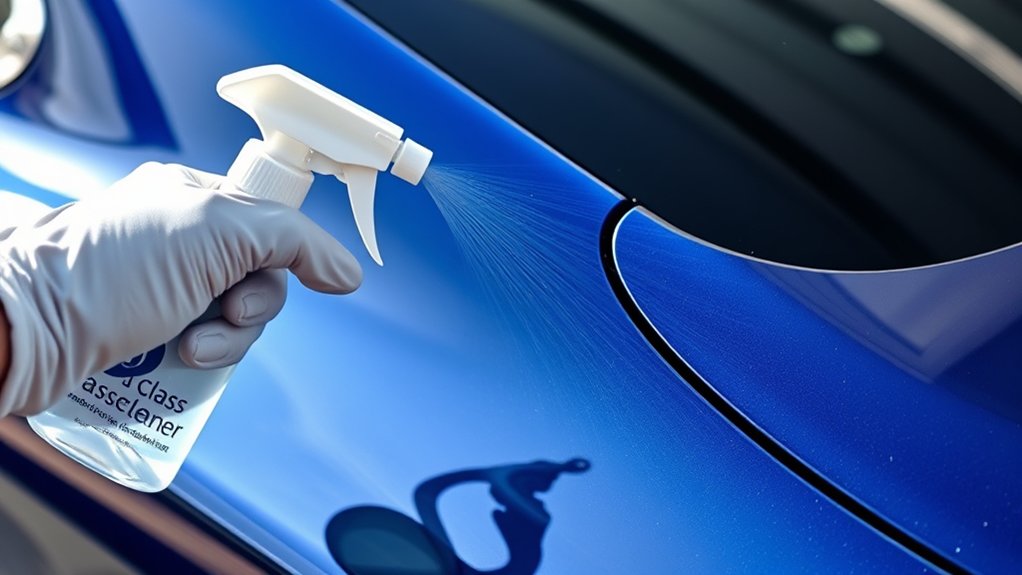
You shouldn’t use glass cleaner on your car body because most contain ammonia and harsh chemicals that can damage paint and clear coats over time. They may cause streaks, residues, or even dullness if used improperly.
Instead, opt for automotive glass products or natural solutions like vinegar and water, and always test a small area first.
If you want to keep your car looking its best, there’s more to take into account for safe cleaning techniques. Using the right products and methods can make a big difference in maintaining that fresh, shiny finish.
Key Takeaways
- Most glass cleaners contain ammonia, which can damage paint and clear coat over time.
- Avoid using household glass cleaners directly on your car body. Instead, opt for automotive-specific products designed for cars.
- Before applying any cleaner all over, test a small, hidden area first. This way, you can see if it causes any adverse effects.
- Natural alternatives like vinegar-water solutions can safely clean your car surfaces without risking damage.
- Make sure to rinse thoroughly and use gentle cloths. This helps prevent residue buildup and keeps your vehicle’s finish looking its best.
Is It Safe to Use Glass Cleaner on Your Car?
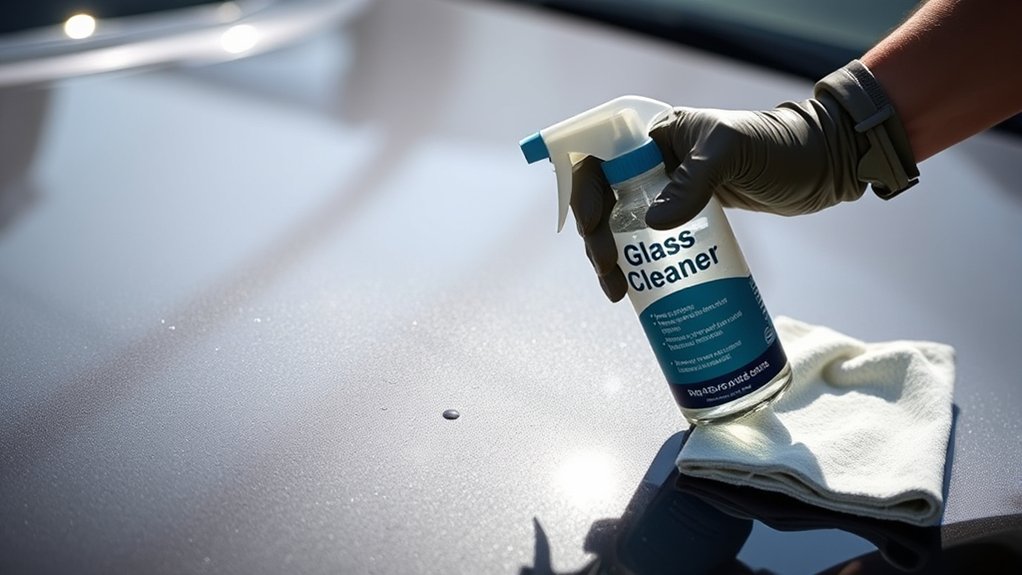
Is it safe to use glass cleaner on your car? Generally, it’s not recommended. Most glass cleaners contain chemicals like ammonia that can damage your car’s paint, clear coat, or plastic trim.
If you spray it directly onto your car’s body, it could cause discoloration or deterioration over time. Plus, some cleaners might leave streaks or residues that are hard to remove.
If you want a streak-free shine on your windows, it’s better to use products specifically designed for automotive glass. Always check the label before applying any cleaner to your car.
When in doubt, test a small, hidden area first. Using the right products guarantees your car stays protected and looks great without risking damage.
How to Properly Wash and Detail Your Car
To properly wash and detail your car, start by gathering all the necessary supplies, including quality car wash soap, microfiber wash mitts, soft brushes, and clean, dry towels. These tools help you clean effectively without scratching the paint.
Next, follow these steps:
- Rinse the car thoroughly to remove loose dirt and debris.
- Mix soap with water and use a microfiber mitt to wash the car from top to bottom.
- Use soft brushes for stubborn spots or wheels.
- Rinse completely and dry with a clean towel to prevent water spots.
Always work in sections and avoid harsh scrubbing. Proper washing preserves your car’s finish and keeps it looking shiny and new.
Can Glass Cleaner Damage Your Car Paint?
Wondering whether glass cleaner can harm your car’s paint? While many glass cleaners are gentle, some have harsh chemicals that can strip protective layers or cause discoloration over time.
If the cleaner contains ammonia or alcohol, it can break down the clear coat, leading to dullness or paint damage. Using glass cleaner on your car’s body often or in high concentrations raises the risk.
It’s best to avoid spraying directly onto painted surfaces without testing a small area first. Always check the label for ingredients that might harm your paint.
When in doubt, stick to cleaners made specifically for automotive paint. This helps prevent damage and keeps your car looking its best.
Safer Alternatives to Glass Cleaner for Your Car
Instead of risking paint damage with harsh glass cleaners, consider safer alternatives designed specifically for automotive surfaces. These options clean your car’s windows effectively without harming the paint or clear coat. Here are four safe choices:
- Automotive Glass Cleaner – Made to remove grime and streaks without damaging surfaces.
- Vinegar and Water Solution – Mix equal parts vinegar and water for a natural, gentle cleaner.
- Isopropyl Alcohol – Diluted with water, it’s great for removing smudges and fingerprints.
- Microfiber Cloths – Use damp microfiber cloths for gentle cleaning and streak-free results.
These alternatives are safer, eco-friendly, and won’t compromise your car’s finish while keeping your windows crystal clear.
Common Mistakes When Using Household Cleaners on Cars
Using household cleaners on your car might seem convenient, but it can lead to costly mistakes. These products aren’t made for automotive finishes and can cause damage.
A common mistake is using abrasive cleaners that scratch the paint. Another is applying cleaners with high acidity or alkalinity, which can strip protective layers.
Neglecting to rinse thoroughly leaves residue that attracts dirt. To help visualize, here’s a quick comparison:
| Mistake | Effect | Better Alternative |
|---|---|---|
| Using abrasive cleaners | Scratches and dulls paint | Use a car-specific polish |
| High acidity/alkalinity | Paint damage and discoloration | Use a pH-balanced cleaner |
| Not rinsing properly | Residue and dirt buildup | Rinse thoroughly after cleaning |
Avoid these pitfalls to protect your car’s finish.
Expert Tips to Keep Your Car Shine Safe
To keep your car’s shine safe, focus on proper cleaning techniques and choose products suited for automotive surfaces. Regular maintenance, like washing and waxing, also plays a key role in preserving your finish.
Following these expert tips helps guarantee your car looks its best for years to come.
Proper Cleaning Techniques
When cleaning your car, using the right techniques ensures a safe and effective process that keeps your vehicle shining. Start by rinsing your car thoroughly to remove loose dirt and debris.
Use two buckets—one with soapy water and another for rinsing your sponge or cloth. This helps prevent scratching and keeps dirt away from the clean water.
Always wash in straight lines rather than circular motions. This helps avoid swirl marks and keeps your car looking smooth and shiny.
Dry your car with a microfiber towel to prevent water spots. It’s a simple step that makes a big difference in the final look.
Here are some expert tips:
- Use gentle, car-specific cleaning products for the best results.
- Avoid washing in direct sunlight to prevent soap from drying too quickly.
- Work from the top down to avoid re-contaminating cleaned areas.
- Regularly clean your tools to prevent dirt transfer.
Choosing Suitable Products
Choosing the right products is key to protecting your car’s finish and getting that professional-looking shine. Use cleaners made specifically for automotive paint to avoid any damage.
Stay away from household glass cleaners with ammonia because they can strip wax or harm the clear coat. Instead, pick pH-balanced car shampoos and dedicated glass cleaners made for vehicles.
Always check product labels to make sure they’re compatible with your car’s surface. It’s a good idea to test new products on a small, hidden area first just to be safe.
When you’re unsure, consult your vehicle’s manufacturer recommendations or ask automotive professionals for advice. Using the correct products helps keep your car shiny, colorful, and well-protected.
It also prevents scratches, dullness, or long-term damage. Proper product selection is the best way to clean safely and effectively.
Regular Maintenance Practices
Maintaining your car’s shine takes simple, regular routines that protect its finish over time. Keeping up with these habits helps your car look great and prevents costly repairs.
Wash your car weekly using a gentle, car-specific soap to get rid of dirt and grime. Then, dry it with a microfiber cloth to avoid water spots and scratches.
Every few months, apply a good quality wax or sealant to shield the paint and keep it looking fresh. If possible, park in shaded areas or garages to reduce sun damage and fading.
Frequently Asked Questions
Will Glass Cleaner Leave Streaks on My Car’s Paint?
Yes, glass cleaner can leave streaks on your car’s paint if you’re not careful. To avoid this, use a soft microfiber cloth and spray the cleaner lightly.
Wash and dry your car regularly, and always test the cleaner on a small, hidden area first. Proper application and wiping technique help guarantee a streak-free finish, leaving your car looking shiny without unwanted marks.
How Often Should I Clean My Car With Glass Cleaner?
You should clean your car with glass cleaner once a week to keep it gleaming and grime-free. Regular rinsing removes dirt and dust, preventing buildup that can damage your paint.
But be careful not to overdo it, since cleaning too often might strip away protective coatings. Always use a soft cloth, wipe gently, and dry thoroughly to avoid streaks.
Sticking to a consistent cleaning routine keeps your car shiny, spotless, and looking its best.
Can Glass Cleaner Remove Stubborn Stains From Car Paint?
Glass cleaner isn’t designed to remove stubborn stains from car paint, so it probably won’t do the job effectively. If you try it, you might risk damaging your paint or creating streaks.
Instead, use a dedicated car wash or a specialized stain remover. For tough stains, gently buff the area with a microfiber cloth and a suitable automotive cleaner.
This approach helps keep your car’s paint in top condition.
Does Glass Cleaner Have Any Long-Term Effects on Car Paint?
Glass cleaner generally won’t cause long-term damage to your car paint if used occasionally and properly. However, using it too often or with harsh formulas can strip away protective wax and clear coat, which might lead to dullness or damage over time.
To avoid this, stick with a gentle, automotive-specific cleaner and rinse thoroughly. Regularly applying wax or sealant afterward helps keep your car’s shine and protects the paint from future harm.
Are There Specific Brands of Glass Cleaner Recommended for Cars?
Think of choosing a glass cleaner like selecting a fine fabric for your favorite shirt; you want quality that won’t damage. Brands like Meguiar’s, Chemical Guys, and Stoner are highly recommended because they’re formulated specifically for automotive finishes.
These products clean effectively without harming your paint. I once used a standard glass cleaner on my car, which left a dull film. So, it’s best to stick with trusted brands for the best results.
Conclusion
In the end, using glass cleaner on your car might seem like a quick fix, but it’s risky. Your paint could suffer more than you realize.
Stick to safer alternatives and proper washing techniques to keep your car looking its best. Think of your car as a precious gem—treat it with care.
With proper care, your car will shine brighter than the sun, turning heads wherever you go. Protect your investment and enjoy that flawless finish long-term.
Using glass cleaner on your car body isn’t recommended. It’s better to use products designed specifically for automotive paint to avoid damage.