How to Use Glass Cleaner Safely on Your Car Windshield
Are you tired of streaks and smudges ruining your view every time you clean your windshield? You’re not alone—many people struggle to find the right method for a crystal-clear shine.
Using the right glass cleaner safely is key to keeping your car looking its best.
To use glass cleaner safely on your windshield, start by ensuring your car is parked securely in a well-ventilated area. Remove loose debris, inspect for damage, and dry the surface before cleaning.
Choose a cleaner designed for automotive glass, preferably ammonia-free, and spray evenly. Use a microfiber cloth to wipe in circular motions, buff for a streak-free finish, and avoid over-saturating.
If you want to learn more about proper techniques and extra tips, keep going.
Key Takeaways
- Ensure proper ventilation and wear gloves before applying glass cleaner to avoid chemical irritation.
- Rinse the windshield with water to remove loose dirt. This helps prevent scratches during cleaning.
- Spray the cleaner evenly on the glass. Use a microfiber cloth and move in circular motions with gentle pressure.
- Buff the glass with a clean cloth to get a streak-free shine. This also helps prevent any leftover residue from building up.
- Store your cleaning tools separately for inside and outside use. It’s a simple way to avoid cross-contamination and keep things safe.
Why Safety Matters When Cleaning Your Car Windshield
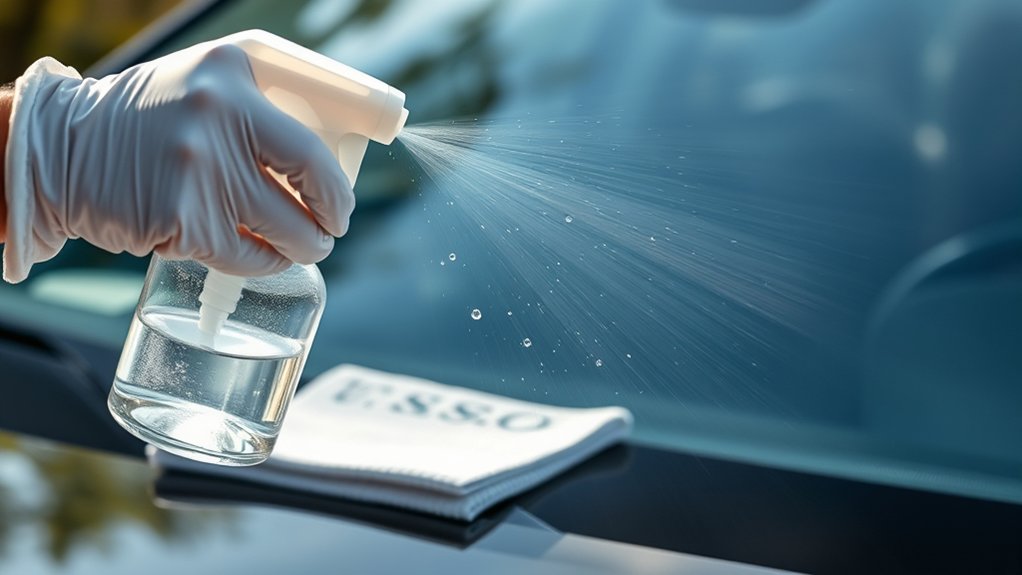
Cleaning your car windshield may seem straightforward, but safety should always come first. Using the right products and techniques reduces the risk of accidents or injuries.
Glass cleaner fumes can irritate your eyes and respiratory system if inhaled in large amounts, so proper ventilation is essential. Using sharp tools or rough cloths can scratch or damage the glass, making your view blurry or unsafe.
Proper ventilation prevents fumes from irritating eyes and lungs during windshield cleaning.
Wearing gloves protects your skin from chemical irritation, and making sure the car is parked securely prevents unexpected movement. If you’re working on a busy street or in a poorly lit area, the risk of accidents increases.
Prioritizing safety keeps you protected while effectively cleaning your windshield, ensuring clear visibility and a safer driving experience.
Preparing Your Windshield for a Safe and Effective Clean
Before you start cleaning, it’s important to prepare your windshield to guarantee a safe and effective process. First, remove loose debris like leaves, dust, or insects with a soft brush or microfiber cloth. This helps prevent scratching during cleaning.
Next, check for any cracks or chips that might worsen with cleaning. To help you visualize, here’s a simple table:
| Debris Removal | Check for Damage | Clear View |
|---|---|---|
| Remove leaves | Inspect cracks | Wipe with microfiber cloth |
| Brush off dirt | Repair chips if needed | Soak cloth in water |
| Blow away dust | Avoid cleaning over cracks | Prepare cleaning solution |
| Clear insects | Avoid worsening damage | Dry with clean towel |
| Remove snow/ice | Take your time | Make sure windshield is dry |
Proper prep makes sure your cleaning is safe and leaves a spotless finish.
How to Choose the Best Glass Cleaner for Your Vehicle
Choosing the right glass cleaner can make a big difference in how clear and shiny your windshield and windows look.
Look for a cleaner made specifically for automotive glass, because these are designed to remove dirt, grime, and streaks without damaging the surface.
Avoid cleaners with harsh chemicals like ammonia, which can harm tinted windows or cause haziness.
Instead, go for eco-friendly or ammonia-free formulas that are gentle but still effective.
Check reviews and ratings to see what other vehicle owners recommend and trust.
Think about your specific needs—if you have tinted windows, pick a cleaner that’s safe for tint as well.
Finally, test the cleaner on a small area first to make sure it doesn’t leave residue or streaks.
Choosing the right cleaner ensures a crystal-clear view and makes cleaning easier.
The Right Way to Apply Glass Cleaner on Your Windshield
To get the best results, start by thoroughly rinsing your windshield with water to remove loose dirt and debris. This helps prevent scratching and ensures a cleaner finish.
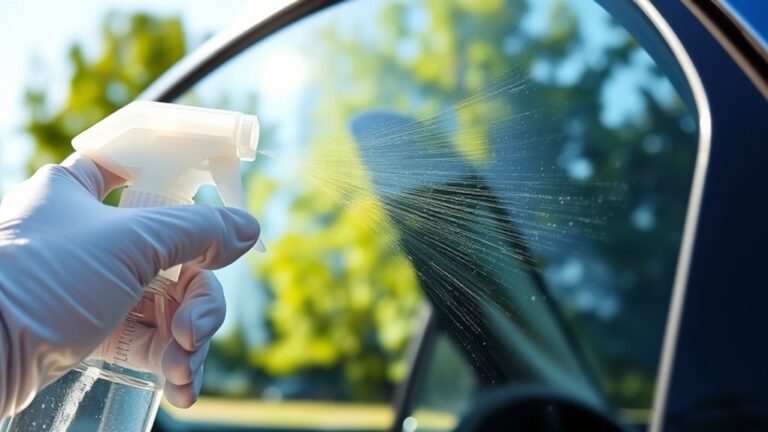
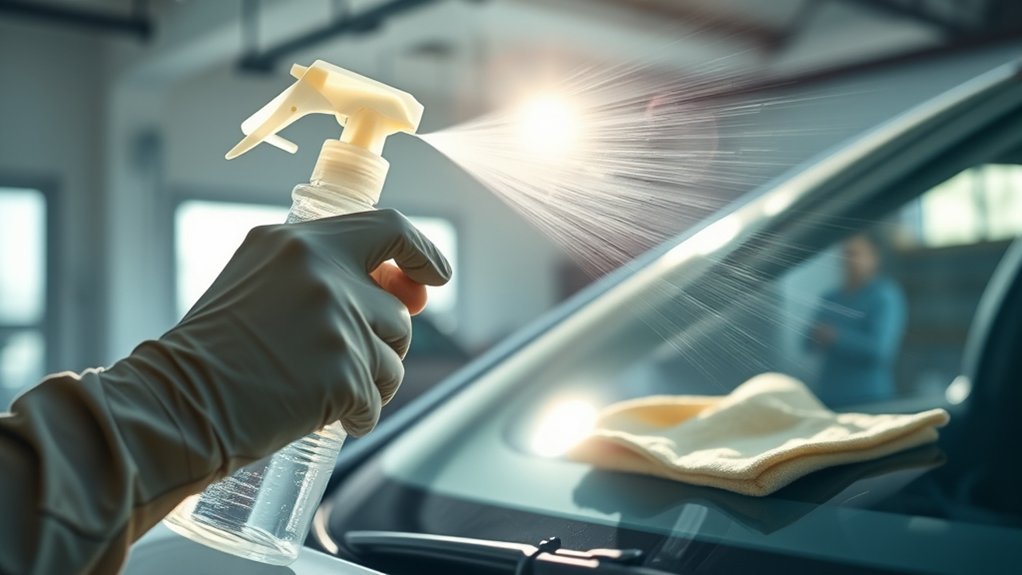
Spray the glass cleaner evenly across the entire windshield, covering all areas. Use a microfiber cloth or a soft, lint-free towel to wipe in circular motions, applying gentle pressure.
Avoid pressing too hard, as it can scratch the glass. Once you’ve cleaned the surface, use a clean section of the cloth to buff the glass to a streak-free shine.
Here’s a quick guide:
| Step | Tip |
|---|---|
| Spray evenly | Cover all areas without over-saturating |
| Use soft cloth | Prevent scratches, ensure a smooth finish |
| Buff to shine | Wipe in circular motions for clarity |
Tips to Avoid Streaks and Scratches During Cleaning
To avoid streaks and scratches, use soft, microfiber cloths made for glass cleaning. They’re gentle and won’t scratch the surface.
Apply gentle pressure and move in circular motions to clean effectively without causing damage.
Using the right tools and techniques keeps your glass spotless and scratch-free.
Use Proper Cleaning Tools
Using the right cleaning tools is essential for achieving streak-free and scratch-free glass. Always opt for soft microfiber cloths or dedicated glass cleaning pads. These materials are gentle on the surface and help prevent scratches.
Avoid using abrasive sponges, paper towels, or rough cloths, which can leave scratches or streaks. Make sure your cleaning tools are clean and free of dirt or debris before you start, as trapped particles can scratch the glass.
Use separate cloths for the inside and outside of the windshield to prevent cross-contamination. A clean, lint-free cloth ensures no fibers are left behind, helping you achieve a clear, streak-free finish.
Proper tools really make all the difference in maintaining your windshield’s clarity.
Apply Gentle Cleaning Techniques
One of the most effective ways to prevent streaks and scratches is to apply gentle, consistent pressure while cleaning. You want to avoid pressing too hard, which can cause scratches or leave streaks. Instead, use smooth, even strokes across the windshield. Keep your cleaning cloth or sponge damp but not soaked, as excess liquid can cause streaking.
When wiping, use a circular motion to lift dirt and grime effectively. Afterward, switch to straight, horizontal or vertical strokes to remove any remaining residue. Take your time and don’t rush—patience guarantees a cleaner, streak-free finish. Regularly rinse your cloth or sponge to prevent dirt from scratching the glass.
Gentle, deliberate actions help maintain your windshield’s clarity and keep it scratch-free over time.
Extra Care Tips to Keep Your Windshield Looking Great
To keep your windshield looking great, establish a regular cleaning routine to prevent buildup.
Make sure you use the proper cleaning products designed for glass to avoid damage.
Regular Cleaning Routine
Establishing a regular cleaning routine is key to keeping your windshield clear and streak-free. Cleaning often prevents dirt, grime, and bugs from building up, making each wash easier and more effective.
Try to clean your windshield at least once a week to prevent stubborn stains from setting in. Use a microfiber cloth to avoid scratching the glass and to get a streak-free finish.
Before applying cleaner, always remove loose debris. This simple step helps prevent scratches and keeps your windshield in top shape.
Use Proper Cleaning Products
Choosing the right cleaning products is key to keeping your windshield clear and preventing damage. Use a glass cleaner made specifically for cars because household cleaners with ammonia can harm tinted windows or leave streaks.
Avoid products with harsh chemicals or abrasives that might scratch or damage the glass. Always check labels to make sure the cleaner is safe for automotive glass and won’t leave residues that attract dirt.
If you prefer a natural option, a mix of water and a small amount of vinegar works well. Just make sure it’s free of added fragrances or dyes. Using the right cleaning products helps keep your windshield streak-free and undamaged, ensuring good visibility and safety on the road.
Avoid Harsh Scrubbing
Using the right cleaning products is a great start, but how you clean your windshield matters just as much. Harsh scrubbing can scratch the glass or damage the protective coating, making your windshield more vulnerable over time. To prevent this, follow these tips:
- Avoid using abrasive scrub pads or steel wool. Stick to soft microfiber cloths.
- Don’t apply excessive pressure. Gentle, circular motions are enough to lift dirt.
- Skip aggressive cleaning solutions with harsh chemicals. Opt for gentle, glass-safe cleaners instead.
Frequently Asked Questions
Can I Use Household Glass Cleaners on My Car Windshield?
Yes, you can use household glass cleaners on your car windshield, but it’s not recommended. Many contain ammonia or harsh chemicals that can damage the tint or strip protective coatings.
Instead, opt for a cleaner specifically designed for automotive glass. If you do use household cleaner, dilute it well and avoid spraying directly on the edges to prevent damage.
Always rinse thoroughly and dry with a clean microfiber cloth.
How Often Should I Clean My Car Windshield?
You should clean your car windshield at least once a month to keep visibility clear and prevent dirt, bugs, and grime from building up.
If you drive often or in tough conditions, consider cleaning it more frequently, like every two weeks. Regular cleaning also helps prevent scratches and keeps your windshield wipers working well.
Keep an eye out for streaks or smudges, and clean immediately if anything blocks your view. This way, you’re always safe and ready to go.
Is It Safe to Use a Sponge or Cloth for Cleaning?
Yes, using a sponge or cloth is safe for cleaning your car windshield if you pick the right ones.
Choose a soft microfiber cloth or a gentle sponge to avoid scratching the glass.
Make sure the cloth is clean and free of dirt or debris before you start wiping.
Gently clean the surface, applying light pressure—no need to scrub hard.
Rinse your cloth or sponge regularly to prevent scratches and keep cleaning effective.
Are There Specific Weather Conditions to Avoid When Cleaning?
You should avoid cleaning your windshield in direct sunlight because the cleaner can dry too quickly and leave streaks or spots.
Also, don’t clean during very cold or freezing weather since the product might freeze or not work effectively.
Overly hot days can cause the cleaner to evaporate too fast, which reduces its effectiveness.
Aim for mild, overcast days or early mornings for the best results and safety.
Can Glass Cleaner Damage Tinted Windshields?
Yes, glass cleaner can damage tinted windshields if it contains ammonia or harsh chemicals. These ingredients can cause the tint film to peel or discolor over time.
To keep your tinted windshield safe, use a cleaner made for tinted glass or one that’s labeled ammonia-free. Always spray the cleaner onto a soft cloth first, then gently wipe the windshield.
This method helps protect your tint’s look and clarity in the long run.
Conclusion
By prioritizing safety, preparing properly, choosing the right cleaner, applying carefully, and avoiding streaks and scratches, you can keep your windshield clear and pristine. Protect your vision and your vehicle’s appearance for safer driving.
Follow these steps consistently, stay attentive to details, and treat your windshield with care. When you do, you’ll see the road more clearly, drive confidently, and keep your car looking its best every day.
Using the right glass cleaner on your car windshield is key. It helps remove dirt and grime without damaging your glass. Remember to select a cleaner specifically designed for automotive glass for the best results.