How to Use Glass Cleaner Safely on Car Paint
Many car owners know the frustration of trying to keep their vehicle looking spotless, especially when it comes to cleaning glass without damaging the paint. You’re not alone—many people struggle with finding the right products that are safe and effective.
Using the wrong glass cleaner can lead to streaks or even harm your car’s finish.
To use glass cleaner safely on your car paint, start by thoroughly cleaning and rinsing your vehicle to remove dirt that could scratch the surface.
Choose a product specifically made for cars that’s ammonia- and alcohol-free.
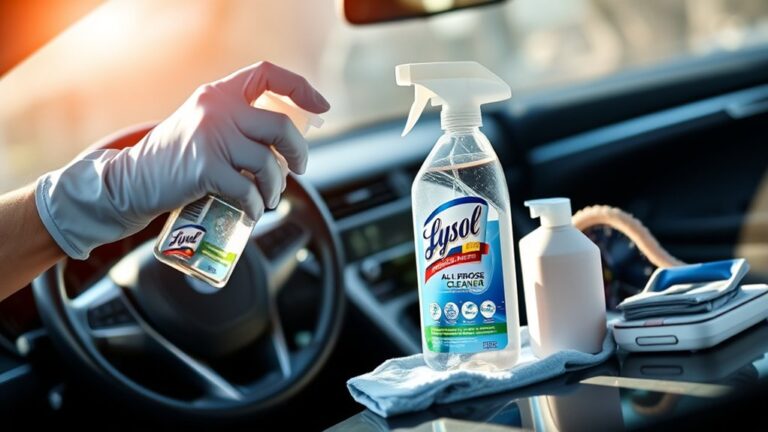
Spray the cleaner onto a microfiber cloth, not directly on the glass, and gently wipe in circular motions, avoiding pressure.
Proper application helps protect your paint—keep going to uncover detailed tips on maintaining your car’s finish over time.
Key Takeaways
- Use ammonia-free and alcohol-free glass cleaners made specifically for automotive glass. This helps prevent any damage to your car’s paint.
- Spray the cleaner onto a microfiber cloth instead of directly on the glass. This way, you can control the application and avoid any overspray that might land on the paint.
- It’s best to park your car in a shaded spot. This prevents streaks and makes sure the cleaner doesn’t dry too quickly, which can be tricky to clean off.
- Avoid harsh scrubbing or using abrasive materials. They can scratch or damage your car’s paint surface, so gentle is better.
- Make sure to dry the car thoroughly before applying the glass cleaner. This helps prevent streaks and keeps your paint protected.
Why Using Glass Cleaner on Your Car Can Damage the Paint
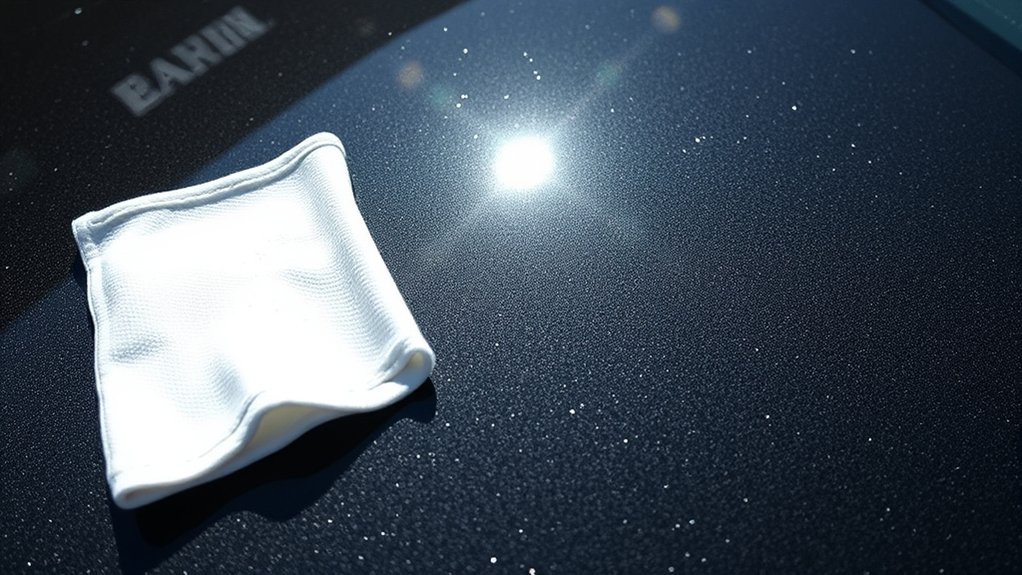
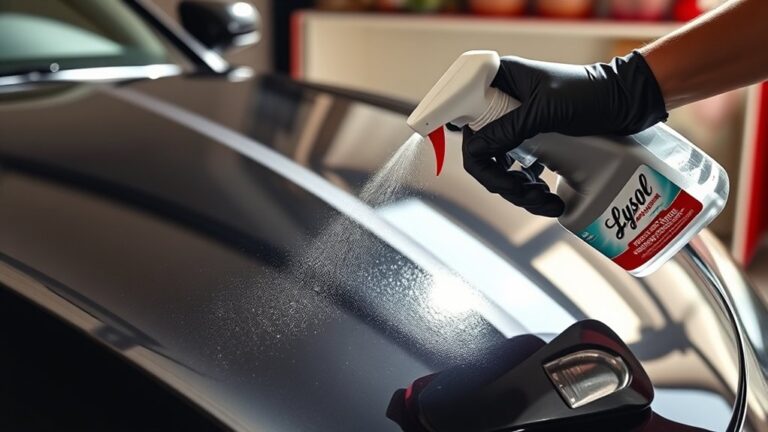
Although glass cleaner is great for removing fingerprints and smudges from windows, using it on your car’s paint can cause damage. Many glass cleaners contain harsh chemicals like ammonia or alcohol, which can strip away the protective wax layer on your car’s surface.
This exposure can lead to paint fading, dullness, or even peeling over time. The strong solvents might also cause micro-abrasions, especially if you use a rough cloth or scrub too hard. These tiny scratches trap dirt and grime, making the paint more vulnerable to corrosion and further damage.
Even if your glass cleaner seems gentle, repeated use on painted surfaces can weaken the finish. To protect your car, avoid glass cleaners and stick to products specifically designed for automotive paint.
How to Prepare Your Car Before Cleaning
Before you start cleaning, remove any loose debris from your car’s surface to prevent scratching.
Next, wash the paint gently with a mild soap to clear away dirt and grime.
Finally, dry the car thoroughly to make sure no water spots or residue interfere with the cleaning process.
Remove Surface Debris
Start by gently rinsing your car with water to loosen and remove loose dirt, leaves, and other surface debris. This helps prevent scratching when you start wiping or washing. Use a hose or a bucket of water, focusing on the areas with visible debris.
To stay organized, here’s a quick guide:
| Debris Type | Removal Method | Precautions |
|---|---|---|
| Loose Dirt | Rinse with water | Avoid scrubbing to prevent scratches |
| Leaves & Twigs | Use a soft brush or cloth | Remove gently to avoid paint damage |
| Dust & Sand | Rinse or blow off with air | Don’t rub to prevent scratching |
| Bird Droppings | Rinse immediately | Use gentle pressure to avoid paint damage |
Removing debris properly keeps your car’s surface safe and ready for cleaning.
Wash With Mild Soap
To guarantee a gentle yet effective clean, fill a bucket with water and add a mild car-specific soap, avoiding harsh detergents or household cleaners. This soap is designed to break down dirt without stripping the paint or damaging the finish.
Use a soft sponge or wash mitt, and gently scrub the surface in straight lines rather than circles to prevent swirl marks. Focus on one section at a time, rinsing your sponge frequently to remove dirt.
Make sure the entire car is covered evenly, paying attention to areas with stubborn grime. Properly washing your car with mild soap sets a clean foundation, reducing the risk of scratches and helping the paint stay protected when you move on to other cleaning steps.
Dry Thoroughly Beforehand
After washing your car with a mild soap, it’s important to remove excess water completely. Use a clean, soft microfiber towel or chamois to gently dry the surface.
Focus on areas where water tends to pool, like door jambs, wheel wells, and crevices. This helps prevent water spots and streaks, which can interfere with the cleaning process.
Make sure the paint is thoroughly dry before using glass cleaner. Any leftover moisture can dilute the product or cause streaks.
Drying also helps you spot any remaining dirt or debris that might scratch the paint if rubbed in. Taking your time to dry your car properly ensures a smooth, even application of the cleaner.
It also protects your paint and helps you achieve a clear, streak-free finish.
Choosing a Safe Glass Cleaner for Your Vehicle
Choosing a safe glass cleaner for your vehicle is essential to protect your paint and clear coat from damage. Not all cleaners are created equal, so pick products formulated specifically for automotive use.
Selecting a vehicle-safe glass cleaner helps protect your paint and clear coat from damage.
Look for labels that specify they’re safe for painted surfaces and avoid those with ammonia or harsh chemicals. Always read the ingredient list to guarantee it’s gentle yet effective. Using the wrong cleaner can strip away wax, dull your paint, or cause peeling over time.
To make an informed choice, consider these factors:
- Alcohol-free formulas for added paint protection
- pH-balanced solutions to prevent surface damage
- Products designed specifically for automotive glass
- Eco-friendly options with biodegradable ingredients
- Avoiding cleaners with ammonia or bleach
Step-by-Step: Safely Applying Glass Cleaner to Your Car
Before applying glass cleaner, make sure your area is well-prepared and free of dirt and debris that could scratch your paint.
Choose a proper, car-safe glass cleaner to avoid damage and make sure it cleans effectively.
Then, apply the cleaner carefully, using gentle motions to protect your vehicle’s finish.
Prepare Your Cleaning Area
To start, make sure your cleaning area is clear of any debris, loose dirt, or objects that could scratch your car’s paint. A clean, clutter-free space helps prevent accidental damage and makes cleaning easier.
Before you begin, check the area for dust, leaves, or gravel that might cause scratches. Parking in a shaded spot is also helpful to prevent the cleaner from drying too quickly and leaving streaks.
Keep a bucket of water nearby for rinsing your sponge or cloth. It’s a good idea to gather all your supplies in one place so you don’t have to move around too much during cleaning.
- Clear the area of debris and loose dirt
- Park in a shaded spot
- Keep a water bucket handy
- Collect all cleaning supplies beforehand
- Inspect the surface for hazards
Choose Proper Glass Cleaner
Selecting the right glass cleaner is key to protecting your car’s paint and getting a streak-free shine.
Look for a cleaner made specifically for automotive glass, since household cleaners often have chemicals that can damage paint or leave residue.
Check the label to make sure it’s ammonia-free because ammonia can harm your car’s clear coat and plastics.
Choose a product that states it’s safe for use on automotive surfaces. If possible, go for a pH-balanced formula to prevent corrosion or paint damage.
Reading reviews or asking for recommendations can help you find a reputable brand.
Always follow the manufacturer’s instructions for proper use.
Using the right glass cleaner helps you avoid streaks, smudges, and potential damage—making your cleaning safer and more effective.
Apply With Care
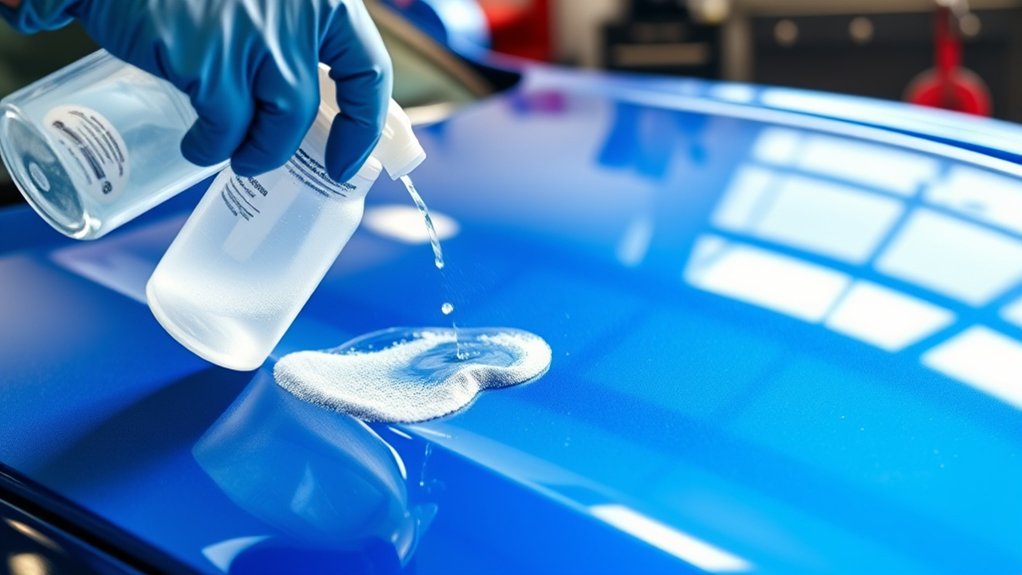
Start by making sure your car is parked in a shaded spot and the surface feels cool to the touch. This helps prevent the cleaner from evaporating too quickly and keeps streaks away. When you’re ready, spray the glass cleaner directly onto a microfiber cloth instead of the glass to avoid overspray.
Use gentle, circular motions to clean the surface, and don’t press too hard — you could damage the paint. Keep the nozzle at a distance so the product spreads evenly. Work on small sections so the cleaner doesn’t dry before you wipe it off.
Check your cloth regularly for dirt buildup and switch to a clean one when needed. Taking this careful approach means you’ll clean effectively without harming your car’s paint or leaving streaks.
Common Mistakes to Avoid When Cleaning Your Car’s Paint
One common mistake people make when cleaning their car’s paint is using abrasive materials or harsh scrubbing techniques. These can scratch or dull the finish, causing permanent damage. Instead, use soft, microfiber cloths or sponges designed for vehicle surfaces. Avoid household cleaning brushes or rough towels.
Another mistake is relying on cheap or old cleaning products, which may contain harsh chemicals. Always choose gentle, car-specific cleaners and test a small area first. Also, washing your car in direct sunlight can cause soap and cleaner to dry too quickly, leaving streaks or spots.
Instead, wash in shaded areas and rinse thoroughly. By avoiding these mistakes, you protect your paint and keep your car looking its best.
How to Maintain Your Car’s Paint After Cleaning
After thoroughly cleaning your car’s paint, keeping its shine and protection up is an ongoing effort. Regular maintenance helps prevent damage and keeps your vehicle looking great.
To do this effectively, apply a high-quality wax or sealant every few months for extra protection. Wash your car with gentle, pH-balanced soap to preserve the paint’s finish.
Apply high-quality wax or sealant every few months and use pH-balanced soap for lasting shine and protection.
Park in shaded areas to reduce UV exposure and prevent fading. Avoid automatic car washes with harsh brushes that can scratch the surface.
Use a microfiber cloth for drying to minimize swirl marks and keep the surface smooth. Following these simple steps will help your car’s paint stay vibrant, protected, and well-maintained over time.
Frequently Asked Questions
Can I Use Regular Household Glass Cleaner on My Car?
You can use regular household glass cleaner on your car, but it’s not always the best choice. Many household cleaners contain ammonia or harsh chemicals that can damage or strip your car’s paint and clear coat over time.
To keep your car’s finish safe, go for a cleaner designed specifically for automotive surfaces. This helps prevent streaks, discoloration, and potential paint damage while keeping your windows crystal clear.
How Often Should I Clean My Car’s Windows?
You should clean your car’s windows every two to four weeks, depending on your driving environment. Think of it like giving your eyes a refresh; clean windows improve visibility and safety, just like clear vision benefits your day.
If you drive through mud, rain, or dusty areas often, clean them more frequently. Regular cleaning prevents buildup and streaks, helping you see clearly.
Keeping your windows clean makes every drive safer and more enjoyable. It’s a small habit that makes a big difference in your driving experience.
Is It Safe to Use Glass Cleaner in Direct Sunlight?
It’s not safe to use glass cleaner in direct sunlight because it can dry too quickly. This quick drying can leave streaks and residue on your car’s paint.
When you apply it in the shade or on a cool surface, it has more time to evaporate evenly. This helps you avoid streaks and potential damage.
Always work in shaded areas or during cooler parts of the day. This way, you protect your car and get a clean, streak-free finish.
Can Glass Cleaner Damage Tinted Windows?
Yes, glass cleaner can damage tinted windows if it contains ammonia or harsh chemicals. These substances can break down the tint film over time, leading to peeling or discoloration.
To keep your tinted windows safe, always pick a cleaner made specifically for tinted glass or choose a pH-balanced, ammonia-free product.
When cleaning, apply the cleaner gently with a soft cloth and avoid letting it sit on the tint for too long.
Should I Wash My Car Before Applying Glass Cleaner?
Absolutely, you should wash your car before applying glass cleaner—it’s like preparing a clean canvas for a masterpiece! Dirt and grime can turn your glass cleaner into an abrasive weapon instead of a shine-enhancer.
By giving your car a thorough wash first, you guarantee that the glass cleaner works its magic without scratching or smudging. This leaves your windows crystal clear and streak-free.
Don’t skip this step—your car deserves the best!
Conclusion
To protect your car’s paint, you need to choose your glass cleaner wisely, prepare thoroughly, and apply carefully. Avoid rushing through the process to prevent any damage.
Mistakes can happen, but by understanding the risks and selecting safe products, you can keep your vehicle looking its best. Proper steps are key to maintaining a vibrant, pristine finish.
Keep your car clean, safe, and looking its best by using glass cleaner correctly. When you prioritize careful application, you preserve your car’s beauty and prevent damage.
Using safe glass cleaner on your car paint ensures a spotless ride that lasts. Regular maintenance and proper care help your vehicle stay vibrant and protected over time.