Can I Use Carpet Cleaner on My Car Seats?
Many car owners know the struggle of keeping car seats clean and fresh. Stains, dirt, and odors can quickly turn a comfortable ride into a frustrating chore. If you’re looking for an effective yet gentle way to tackle these issues, you’re not alone.
Yes, you can use a carpet cleaner on your car seats if you choose a gentle, water-based or foam cleaner specifically labeled as safe for auto fabrics. Always test a small hidden area first and avoid harsh chemicals, solvents, or bleach that can damage or discolor the fabric.
Be careful not to oversaturate the seats, and make certain they dry thoroughly to prevent mold and odors.
To find out more tips for safe cleaning and maintenance, keep exploring your options.
Key Takeaways
- Use only cleaners labeled as safe for auto fabrics and suitable for your seat material.
- Always test a small, hidden area first to check for discoloration or damage.
- Avoid harsh chemicals like bleach, ammonia, or solvent-based cleaners.
- Don’t oversaturate your seats; use minimal moisture to prevent mold and odors.
- For stubborn stains or damage, it’s a good idea to consider consulting a professional cleaner.
Can You Safely Use Carpet Cleaner on Car Seats?
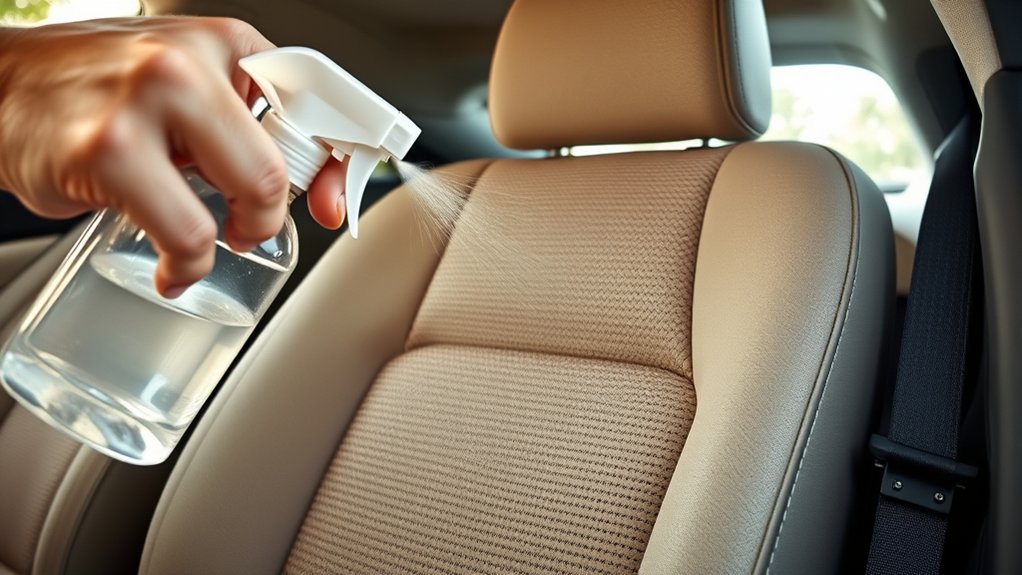
Is it safe to use carpet cleaner on your car seats? The answer depends on the type of cleaner and your car’s upholstery. Many carpet cleaners are made for carpets and upholstery, but not all are safe for car seats, especially if they have harsh chemicals.
You might risk damaging the fabric or causing discoloration if you don’t pick the right product. Before applying, check the label to see if it’s compatible with automotive fabric. Test a small hidden area first to see how it reacts.
If the cleaner is safe for fabric and you follow the instructions carefully, you can clean your seats effectively. Always avoid over-wetting and make sure they dry properly to prevent mold or odors.
Proper testing and choosing the right product are key to cleaning safely and effectively.
What Types of Carpet Cleaners Are Safe for Your Car Interior?
To keep your car interior safe, choose carpet cleaners labeled as gentle and suitable for auto fabrics.
Avoid harsh chemicals that can damage surfaces or cause odors. Always test a small area first to be sure.
This way, you protect your seats while effectively cleaning them.
Suitable Cleaner Types
Choosing the right carpet cleaner for your car seats is essential to avoid damage and guarantee effective cleaning. Look for cleaners labeled safe for automotive fabrics and upholstery.
Generally, mild, pH-balanced solutions are best because they won’t harm the material or cause discoloration. You can also go for foam-based or water-based cleaners, which are gentle yet effective.
| Cleaner Type | Suitable for Car Seats? |
|---|---|
| Detergent-based | Yes, if pH-balanced and mild |
| Solvent-based | No, can damage fabric or cause discoloration |
| Foam cleaners | Yes, gentle and effective |
| Heavy-duty cleaners | No, too harsh for delicate fabrics |
Avoid Harsh Chemicals
Since harsh chemicals can damage your car’s interior, it’s important to choose cleaners that are gentle yet effective. Look for products labeled as safe for automotive use or specifically made for car interiors.
Avoid cleaners with bleach, ammonia, or strong solvents because they can discolor fabrics and harm surfaces. Instead, go for mild, pH-balanced cleaners that lift dirt without stripping protective coatings.
Natural or eco-friendly options are also a good idea since they tend to be less abrasive and safer for your health. Always check labels carefully to make sure the product is suitable for fabric or leather seats.
Using the right, gentle cleaner will help keep your car’s interior looking fresh and in good shape without risking damage.
Test Before Applying
Before applying any carpet cleaner to your car seats, it’s important to test it in a small, hidden spot first. This helps prevent damage or discoloration. Use a gentle cleaner made for fabric or upholstery, and steer clear of harsh chemicals.
To stay safe, try these tips:
- Test on a small patch of the seat fabric.
- Wait 24 hours to see if there’s any color change or damage.
- Use a cleaner labeled safe for automotive interiors.
- Consider natural or enzyme-based cleaners if you can.
If the test spot looks fine and isn’t damaged, you’re good to go. Always follow the instructions on the cleaner you choose. Testing first helps protect your car’s interior and ensures a successful clean.
Why Some Carpet Cleaners May Damage Car Seats
Harsh chemicals in some carpet cleaners can weaken or discolor your car seats’ upholstery.
Using too much moisture can lead to mold growth, damaging the fabric and creating unpleasant odors.
Choosing the wrong product might do more harm than good, so it’s important to know what to avoid.
Harsh Chemicals Damage Upholstery
Many carpet cleaners contain harsh chemicals that can easily damage your car seats’ upholstery. These chemicals can weaken fibers, cause discoloration, or leave residue that attracts dirt. Be cautious, especially with products not designed for automotive fabrics.
Here are four common ingredients to watch out for:
- Ammonia can cause fading and weaken fabric fibers.
- Bleach leads to discoloration and fabric deterioration.
- Strong surfactants may strip protective coatings and cause stiffness.
- Solvents can damage adhesives and cause upholstery to crack or peel.
Using cleaners with these chemicals might seem effective at first, but long-term damage to your car seats can be costly. Always choose upholstery-specific or gentle, eco-friendly options.
Excessive Moisture Causes Mold
Excessive moisture from improper cleaning can quickly lead to mold growth on your car seats. When you use too much water or don’t dry the seats thoroughly, moisture gets trapped in the upholstery and padding.
This creates an ideal environment for mold spores to thrive, especially in humid or poorly ventilated conditions. Mold not only damages the fabric but can also pose health risks like allergies and respiratory issues.
If you notice a musty smell or visible spots, it’s a sign that mold is developing. To prevent this, avoid oversaturating your seats and make sure they dry completely after cleaning.
Using the right amount of cleaner and proper drying techniques helps protect your car seats from mold damage.
How to Choose the Right Carpet Cleaner for Your Car
How do you choose the right carpet cleaner for your car? Start by considering the type of stain or dirt you’re dealing with.
Next, look for cleaners labeled safe for automotive fabrics and upholstery. Here are four key points to keep in mind:
- Compatibility: Make sure the cleaner works well with your car’s material.
- Ingredients: Choose eco-friendly, non-toxic options to avoid damage and fumes.
- Cleaning Power: Pick a product that’s strong enough to clean but gentle on your car’s interior.
- Ease of Use: Find a formula that’s simple to apply and doesn’t need special tools.
Preparing Your Car Seats for Cleaning: Tips and Precautions
Before you start cleaning your car seats, it’s important to prepare them properly to get the best results and avoid any damage. First, remove loose dirt and debris using a vacuum or a brush.
Check the fabric type to make sure your cleaner is safe to use. It’s a good idea to spot-test a small, hidden area to prevent any discoloration or bleaching.
Use a microfiber cloth or a soft brush to loosen dirt gently without damaging the fibers. Protect the surrounding areas by covering them with plastic or towels to keep everything clean.
Here’s a quick guide:
| Step | Action | Precaution |
|---|---|---|
| Vacuum | Remove loose dirt | Avoid scratching the fabric |
| Spot-test | Test cleaner on hidden spot | Prevent staining or bleaching |
| Cover nearby | Protect with plastic or towels | Keep cleanup easy and safe |
Proper preparation makes cleaning more effective and helps keep your seats in great shape.
How to Clean Car Seats With Carpet Cleaner : a Step-By-Step Guide
Once your seats are prepared and protected, it’s time to start cleaning with a carpet cleaner. Follow these steps for effective results:
- Spray the carpet cleaner evenly over the seats, focusing on stained or dirty areas.
- Let it sit for 5-10 minutes to loosen dirt and grime.
- Use a soft-bristle brush or microfiber cloth to gently agitate the cleaner into the fabric.
- Wipe away the excess with a damp microfiber cloth, making sure to remove all residue.
Take your time during each step to ensure a thorough clean. Avoid scrubbing too hard to prevent damaging the fabric. Once you’re done, let the seats air dry completely before using the car again.
Common Mistakes to Avoid When Cleaning Car Seats With Carpet Cleaner
While using a carpet cleaner can effectively restore your car seats, it’s easy to make mistakes that could make things worse or damage the fabric. One common mistake is oversaturating the seats with water or cleaning solution, which can cause mold or bad odors.
Always test the cleaner on a small, hidden area first to check for discoloration or damage. Avoid scrubbing too hard, as this can fray or weaken the fabric fibers.
Using the wrong cleaning products can also cause staining or deterioration, so stick to products made for car upholstery. Rushing the drying process without good ventilation can trap moisture and lead to mold growth.
Take your time, follow the instructions carefully, and be gentle. A thorough but careful cleaning will help protect your seats and keep them looking great.
Alternatives to Carpet Cleaners for Deep Cleaning Your Car Interior
When traditional carpet cleaners aren’t enough, there are some great alternatives to deep clean your car interior without risking damage. First, try using a steam cleaner; it penetrates deep into fibers, lifting dirt and grime without harsh chemicals.
Second, mixing baking soda and water makes a natural deodorizer and stain remover. Just apply it with a brush, and you’re good to go. Third, dampen a microfiber towel with a mild soap solution to gently scrub surfaces and remove embedded dirt.
Fourth, you can use an upholstery or fabric cleaner designed specifically for cars. These target stains effectively without harming your seats. These options are safe, eco-friendly, and often more affordable, giving you a thorough clean without the risks of chemical-based carpet cleaners.
How to Remove Stubborn Stains From Car Seats Safely
Stubborn stains on car seats can be frustrating, but with the right approach, you can remove them safely and effectively. Start by gently blotting the stain with a clean cloth to lift excess residue.
Then, choose a suitable cleaner like a mild upholstery solution or a mixture of water and vinegar. Always test it on a hidden area first to make sure it won’t damage the fabric.
Use a soft brush or cloth to apply the cleaner, working in circular motions. Be careful not to oversaturate the fabric to prevent any damage.
Here’s a quick guide:
| Step | Action | Tips |
|---|---|---|
| 1 | Blot excess stain | Use a dry cloth gently |
| 2 | Apply cleaner | Test first; don’t oversaturate |
| 3 | Gently scrub and dry | Use light pressure; let dry naturally |
Tips for Maintaining Your Car Interior After Cleaning
Maintaining your car interior after cleaning is key to keeping it looking fresh and preventing damage. Proper upkeep helps your seats and surfaces stay new longer. Here are four simple tips:
- Protect surfaces with a UV protectant spray to stop sun damage and fading.
- Vacuum regularly to pick up dirt and debris, which reduces wear on fabric and upholstery.
- Use seat covers or mats to guard against spills and stains, especially in high-traffic areas.
- Air out your car periodically to cut down on odors and moisture buildup, which can lead to mold or mildew.
When to Call a Professional for Car Seat Cleaning
If stains and odors won’t go away after cleaning, it’s time to call a professional.
Stubborn dirt buildup or damaged seats also call for expert help to prevent further issues.
Knowing when to seek professional cleaning can keep your car seats in top shape and safe for everyone.
Persistent Stains and Odors
Persistent stains and lingering odors can be tough to eliminate with regular cleaning methods, especially when they seem to resist your efforts.
If you notice stains that won’t come out or odors that keep lingering despite your efforts, it’s time to consider professional help.
You should call a professional if:
- The stain is deeply embedded or has set for a long time.
- The odor persists even after cleaning with household products.
- You notice mold or mildew growth.
- The stains or odors are caused by pet accidents or bodily fluids.
Trying to handle these issues yourself might make things worse or leave residues behind.
Professionals have specialized equipment and cleaning agents that can effectively restore your car seats.
Stubborn Dirt Accumulation
Even after cleaning, stubborn dirt can cling to your car seats, making them look dull and feel grimy. If scrubbing or using a carpet cleaner doesn’t remove deep-seated grime, it’s time to consider professional help.
Persistent dirt often resists typical cleaning methods and can embed into the fabric fibers. Watch for these signs:
| Indicator | What to Do |
|---|---|
| Dirt remains after multiple cleanings | Call a professional |
| Visible grime in crevices | Seek expert cleaning |
| Unpleasant odor persists | Get specialized treatment |
Professional cleaning uses industrial equipment and techniques to extract dirt deep within the seat material. If your efforts aren’t making a difference, it’s best to trust experts to restore your car seats’ appearance and hygiene.
Sensitive or Damaged Seats
When your car seats are made from delicate materials or show signs of wear and tear, it’s important to know when to call in a pro. Trying DIY cleaning on sensitive or damaged seats can make things worse or cause discoloration.
You should consider reaching out to a professional if:
- The seats have visible tears or fraying.
- Stains just won’t come out despite your best efforts.
- The fabric feels fragile or is peeling.
- You notice lingering odors even after cleaning.
Professionals have the right tools and know-how to clean gently without causing more damage. They can also evaluate your seats and suggest the best treatment to keep them safe and in good shape.
Frequently Asked Questions
Can Carpet Cleaners Cause Discoloration on Leather Car Seats?
Yes, carpet cleaners can cause discoloration on leather car seats if used improperly. You might notice fading or staining if the cleaner is too harsh or not designed for leather.
To avoid this, always check the label for compatibility with leather surfaces and test a small, hidden area first. Use a gentle cleaner specifically made for leather to keep your seats looking their best without risking damage or color loss.
Are There Specific Carpet Cleaners Recommended for Fabric Versus Leather Seats?
You definitely want to use specific cleaners for fabric and leather seats—mixing them up is like trying to fit a square peg in a round hole.
For fabric seats, choose a gentle, fabric-specific cleaner that penetrates deep and lifts dirt effortlessly.
For leather, stick with a leather-safe cleaner that nourishes and protects without causing damage or discoloration.
Using the right product keeps your seats looking fresh and prevents costly mishaps.
How Long Should I Wait Before Using My Car After Cleaning the Seats?
You should wait at least 2 to 4 hours before using your car after cleaning the seats, to let the cleaning solution fully dry.
This helps prevent any moisture from causing mold or odors. Keep the windows open or use fans to speed up the drying process.
Don’t rush it. Giving your seats enough time to dry will protect your car’s interior and keep it fresh and clean.
Is It Safe to Use a Steam Cleaner Instead of a Carpet Cleaner on Car Seats?
Yes, using a steam cleaner on your car seats is generally safe and effective if you follow proper procedures.
Make sure to check if the fabric is compatible with steam cleaning to avoid any damage. Keep the steam at a safe distance, move evenly, and don’t oversaturate the seats.
After cleaning, let the seats dry completely before using the car again. Steam cleaning kills germs and removes dirt without harsh chemicals, making it a good choice.
Can Carpet Cleaners Remove Pet Odors From Car Seats Effectively?
Yes, carpet cleaners can effectively remove pet odors from your car seats. They break down the odor-causing molecules and lift stains, especially if you choose a cleaner formulated for pet odors.
Be sure to follow the instructions carefully, test a small area first, and let your seats dry thoroughly afterward. Using a deodorizer after cleaning can also help keep your car smelling fresh longer.
Conclusion
To sum up, using a carpet cleaner on your car seats is like giving your car a rejuvenating shower—if you pick the right product and follow proper steps. Always check the label, test in a small area first, and avoid harsh chemicals.
When in doubt, call a professional. Sometimes a gentle touch is the best way to keep your car’s interior looking and feeling fresh, especially when using a carpet cleaner on your car seats.