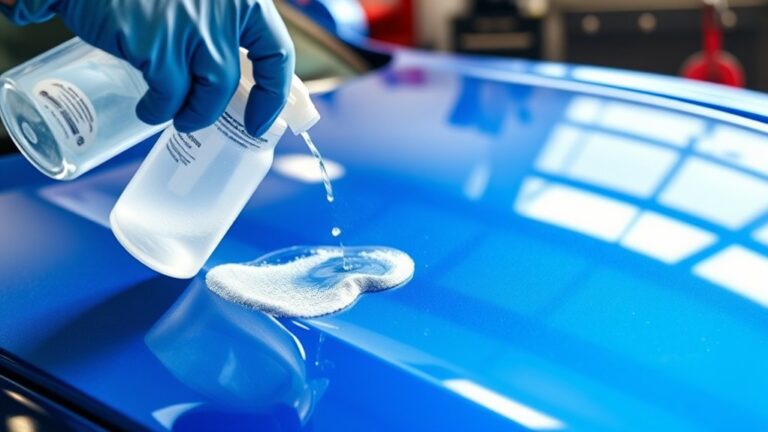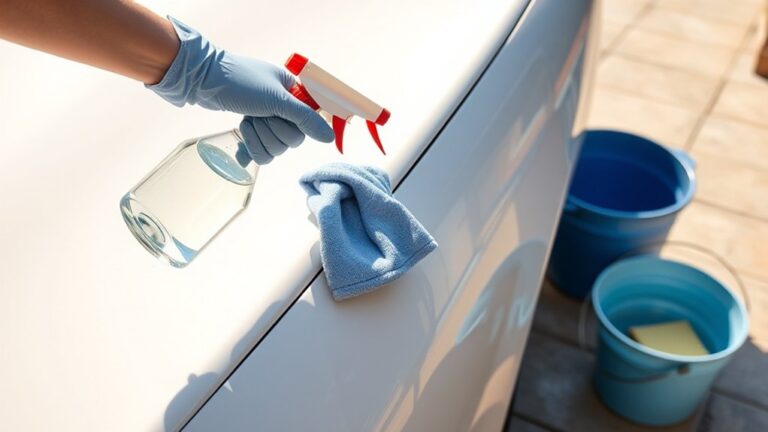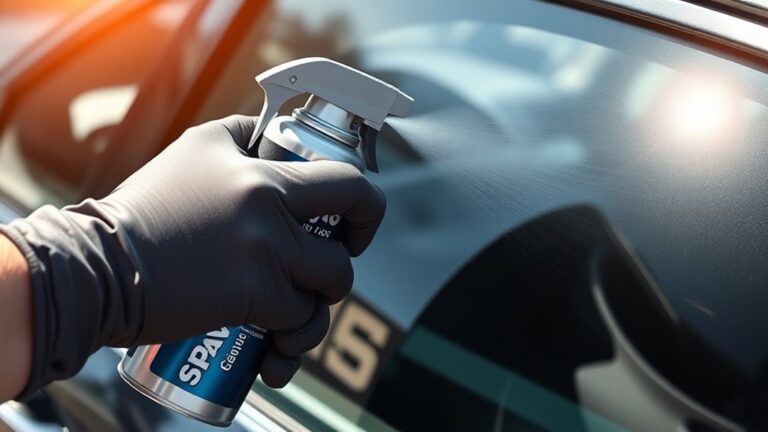
Can I Use Window Cleaner on My Car Windows
Many car owners want crystal-clear windows but often struggle with finding the right cleaning method. You’re not alone—using the wrong products can leave streaks or even damage your car’s glass over time.
You should avoid using regular household window cleaners on your car windows because they often contain ammonia and harsh chemicals that can damage your car’s tint, paint, and coatings.
These cleaners aren’t formulated for automotive glass and can cause streaks, residue, or long-term damage.
Instead, use a product specifically designed for cars, keeping techniques gentle and using soft microfiber cloths.
To learn more about safe cleaning methods and suitable products, keep exploring these tips.
Key Takeaways
- Household window cleaners often contain ammonia, which can damage car tint and paint over time.
- Automotive glass cleaners are specially formulated to clean without harming coatings or causing streaks.
Use a soft microfiber cloth and spray lightly for gentle, effective cleaning.
Clean car windows at least once a month, or more often if you’re in a dusty or polluted area.
Avoid using household cleaners with harsh chemicals; instead, choose pH-balanced, automotive-specific products.
Can I Use Regular Window Cleaner on My Car Windows?
Can you use regular window cleaner on your car windows? While it might seem convenient, it’s not the best idea. Standard household window cleaners often contain chemicals like ammonia, which can damage your car’s tinting or paint if they come into contact.
These cleaners are formulated for glass in your home, not for automotive surfaces. Using them may cause streaks, residue, or even corrosion over time. Instead, opt for a cleaner specifically designed for auto glass.
These products are formulated to be gentle on tint and vehicle surfaces while effectively removing dirt and grime. Always read labels carefully. Properly choosing the right cleaner helps maintain your car’s appearance and prevents damage that could lead to costly repairs later.
Are Household Glass Cleaners Safe for Automotive Windows?
Household glass cleaners often have different chemical compositions than products made specifically for cars, which can cause issues. Using the wrong cleaner might damage your automotive windows or their coatings.
It’s important to understand these differences before deciding if household products are safe for your vehicle.
Chemical Composition Differences
While many household glass cleaners might seem suitable for automotive windows, their chemical compositions often differ greatly from those designed specifically for vehicles. Household cleaners typically contain ammonia or alcohol-based solvents that can be harsher or more aggressive on automotive glass coatings.
These chemicals are formulated for household glass and may include fragrances or dyes that aren’t suitable for cars. Automotive glass cleaners, on the other hand, are designed to remove road grime, bugs, and grease without damaging tinted windows or protective coatings.
They often use gentler, specialized formulas that won’t compromise the glass or any applied coatings. Using the wrong cleaner can lead to streaks, reduced visibility, or long-term damage. Understanding these composition differences is essential for safe and effective cleaning.
Potential Damage Risks
Using household glass cleaners on automotive windows can be risky for your vehicle’s glass and coatings. Many of these cleaners contain harsh chemicals like ammonia or alcohol, which can harm the protective layers on automotive glass. This can lead to decreased clarity and make your glass more prone to scratches.
Over time, these chemicals might cause the tint or coating to peel, crack, or fade. To help you understand, here’s a quick comparison:
| Effect | Household Cleaners | Automotive Cleaners | Impact |
|---|---|---|---|
| Chemical Composition | Harsh, ammonia-based | Gentle, car-specific | Less damage, preserves coatings |
| Surface Compatibility | Not designed for automotive use | Designed for automotive glass | Safer for your vehicle’s longevity |
| Long-term Durability | Can cause coating degradation | Maintains durability | Better protection over time |
Choosing the right cleaner is key to protecting your investment.
What Products Are Best for Cleaning Car Windows Safely?
To clean your car windows safely, choose glass cleaners specifically made for automotive use, as they’re formulated to be gentle and effective.
Avoid harsh chemicals that can damage the glass or surrounding trim, and opt for products labeled safe for automotive finishes.
Use soft cloths and gentle application techniques to prevent scratches and guarantee a streak-free shine.
Suitable Glass Cleaning Products
Choosing the right glass cleaner is key to safely and effectively cleaning your car windows. Look for products labeled specifically for automotive glass or general glass cleaning solutions.
Avoid cleaners with ammonia or harsh chemicals, as they can damage tinting or leave residues. Instead, choose a pH-balanced cleaner designed to remove dirt, grime, and streaks without harming the glass or surrounding materials.
Microfiber cloths and dedicated glass wipes work best for applying these products, giving you a streak-free finish. Many auto parts stores carry specialized cleaners made for car windows that are gentle yet effective.
Always check labels to make sure the product is compatible with automotive glass. Consider eco-friendly options for a safer, more sustainable clean.
Avoid Harsh Chemicals
Even though many household cleaners seem convenient, they often contain harsh chemicals that can damage your car’s tinted windows or leave stubborn residues. Avoid products with ammonia, bleach, or strong solvents, as these can deteriorate tint films and cause cloudiness.
Instead, choose gentle, automotive-specific cleaners or a mixture of water and a small amount of mild dish soap. These options effectively remove dirt without risking damage.
Look for labels indicating they’re safe for automotive glass and tinted windows. Using harsh chemicals can also lead to streaks or a cloudy film, making your windows harder to see through.
Prioritizing safe, mild products guarantees your car’s windows stay clear, shiny, and protected over time.
Use Gentle Application Techniques
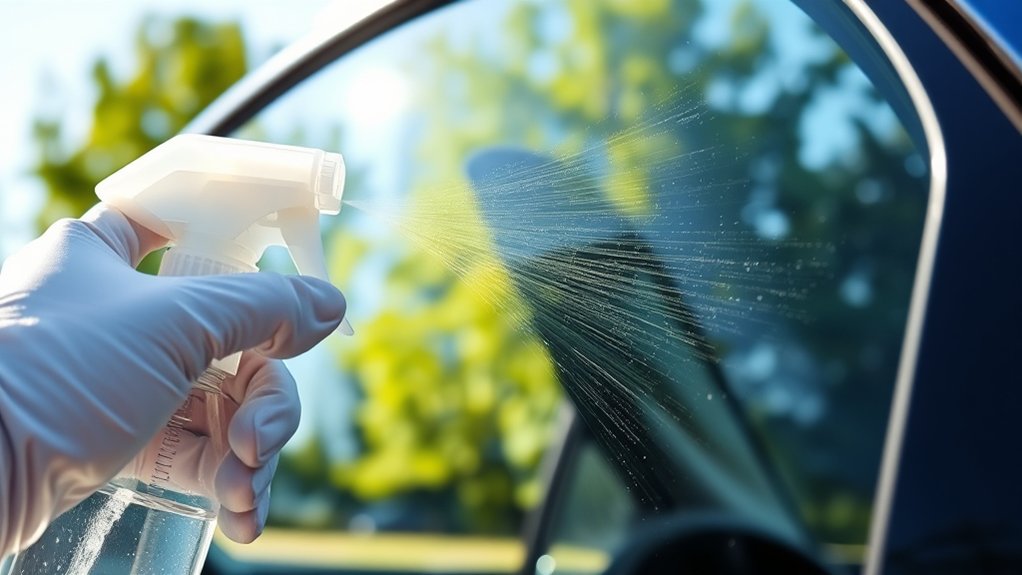
When applying cleaning products to your car windows, using gentle techniques helps prevent scratches or streaks that can impair visibility. Start by avoiding harsh scrubbing or pressing too hard. Instead, use soft, microfiber cloths to wipe in a gentle, circular motion.
Keep your cloth slightly damp, not soaked, to avoid excess liquid pooling and streaking. Always spray cleaner lightly, focusing on small sections at a time. Rubbing too aggressively can scratch the glass or leave smudges.
Patience is key. Take your time for a streak-free finish. Use a microfiber cloth for soft, scratch-free cleaning. Spray cleaner evenly without over-saturating. Wipe in gentle, circular motions. Avoid pressing too hard on the glass.
Top Alternatives to Household Window Cleaners for Cars
While household window cleaners might seem convenient, they often fall short when it comes to cleaning car windows effectively. Instead, try using products specifically designed for automotive use, like glass cleaners made for cars. These are formulated to remove stubborn dirt, grease, and grime without leaving streaks or residue.
Microfiber cloths are also a must. They lift dirt effectively without scratching the glass. For tougher spots, a mixture of vinegar and water can work as a natural alternative, but use it carefully.
Some detailers recommend using automotive-specific sprays that protect the glass and boost visibility. Avoid household cleaners with ammonia or harsh chemicals, as they can damage your car’s tint or finish. Using targeted products helps keep your windows clearer and safer to drive.
How to Clean Your Car Windows Without Causing Damage
To clean your car windows without causing damage, it’s important to use gentle, automotive-specific products and proper techniques. Start by choosing a soft microfiber cloth to avoid scratching the glass.
Use a spray designed for cars, not household cleaners, which can be too harsh. When wiping, work from top to bottom to prevent streaks and dirt from spreading around.
Use automotive-specific spray and wipe from top to bottom for streak-free, safe cleaning.
Avoid applying too much pressure, as pressing too hard can damage the glass or cause scratches. Remember to rinse the cloth frequently to keep debris off the glass.
Clean in mild, circular motions for even coverage. Use a dedicated car glass cleaner for safe, effective results and avoid ammonia-based products that can harm tint or seals.
Never scrub aggressively—keep it gentle. Dry the glass with a clean microfiber cloth to prevent streaks and achieve a clear, streak-free finish.
Common Mistakes to Avoid When Cleaning Car Windows
Many people make common mistakes when cleaning car windows that can lead to streaks, scratches, or damage. One mistake is using harsh or abrasive cleaners that can scratch the glass or strip protective coatings.
Avoid cleaning windows in direct sunlight, as the heat causes the cleaner to evaporate quickly, leaving streaks. Using dirty or old cloths can also spread dirt and cause scratches; always use a clean microfiber cloth.
Applying too much cleaner or pressing too hard can damage the glass or leave residue. Forgetting to rinse windows thoroughly before cleaning can trap dirt, leading to scratches during wiping.
Finally, using household cleaners not designed for automotive glass can cause cloudiness or damage. Stick to recommended products and proper techniques to keep your windows clear and damage-free.
How Often Should You Clean Your Car Windows?
How often you need to clean your car windows depends on your driving habits and local conditions, but generally, it’s best to do it at least once a month. Regular cleaning helps keep your windows clear and prevents dirt, bugs, and grime from building up.
If you often drive on dusty roads or through areas with heavy pollution, you might need to clean your windows more often. In cleaner environments, once every few weeks should be enough. Keep an eye out for streaks, smudges, or foggy windows, which mean it’s time for a clean.
Rain and snow can leave streaks that need wiping away more frequently. Long commutes can also lead to dirt buildup and might require more regular cleaning. Dirty windows can impair your visibility, especially at night, so don’t forget to keep them clean.
Do Special Glass Cleaners Improve Visibility and Safety?
Do special glass cleaners truly improve your visibility and safety on the road? Yes, they often do. These cleaners are designed to remove stubborn dirt, grime, and streaks that regular cleaners might leave behind.
When your windows are clear and free of smudges, you see better and can react faster to hazards. Many special glass cleaners contain ingredients that prevent streaking and residue, leaving a spotless finish.
Clear, streak-free windows improve visibility and quicken reactions to road hazards.
This clarity also reduces glare from headlights and sunlight, making driving safer. Using a cleaner made specifically for glass helps preserve your windows and prevents damage over time.
While they aren’t a magic fix, these cleaners significantly enhance your ability to see clearly. This contributes to safer, more confident driving.
When Should You Seek Professional Help for Your Car’s Windows?
Sometimes, despite your best efforts, problems with your car’s windows need professional help. If you notice cracks, chips, or scratches that get worse over time, it’s a good idea to see a pro.
If your windows become foggy or won’t clear even after cleaning, there might be an issue with the sealing or defogging system.
You should seek help if the window is cracked or shattered beyond simple repairs.
Also, if you’re having trouble rolling your windows up or down, it’s time to get it checked out.
Water leaks or persistent fogging that doesn’t clear up are signs you need professional assistance.
And if the window’s functionality is affected after a collision, don’t wait—get it looked at.
Addressing these issues quickly helps prevent further damage, keeps you safe, and maintains your vehicle’s condition.
Don’t hesitate to consult a professional if your car windows show serious damage or aren’t working properly.
Frequently Asked Questions
Can Using the Wrong Cleaner Damage My Car’s Window Tint?
Yes, using the wrong cleaner can damage your car’s window tint. Many household or regular glass cleaners have ammonia or harsh chemicals that can cause the tint to peel, crack, or fade over time.
To keep your tint looking good, use a cleaner specifically made for automotive windows or a gentle, ammonia-free option. Always check the label and steer clear of abrasive materials to protect your tint and keep it looking new.
Are There Eco-Friendly Window Cleaning Options for Cars?
They say “every cloud has a silver lining,” and eco-friendly options are shining bright for car windows. You can choose biodegradable or plant-based cleaners that are gentle but still work well.
Look for products labeled as environmentally safe, free of harsh chemicals, and non-toxic. These choices help protect your car’s tint and the environment, giving you a clear view without guilt.
Eco-friendly cleaners are a smart and responsible way to keep your windows spotless.
How Do I Remove Streaks From My Car Windows Effectively?
To remove streaks from your car windows, start with a clean microfiber cloth and a glass cleaner or a simple mixture of equal parts vinegar and water.
Spray the solution onto the glass and wipe in a circular motion. This helps lift dirt and grime without scratching the surface.
Next, use a dry, lint-free cloth to buff the window until it’s streak-free and shiny. Avoid paper towels or harsh chemicals, as they can leave residues or cause scratches.
Is It Safe to Use Paper Towels on Car Windows?
A stitch in time saves nine, so you’re wise to ask. It’s generally safe to use paper towels on your car windows if they’re soft and lint-free.
But avoid rough or cheap paper towels that might scratch the glass. Use gentle, circular motions and don’t press too hard.
For the best results, consider microfiber cloths—these are softer and leave fewer streaks, keeping your windows crystal clear and streak-free.
Can Cleaning Products Affect the Durability of My Car’s Glass?
Cleaning products can affect your car’s glass durability if they contain harsh chemicals or abrasives. These substances might cause tiny scratches or weaken the glass over time, which can reduce its strength and clarity.
To keep your windshield and windows in good shape, pick products made specifically for automotive glass or go for a gentle, non-abrasive cleaner. Regularly cleaning with the right products helps maintain your glass’s integrity and keeps your visibility clear.
Conclusion
In the world of car care, your windows are the eyes that reveal every journey. Using the right cleaner is like giving your car a gentle kiss, not a harsh slap. Stick to products designed for automotive glass, and avoid household cleaners that can cause damage.
Can I use window cleaner on my car windows? It’s best to use a cleaner specifically made for automotive glass. Household cleaners often contain ingredients that can harm your windshield or windows over time.
With proper care, your windows will shine like diamonds in the sun, ensuring clear vision and safe travels. Treat your car’s windows with kindness—they’re the window to your adventures. Using the right window cleaner helps keep them spotless and safe for every trip.