How to Safely Use Lysol All Purpose Cleaner on My Car
If you’re like so many car owners, keeping your vehicle clean without damaging its surfaces can be a real challenge. You want it to look great, but you’re also worried about using the wrong products that might harm your car’s finish or interior.
Many people struggle with finding safe, effective cleaning solutions that won’t cause more harm than good.
You can safely use Lysol all-purpose cleaner on your car by diluting it with water. Mix one part cleaner with three to four parts water for regular surfaces, or use a higher dilution for delicate areas.
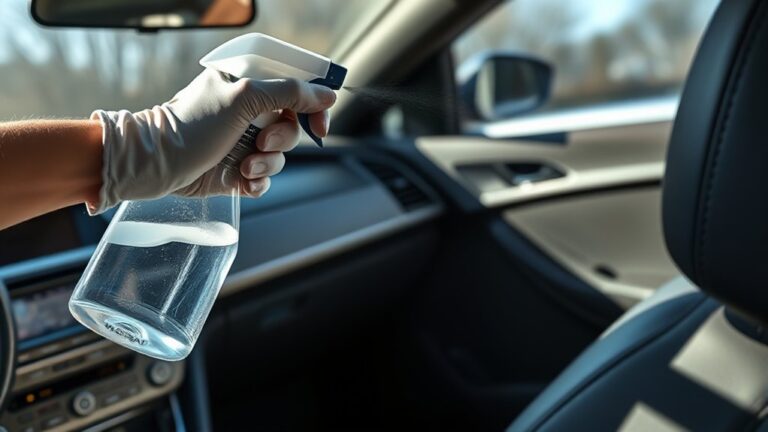
Spray the solution onto a microfiber cloth, then wipe hard, non-porous surfaces like plastic and glass.
Avoid electronic components and upholstery, and always test on a small area first.
To protect your car’s finish, learn more about safe cleaning techniques and alternatives.
Key Takeaways
- Dilute Lysol with water in a ratio of 1:3 to 1:5 before using. This helps prevent any potential damage to your car’s surfaces.
- Before applying it widely, test the solution on a small, hidden area. This way, you can check for any discoloration or damage first.
- Spray Lysol onto a microfiber cloth instead of spraying directly onto the car. This gives you better control over where the cleaner goes.
- It’s best to use Lysol on non-porous surfaces like plastic and glass. Avoid using it on leather, fabric, or electronic screens to prevent damage.
- After disinfecting, make sure to rinse the area thoroughly with water. Then, dry it off with a microfiber cloth to avoid streaks and ensure a clean finish.
Is It Safe to Use Lysol All Purpose Cleaner on Your Car?
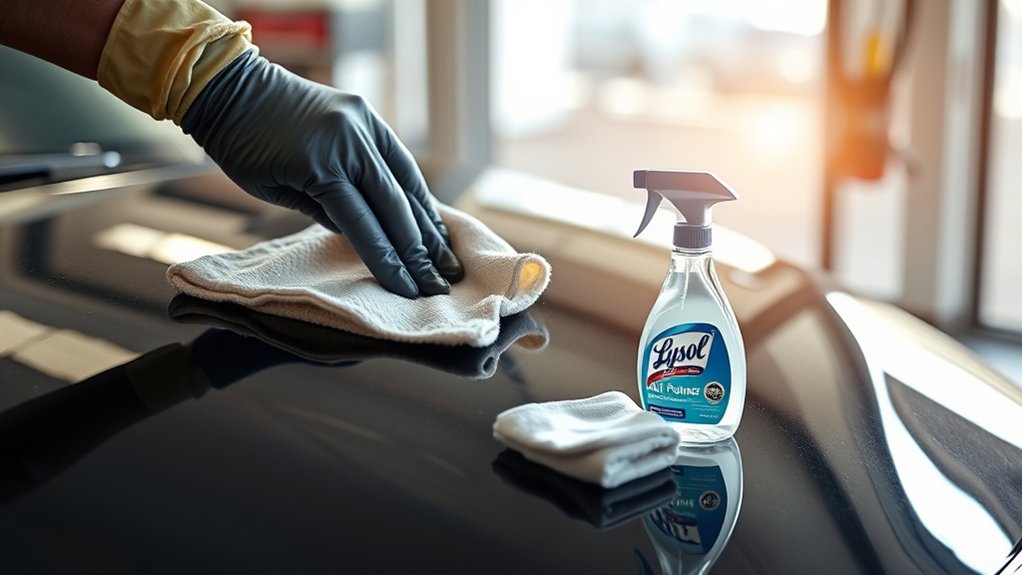
Is it safe to use Lysol All Purpose Cleaner on your car? While Lysol is great for disinfecting household surfaces, using it directly on your car isn’t recommended without caution.
The cleaner contains strong chemicals that can damage certain car surfaces, especially if used undiluted or left on too long. It’s designed for non-porous indoor surfaces, not for automotive finishes or fabrics.
Using it improperly might cause discoloration, dullness, or deterioration of materials like plastic, rubber, or paint. Always check the product label for specific instructions and warnings.
If you decide to use Lysol, dilute it properly and test it on a small, inconspicuous area first. When in doubt, opt for cleaning products specifically formulated for automotive use.
Which Car Surfaces Are Safe for Lysol Cleaning?
While Lysol can be effective for disinfecting certain car surfaces, it’s important to know which ones can handle its chemicals safely. Typically, you can safely use Lysol on hard, non-porous surfaces like plastic dashboard panels, door handles, and steering wheels.
These surfaces resist damage and won’t absorb the disinfectant. However, avoid using Lysol on leather seats, fabric upholstery, or painted surfaces, as the chemicals can cause discoloration or deterioration.
Glass surfaces like windows and mirrors are also safe for Lysol, but avoid spraying directly onto electronic components or screens. Always test a small, hidden area first to ensure there are no adverse reactions.
Using Lysol on appropriate surfaces helps keep your car clean without risking damage.
How to Prepare Your Car for Lysol Cleaning
Before you start disinfecting with Lysol, it’s important to prepare your car to guarantee a safe and effective cleaning process. First, clear out any loose items, trash, or personal belongings from your car’s interior. This makes it easier to access all surfaces and keeps your belongings from getting contaminated.
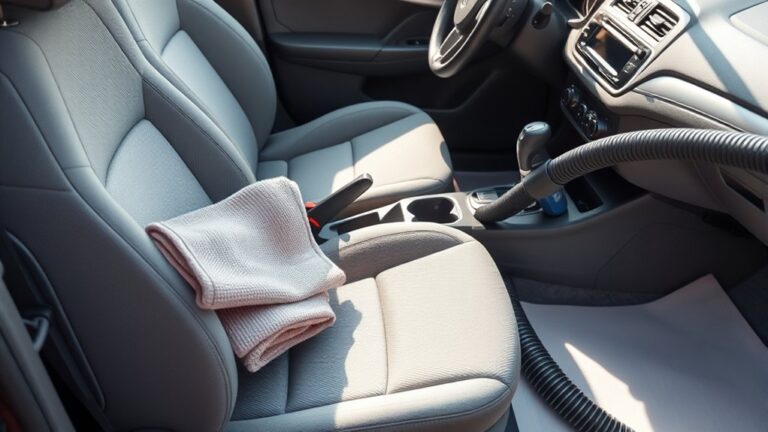
Next, vacuum the seats, carpets, and floor mats to remove dust, dirt, and debris. Wipe down surfaces like the dashboard, steering wheel, and door handles with a damp cloth to get rid of surface grime. Make sure your windows and mirrors are clean for better visibility.
Finally, open the doors and windows to ventilate the space. Proper preparation helps the Lysol cleaner work effectively while protecting your car’s surfaces and your health.
How to Dilute Lysol All Purpose Cleaner for Car Use
Once your car is prepped and ready, it’s important to dilute the Lysol All Purpose Cleaner correctly to ensure effective disinfecting without damaging surfaces. Start by reading the label for specific instructions.
Typically, mix one part Lysol cleaner with three to four parts water for general cleaning. For more delicate surfaces, use a higher dilution ratio, like one part cleaner to five parts water.
Use a clean spray bottle to combine the solution, making sure to mix thoroughly. Avoid using undiluted Lysol directly on your car’s surfaces, as it can cause damage.
Always test a small, hidden area first to check for any adverse reactions. Proper dilution guarantees you kill germs effectively while preserving your vehicle’s interior and exterior finishes.
How to Safely Apply Lysol to Your Car’s Interior and Exterior
To safely apply Lysol to your car’s interior and exterior, start by making sure the surfaces are clean and free of loose dirt or debris. This helps prevent scratching and makes sure the disinfectant works effectively.
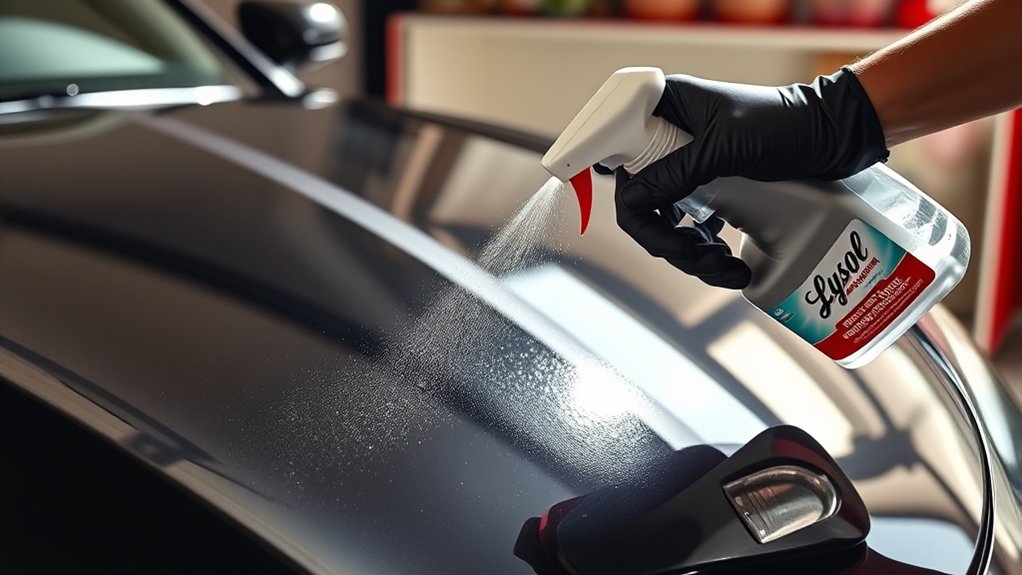
Use a soft cloth or sponge to wipe down dashboards, seats, door panels, and exterior panels. When applying, spray Lysol evenly, but avoid oversaturating the surfaces.
Keep these points in mind: spray a fine mist over surfaces, not drenched. Focus on high-touch areas like steering wheels and door handles. Avoid spraying directly onto electronic parts or vents.
Use a microfiber cloth to wipe and spread the cleaner smoothly. This helps minimize waste and prevents damage while ensuring your car gets properly disinfected.
How to Rinse and Dry Your Car After Using Lysol
After applying Lysol, make sure to rinse your car carefully with clean water to get rid of any leftover residue.
Use gentle, even streams of water to ensure all the cleanser is washed away without harming your paint.
Finally, dry your car with a microfiber cloth or chamois to avoid water spots and leave a streak-free shine.
Proper Rinsing Techniques
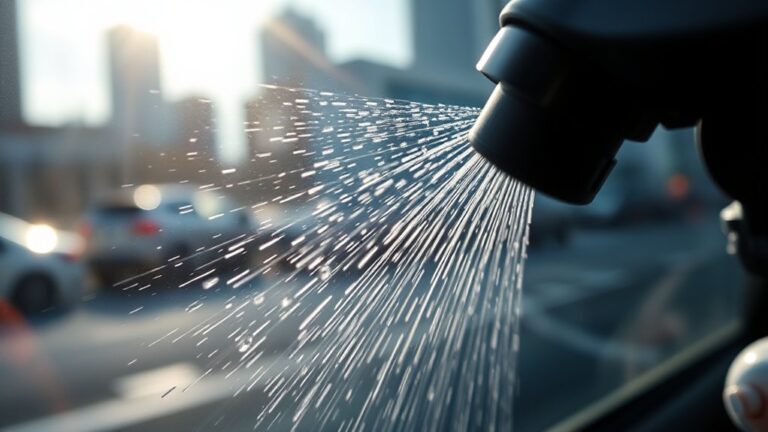
Proper rinsing is essential to remove any remaining Lysol residue and prevent streaks or streaking. To do this effectively, use a gentle stream of water, making sure you cover all surfaces evenly. Start from the top of your car and work downward, guiding water over the entire surface.
Keep the nozzle at a consistent distance to avoid high-pressure spots that could damage the paint. As you rinse, imagine water flowing smoothly over curves and edges, washing away suds with each pass.
Visualize the surface glistening under the stream, with residue disappearing with every rinse. This method ensures thorough cleaning and leaves your car with a clean, streak-free finish.
Take your time and don’t rush the process to get the best results.
Effective Drying Methods
Once you’ve rinsed your car thoroughly, the next step is drying it properly to avoid water spots and streaks. Use clean, soft microfiber towels to gently blot and wipe the surface.
Avoid air drying because it can leave mineral deposits behind. For a streak-free finish, follow a pattern to cover every area evenly.
| Technique | Tool Needed | Tip |
|---|---|---|
| Blotting | Microfiber towel | Pat dry instead of rubbing too hard |
| Wiping | Microfiber cloth | Use light, even strokes |
| Air drying | Air blower or dry cloth | Use only if necessary |
These methods help your car dry evenly and leave a clean, shiny surface.
What Are Better Alternatives to Lysol for Car Cleaning?
While Lysol is good for disinfecting surfaces, there are better options made specifically for car cleaning that are safer and more suitable. These choices target dirt and germs without risking damage to your vehicle’s interior or exterior.
You might want to try automotive-specific disinfectant sprays that are designed to kill bacteria without harming plastics or fabrics. Mild soap and water solutions are also great for general cleaning, leaving surfaces fresh without harsh chemicals.
Vinegar-based cleaners naturally disinfect and help remove grime, especially on glass and mirrors. Using microfiber cloths and sponges can lift dirt effectively while avoiding scratches, giving your car a gentle, thorough clean.
Opting for these alternatives helps protect your car’s surfaces while keeping it sanitized effectively.
Tips for Maintaining Your Car’s Finish and Safety
To keep your car looking its best, focus on protecting the paint and using proper cleaning techniques.
Regularly wash and wax your vehicle to prevent scratches and damage. Always use gentle cleaners to avoid harming the finish.
This way, you guarantee your car stays safe, shiny, and well-maintained over time.
Protect Your Car’s Paint
Protecting your car’s paint is key to keeping it looking great and holding its resale value.
Avoid harsh chemicals like Lysol directly on the surface, as they can damage the finish. Instead, use gentle cleaning products made for automotive paint.
Wash your car regularly with a soft microfiber cloth or sponge to prevent scratches.
Applying a good wax or sealant every few months creates a barrier against dirt, UV rays, and pollutants.
Whenever possible, park in shaded areas to reduce sun damage.
Watch out for bird droppings and tree sap, which can eat into the paint.
Be careful with road salt and grime—they can cause corrosion.
Debris and stones can chip the surface, so try to avoid driving on rough roads when you can.
UV rays fade and degrade the finish, so extra protection helps keep your car shiny.
Taking proper care will help your car stay looking new and last longer.
Use Proper Cleaning Techniques
Using proper cleaning techniques is essential for maintaining your car’s finish and guaranteeing safety on the road. Always start by rinsing your car with water to remove loose dirt and debris.
Use a soft microfiber cloth or sponge to gently wash the surface, avoiding harsh scrubbing that can scratch the paint. When applying Lysol or any cleaner, spray it onto the cloth first rather than directly onto the car to prevent overspray and damage.
Work in small sections to ensure thorough cleaning without leaving residue. Rinse each area with clean water before moving on. Dry your car with a clean, dry microfiber towel to prevent water spots.
Following these techniques helps preserve your paint, keeps your car looking new, and reduces the risk of damage or safety hazards.
Common Mistakes to Avoid When Using Lysol on Your Car
While Lysol is great for disinfecting surfaces, using it the wrong way in your car can cause damage or make it less effective. One common mistake is spraying too much product, which can leave streaks or residue behind.
Avoid spraying Lysol directly on delicate areas like vents or upholstery. Instead, spray it onto a cloth first to prevent any damage. Also, always test a small spot before applying it all over to check for any discoloration.
Don’t forget to let the disinfectant dry completely. Rushing this step can reduce its effectiveness and leave surfaces still dirty. Be careful not to spray on electronic components or switches, as liquids can cause issues.
Steering clear of these mistakes will help keep your car clean and protected, while ensuring the disinfectant works as it should.
Frequently Asked Questions
Can Lysol Damage Car Paint or Plastics?
Lysol All Purpose Cleaner can damage your car’s paint or plastics if used improperly. Its strong chemicals might strip away paint or degrade plastic surfaces over time.
To avoid damage, never spray it directly onto your car’s exterior. Instead, dilute the cleaner with water and use a soft cloth.
It’s a good idea to test a small area first before cleaning the entire surface. Always follow the manufacturer’s instructions for safe use.
How Often Should I Clean My Car With Lysol?
You should clean your car with Lysol once a week or whenever it feels dirty or sticky. Regular cleaning helps keep germs, bacteria, and dirt at bay, making your car a fresher and more hygienic space.
Avoid overusing Lysol, as too much cleaning might damage surfaces. Instead, find a good balance with gentle methods and always follow the product instructions.
Sticking to a consistent cleaning routine is key to keeping your car interior clean, safe, and pleasant to be in.
Is Lysol Effective Against Mold and Mildew in Cars?
Lysol can be effective against mold and mildew in your car because of its disinfectant properties. It kills germs and helps prevent mold growth when used properly.
To get the best results, spray Lysol on the affected areas, let it sit for a few minutes, then wipe with a clean cloth. Just be careful not to overuse it on delicate surfaces.
Make sure your car is well-ventilated during and after applying Lysol. Regular cleaning and drying are key to preventing mold from coming back.
Are There Specific Safety Precautions for Children and Pets?
Think of your car as a castle where safety is the moat. You should keep children and pets away when using Lysol, as its fumes and residues can be harmful.
Always ventilate the area well, wear gloves, and avoid spraying directly onto soft surfaces. After cleaning, let everything dry completely before allowing kids or pets back in.
These precautions help guarantee your car stays a safe haven for everyone.
Can I Use Lysol in My Car’s Air Conditioning System?
No, you shouldn’t use Lysol in your car’s air conditioning system directly. It’s not made for HVAC systems and might cause damage or leave harmful residues.
Instead, look for a disinfectant specifically designed for automotive AC systems or check your vehicle’s manual for recommended cleaning products. Always follow the instructions provided.
Make sure to ventilate your car well during and after cleaning. This helps keep the air quality inside safe and fresh.
Conclusion
Using Lysol all-purpose cleaner on your car can be effective if you follow the right steps and safety precautions. But is it really worth risking damage to your vehicle’s surfaces?
By understanding the proper methods and alternatives, you can keep your car clean without compromising its finish or safety. Remember, a little extra care goes a long way.
So why not choose the safest, most effective approach for your car’s health and yours? Using Lysol all-purpose cleaner carefully can help you do just that.