What Is Floor Care Cleaning and Maintenance and How To Guide
Many people struggle with keeping their floors looking spotless and well-maintained. It can feel overwhelming to figure out the right cleaning routine and products to use. You’re not alone—floor care cleaning and maintenance is a common challenge.
Floor care cleaning and maintenance involve regularly sweeping, mopping, and using the right products tailored to your floors to keep them looking their best and lasting longer. You need essential tools like brooms, vacuum cleaners, microfiber cloths, and specific cleaners for different surfaces such as hardwood or tile.
Proper techniques and avoiding common mistakes are key. Scheduling routine upkeep helps prevent costly repairs down the line.
Keep learning to uncover how to effectively care for your floors and maintain their beauty over time.
Key Takeaways
- Floor care cleaning and maintenance involve regular cleaning, using the right tools, and applying techniques suited for different types of flooring.
- Routine sweeping, vacuuming, and deep cleaning help prevent damage, stains, and the buildup of dirt, dust, and bacteria.
- Using the correct cleaning products and methods is key to keeping floors durable and preventing them from wearing out too soon.
- Creating a cleaning schedule and fixing issues early can really extend the life of your floors.
- Sometimes, you might need professional help for stubborn stains, damage, or specialized cleaning needs.
What Is Floor Care and Why Is It Important?
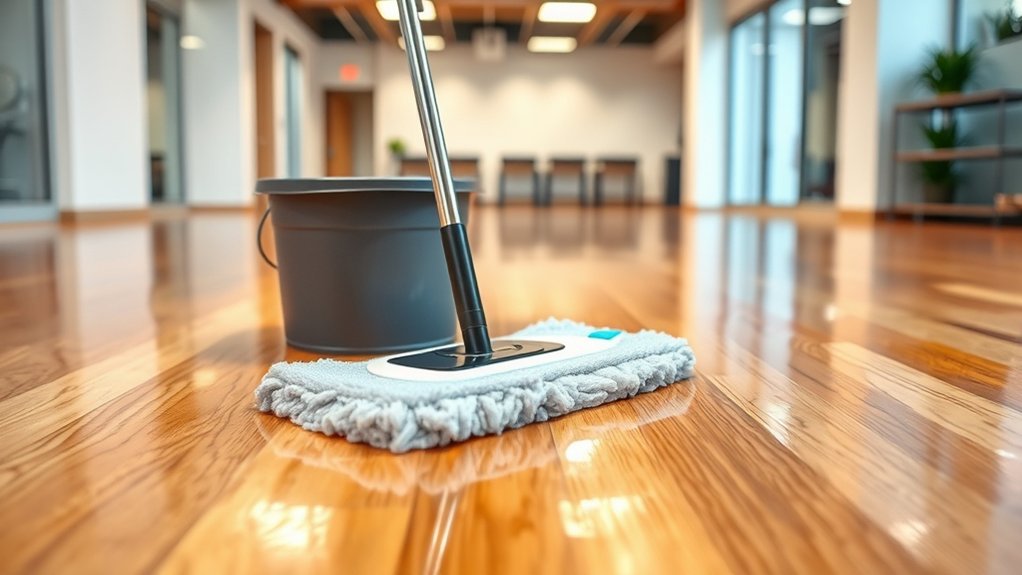
Floor care involves regular cleaning and maintenance to keep your floors looking their best and working properly. It’s important because well-kept floors make your space look better, last longer, and stay more durable.
Dirt, dust, and spills can cause scratches, stains, and wear over time if you ignore them. Regular cleaning helps remove debris that could damage the surface or lead to accidents.
Ignoring dirt and spills can lead to damage and accidents; regular cleaning protects and preserves your floors.
Proper floor care also prevents grime, mold, and bacteria buildup, making your environment healthier. Whether you have hardwood, tile, laminate, or carpet, each type needs specific routines.
Spending a little time on routine maintenance now can save you money on repairs or replacements later. In the end, good floor care keeps your floors beautiful, strong, and safe, making your space more inviting.
Must-Have Tools and Supplies for Floor Care
To keep your floors looking their best, you need the right tools and supplies. Essential cleaning equipment like mops, vacuums, and scrub brushes will make the job easier.
Key maintenance supplies such as floor polish and sealants help protect your surfaces. Having these items on hand guarantees you can maintain your floors efficiently and effectively.
Essential Cleaning Equipment
Having the right cleaning equipment is vital for effective floor maintenance. You’ll need a sturdy broom or dust mop to sweep up dirt and debris regularly. A good vacuum is essential for deep cleaning carpets and removing embedded particles.
Microfiber cloths or mops are excellent for trapping dust and grime without scratching surfaces. For wet cleaning, invest in a mop with a bucket and wringer or a steam cleaner for deeper sanitation.
A scrubbing brush can help tackle stubborn stains or textured floors. Moreover, having a squeegee or floor squeegee is useful for wet areas. Quality tools make cleaning more efficient and help preserve the floor’s appearance.
Choose durable, easy-to-maintain equipment to guarantee your floor stays clean and well-maintained over time.
Key Maintenance Supplies
Essential maintenance supplies are the backbone of effective floor care, making it easy to handle spills, stains, and routine touch-ups quickly. Having the right tools on hand means you won’t have to delay cleaning or risk damage.
Here are four must-have supplies:
- Microfiber Cloths: Great for dusting and wiping surfaces without scratching.
- Scraper or Putty Knife: Perfect for removing stubborn debris or sticky residues.
- Floor Repair Kit: Handy for fixing chips, scratches, or minor damages right away.
- Protective Pads: Help prevent scratches and scuffs on vulnerable flooring areas.
These supplies help keep your floors looking their best and extend their lifespan. Keep them accessible and well-maintained so you can handle any maintenance task efficiently.
How to Care for Different Flooring Types
Different flooring types need specific care to keep them looking good and lasting longer.
For hardwood floors, avoid using too much water and wipe up spills with a soft cloth. Use gentle cleaners made for wood and steer clear of abrasive tools that can scratch the surface.
Tile floors are tough but can crack or chip if not handled carefully. Clean them with a damp mop and non-abrasive cleaners to keep them in good shape.
Vinyl floors are also easy to maintain. Just use a damp mop and avoid harsh chemicals that might damage the surface.
Carpets need regular vacuuming to remove dirt and allergens. Every now and then, do a deep clean to keep them fresh and in tip-top shape.
Laminate floors should be swept gently and cleaned with a damp cloth using a cleaner suited for laminate. Always follow the manufacturer’s instructions to avoid damage and extend the life of your floors.
Daily Floor Cleaning Steps
To keep your floors looking their best every day, start with regular sweeping to remove dirt and debris. Use proper mopping techniques to clean thoroughly without damaging the surface.
These simple steps help maintain your floors’ appearance and extend their lifespan. Just a little daily effort can make a big difference!
Regular Sweeping Techniques
Regular sweeping is the first step in keeping your floor clean and safe. It gets rid of loose dirt, dust, and debris that could cause scratches or make the floor slippery.
To do it right, follow these simple steps:
- Choose the right broom for your flooring type to pick up debris efficiently.
- Sweep in a consistent pattern—start from one corner and work your way across the room to cover everything.
- Use short, controlled strokes to gather dirt into a pile without scattering particles.
- Regularly clean your broom to prevent spreading dirt back onto the floor.
Proper Mopping Methods
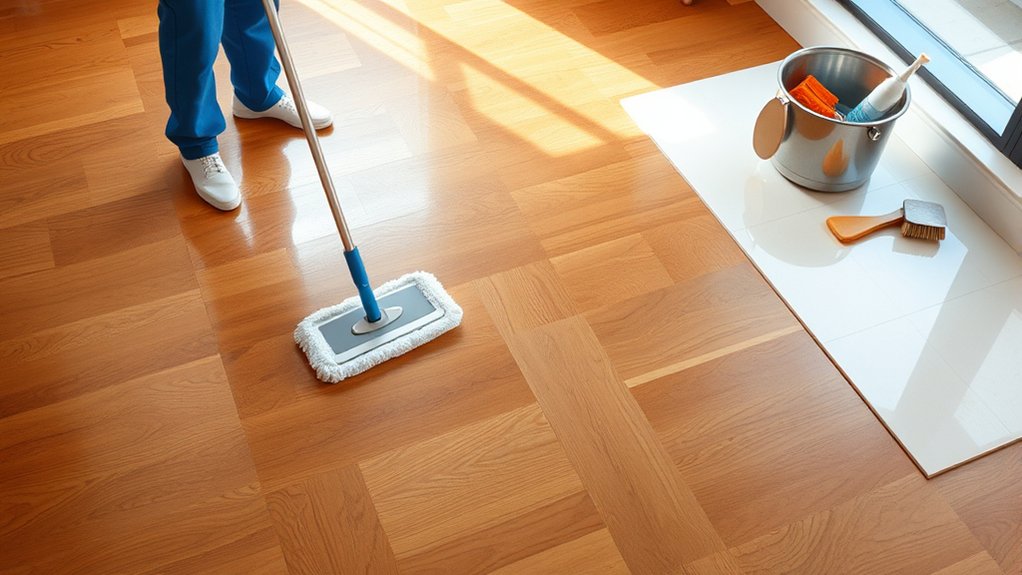
After sweeping away loose dirt and dust, mopping helps remove any remaining grime and spills that can’t be picked up with a broom. Start by filling a bucket with warm water and adding a suitable floor cleaner.
Dip your mop, then wring it out so it’s damp, not soaked. Work in small sections, starting from the far corner of the room and moving toward the exit. Use a figure-eight motion or back-and-forth strokes to lift dirt effectively.
Rinse and wring the mop frequently to prevent spreading dirt around. Change the water if it becomes cloudy. For stubborn spots, apply a bit of cleaner directly and scrub gently.
Finish by allowing the floor to air dry or wiping with a clean towel for faster drying.
How to Deep Clean and Restore Floors
Deep cleaning your floors is key to bringing back their shine and making them last longer. Start by sweeping or vacuuming to pick up loose dirt and debris.
Next, prepare a cleaning solution that’s right for your floor type, like a special cleaner for hardwood or tile. Use a microfiber mop or soft brush to scrub gently, focusing on stubborn stains or grime.
Finally, rinse with clean water and dry the surface completely. This helps prevent water damage and leaves your floors looking shiny and new.
Remember these simple steps:
- Clear debris before cleaning.
- Use the right cleaning solutions.
- Scrub gently to avoid damage.
- Dry thoroughly for a polished finish.
Following these tips will keep your floors looking great and protected for years to come.
Tips for Maintaining Hardwood, Tile, Carpet, and Vinyl Floors
To keep your floors looking their best, it’s important to follow specific maintenance tips for each type.
For hardwood floors, sweep regularly to prevent dirt from scratching the surface. Use a damp mop with a gentle cleaner, and avoid excess water, which can warp the wood.
Tile floors benefit from sweeping and mopping with a pH-neutral cleaner to prevent grime buildup.
For carpets, vacuum frequently to remove dirt and allergens. Spot-treat stains immediately to prevent lasting damage.
Vinyl floors require gentle cleaning with a soft mop and a mild cleaner. Avoid abrasive tools that can scratch the surface.
Regular maintenance helps extend the lifespan of each floor type, keeping them looking fresh and well-maintained.
How to Pick the Best Cleaning Products for Your Floors
Choosing the right cleaning products for your floors can really make a difference in how long they last and how good they look. First, figure out what type of floor you have—hardwood, tile, carpet, or vinyl—since each needs specific cleaning formulas.
Next, check the labels to make sure the product is compatible with your flooring. Using the wrong cleaner can cause damage or make your floors look dull. It’s also a good idea to choose eco-friendly options whenever possible to protect your environment and keep indoor air quality high.
Before cleaning the entire floor, test a small, hidden spot to see if the product causes discoloration or damage. Not all cleaners are the same, so taking a little time to pick the right one will save you money and hassle later on.
Choosing the right product helps keep your floors looking their best and ensures they stay durable for years to come.
Common Floor Cleaning Mistakes and How to Fix Them
Even with the best cleaning products, mistakes can still happen during floor maintenance, leading to damage or dullness. Common errors include using harsh chemicals, over-wetting floors, or scrubbing too hard.
These mistakes can cause discoloration, warping, or scratches. To avoid these issues, here’s a quick guide to help you out.
| Mistake | Fix |
|---|---|
| Using too much water | Use minimal water and dry floors quickly after cleaning |
| Harsh chemicals | Pick pH-neutral cleaners suited for your floor type |
| Scrubbing aggressively | Use gentle, circular motions with soft tools |
| Ignoring manufacturer instructions | Follow the cleaning guidelines carefully |
Staying mindful of these tips can help keep your floors looking great for longer.
When to Call Professional Floor Cleaning Services
Ever wonder when it’s time to bring in professional floor cleaning services? You should consider it if you notice:
- Stubborn stains that won’t come out with regular cleaning.
- Excessive dirt buildup or dullness that affects your floor’s appearance.
- Persistent odors even after cleaning efforts.
- Damage or wear that needs specialized equipment or expertise.
Professional cleaners have the tools and knowledge to handle tough grime, restore shine, and address damage effectively. If your regular cleaning isn’t cutting it or you’re unsure about the best method, calling in experts can save you time and prevent further harm.
Recognizing these signs helps keep your floors in top shape and makes them last longer.
How to Create a Floor Maintenance Schedule
To create an effective floor maintenance schedule, start by evaluating your floor types to understand their specific needs.
Then, set regular cleaning intervals based on foot traffic and usage to keep your floors in top condition.
This approach helps ensure your floors stay clean and durable over time.
Assess Floor Types
When creating a floor maintenance schedule, the first step is to accurately assess the types of flooring you have. Understanding your floors helps you choose the right cleaning methods and products.
Identify surface materials such as wood, tile, carpet, or vinyl to match your cleaning techniques. This way, you can avoid using anything that might damage the surface.
Next, determine the wear and tear. High-traffic areas need more frequent attention to stay looking their best.
Recognize the finish types of your floors. Sealed or unsealed surfaces influence which cleaning solutions are safe to use.
Finally, note any special features like delicate inlays or textured surfaces. These require gentle care to prevent damage.
Set Regular Intervals
Establishing regular intervals for floor cleaning keeps your floors looking great and helps them last longer. Setting up a maintenance schedule means you won’t forget important tasks and can stay consistent.
Think about your floor type and how much it’s used when planning your cleaning routine. For high-traffic areas, clean daily or every other day; for less-used spaces, weekly or biweekly cleaning is enough.
Use the table below as a helpful guide:
| Frequency | Tasks | Areas |
|---|---|---|
| Daily | Sweeping, spot mopping | Entryways, kitchens |
| Weekly | Vacuuming, mopping | Living rooms, hallways |
| Monthly | Deep cleaning, waxing | Hardwood or tile floors |
Stick to your schedule, and your floors will stay in top shape all year round.
Final Tips for Long-Term Floor Care Success
Achieving long-term floor care success takes consistent effort and mindful habits. Staying proactive with maintenance will help keep your floors looking their best.
Start with daily cleaning to prevent dirt buildup, which can cause scratches or damage over time. Using the right cleaning tools and products suited to your floor type makes a big difference.
Don’t forget to address spills right away to avoid stains and moisture issues. Regular professional inspections and deep cleans can catch problems early and help your floors last longer.
Frequently Asked Questions
How Often Should I Schedule Professional Floor Inspections?
You should schedule professional floor inspections at least once a year to keep your floors in top shape.
If your floors see heavy foot traffic or are exposed to tough conditions, think about more frequent check-ups, like every six months.
Regular inspections help catch issues early and avoid costly repairs down the line.
Stay proactive by working with your flooring specialist to find the best schedule based on your environment and flooring type.
Are Eco-Friendly Cleaning Products Effective for All Floor Types?
Think of eco-friendly cleaning products as gentle rain nourishing your floor’s roots. They’re effective on many floor types, including hardwood, tile, and laminate, but not always suitable for every surface.
You might need stronger solutions for stubborn stains or delicate materials. Always test a small area first, and follow manufacturer instructions.
While eco-products are generally effective, understanding your specific floor type guarantees you choose the right cleaner for best results.
Can I Use Household Items to Remove Stubborn Stains?
Yes, you can use household items to remove stubborn stains, but you need to choose wisely. For example, baking soda and water make a gentle paste for stains on many surfaces, while vinegar can help with mineral deposits.
Always test a small area first to avoid damage. Be cautious with acidic or abrasive items, and follow up with a clean, damp cloth to remove residue and prevent further harm.
What Are Signs Indicating My Floors Need Immediate Attention?
You’ll know your floors need immediate attention if you notice persistent stains that just won’t come out, scratches, or dull spots that take away their shine.
If your floors feel uneven or sticky underfoot, that’s a clear sign something’s wrong.
Keep an eye out for water damage, warping, or loose tiles—these are signs you need to act quickly.
Regularly inspecting your floors helps catch these issues early, so you can prevent more damage and keep them looking great.
Taking prompt action will help your floors stay beautiful and last longer.
How Do I Prevent Future Damage During Cleaning?
Think of your floor as a delicate garden that needs gentle tending. To prevent future damage during cleaning, use soft brushes or cloths instead of harsh scrubbers.
Avoid excessive water, which can seep in like weeds taking root. Always follow manufacturer instructions for cleaning products, and regularly check for signs of wear.
This careful approach keeps your floor vibrant and resilient, like a well-tended garden flourishing over time.
Conclusion
Taking care of your floors is like tending a garden—you need patience and the right tools to keep everything flourishing.
With regular cleaning, proper maintenance, and knowing when to call in the pros, your floors will stay beautiful and durable for years to come.
Think of it as giving your home a well-deserved spa day—refreshing, revitalizing, and worth every effort.
By focusing on floor care cleaning and maintenance, you can keep your space shining bright like a star.